By Markus Faigle | Volunteer
From the very beginning, the Zahana Association has included among its goals the introduction of practices that could revolutionize agricultural production. In agriculture this may require the use of machinery. (See the cultural importance of rice on our website). Currently in most rural areas growing rice requires a lot of manual, back breaking labor.
It is worth noting that in Madagascar, there are two types of rice crops per season: rain-fed rice fields, which is planted in November and harvested in March, and irrigated rice, which is planted in December and harvested in April or May.
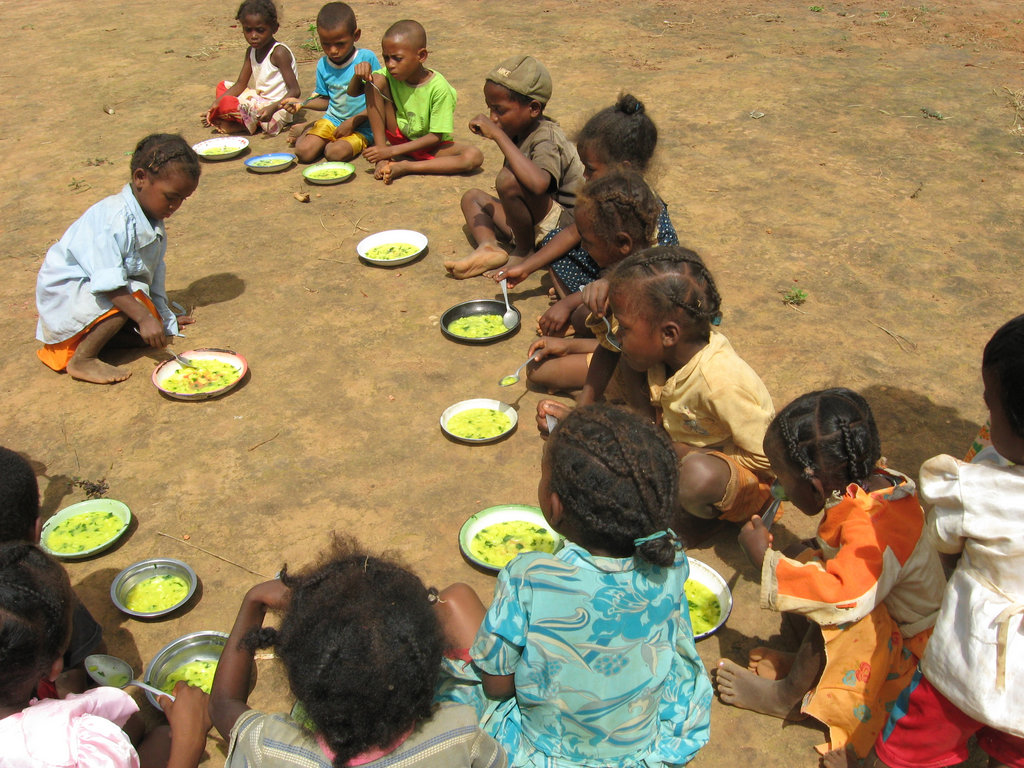
With these reasons in mind, we thought: why not grow our own rice, instead of buying it by embarking in a pilot project? The ZAHANA association encouraged parents from two of our schools to cultivate a 30,000-square-meter plot of land growing the rice needed for the children’s school cafeteria ourselves. Donated free of charge this year by its landowner, it required three days of work making use of a rented tractor. Most of our parents are rice farmers and given access to tools and land, they do what they know best: grow rice.
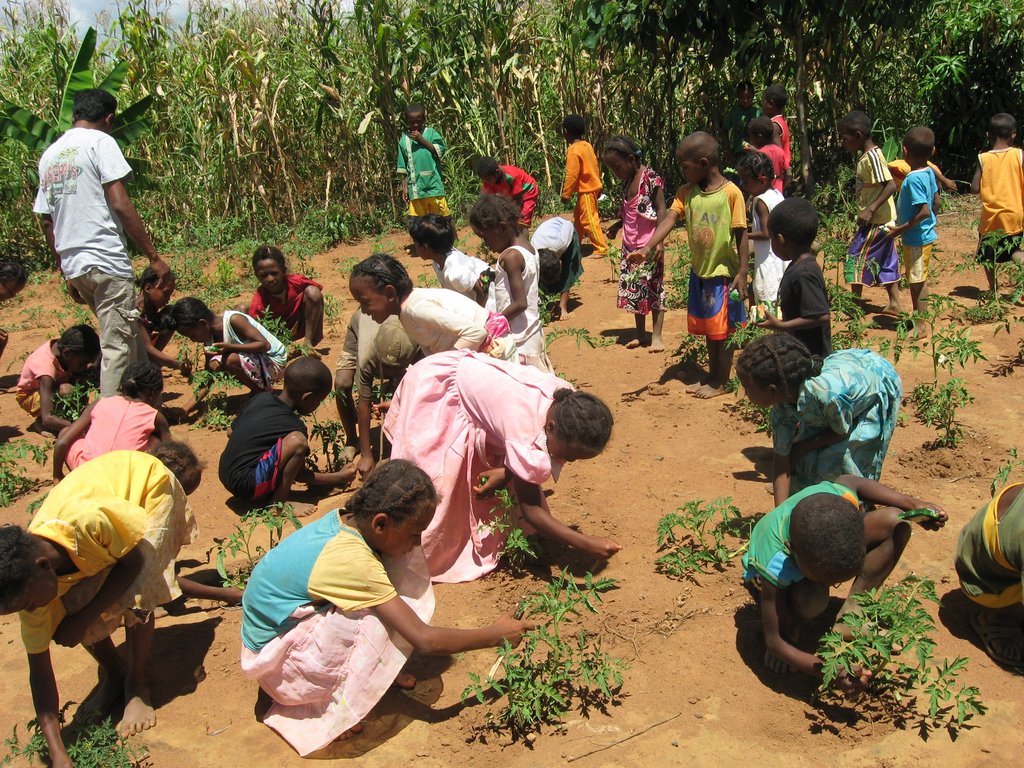
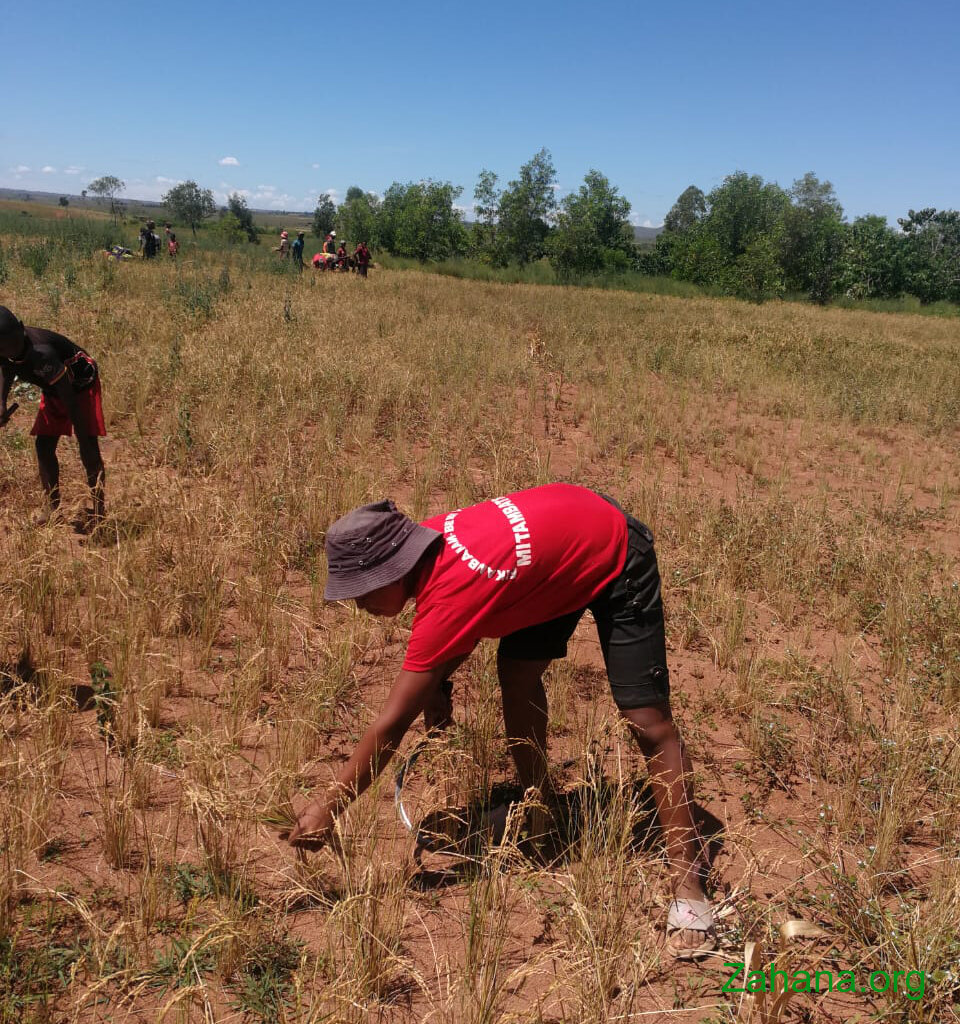
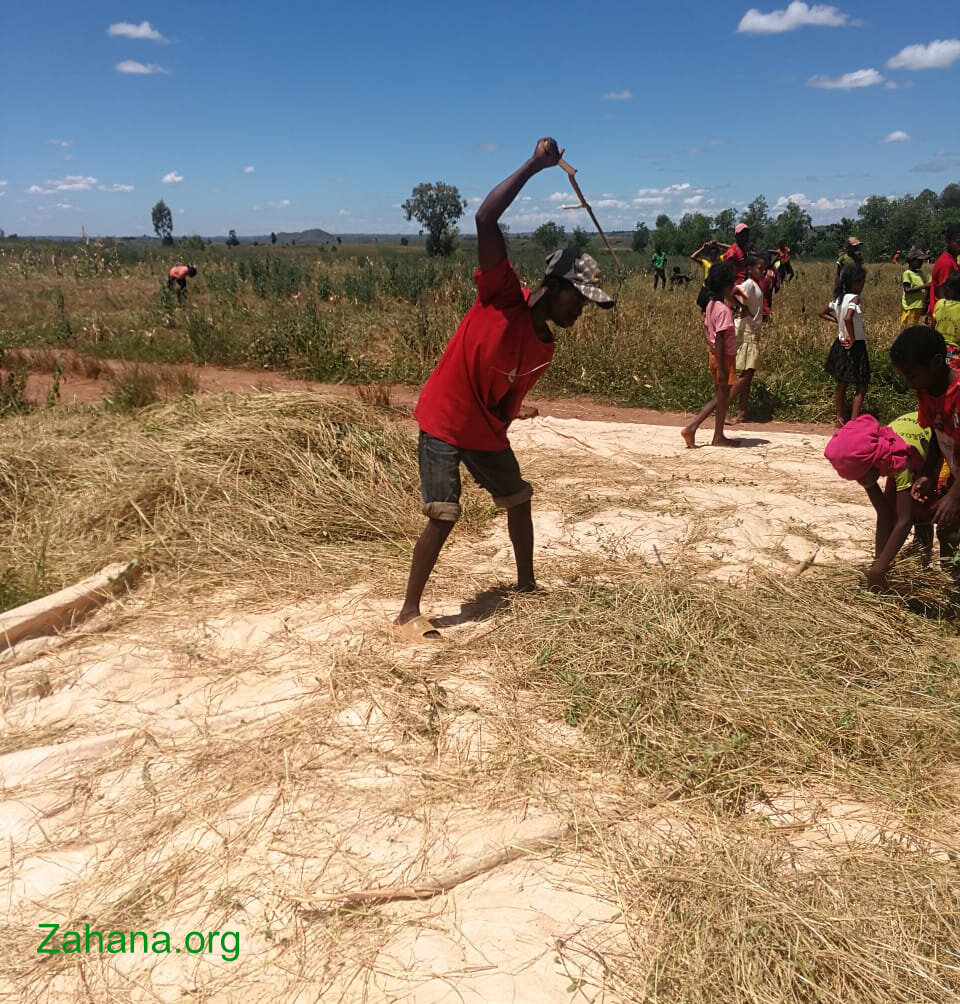
The parents of our students helped with weeding, transplanting, and harvesting the rice. Actively participating in the entire process of rice production from seed to threshing and storing was all done by them, until ‘our’ rice will end up on the children’s plates for their school lunch.
Now it is time for the rice harvest. The first harvest of the season is generally very important. It provides insights into the amount of rice that can be expected across an entire cultivated area. And it is an indication of the approximate amount that can be harvested with part of the harvest sold to generate income, and a portion that should be set aside to ensure the necessary investment of seeds for the next planting season.
As if farming was not hard enough already for our parents, the bigger challenge stems from their frustration caused by the gradual loss of their cattle herds due to the scourge of now rampant cattle theft. Indeed, this type of theft is not viewed as a mere deprivation, but rather as a true tragedy, for it not only robs the family of their wealth but also deprives the household of its primary means of working and plowing the land. Unfortunately, it can be a boon for equipment rental companies and large landowners, who now have access to cheap labor in the form of poor farmers, stripped of their beasts of burden and forced to work for day-laborer wages instead, just to survive.
Because of the lack of cattle, some farmers have opted to only grow the bare minimum of rice needed for subsistence to get them through until the next planting season. Consequently, in our meetings and discussions farmers asked themselves a key question: given the lack of cattle, it is luxury or an innovative opportunity to opt for the mechanization of rice cultivation? Many answered in the affirmative. Indeed, only mechanization may bring back to life hectares of land deliberately left fallow due to a lack of draft animals.
It is worth noting that this year, the children’s rice harvest coincided with the Malagasy New Year (Taombaovao Malagasy), a traditional festival with a modern twist, celebrated commonly in late March or early April. It is a time of social cohesion, a return to one’s roots, festivities, celebrations and solidarity.
Links:
Project reports on GlobalGiving are posted directly to globalgiving.org by Project Leaders as they are completed, generally every 3-4 months. To protect the integrity of these documents, GlobalGiving does not alter them; therefore you may find some language or formatting issues.
If you donate to this project or have donated to this project, you can receive an email when this project posts a report. You can also subscribe for reports without donating.



Support this important cause by creating a personalized fundraising page.
Start a Fundraiser