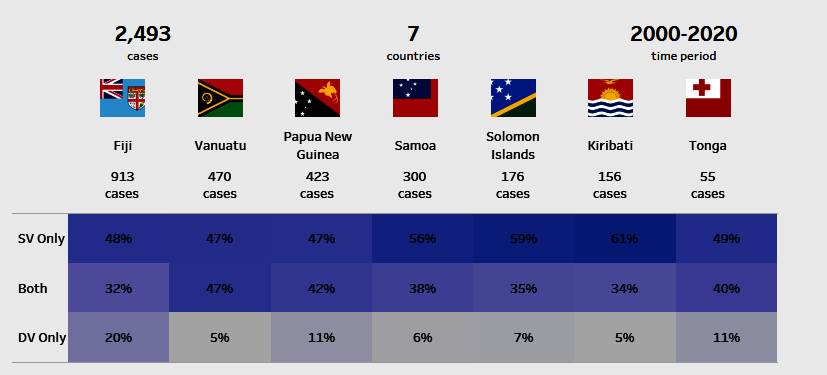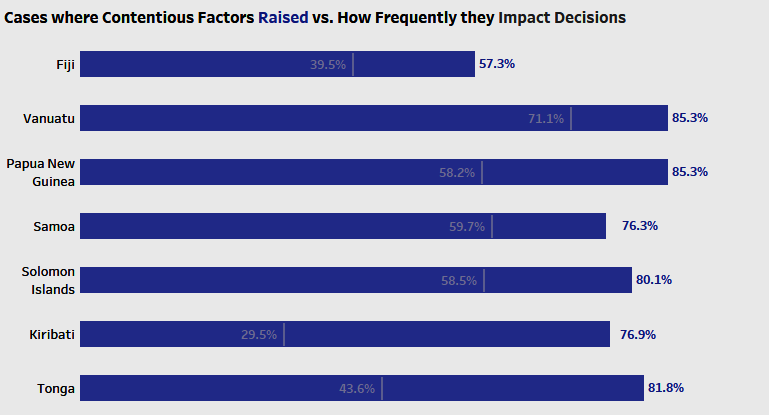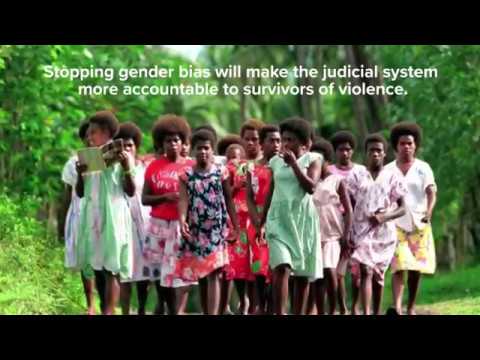
When women and children in Pacific Island and Caribbean regions access the court system in domestic and sexual violence cases, they face numerous barriers that block their pathway to justice. ICAAD's evidence from thousands of cases shows that the driving force behind this problem is gender discrimination, which includes: stereotypes, rape myths, and customary practices. We use the insights from data to make tangible reforms happen with our civil society and government partners.
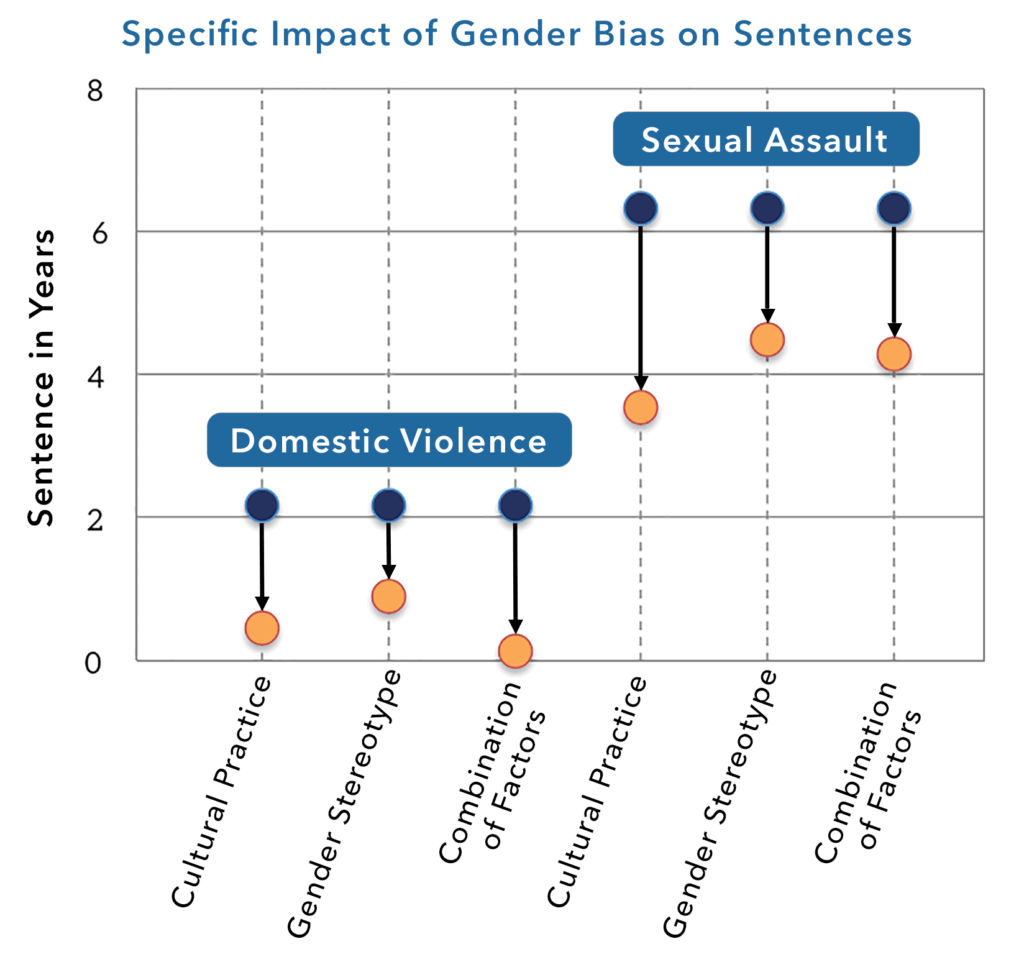
In many Pacific and Caribbean countries, gender-based violence cases are undermined by judicial decision-making shaped by harmful gender stereotypes. Judges often minimize violence, discount survivor testimony, or impose disproportionately low sentences, failing to account for power imbalances and patterns of abuse. These practices weaken accountability, discourage reporting, and create systemic barriers for women seeking justice.
ICAAD's TrackGBV initiative strengthens the rule of law by restoring accountability, transparency, and consistency in GBV adjudication. We collect and analyze judicial decisions to identify patterns of gender bias and sentencing disparities, and use this evidence to train judges and prosecutors. By grounding reform in data from their own courts, TrackGBV changes attitudes and decision-making practices within the justice system.
Greater transparency and consistency in GBV cases improves access to justice and protection for women and girls across the Pacific and Caribbean. Fair and proportionate sentencing sends a clear message that gender-based violence will not be tolerated, influencing judicial culture, legal precedent, and societal norms affecting more than 30 million women and girls. We've already changed laws and policies in multiple countries and are constantly providing evidence to support further reform.



Support this important cause by creating a personalized fundraising page.
Start a Fundraiser