By Denitsa Raykova | Donor Relations and Care Specialist
Nowadays, we have access to more information than ever before in human history. However, this flood of data is often mixed with unreliable claims, fake news, conspiracy theories.
The topic of large predators is no exception. These charismatic species – the brown bear, the grey wolf and, of course, the Eurasian lynx - have always captured the imagination. Facts, however, are often mixed with myths and outdated beliefs, giving rise to misconceptions. In the age of social media, these misconceptions spread particularly quickly. And that has a direct link to conflicts between wildlife and humans.
To make the right decisions for everyone - both people and animals - we must first learn to always rely on facts and truth, not on false and distorted claims.
That is why WWF Bulgaria conducted an information campaign dedicated to debunking the most widespread myths about large carnivores (including the lynx). Here are some of the misconceptions we talked about:
MYTH 1: When large carnivores appear in a certain area, they kill all the game in it.
Ecosystems have their own regulatory mechanisms that prevent predators from completely depleting their food resources.
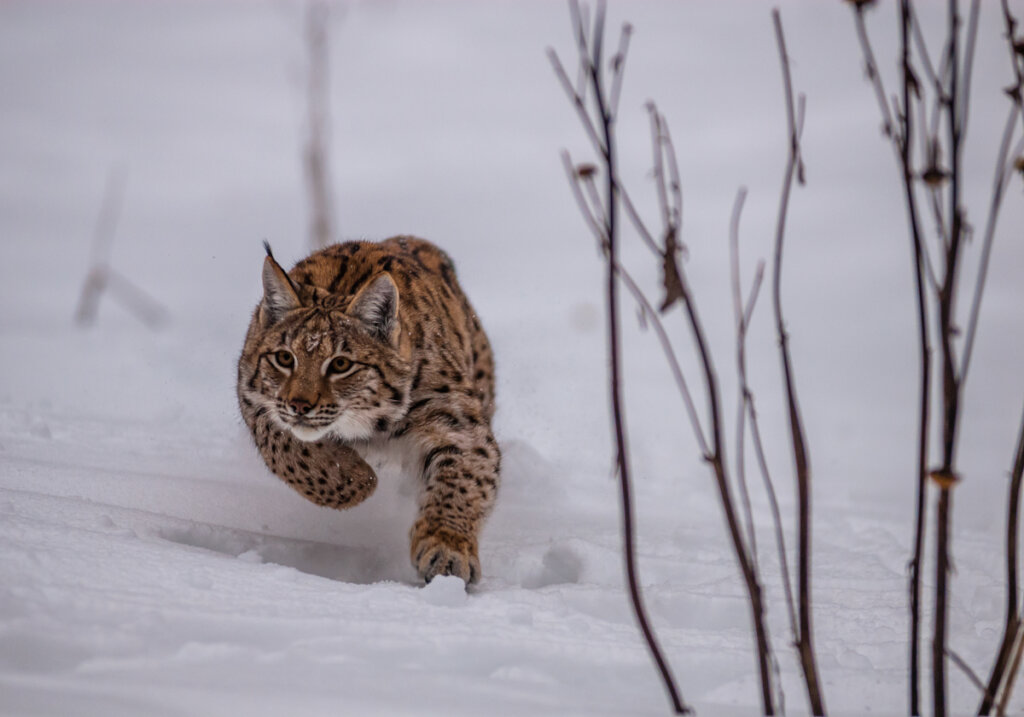
Predators and their prey have undergone a long evolutionary journey together, constantly competing with each other. This is reflected in the appearance, biology, and behavior of the species. Animals that are prey to predators do not stand idly by and wait to become victims. They are often faster and more resilient, living in groups to detect danger earlier and spread the risk among themselves, and in many cases are "equipped" with sharp horns, hooves, or other features that help them defend themselves.This is well illustrated by the fact that the success rate of hunting is relatively low for both wolves and lynxes - around 10-20%. In other words, they successfully catch their prey only 1-2 times out of 10 attempts.
MYTH 2: There are not enough large wild areas for large carnivores in modern day Europe.
It is a fact that bears, wolves, and lynxes are territorial animals and need large spaces. In the past, these species were pushed into more inaccessible mountainous and forested areas where population density was relatively low, and infrastructure development lagged (e.g., the Carpathians).
Although some species, such as the lynx, are more sensitive to human presence, in recent decades we have seen that more of the former ranges of large predators are being repopulated by them.
It seems that large predators are highly adaptable, and their presence is mainly influenced by the availability of food and shelter, the tolerance of the local population towards them, and effective legal protection.
MYTH 3: Large carnivores do not benefit nature; they only cause problems.
Large carnivores have several beneficial effects on their habitats, on the populations of other species, and on entire regions. They contribute to the formation and maintenance of more diverse and sustainable ecosystems. They improve the health of wild populations by removing weaker individuals and limiting the spread of disease. They can also prevent or limit the spread of invasive species.
But their positive impact has other dimensions as well. Their way of life and behavior define them as "umbrella" species—their protection supports broader conservation goals, even benefiting less "popular" species and habitats.
MYTH 4: Large carnivores are often aggressive toward humans.
Aggression by large predators towards humans is extremely rare. Bear attacks have been documented in a few isolated cases and under specific circumstances in Northern Europe and the Balkans (usually as a defense mechanism – protection of cubs or territorial competition). In the 21st century, there has not been a single recorded attack by a wolf on a human in Europe.
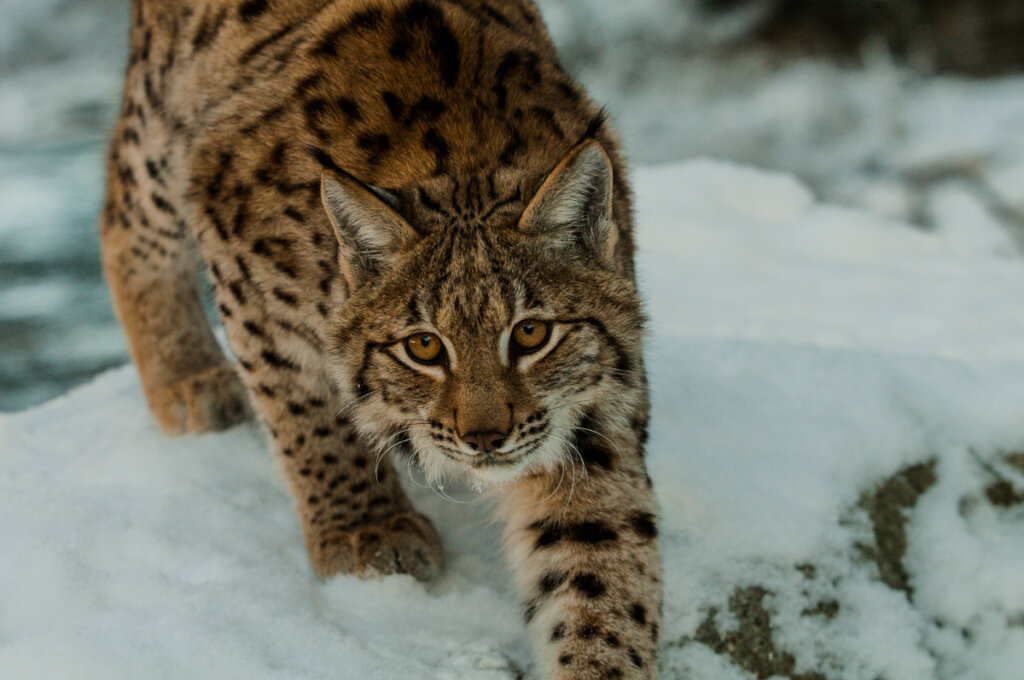
Large predators generally avoid contact with humans. The lynx, for example, is a very secretive animal, active mainly at night – it is very rare for a person to even catch a glimpse of it, let alone have a close encounter with it.
Lynxes, bears and wolves have always been symbols and ambassadors of European and Bulgarian nature. It is our duty to protect them and their habitat by finding ways to coexist in harmony.
Our heartfelt thank-you to everyone who supports our mission to create a safe natural environment for the lynx and other wildlife!
Links:
Project reports on GlobalGiving are posted directly to globalgiving.org by Project Leaders as they are completed, generally every 3-4 months. To protect the integrity of these documents, GlobalGiving does not alter them; therefore you may find some language or formatting issues.
If you donate to this project or have donated to this project, you can receive an email when this project posts a report. You can also subscribe for reports without donating.



Support this important cause by creating a personalized fundraising page.
Start a Fundraiser