Project Report
| Sep 15, 2015
Angelina and her family of Peruvian Amazon artisans
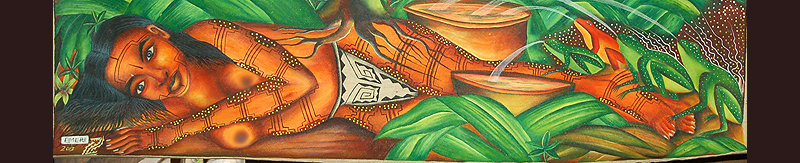
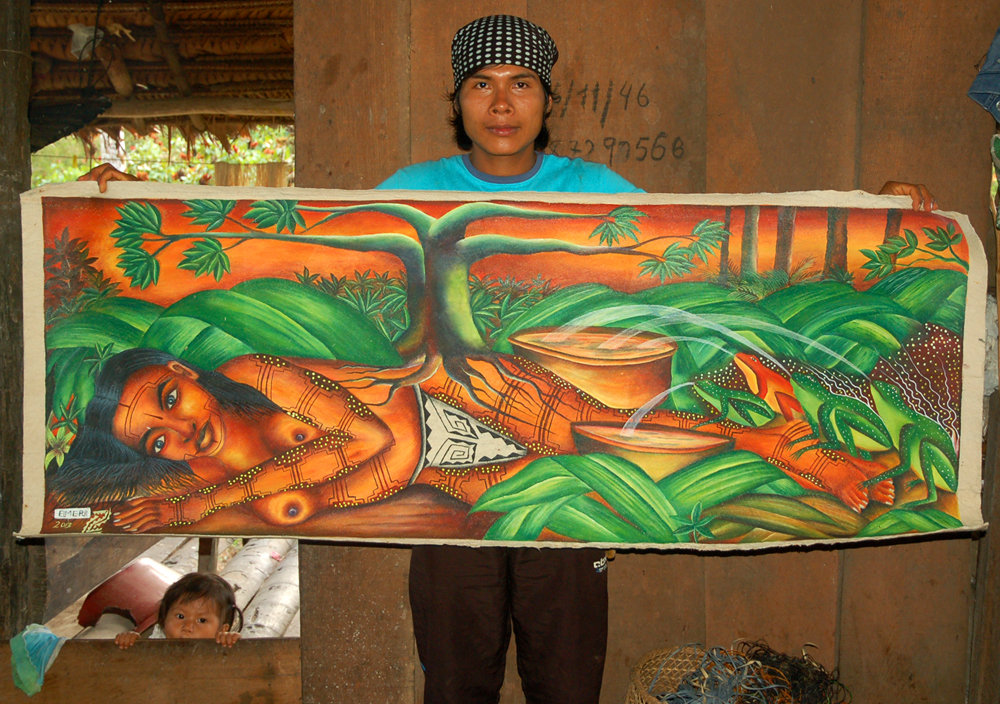
![Bora legendary woman painting by Elmer]()
Bora legendary woman painting by Elmer
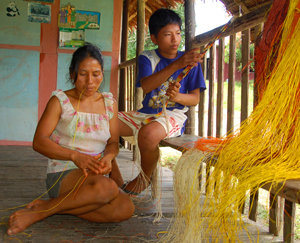
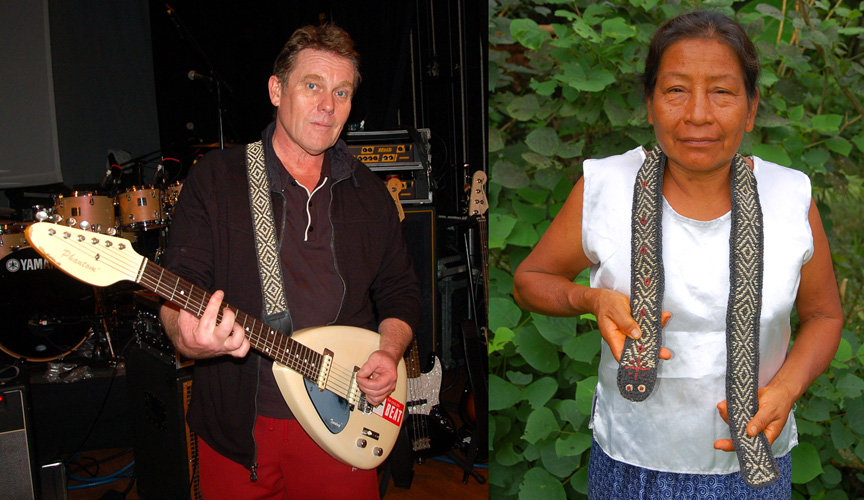
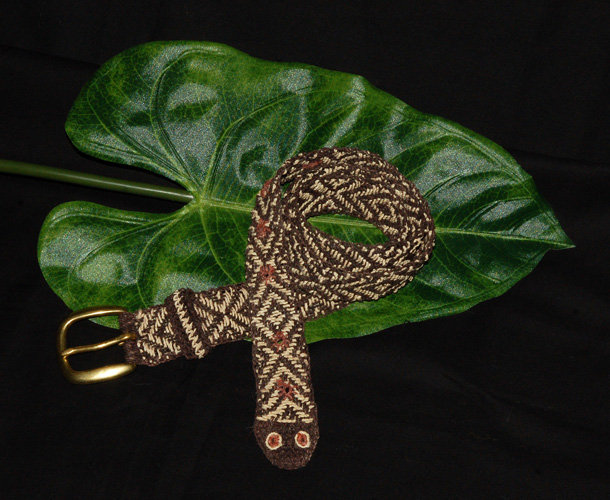
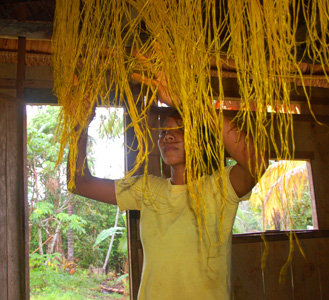
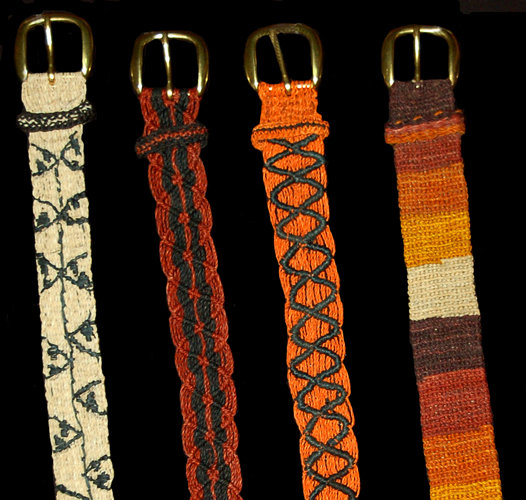
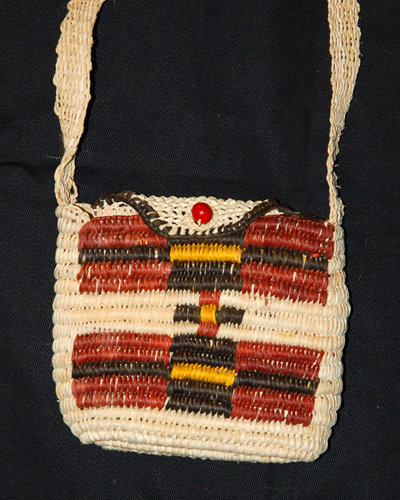
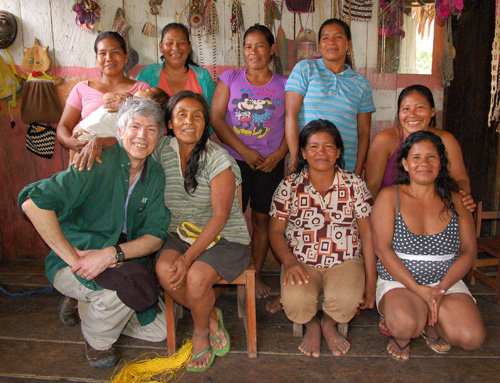
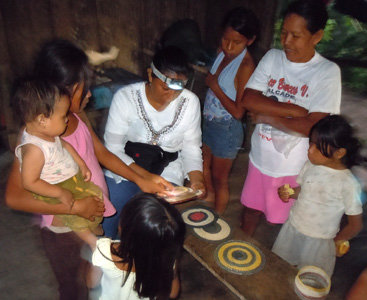
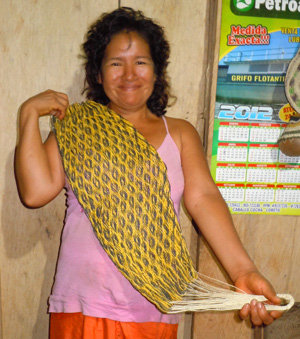
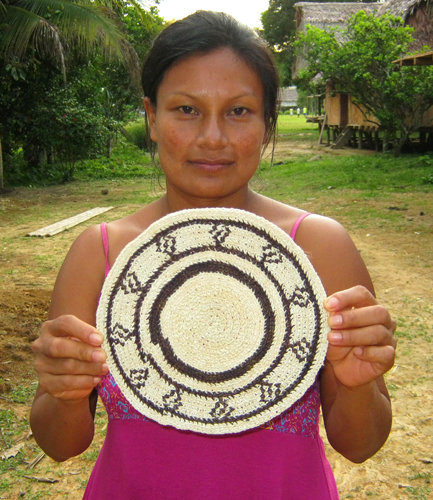
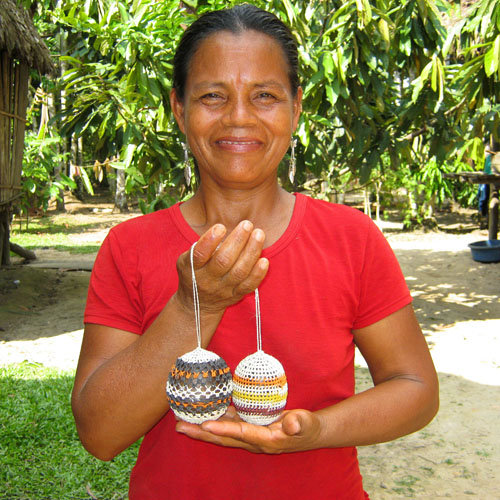
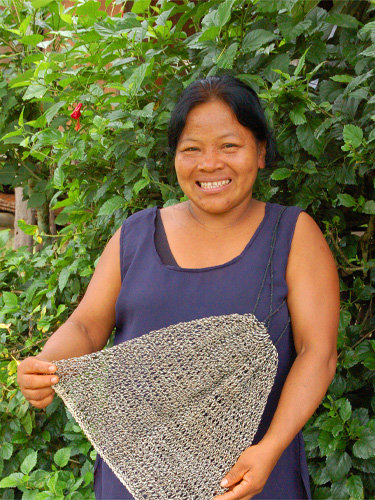
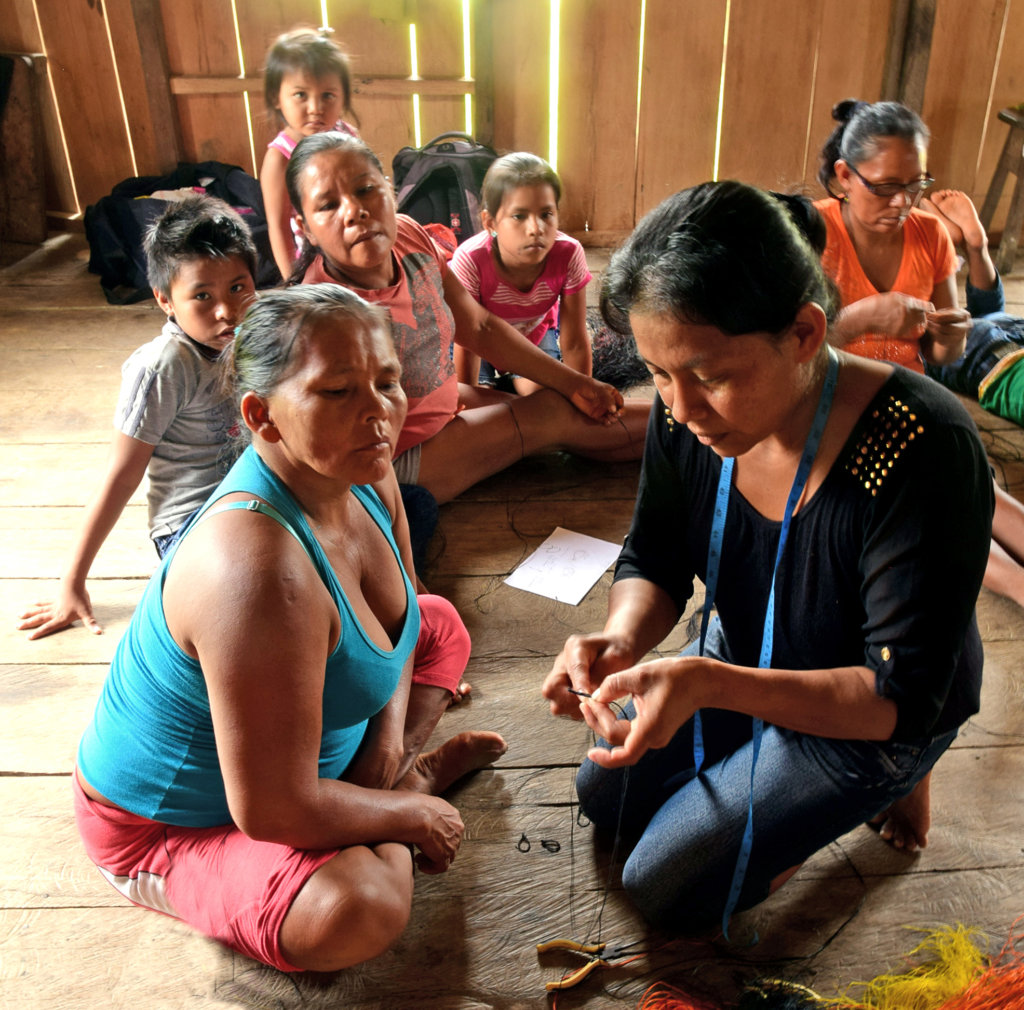
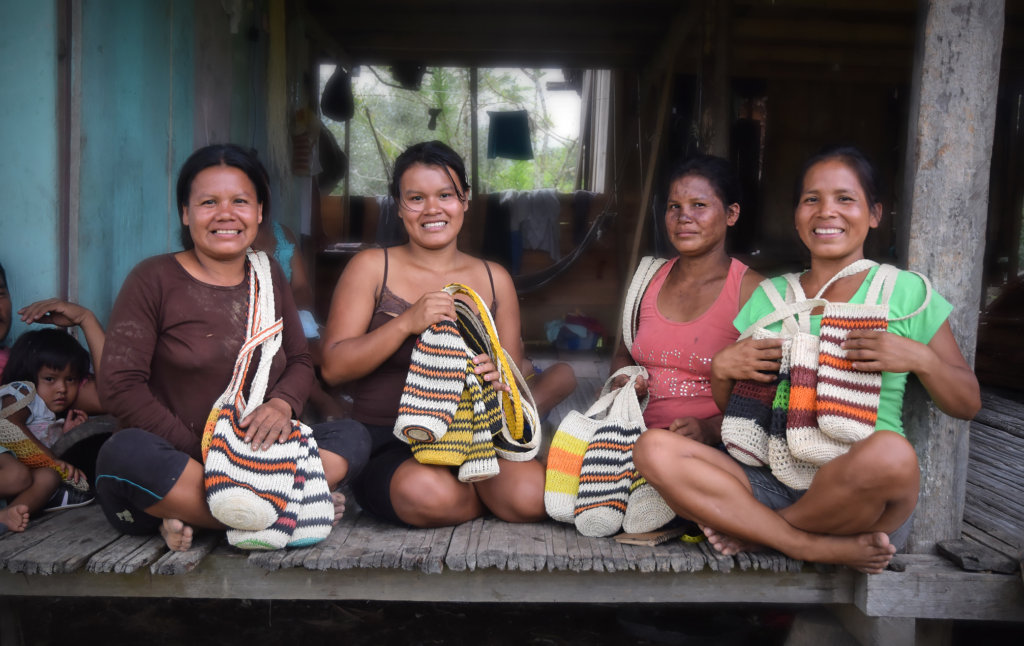
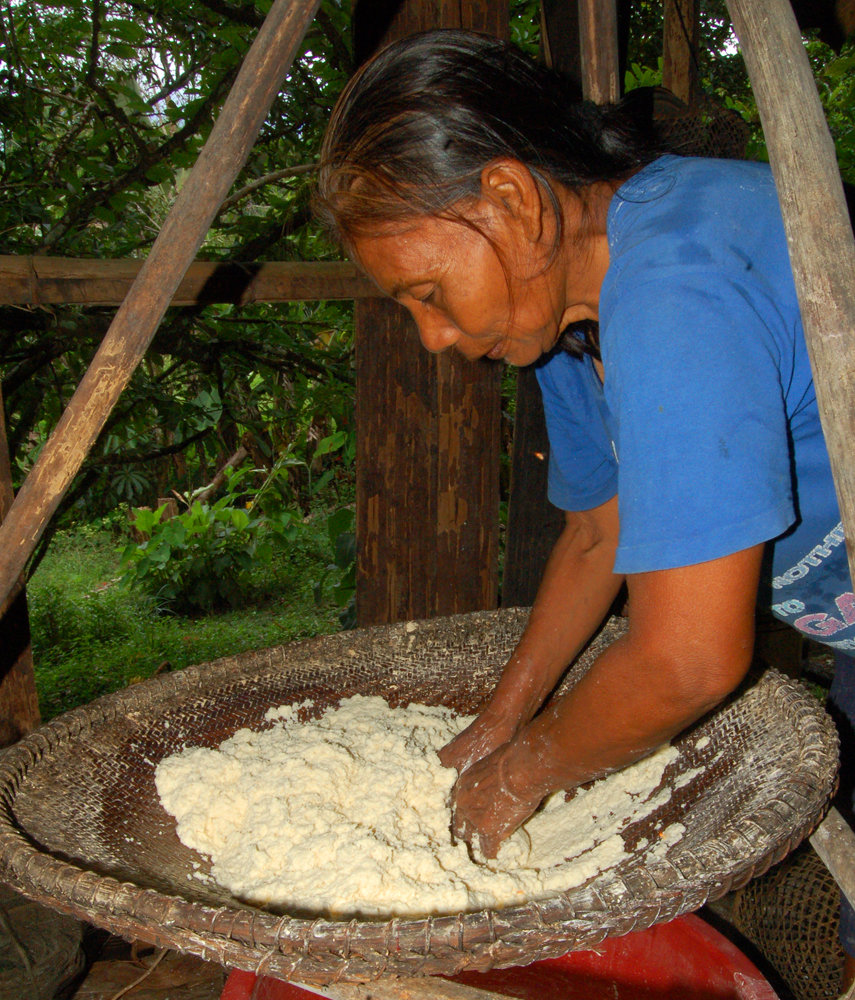
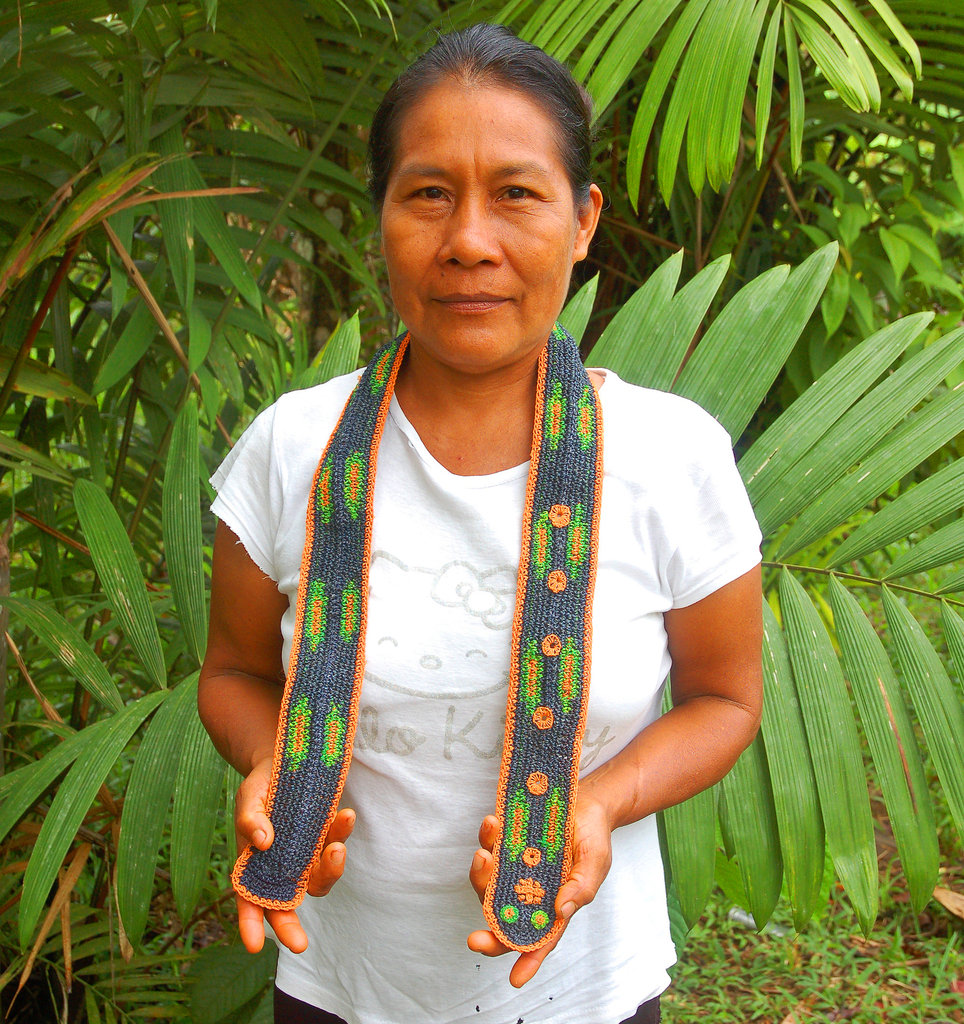
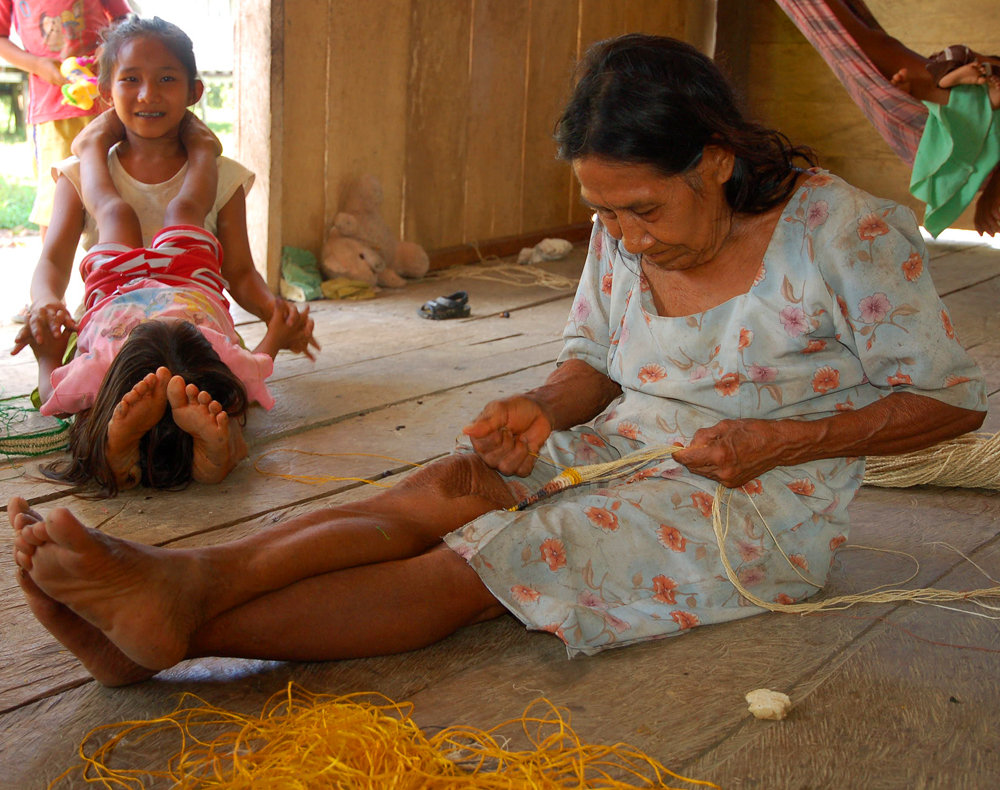
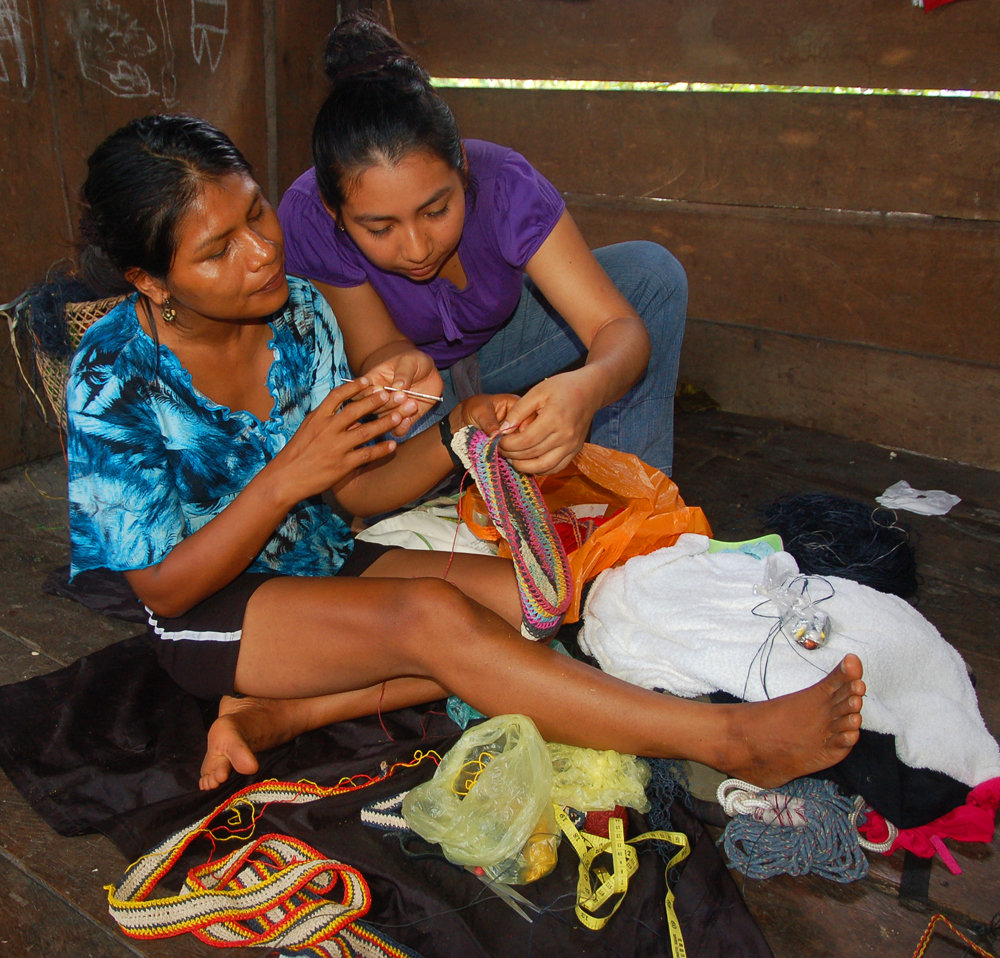
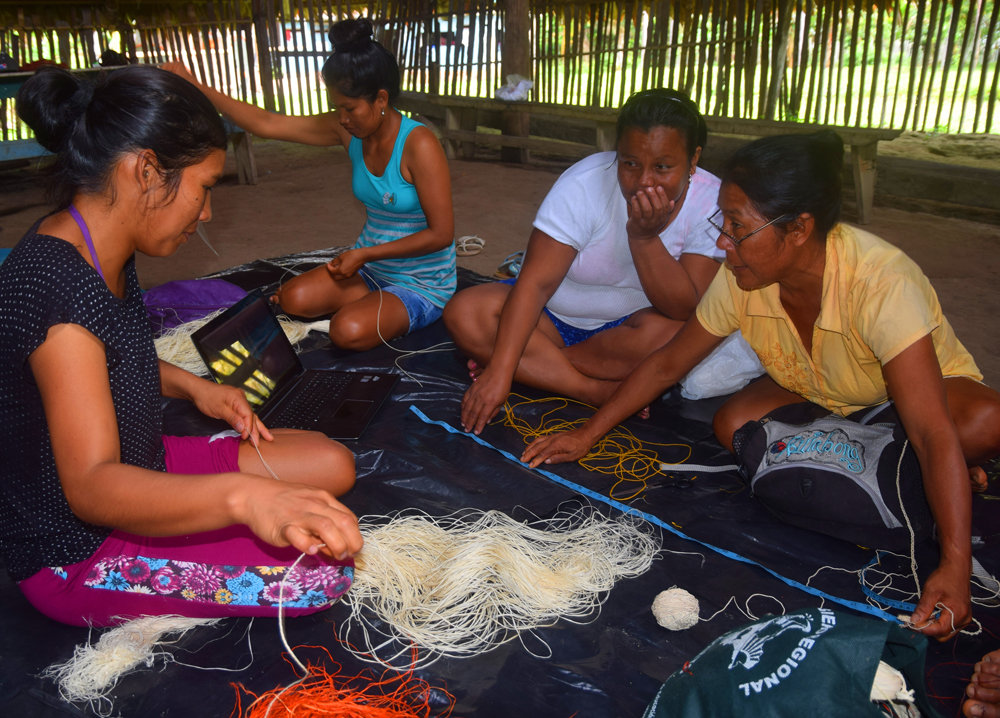
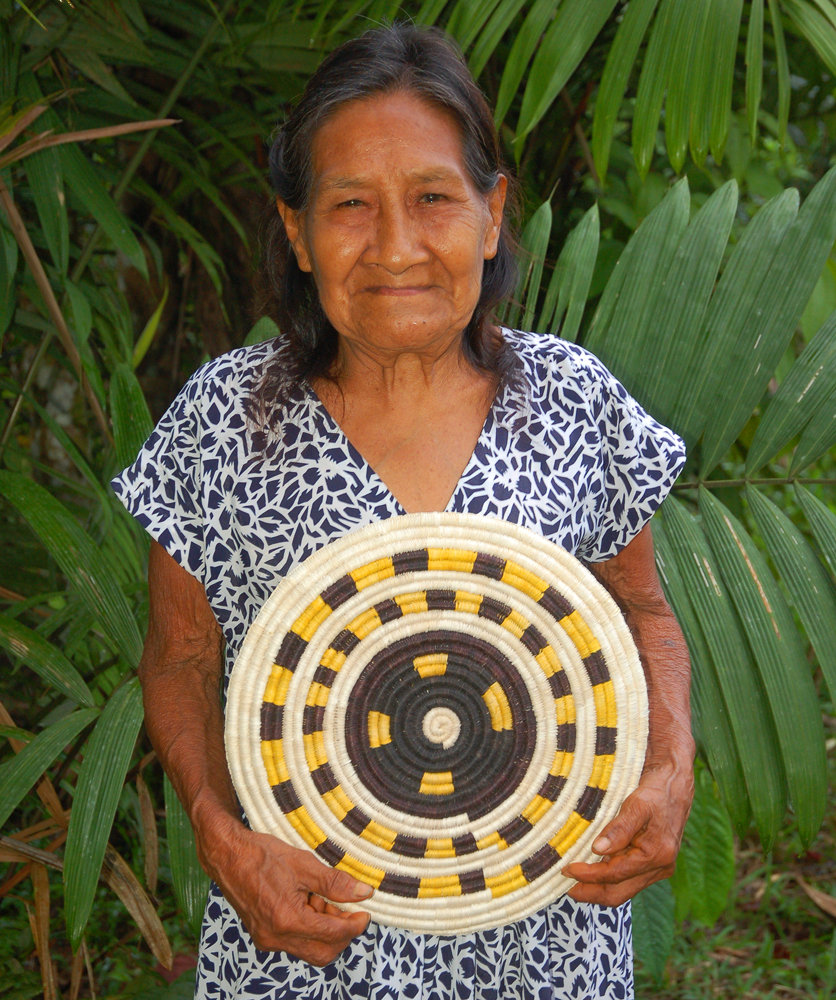
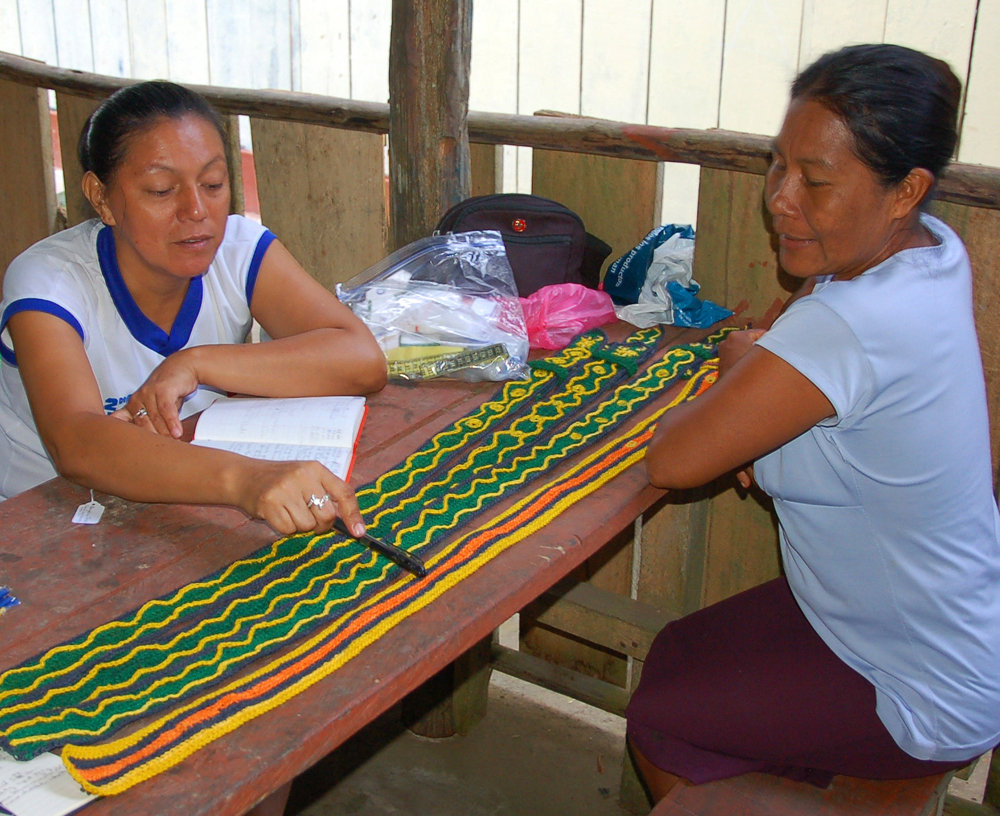
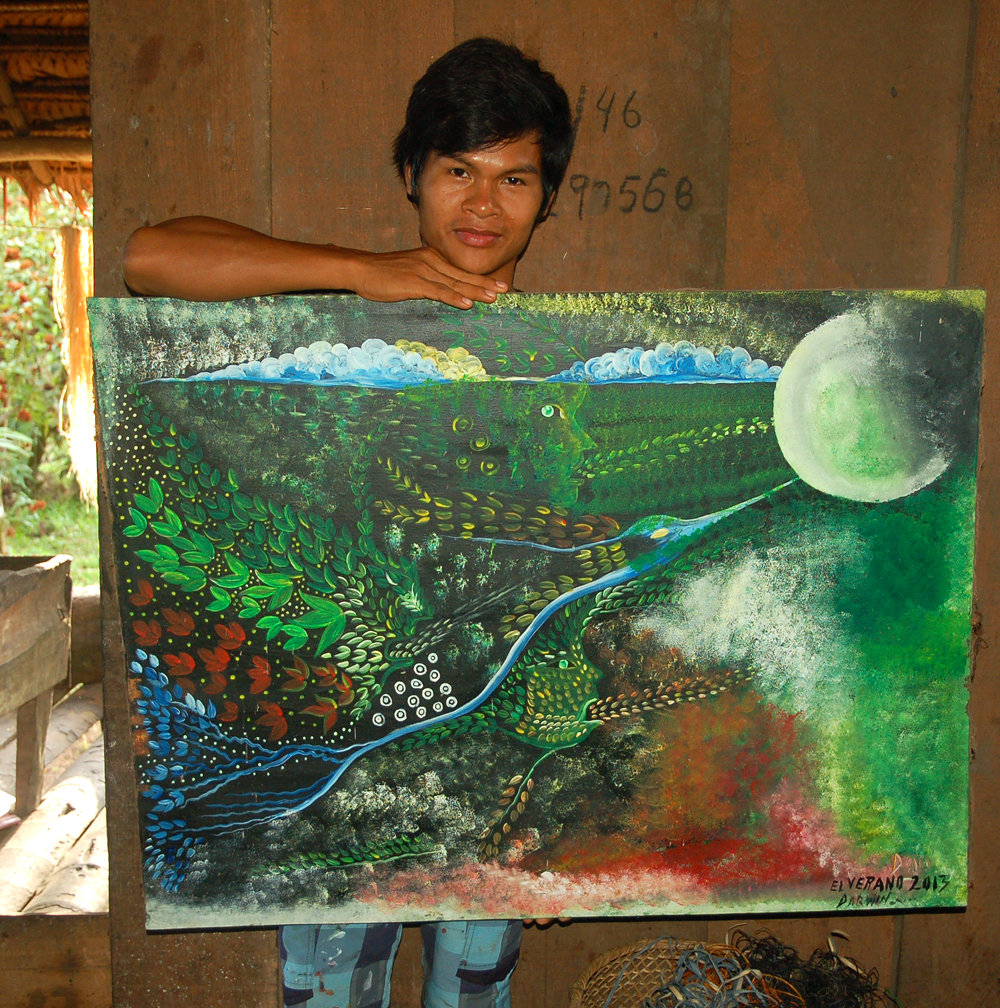
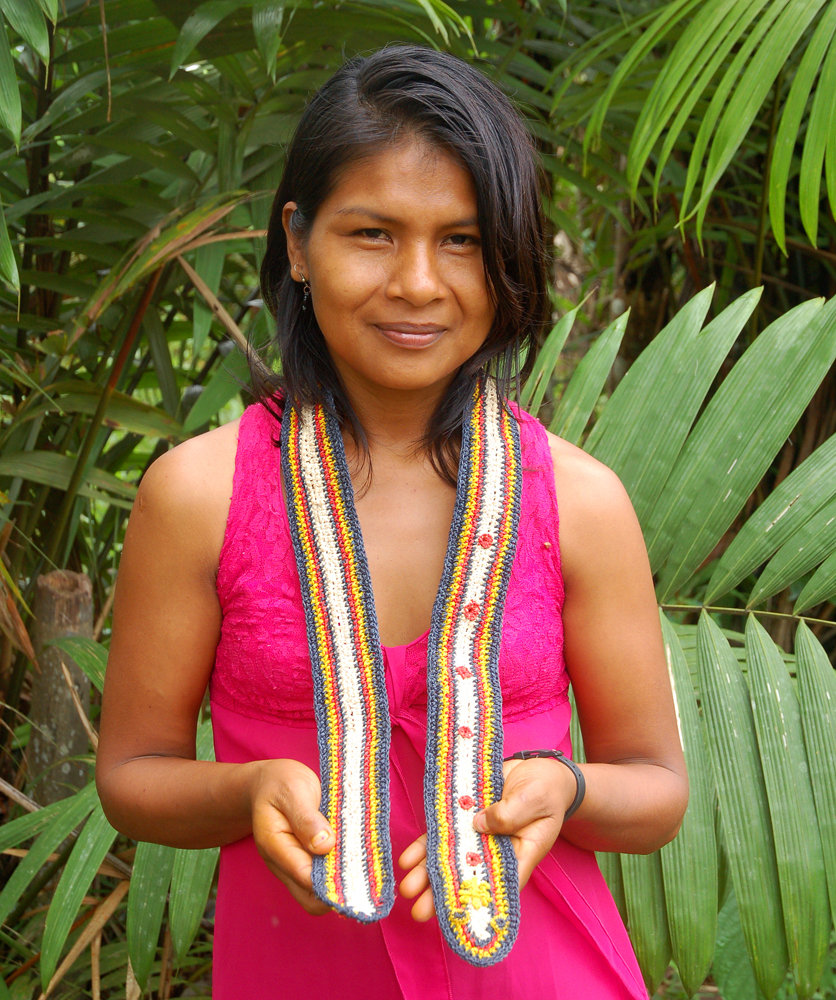
Since I first visited the Bora village of Brillo Nuevo in 2008, I’ve learned that almost everyone knows how to weave things that are essential for rural life in the Amazon – thatched roofs from irapay palm fronds, woven bombonaje cane to strain yucca root mash, and simple baskets made on the spot from leaves in the forest to bring home fruit or game meat. Most people also know how to make a basic bag from chambira palm fiber, but few families have as many creative artisans as Angelina. I have often found Angelina working on some craft alone in the front room of her house on stilts overlooking the Yaguasyacu River. She has told me, “My mother taught me to weave chambira when I was a little girl and now I have taught my daughters to weave as well.” The family nature of this activity is very evident because I usually see her sitting in a circle on the floor of her or her married son’s home with her mother Ernestina and one or more of her daughters and their children. While no one including Ernestina seems to know exactly how old she is, this 70+ year-old lady has lived in Brillo Nuevo for all of her and most of this village’s existence. She has been an enthusiastic participant in our project from the beginning, although her first belt was such a mish-mash of patterns, colors and widths that I worried she might not ever make something that we could sell. Yully and my attempts to speak with her directly in Spanish usually only produced quizzical looks and good-natured laughs, but one of her relatives is always on hand what’s needed to her in Bora. Her grand-daughter Rode told us, “Grand-mother’s hands are still strong but her eyes are getting weak. I help her finish up the detailed parts of her handicrafts.” While Angelina laughs when sitting at ease with her family, her aura of reserved confidence has made her a well-respected artisan leader in Brillo Nuevo and other native communities in the Ampiyacu. I appreciate that she has never been shy about creating and showing us one new design of woven belt, guitar strap and hot pad after another. Angelina said, “New artisans are sometimes scared to bring their work to Senora Yully from CECAMA (CACE’s name in Spanish) because they don’t want her to tell them that their work isn’t made well enough to buy. I don’t mind, though, because we need this kind of tough inspection. Her suggestions have made me a much better craft maker." Angelina has also become of the project’s best and generous teachers. She was one of the veteran artisans who patiently showed a group of four women who to weave her popular “shushupe” (tropical rattlesnake) design guitar strap at a skill-sharing workshop we sponsored this year in the village of Puca Urquillo. Angelina said, “A few women don’t want to show others how to weave their special designs because they worked hard to make them and are worried they won’t get as many orders if others can make them too. I really enjoy sharing my creations, though. It gives me a lot of pride to have my daughters and women from other villagers ask me to show them how to weave the colorful patterns I’ve invented. We can all make money to help our families sharing this way.” While the women in Angelina’s family focus on weaving, her two sons have become very accomplished painters. Darwin and Elmer both make their canvass by pounding the inner bark of the “llanchama” tree, a fast growing pioneer species in young forest fallows, into a thin layer. They use both plant-based dyes and commercial paints to depict portraits of Amazon wildlife and scenes of traditional Bora life and legends including mystical plants, animals and other spirit beings. I haven’t found a channel yet to support the marketing of their creative efforts, but I am glad that they are gaining recognition as talented native artists in Iquitos and beyond.
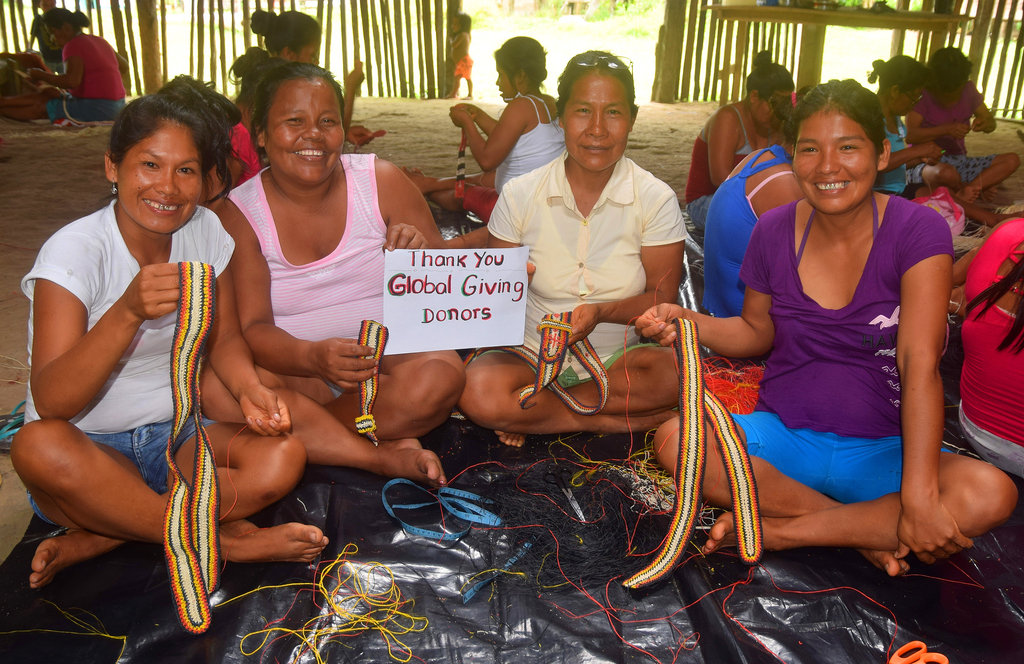
Thank you very much for your support for our project that helps multi-generational families of artisans like Angelina’s to use their creativity to earn a living, maintain their traditions and conserve the forest. We would welcome your continued support on Wednesday, Sept. 16 – the last GlobalGiving Bonus Day of the year. Donations made early in the day will receive a 30% matching donation until matching funds run out – usually within one hour of the 9 am starting time.
![Bora woman straining yucca root mash in basket]()
Bora woman straining yucca root mash in basket
![Angelina with chambira woven guitar strap]()
Angelina with chambira woven guitar strap
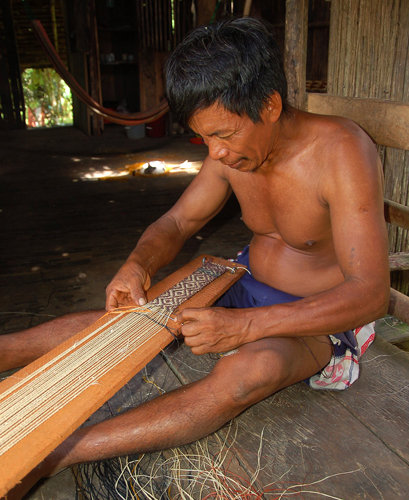
![Angelina's mother Ernestina weaving a belt]()
Angelina's mother Ernestina weaving a belt
![Rode showing CACE intern how to weave a bag]()
Rode showing CACE intern how to weave a bag
![Angelina teaching at CACE skill-sharing workshop]()
Angelina teaching at CACE skill-sharing workshop
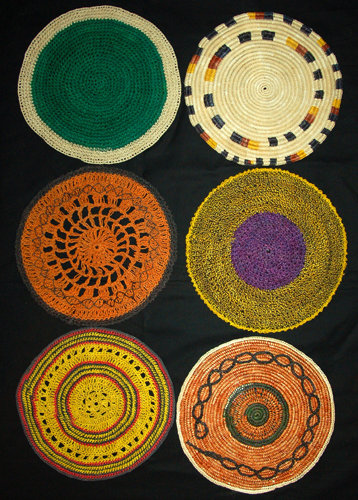
![Ernestina and chambira palm fiber placemat]()
Ernestina and chambira palm fiber placemat
![CACE manager Yully reviewing crafts with Angelina]()
CACE manager Yully reviewing crafts with Angelina
![Angelina son Darwin and traditional Bora painting]()
Angelina son Darwin and traditional Bora painting
![Bora painter Elmer and legendary woman painting]()
Bora painter Elmer and legendary woman painting
![Angelina daughter Rode and shushupe guitar strap]()
Angelina daughter Rode and shushupe guitar strap
![Angelina group thankyou to GlobalGiving donors]()
Angelina group thankyou to GlobalGiving donors
Links:
![Share on Twitter]()
![Share on Facebook]()