By Campbell Plowden | Executive Director & Project Leader
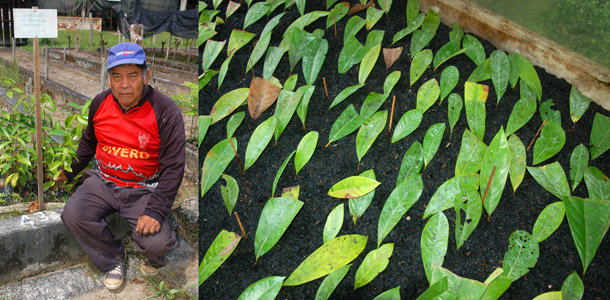
Three years ago we began an exciting joint project with our partner Camino Verde by planting almost 1000 seedlings of rosewood trees in the Bora native community of Brillo Nuevo (see GlobalGiving Report #8). Our aim was to help families create a long-term sustainable source of income by carefully harvesting leaves and branches of these aromatic trees and distilling them into a valuable essential oil. Our other goal was to promote the recovery of this endangered species brought to the verge of extinction by unlimited harvesting of whole trees for the perfume industry.
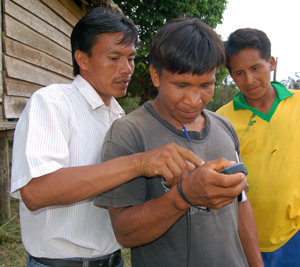
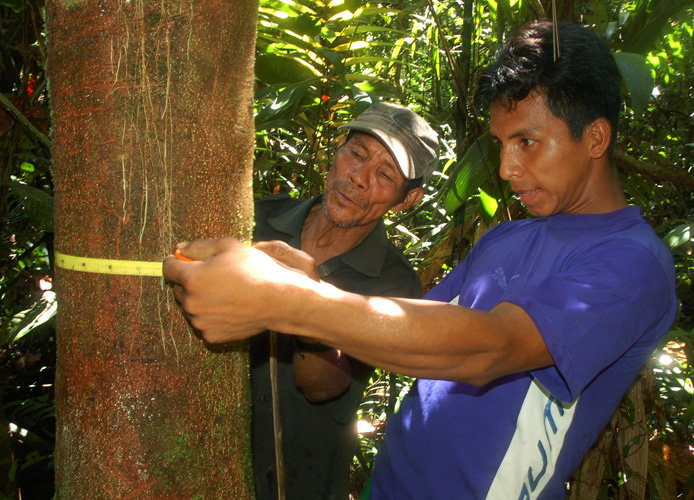
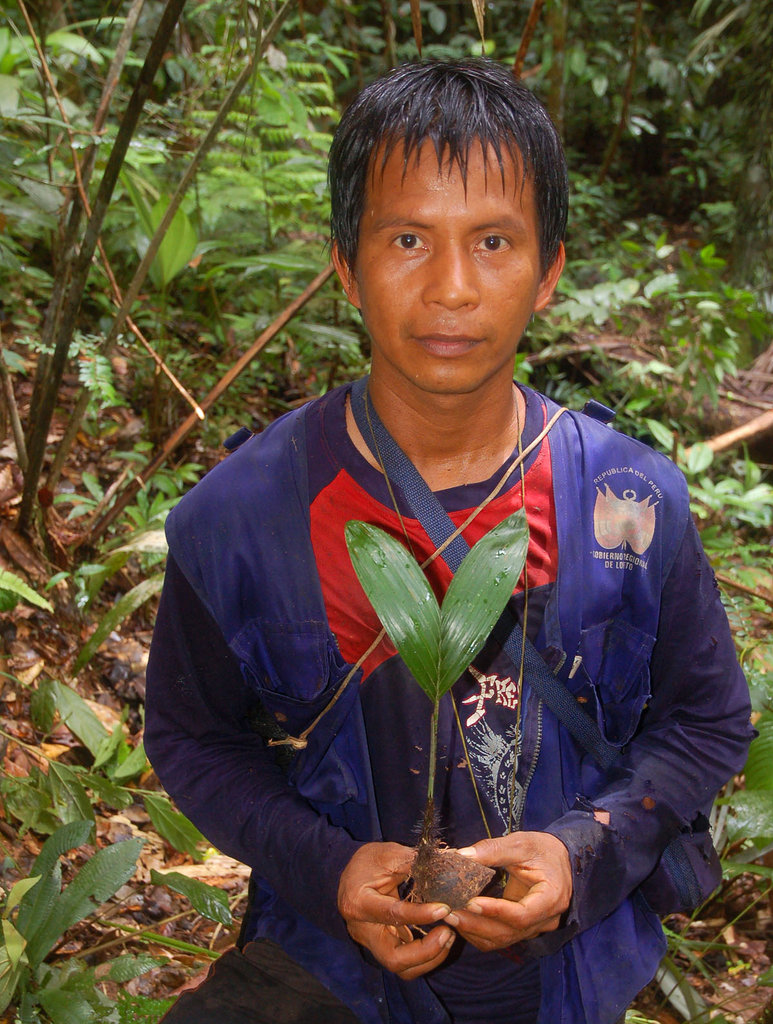
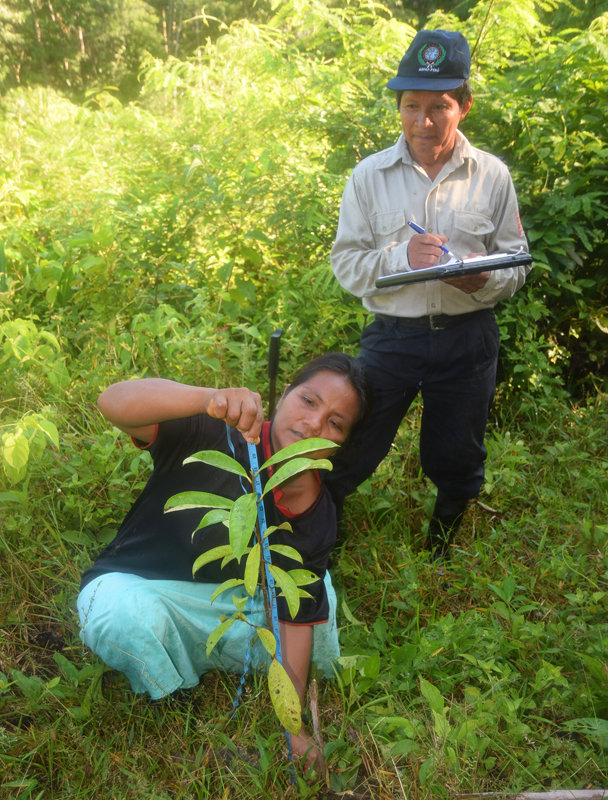
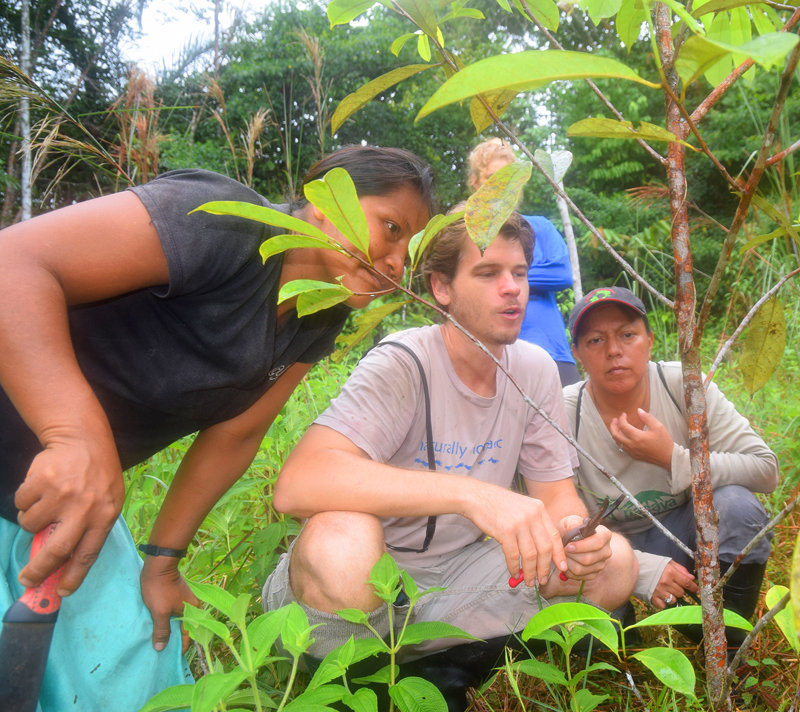
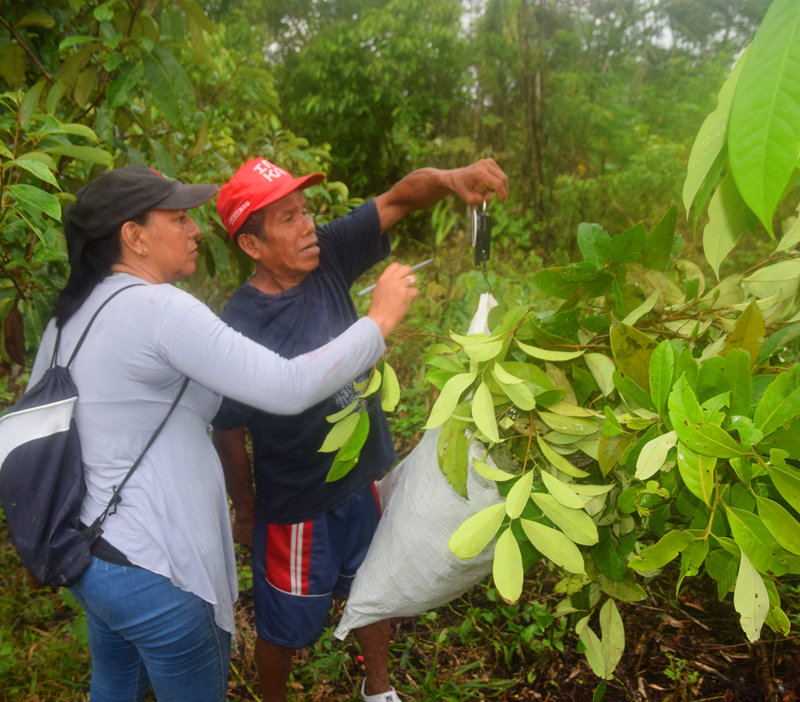
Our project reached an important milestone this month when our friend Robin van Loon from Camino Verde joined us again to lead the first harvest of material from healthy young rosewood trees planted in the forest fields of five families. We began by recording the size and condition of every tree. While the seedlings had been planted in the same way, they had fared differently according to the characteristics of the site and management style of the owner. A few men had regularly cleared weedy vegetation that could compete with the juvenile rosewoods; one fellow pretty much allowed nature to take its course. While half of the trees had died since 2013, Robin complimented the owners that their overall efforts to care for these trees had produced a much higher survival rate than other attempts to reforest rosewood in Peru and Brazil. One of the plot owners Brito said, “I’m very content that most of my trees are still alive. It’s important to realize that these trees grow more slowly than many others and don’t mind some shade.
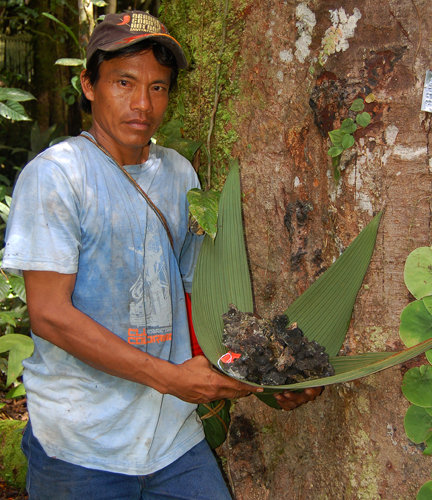
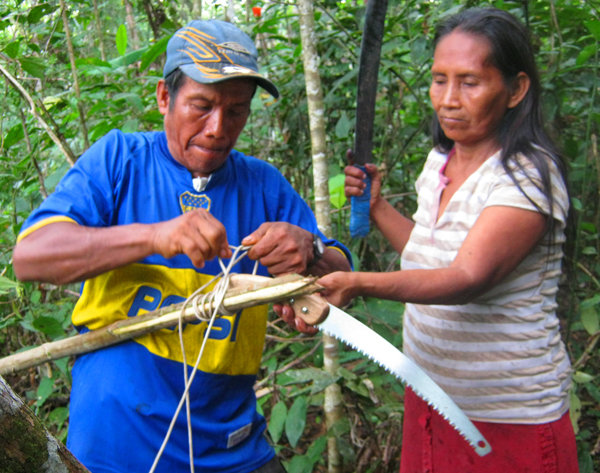
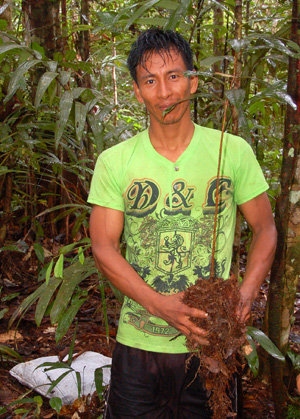
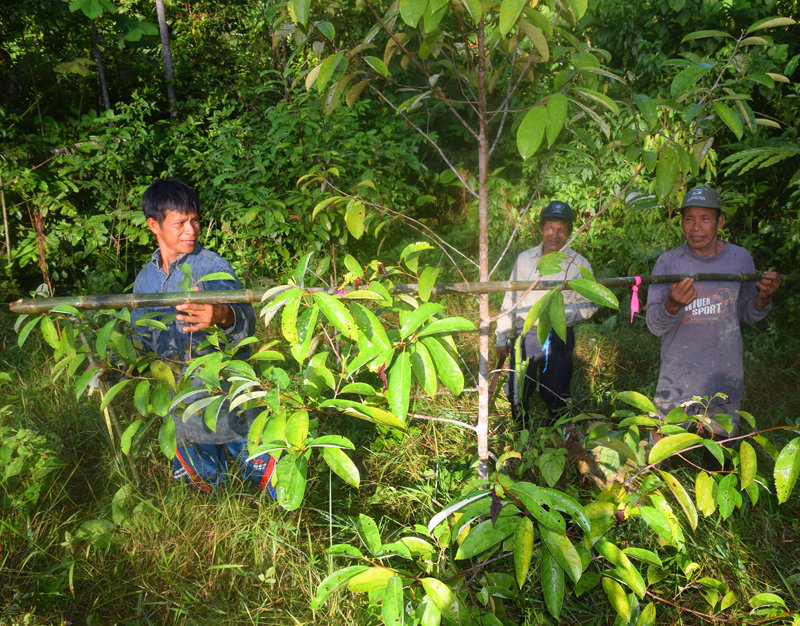
We did our first round of monitoring on a cloudless day under an intense tropical sun. As we shifted to collecting rosewood material on the second day, we surrendered ourselves to working in the rain. Robin showed the team how to cut small branches with pruning shears and how to use a pruning saw to harvest larger branches with a series of three cuts. Plot owner and talented carver David observed, “It was amazing to see how much better my rosewood trees looked after removing some dead wood and a few lower branches with leaves we can distill. I suppose this is science, but it feels more like a kind of art I can practice to shape and care for my trees for a long time. Some of them will eventually produce seeds we use to plant more of these beautiful trees all around our community.”
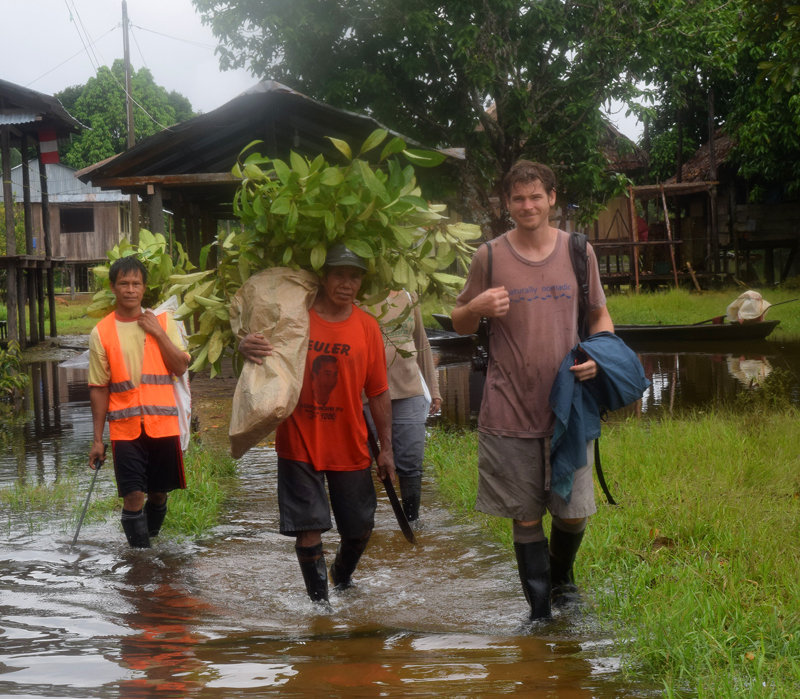
Our prime adventure of the day was wading up to our armpits to cross an engorged stream en route to Dolores’ field. I was deeply relieved when she steadied our videographer Tulio’s arm just as he slipped off a submerged log and was about to plunge his camera in the water. Navigating around wasp nests on the underside of leaves on the trail and rosewood trees was a challenge that usually succeeded but sometimes resulted in painful stings. This site was the most distinct since it was on a slope, and most of the rosewood seedlings had been lost to unchecked regrowth of forest tree pioneers. After Dolores took on the task of caring for this field, however, the survivors had become the most robust and tallest rosewood trees we found. While we collected five to eight kilograms of leaves and branches from other fields with many small trees, the few four to five meter tall trees in this distant plot easily yielded 12 kilograms of material. Dolores said, “It was great to receive my first payment from these trees. As they keep growing, it’s easy to see how we’ll be able to collect more material each time we prune them and provide some more money for my family.”
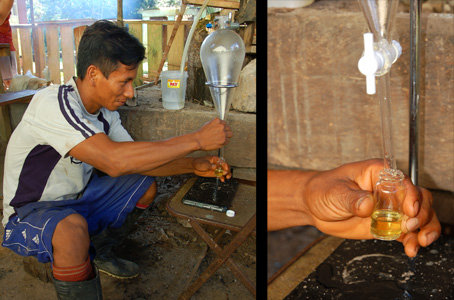
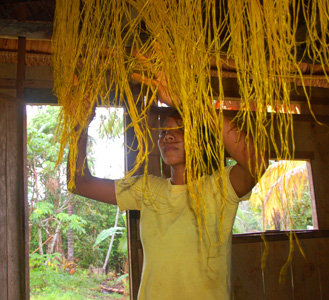
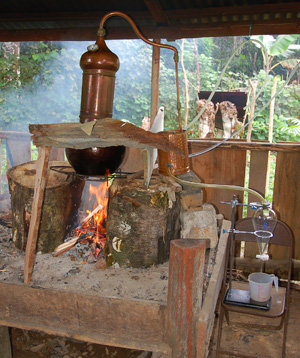
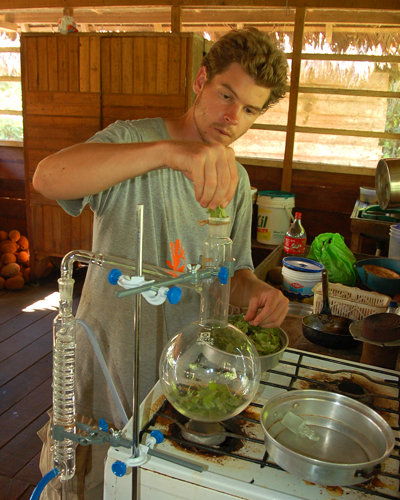
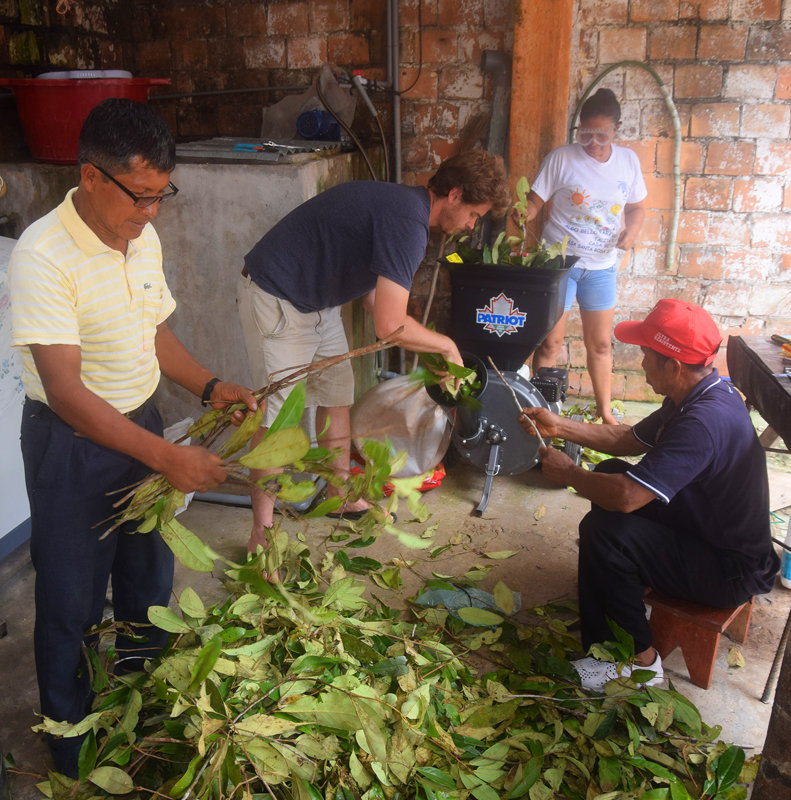
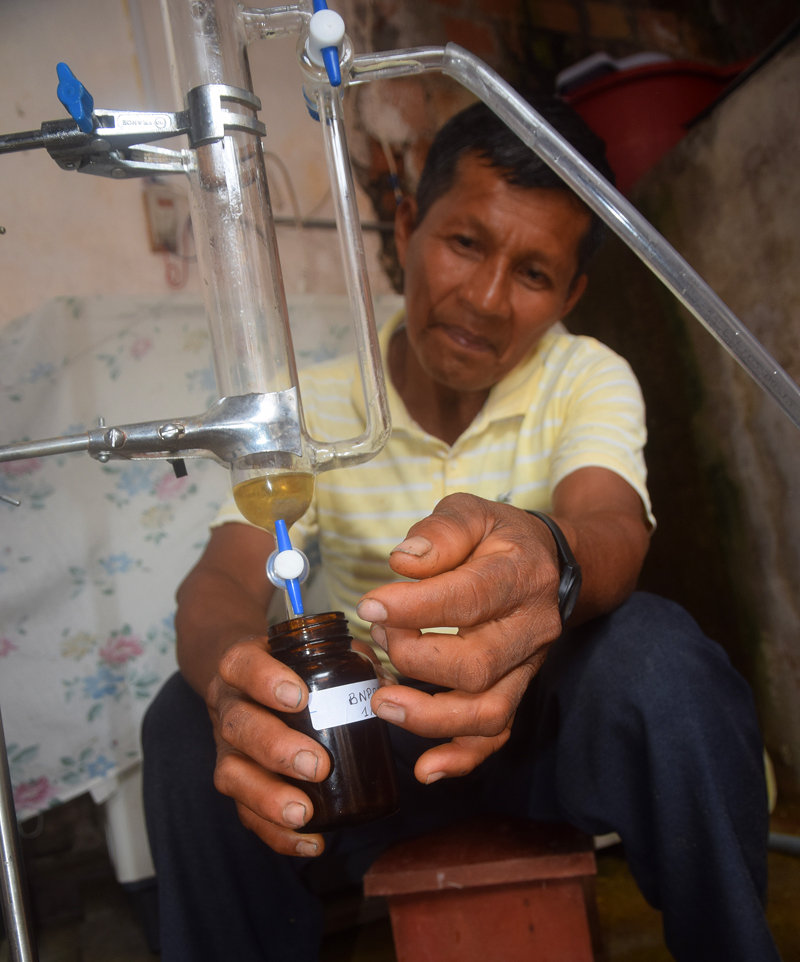
We invited two members of the rosewood team to go to Iquitos with us this time to distill the rosewood material. It was fortunate that Oscar and David drew the lucky numbers since they and Robin figured out how to clean out the stalled motor of the grinder that had not been used for a while. Oscar immediately appreciated the efficiency of this machine since the last time we distilled material in Brillo Nuevo, he and two other men had spent hours chopping branches into bits with their machetes. Once the shredder got working, we quickly fed leaves into the top hopper and straight branches through a cone to the larger knives. We poured five gallons of water into the outer tank of the distiller and then packed the inner tank with about 20 kg of finely chopped green aromatic material. An hour after setting the tank to boil, the first drops of golden oil began to flow into the collecting glass along with fragrant hydrosol – the water used in distilling plants that absorbs some its aroma. While the oil is the most valuable product of the process, we also hope to market the hydrosol as an ingredient in natural cosmetics.
Our yield from distilling the rosewood material from Brillo Nuevo was modest, but it was a good start. Leaves tend to have less oil than branches, and this first batch collected from young trees had a relatively high proportion of leaves. The amount of oil we will be to extract should increase over time as the trees continue to grow and produce larger branches that can be carefully removed without damaging the tree. This principle seemed to be confirmed a few days later when we collected material from 11 year old rosewood trees from a campesino family’s field near the town of Tamshiyacu. The yield of oil from these older trees was 30% higher.
Oscar described his experience with the rosewood project this way – “I fondly remember the aroma of a few rosewood trees that my father had brought from the Putumayo to plant in our front yard. I really appreciate the chance to plant rosewood trees in my field in Brillo Nuevo now and learn how to use this distillation equipment to make oil from it.” He concluded, “Our goal isn’t to create big plantations of rosewood trees. The Bora have an old tradition of planting many kinds of trees to produce fruits, fibers and medicines (a well-documented process called agroforestry). It’s great that we can now include valuable rosewood trees in this mix.”
******
Thank you very much for your interest in this project. We would particularly welcome your support on the next GlobalGiving Bonus Day on March 16 when a part of your donation will be matched by other donors. Visit www.AmazonAlive.net to make a contribution.
Links:
Project reports on GlobalGiving are posted directly to globalgiving.org by Project Leaders as they are completed, generally every 3-4 months. To protect the integrity of these documents, GlobalGiving does not alter them; therefore you may find some language or formatting issues.
If you donate to this project or have donated to this project, you can receive an email when this project posts a report. You can also subscribe for reports without donating.



Support this important cause by creating a personalized fundraising page.
Start a Fundraiser