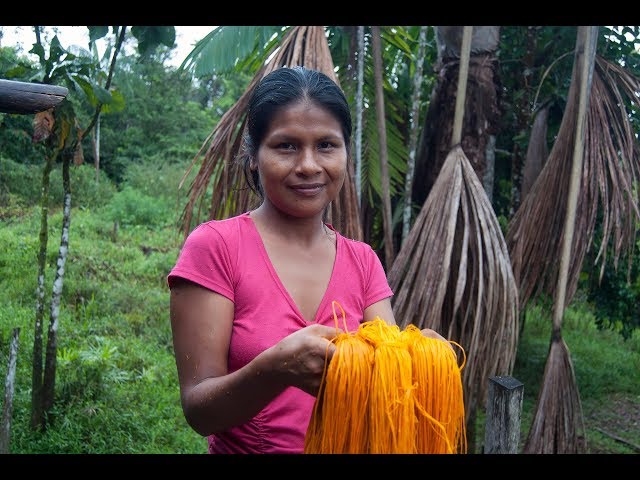
By Campbell Plowden | Executive Director and Project Leader
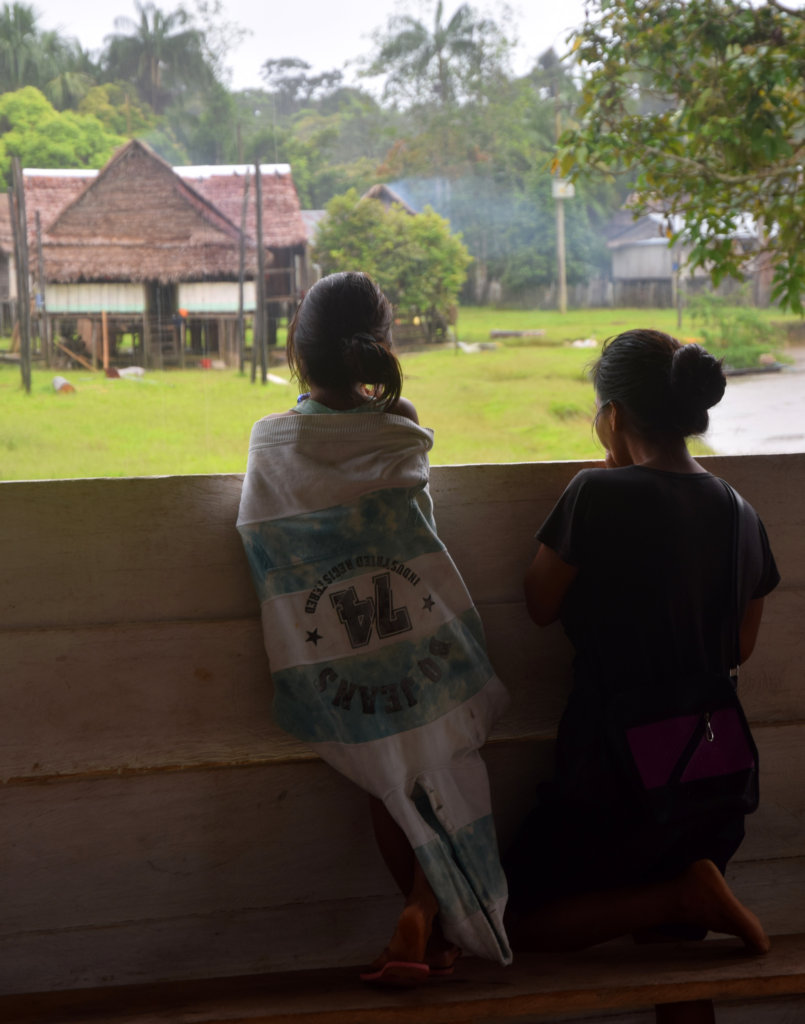
As soon as our boat pulled up to the bank of Nuevo Peru in the pouring rain, Yully, Tulio, Ania, Lucio, and I ran to the school building, draped our ponchos over the sills of the open-air windows and waited for the artisans to arrive for what we hoped would be a quick introductory meeting. We waited some more hoping the rain might stop. Then we waited some more hoping that people might show up.
Fair enough. We started working with native communities in the Ampiyacu River area in 2008 to develop handicrafts and essential oils, and this Bora village had waited seven years for us to visit them. We were still a very small NGO, though, so we did not want to take on new partners until we felt we could work with them effectively.
We occasionally saw figures darting between the half-dozen houses spaced around the open soccer field, and finally one of them splashed across the tall grass and mud puddles toward us. He bounced up the stairs, and wiping his wet hair away from eyes said, “I am Alejandro, the president of this community. Welcome to Nuevo Peru. We have heard a few things about CECAMA (the Spanish acronym for CACE) from others and look forward to learning more about your group from you. As you know, our village is very small so not many people or projects pay attention to us.
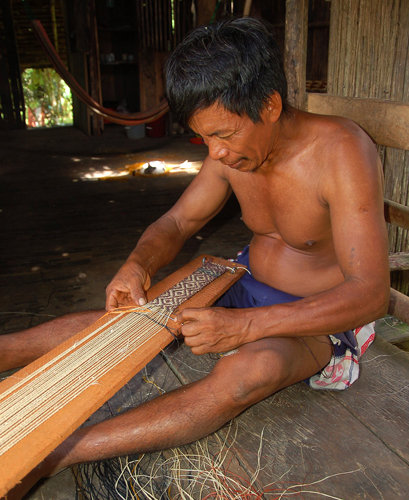
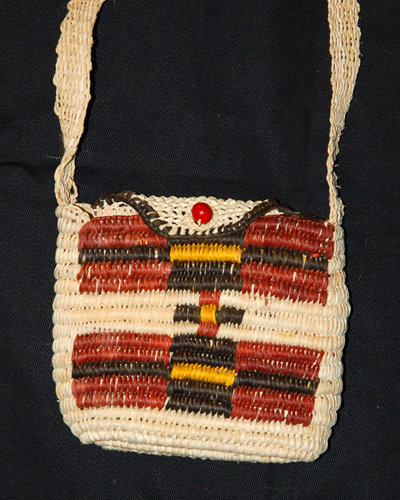
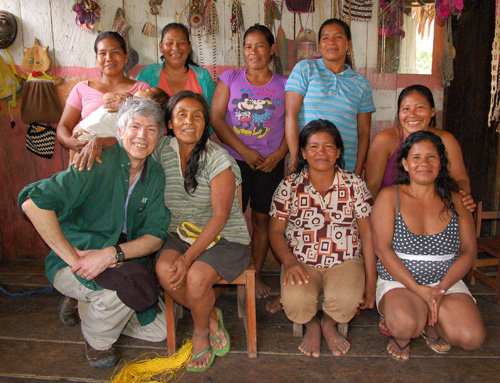
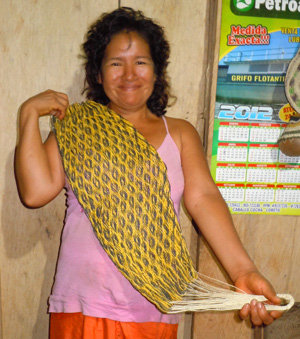
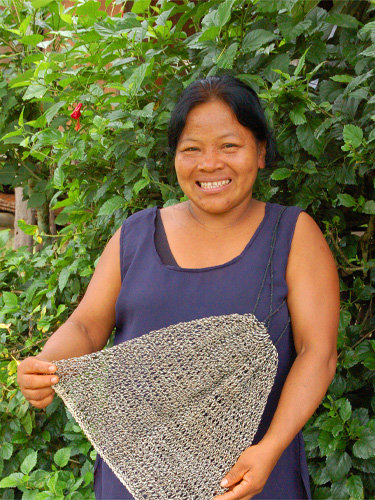
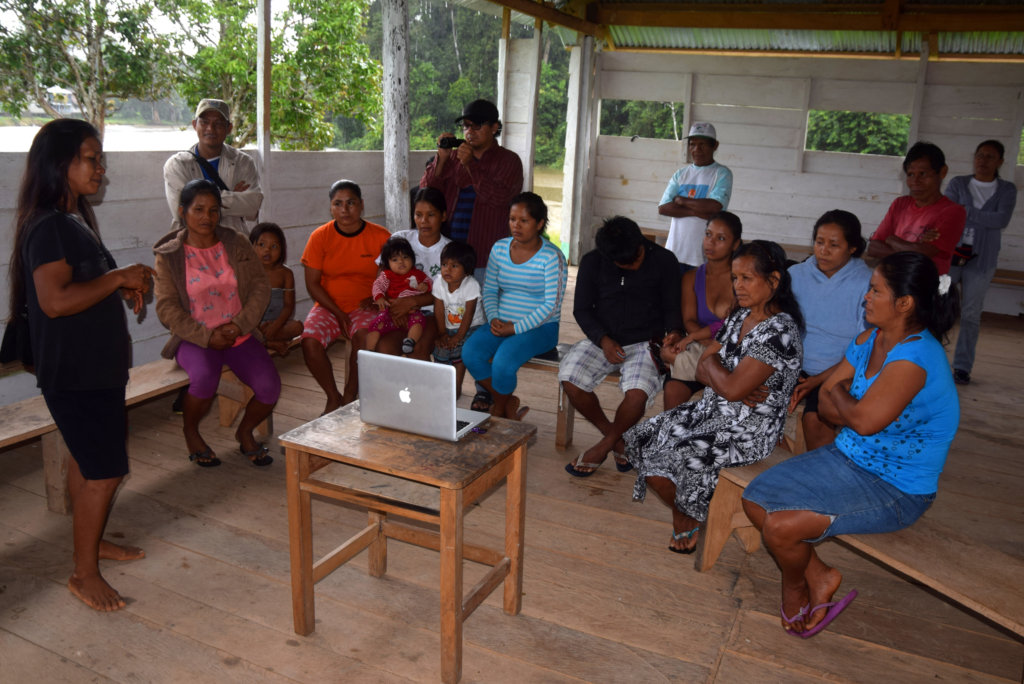
As the downpour subsided to a drizzle, our audience gradually grew to eight women, three men and two children from the village. We asked them what kind of crafts they had experience making and selling, and their answer was typical of artisans in the area. Rosalvina said, “My sisters and I know how to weave chambira palm fiber into simple bags and hammocks, but we don’t sell them very often because tourists hardly ever come here, and it’s expensive to go to Iquitos where the market vendors don’t pay much for our crafts that take many days to make.”
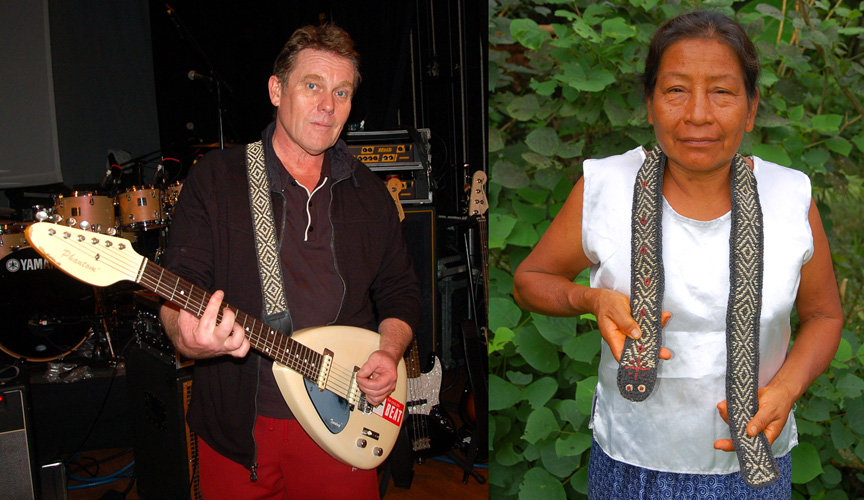
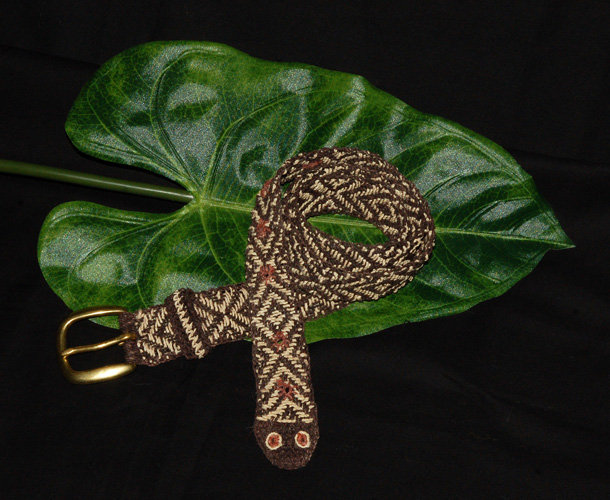
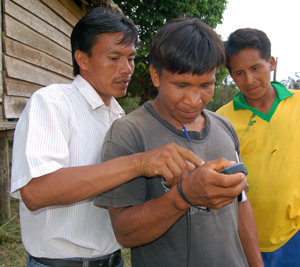
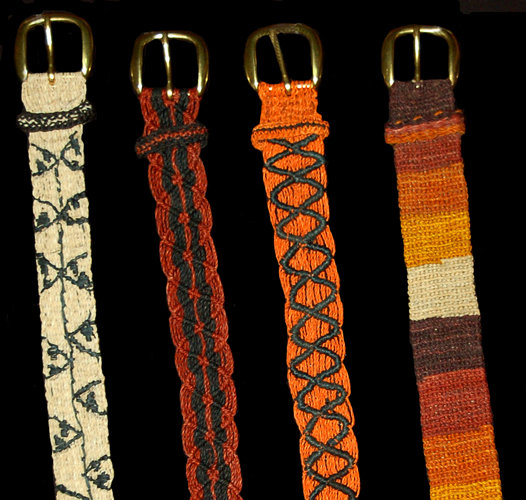
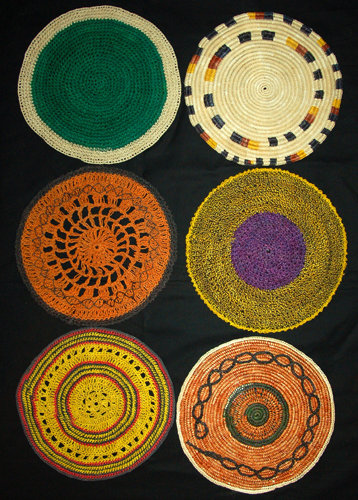
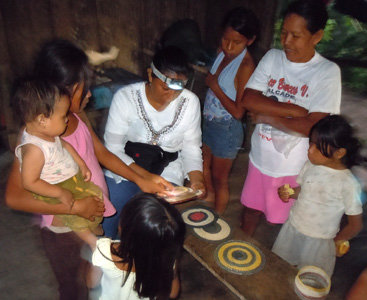
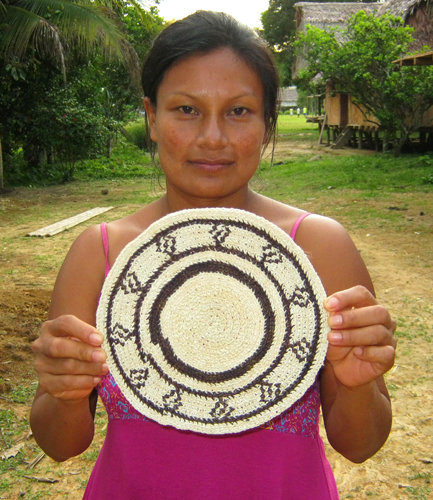
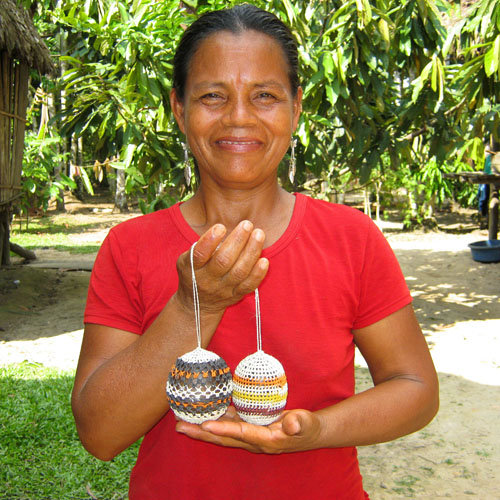
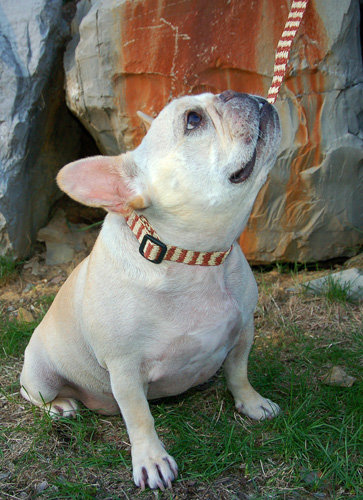
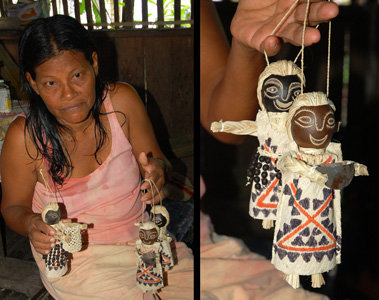
Tulio then set up his MacBook and showed the group a video he had just finished making about the different products that artisans from other Ampiyacu communities weaving for sale in the US through CECAMA. Ania from Brillo Nuevo next addressed her Bora colleagues – “I’ve really enjoyed weaving natural patterns like the red, white and black striped naca naca (coral snake) into new crafts like belts, guitar straps and hot pads.” Lucio told the men – “We get to know many animals while hunting in the forest. I still sometimes shoot a paca or peccary for my family to eat, but I can make more money now carving wildlife figures onto calabash tree pods than selling game meat in the town of Pebas. CECAMA buys lots of these for people in the US to use for Christmas tree ornaments or hand rattles.”
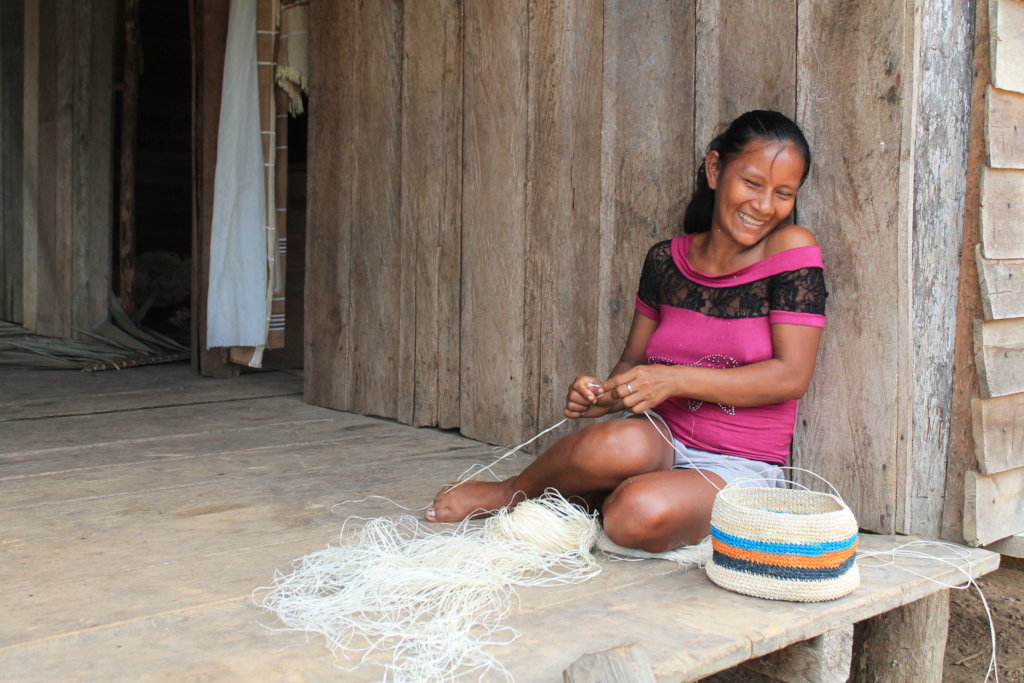
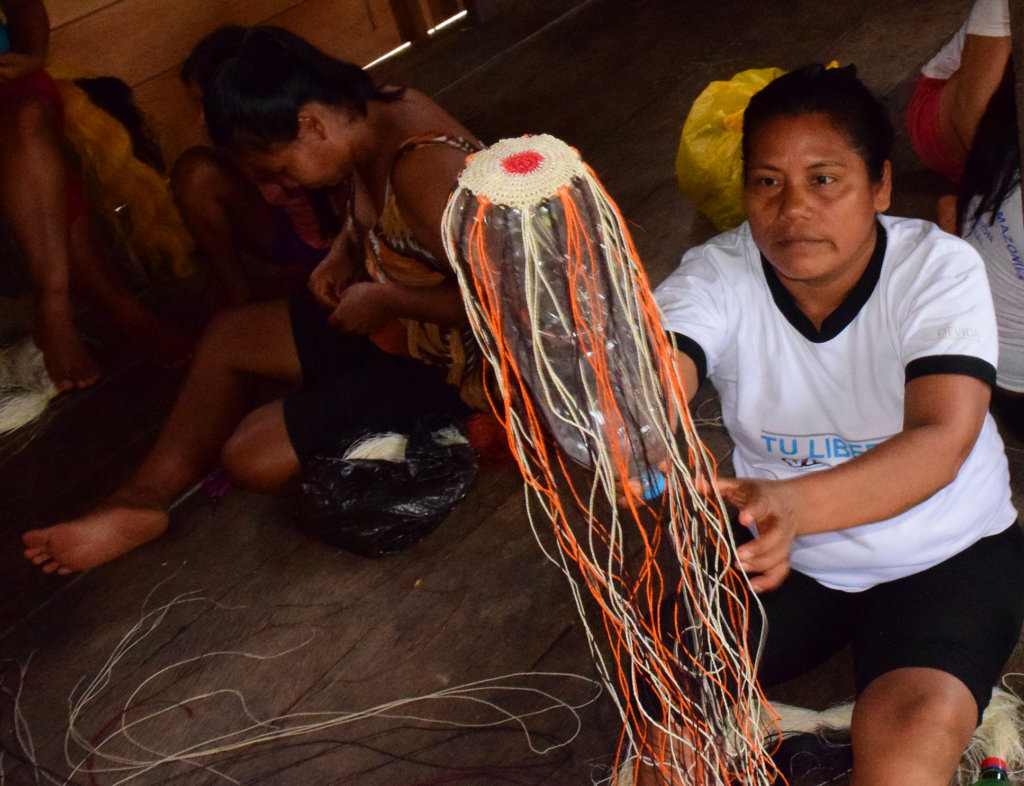
The group seemed very enthusiastic about getting involved, but over the next year and a half, only a few artisans came to any of the skill-sharing workshops that we sponsored in the area. A few wove a few hot pads, but the colors were weak or muddy, and the shapes were irregular. One woman made a guitar strap that was OK for a first try, but it wasn’t good enough to sell in the US. We realized that while these products looked simple, they were not at all simple to make. It had taken the artisans from other villages several years to start making these with consistently high quality. The Nuevo Peru artisans were getting discouraged and resentful that we weren’t buying their initial efforts. Jheny expressed this sentiment succinctly – “how would you feel if you spent a week gathering, cleaning, dyeing, and weaving a craft and were then told – sorry, it’s not good enough, try again.”
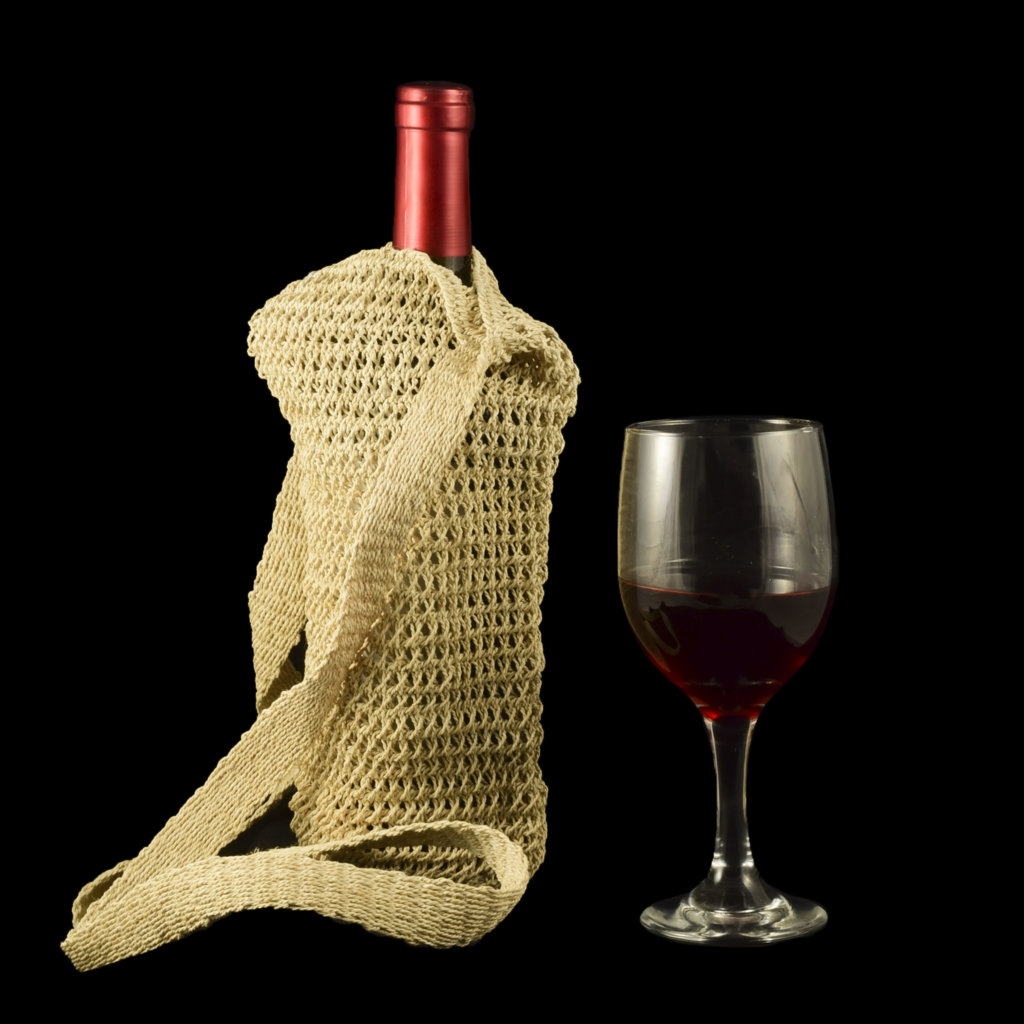
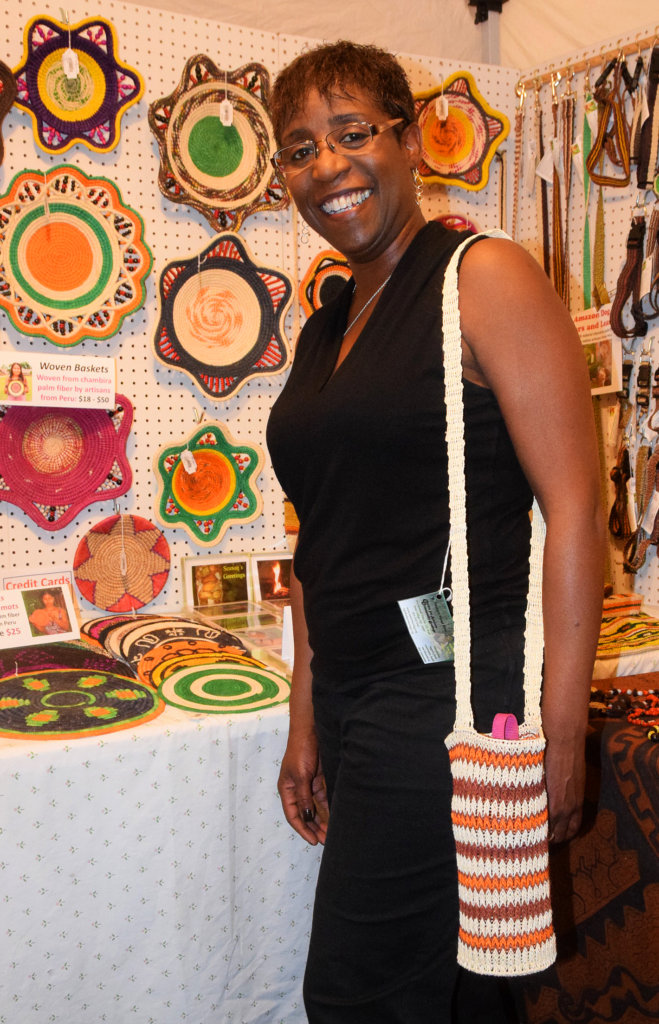
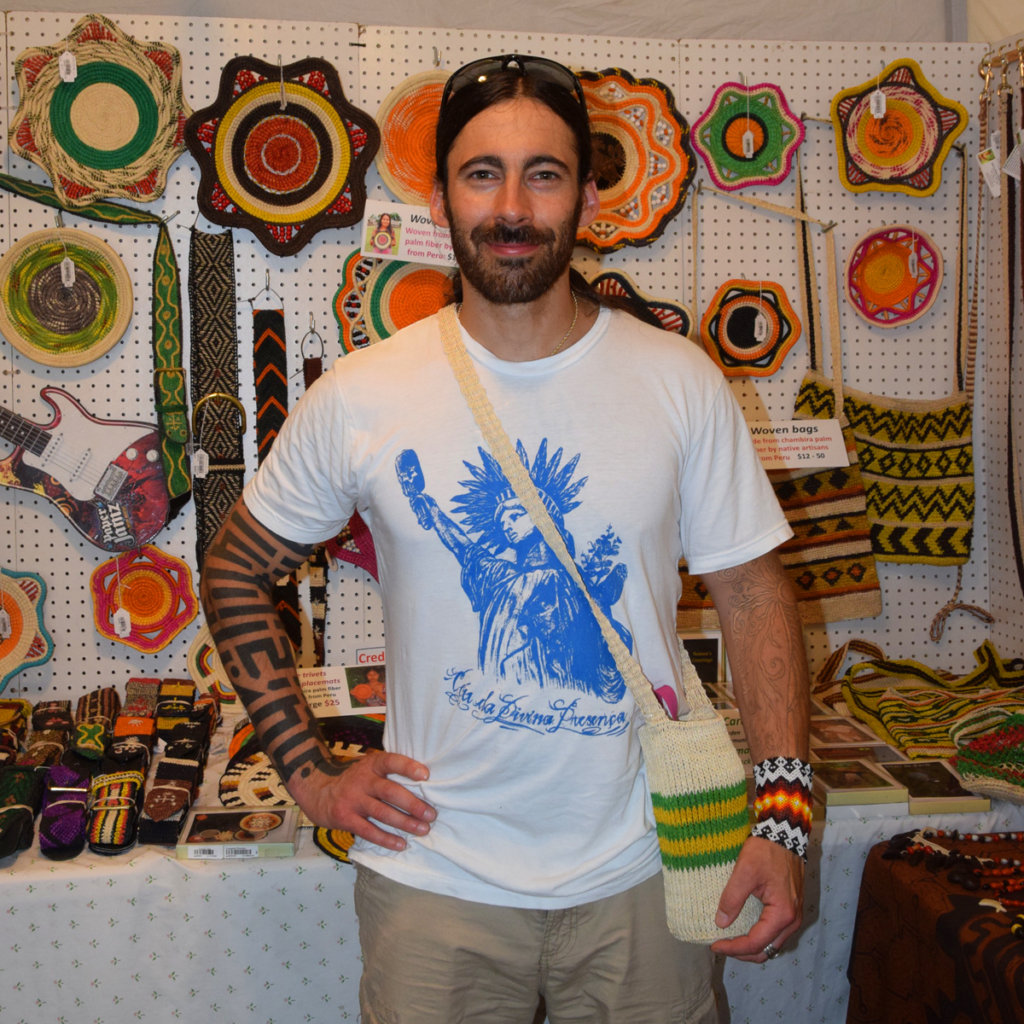
At this common juncture of working with artisans, some artisans do quit or at least give up wanting to work with us. Others understand that making new things well inevitably takes a lot of trial, error and practice. Rather than accept that we were bound to have a high attrition rate and hope that one or two artisans might persevere long enough to make good crafts with us, we tried a different strategy that should have seemed obvious at the beginning. We asked the Nuevo Peru artisans to make bottle carriers which were a relatively new product for us, but the women could make them in a very similar way they used to weave chambira bags – they just needed to make them tall, skinny and round.
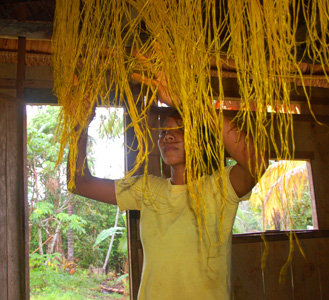
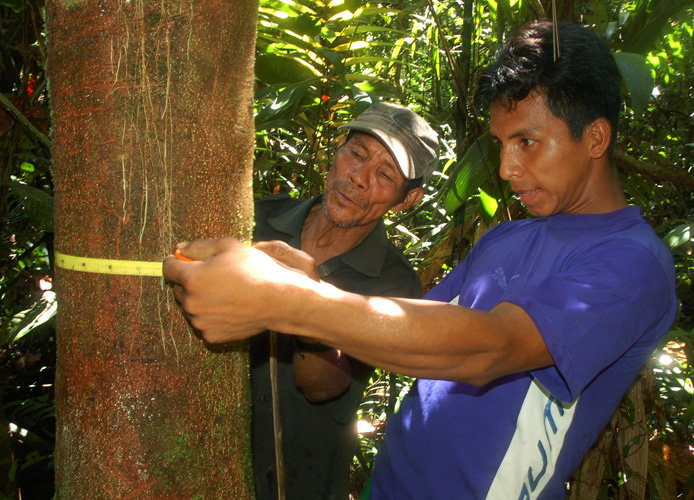
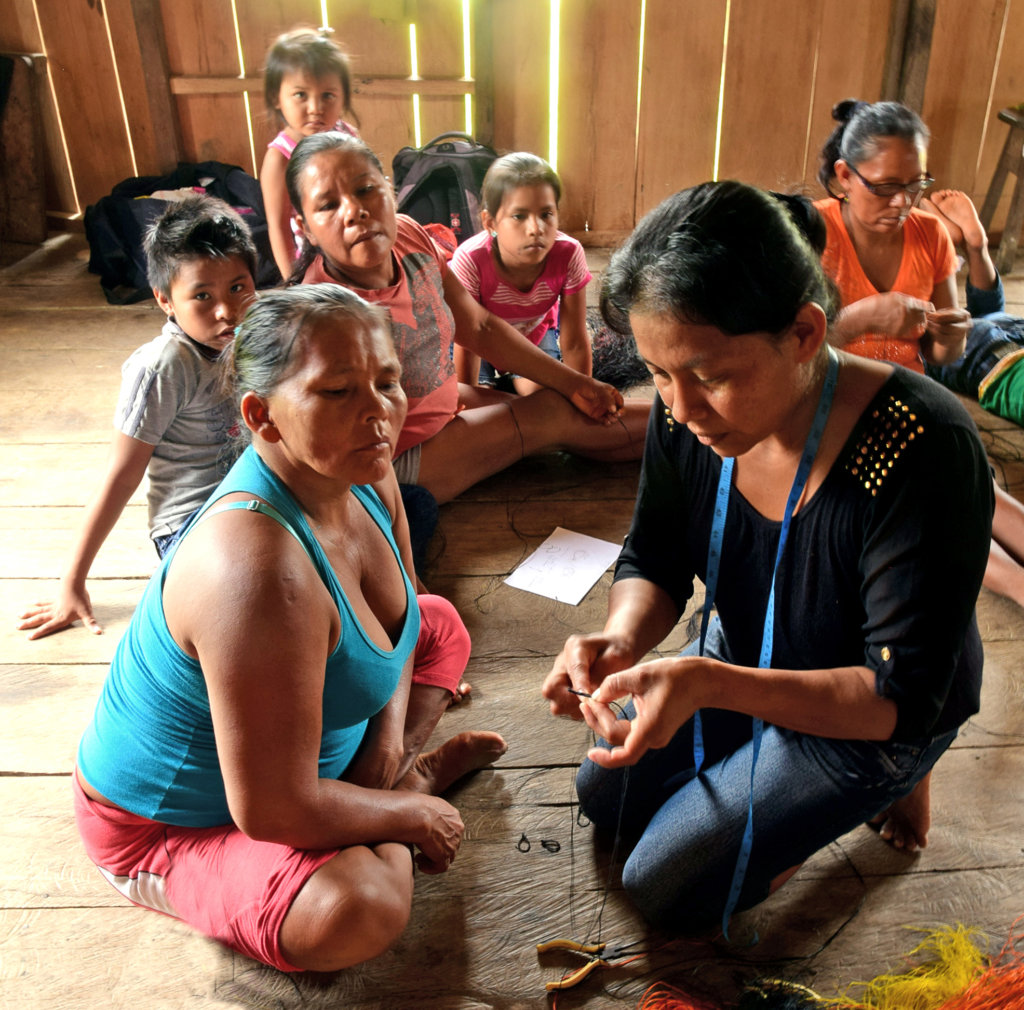
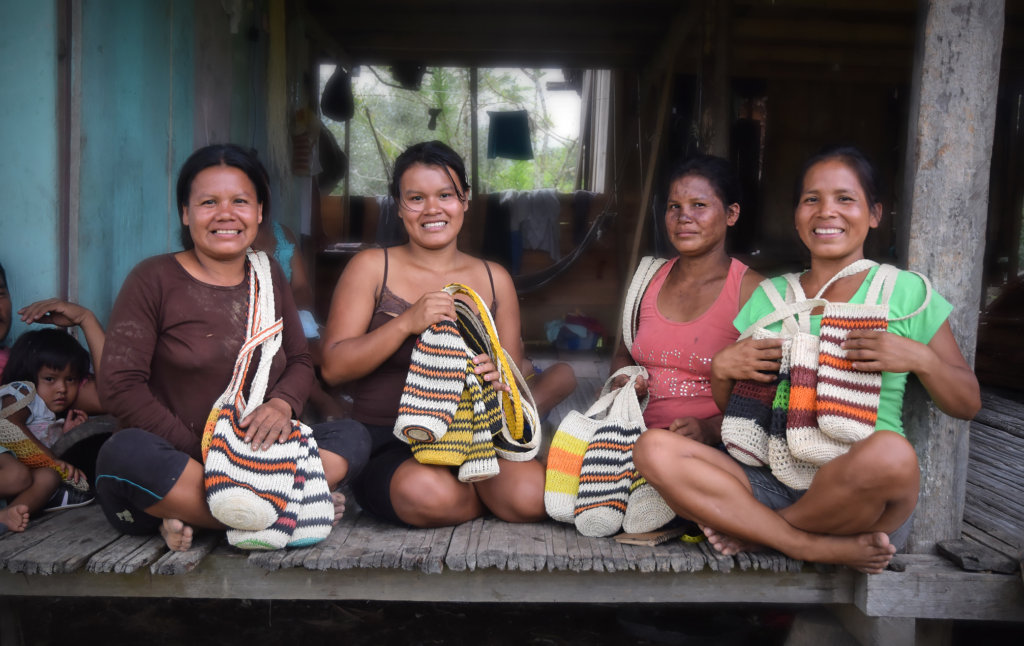
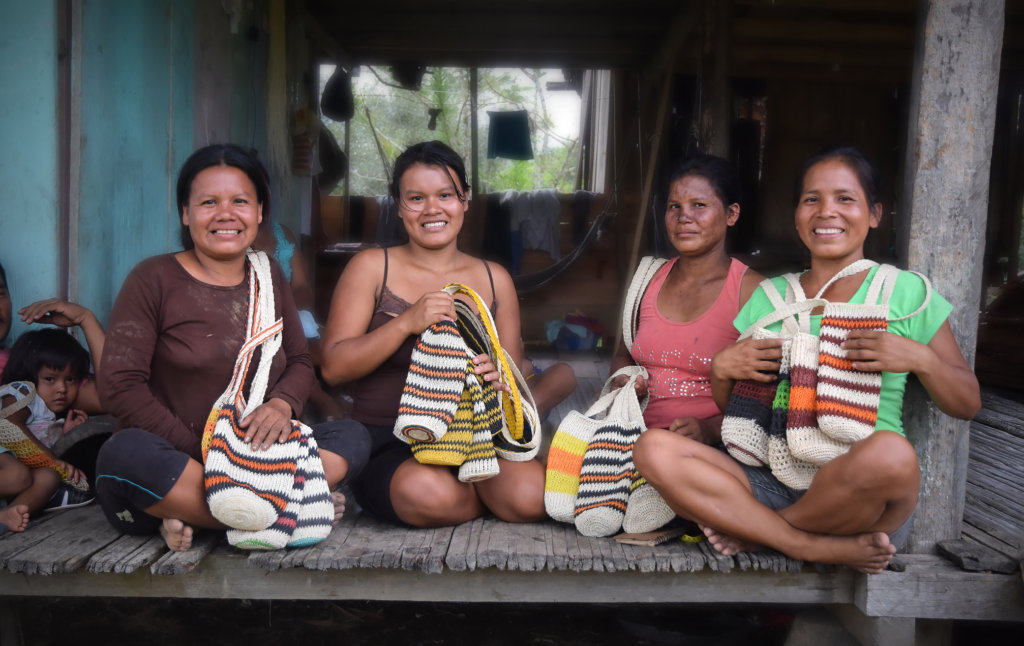
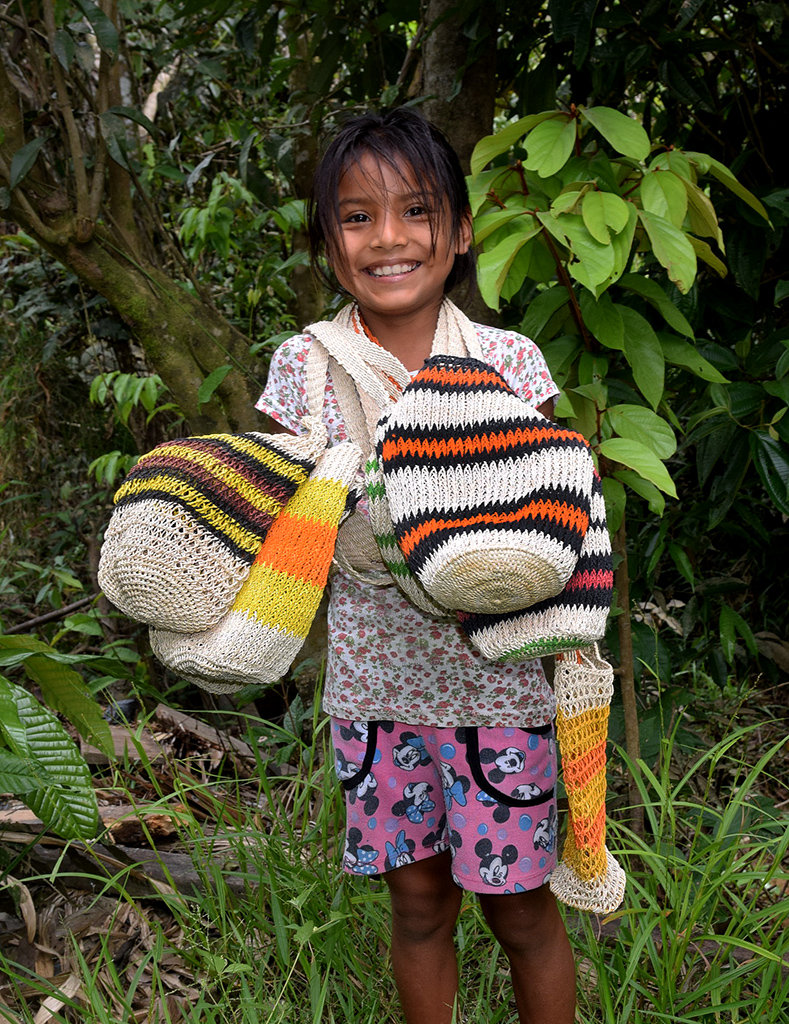
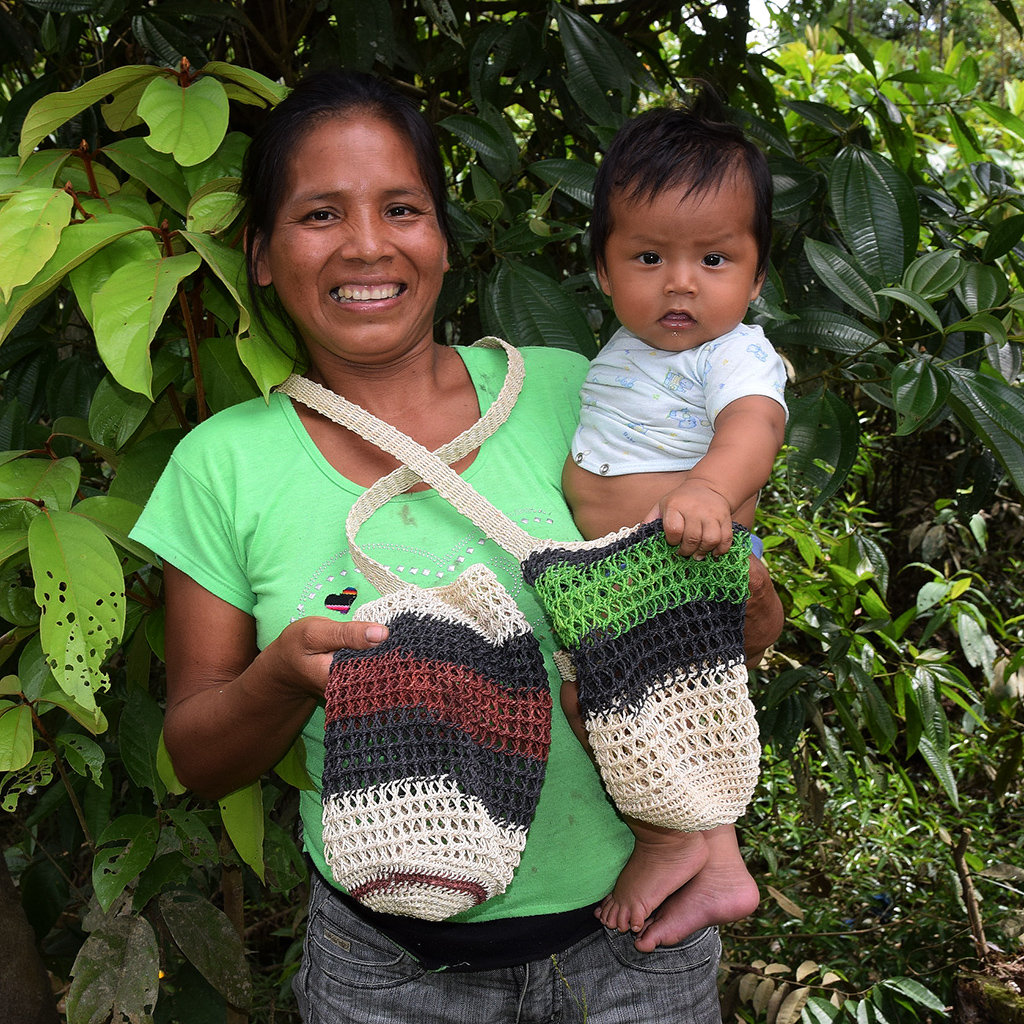
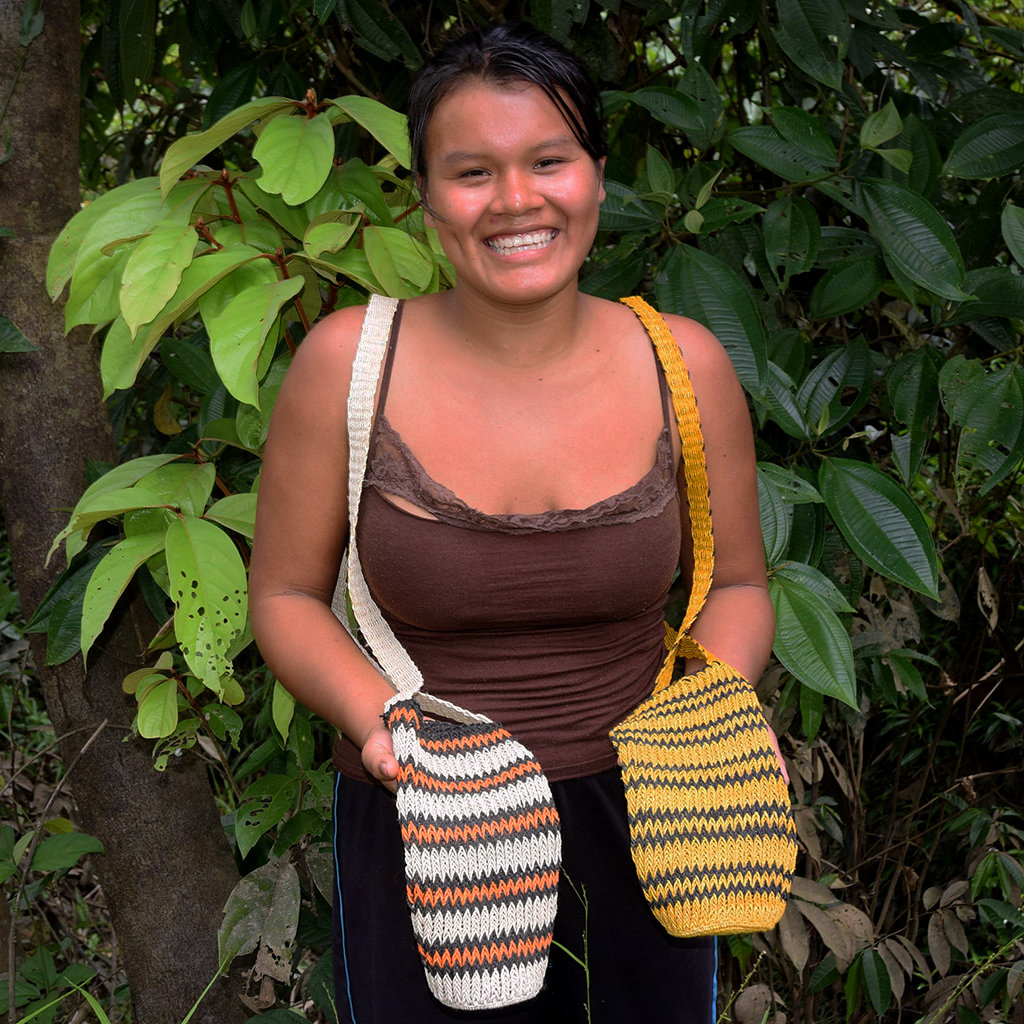
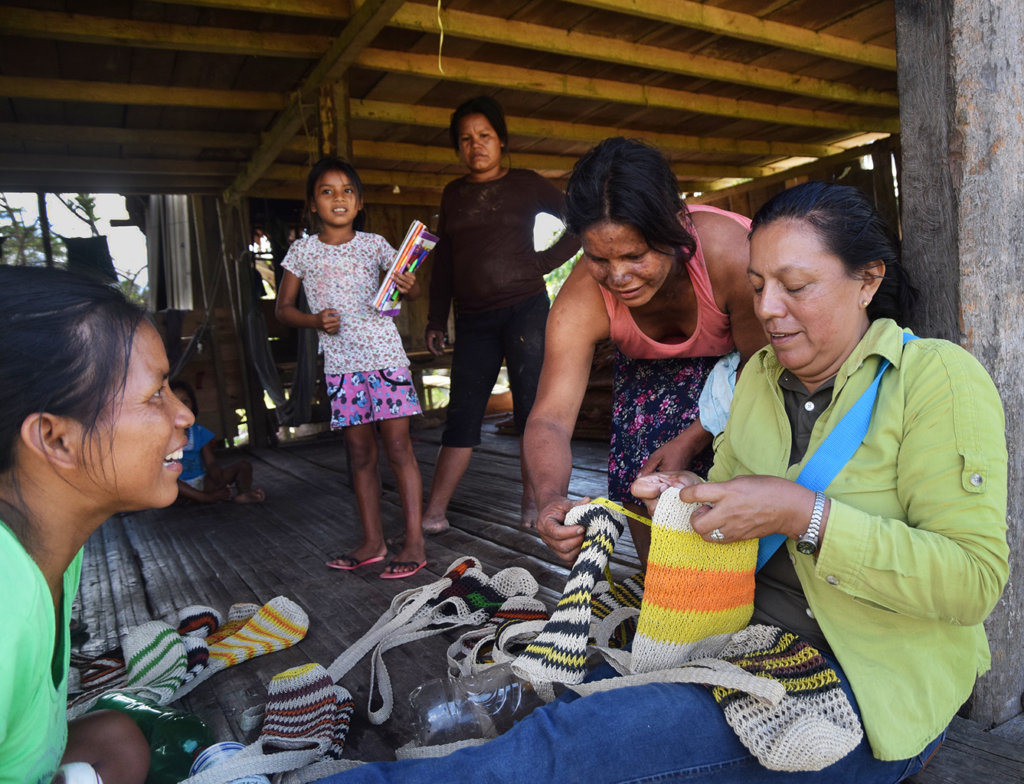
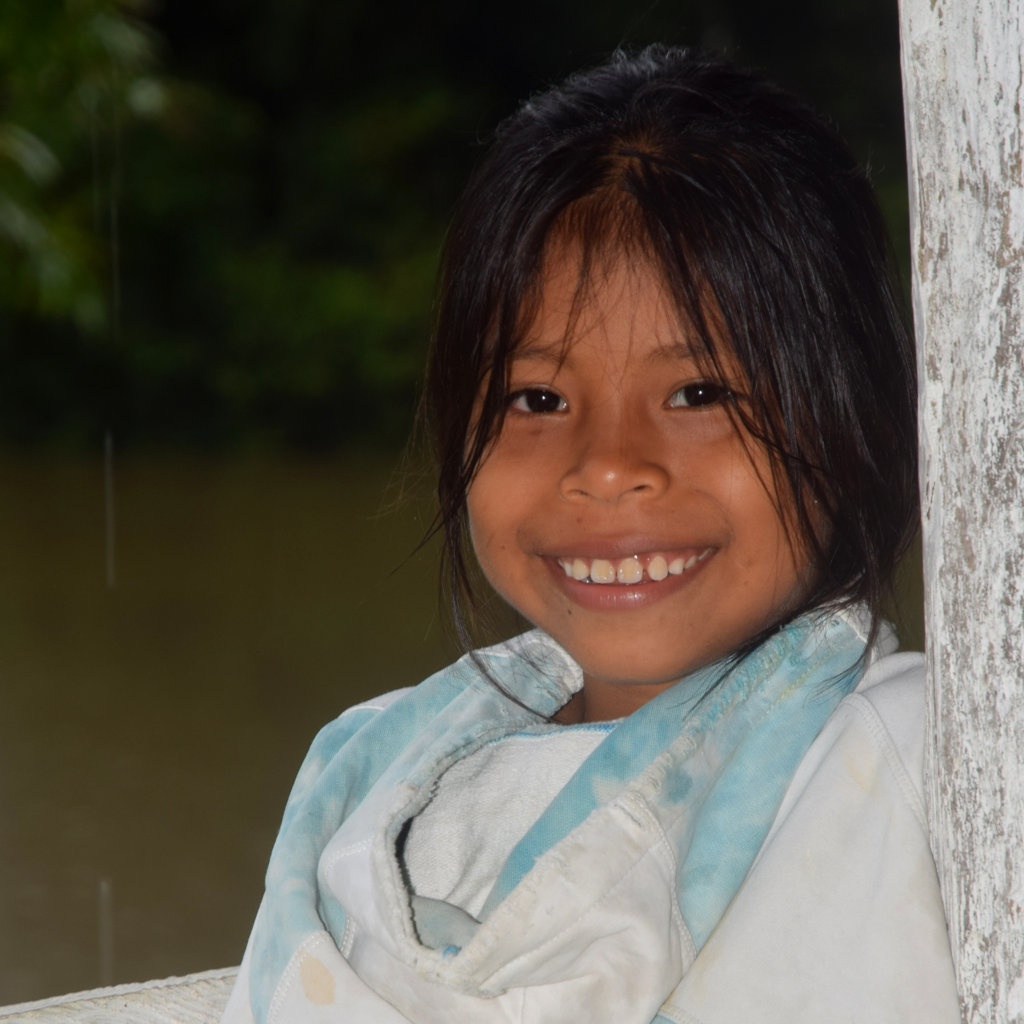
When I next visited Nuevo Peru in the fall of 2016, we gathered at Luz’ house on the edge of the soccer field since she had emerged as the local artisan group leader. She told us, “I am really working hard to become a better artisan because I can already see this will help me sell more crafts and make more money for my family. The hardest part is encouraging my sisters and others in the village to keep practicing and pay attention to the details.” It was great to see, though, that this group had made a big step forward by making a batch of attractive slender bags that could be used to carry a bottle of water at a festival or bottle of wine to a neighborhood party. (I recently learned this item is called a wine cozy.) It was still a somewhat painful process, though, because Yully still rejected many of them after close inspection because their dimensions, colors, and/or quality of weaving weren’t good. We realized (again) that we need to train our partners how to use simple tools like a tape measure and leave a few well-made crafts with them as examples. It was, nonetheless, great to get a few shots of the four artisans with their best bottle carriers and Rosalvina’s daughter Dana holding all of them draped over her head. One of these pics was selected as a semi-finalist in this year’s GlobalGiving Photo Centest – see details for how you can vote for this vote as your favorite at the end of this report.
So we’ve made some progress with Nuevo Peru, but beyond the issues discussed in this report lie even bigger challenges that feel well beyond our scope to resolve. Last year Nuevo Peru agreed to host a major skill-sharing workshop which would have been a big boost for their artisans. We cancelled it, however, because it became evident that the community’s exploration of problematic modes of generating income would not make it a safe environment to bring a large group from other villages under our name. While we have invited their artisans to join the new Artisan Leadership Program workshops held in Nauta, they have so far declined. I am optimistic we will find a way to reconnect to the Neuvo Peru artisans in time, but we are still learning to navigate these choppy community waters.
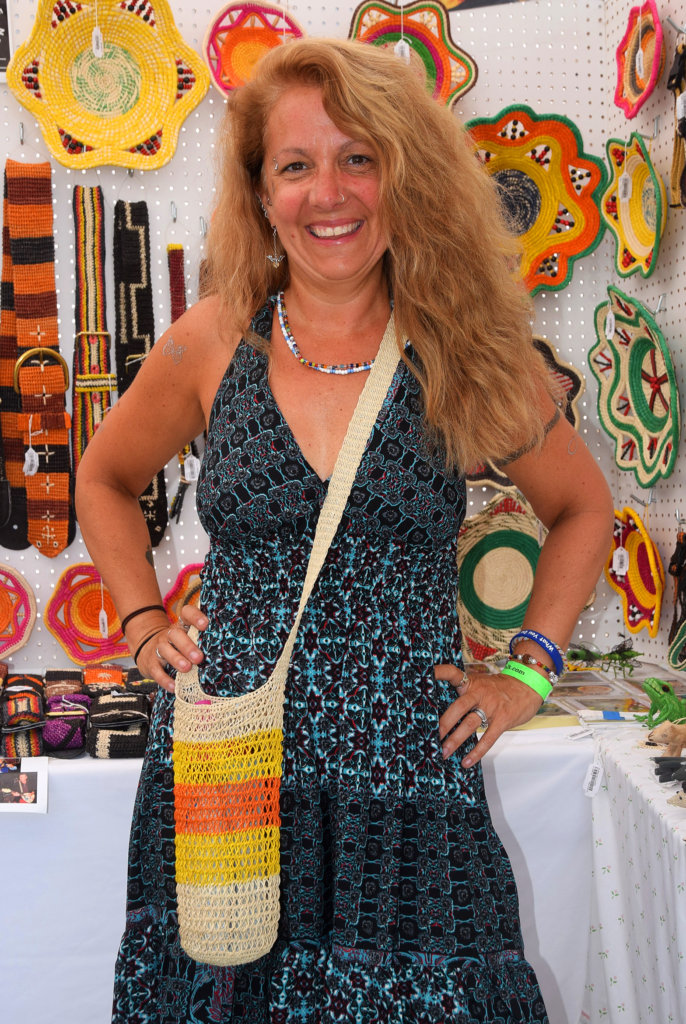
In the meantime, Bora and Huitoto artisans from Puca Urquillo are continuing to make high-quality bottle carriers that we will sell through our online Amazon Forest Store and at music festivals this summer.
Thanks for your support of our project. Please vote for our photo of Ampiyacu artisans as your favorite in the GlobalGiving Photo Contest at: https://www.globalgiving.org/poll/vote/?pollOptionId=1131. Voting is open from May 22 through midnight on Thursday, May 26 (12:01 am on May 27). Help us win the $1000 prize to support our work.
Links:
Project reports on GlobalGiving are posted directly to globalgiving.org by Project Leaders as they are completed, generally every 3-4 months. To protect the integrity of these documents, GlobalGiving does not alter them; therefore you may find some language or formatting issues.
If you donate to this project or have donated to this project, you can receive an email when this project posts a report. You can also subscribe for reports without donating.



Support this important cause by creating a personalized fundraising page.
Start a Fundraiser