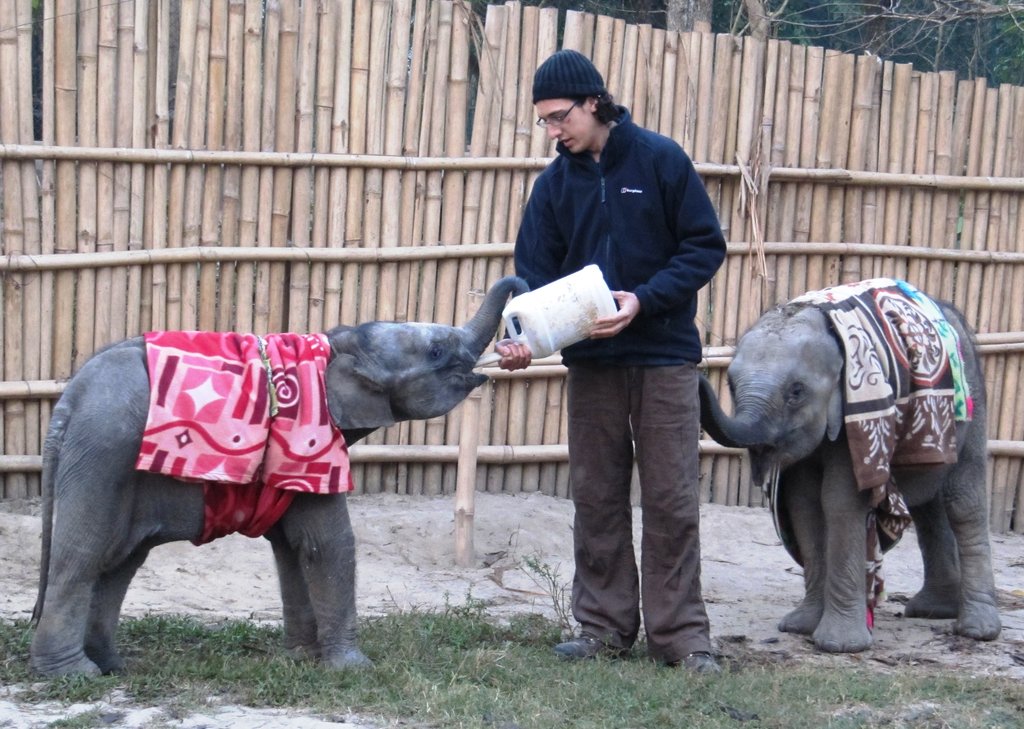
By Anjan Sangma | Wildlife Biologist, WTI
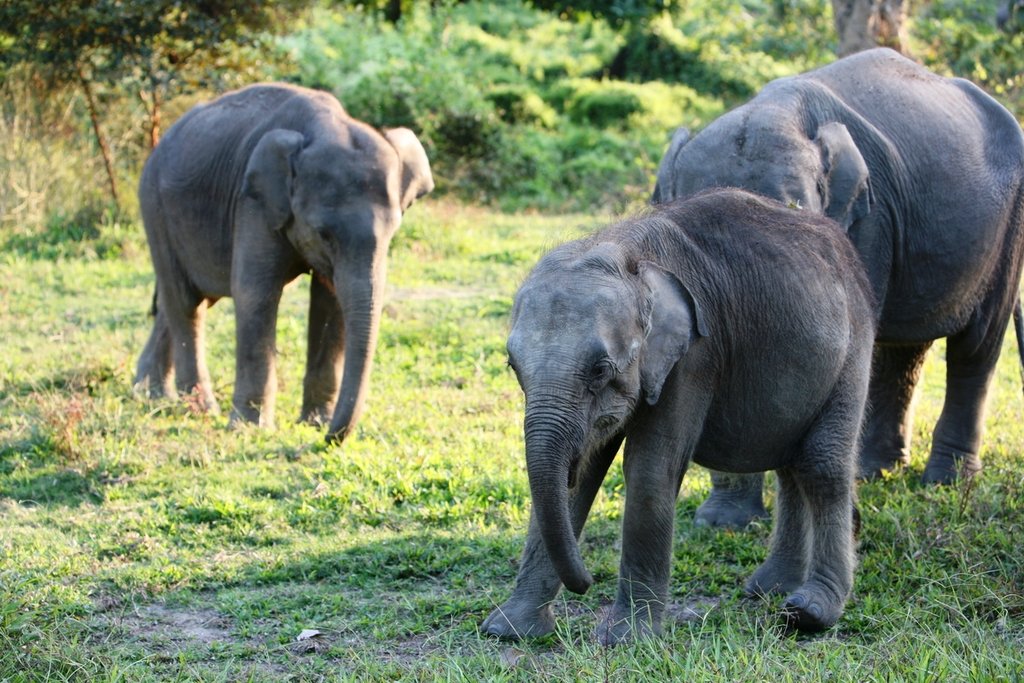
In August 2014, it has been nearly four months since our elephant calves were shifted into Manas National Park, Assam. There are five of them, Rani, Tora, Difloo, Jakhala, and Philip (who joined them a week or so later). The calves have all been radio collared and are being remotely monitored by the Wild Rescue team. The team reports that the calves have been fending for themselves as finding a family in the wild is proving to be a tough task.
Anjan Sangma, our field biologist, sent in the following account from Manas National Park on a recent incident where Philip and Tora had to be rescued from flood waters.
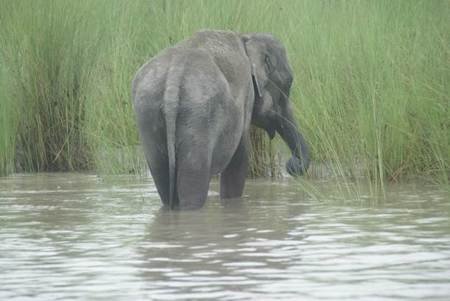
August 8, 2014: It has been pouring for two weeks now and tracking the calves is getting increasingly difficult. Of the five calves, Jakhala, Rani and Diphloo have been found to be moving about singly with signals coming in from different parts of Manas. But Tora and Philip have been moving about together and on the 19th of last month, they were sighted on an island in the Beki River by forest guards. The guards told us that they were on that island for three days.
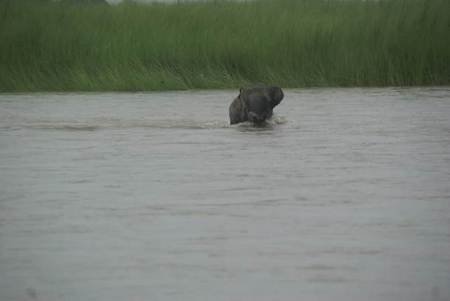
By 23rd July it became evident that Philip and Tora were not there by choice but had been trapped by the rising waters. As the keepers kept watch, Philip took the plunge, literally! He clambered across the waters into the Sundari camp, south of the Beki river, and saved himself.
But Tora did not follow him. The river kept rising and the island was gradually going underwater.
We had to rescue Tora. The next day, we hired a boat and crossed over to island to check if she was physically fit to try and navigate the swollen river. To our relief, it turned out that she was physically absolutely fine, but just not brave enough to risk the river.
We tried for the next two days to get across the river but the currents were too dangerous. On the 26th, a rescue team for formed – Assam Forest Department, IFAW-WTI Wild Rescue team, and volunteers from local villages. The waters all around the island were surveyed and the area with slowest current was selected.
We guided Tora to the area and tied a rope around her body. The rescue team then coaxed her into the water and using rope to support and guide her, slowly got her to cross the river.
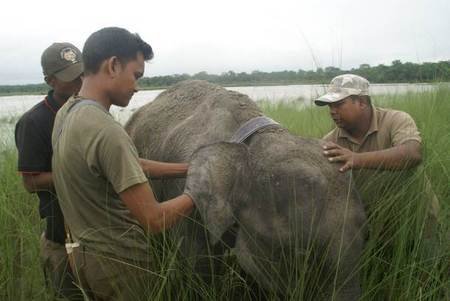
We kept Philip and Tora with us that night to watch over them. The next morning, we changed their radio-collars to facilitate longer monitoring and then sent them off into the wild again.
There was a wild herd nearby and this raised our hopes. Could this be the historic moment when Philip and Tora find a new family? But no... not this time. An elephant from the wild herd drove them away. Philip and Tora were not deterred. They followed the herd back into the forest; leaving us with fingers crossed hoping for the best.
Project reports on GlobalGiving are posted directly to globalgiving.org by Project Leaders as they are completed, generally every 3-4 months. To protect the integrity of these documents, GlobalGiving does not alter them; therefore you may find some language or formatting issues.
If you donate to this project or have donated to this project, you can receive an email when this project posts a report. You can also subscribe for reports without donating.