By Aaron Buzek | Project Leader
I sat down today with the two brothers responsible for the wonderful work of our aquaponics greenhouses. Dennys and Melvin are the people to go to for the history and future, respectively, of our aquaponics project.
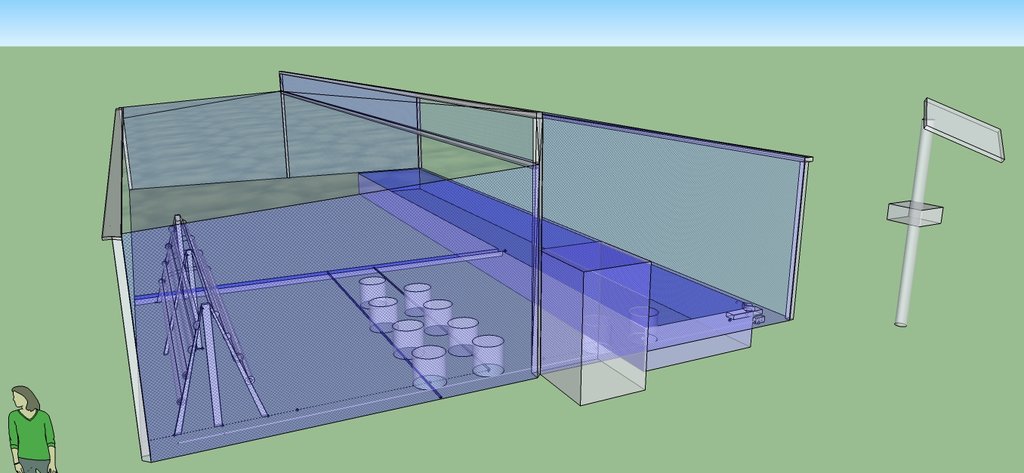
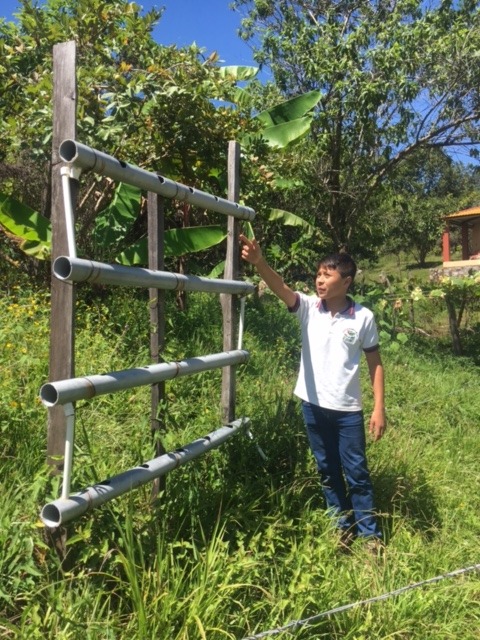
Our project’s humble beginnings are now little more than four tubes of wide PVC piping nailed to wooden poles. Each pipe has a handful of holes drilled into it for the plants to grow in and a small tube that lets water drain from one pipe to the next. Its appearance belies its importance, though; this is the reason that we have one greenhouse and another one in the process of being built.
I asked Dennys to walk me through how this setup works—or worked. “Plants go in the holes,” he said, “They’re put in a foam block that keeps them in place and lets them soak up more water”. It is the same system, fundamentally, that our fully functioning greenhouse uses. “Rainwater gets collected in the top layer and filters down through the tubes to the other plants below”.
It’s a smart system for a few reasons, as Melvin pointed out later in the greenhouse. First, the water gains and swaps out nutrients from every plant it passes through and you don’t have to use nearly as much water as traditional methods. “You get about 80% efficiency out of the water,” says Melvin. He’s not sure about the efficiency of traditional methods, but it’s a lot higher, he assures me.
The second, perhaps more important, reason that the system is so smart is that it allows you to use vertical space for growing plants. Melvin explains that “this vertical system is a lot more efficient than normal farming methods”. Efficiency all around.
Effective use of land is especially important in El Salvador for several reasons. It is the smallest country by quite a margin in the mainland Americas but a sizeable portion of its citizens live in rural areas and depend on farming in some way, whether it be to supplement food supplies or the main source of income for their family. Land is already limited. Furthermore, deforestation is a huge problem in the country, so creating more farmable land to keep up with the increasing population is ecologically irresponsible.
Greenhouses seem to be an important part of the puzzle in El Salvador and the work being done at Amun Shea may just prove to be a starting point for a new agricultural revolution. Stay tuned for our next report, where we will cover the future of our greenhouse project and examine the progress on our newest greenhouse.
Links:
Project reports on GlobalGiving are posted directly to globalgiving.org by Project Leaders as they are completed, generally every 3-4 months. To protect the integrity of these documents, GlobalGiving does not alter them; therefore you may find some language or formatting issues.
If you donate to this project or have donated to this project, you can receive an email when this project posts a report. You can also subscribe for reports without donating.