By Sydney Perlotto | Marketing and Communications Coordinator
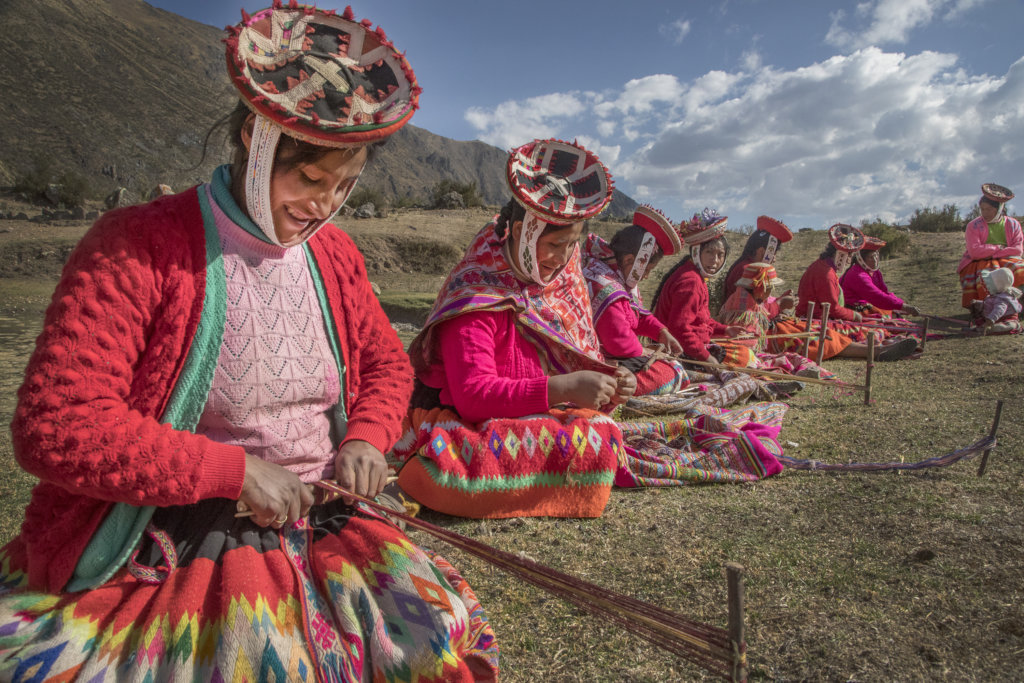
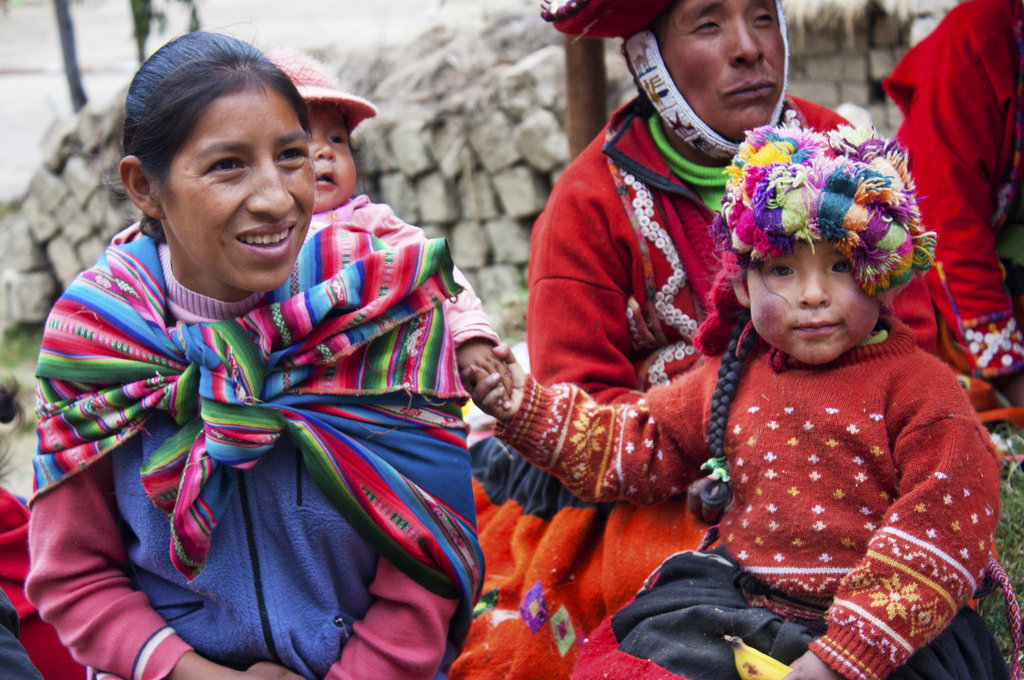
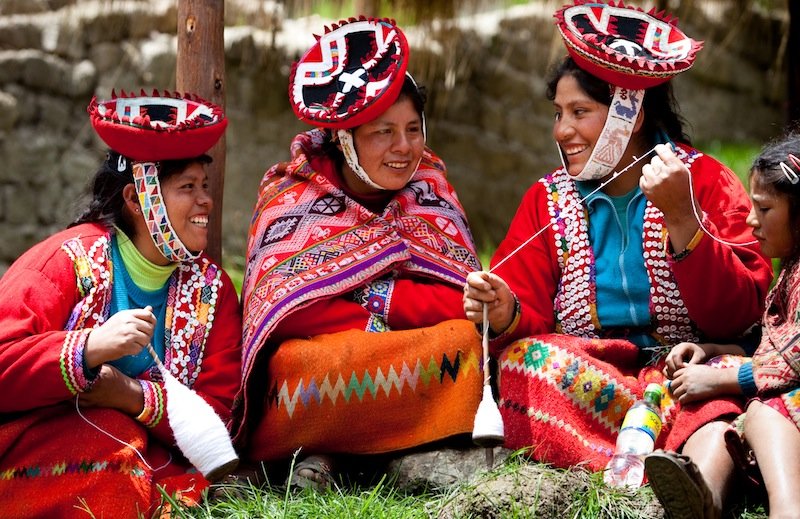
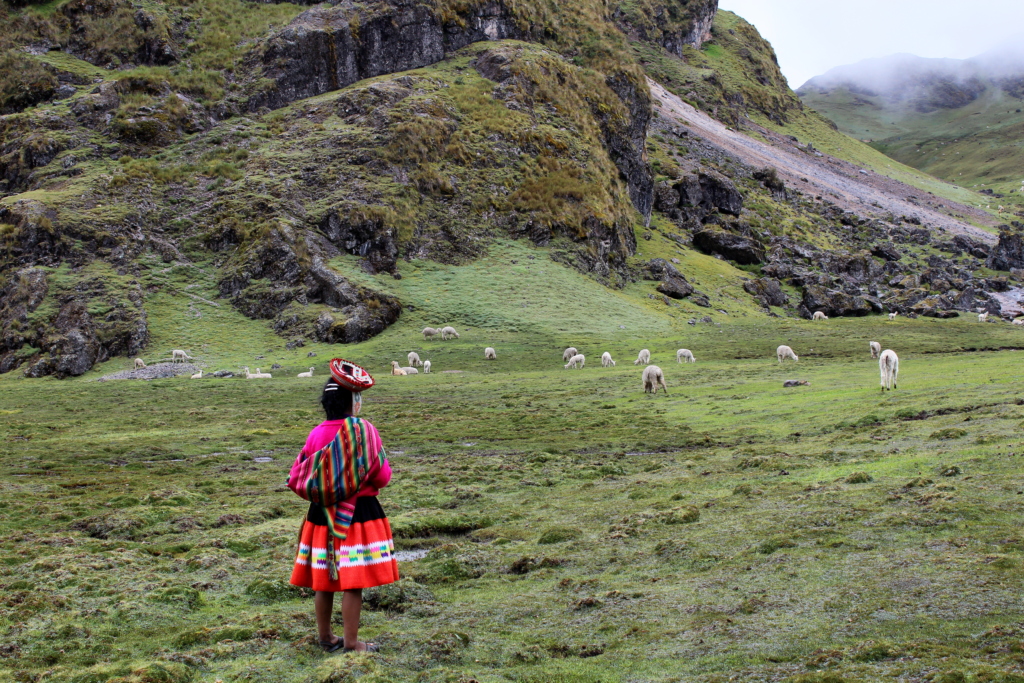
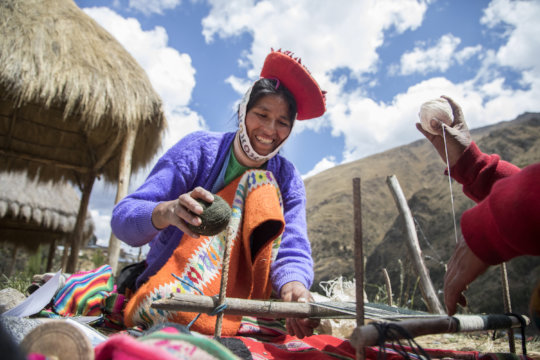
The women weavers of Kelkanka know how to color pop. Although a backdrop of lush green mountains and startling blue skies is hard to beat, the bright red colors, complicated beadwork, and woven motifs characteristic of their dress make them the unequivocal stand outs.
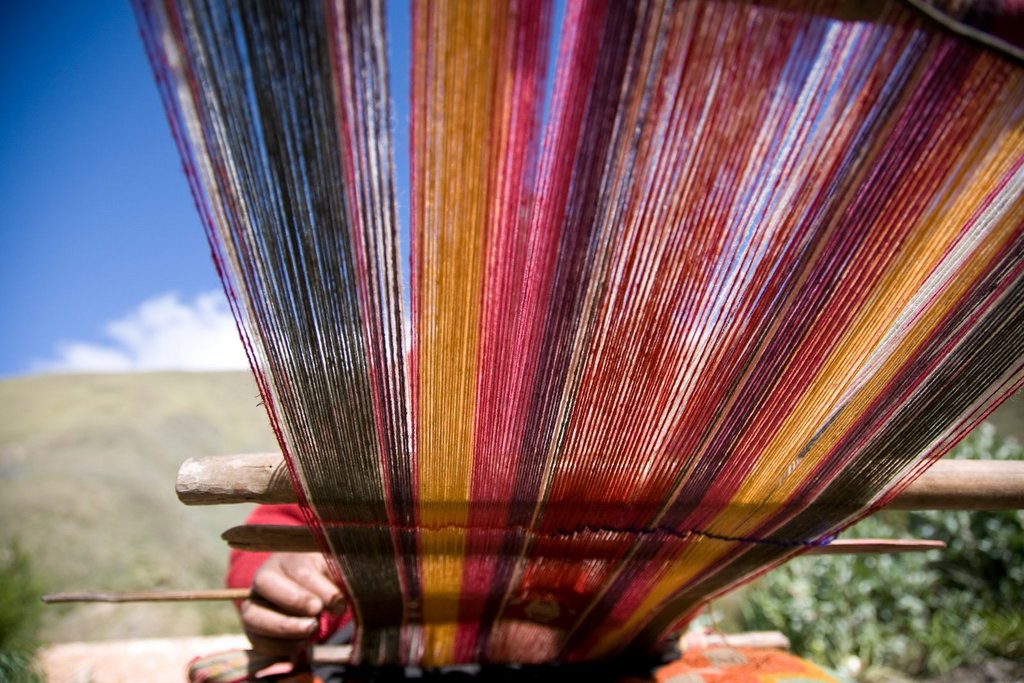
Even though the weavers of Kelkanka know to make a splash with color, we wanted to introduce the powerful dynamics behind color usage. Culturally, their preferences for color combinations are much different than what might appeal to potential customers – not everyone can pull off a rainbow skirt with geometric designs. Additionally, most weavers use synthetic dyes for their personal clothing because the dyes last longer and stay brighter in their harsh outdoor environment. In contrast, the woven products they make for Awamaki and tourists use natural dyes, which are more muted but celebrate traditional techniques. To tie these ideas together, one of our visiting designers, Celeste Ramos, organized a workshop on color theory.
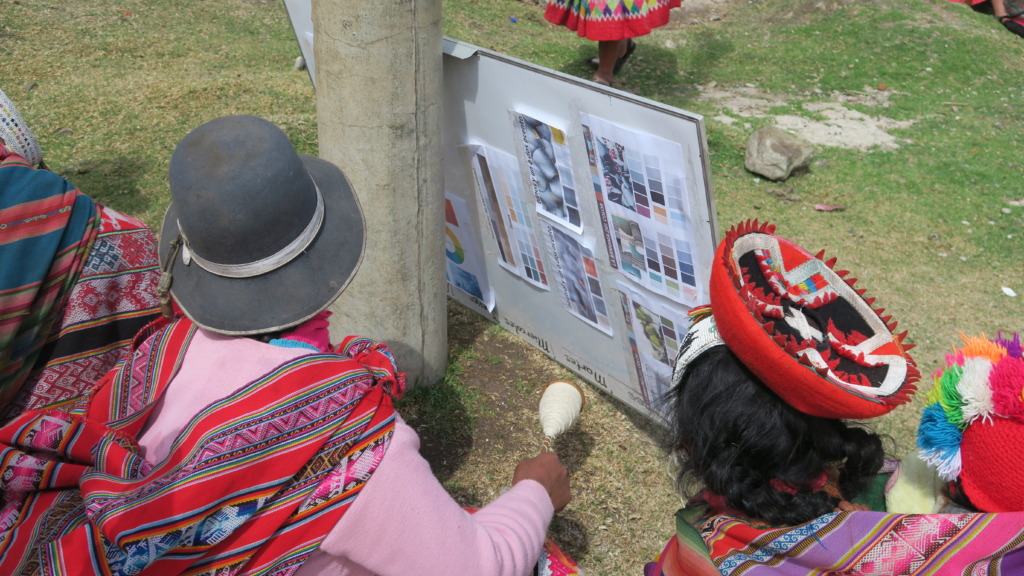
When we arrived in Kelkanka, the meeting space was locked so we had to wait for the key. This didn’t stop the ladies from getting started without us – they excitedly gathered around the prepared posters, chattering quickly in Quechua while pointing at the examples with their Andean phuskas. The level of excitement rose a notch when we pulled out the sheets of paper, packs of crayons, and bags of fruit.
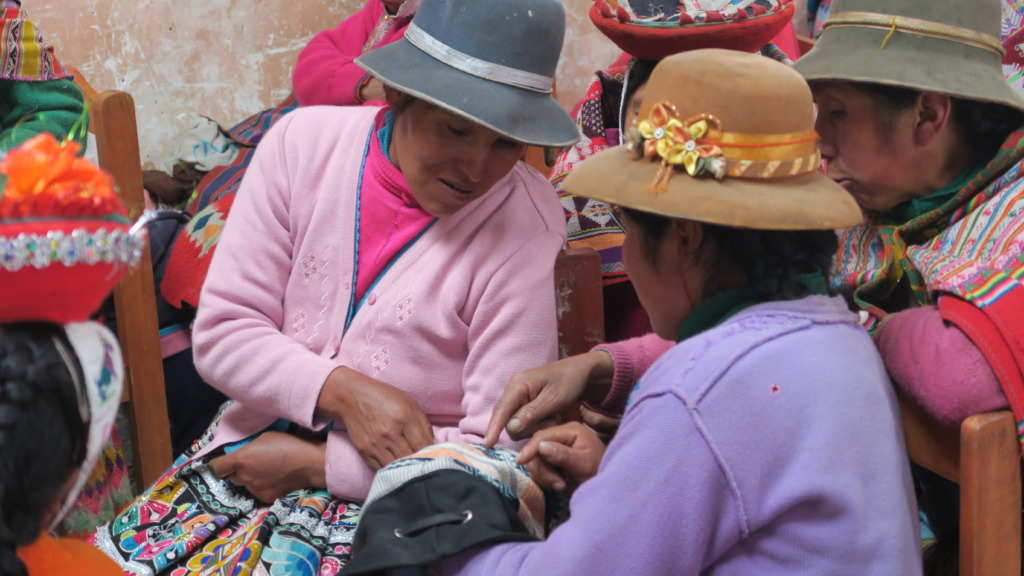
Mercedes, head of the women’s cooperative program, started the workshop with some fun warm-up exercises (it is cold in Kelkanka!). On her command the ladies moved about the meeting room waving their arms and switching seats. After the laughter faded, we got down to business explaining what the attention-grabbing colorful diagrams meant. Celeste and Mercedes worked together to cover concepts of primary colors, secondary colors, cool and warm colors, and color harmony. The diagrams were passed around the room as were Awamaki products illustrating the concepts. The women were extremely interested in examining the products and quickly arranged themselves in groups to examine them. Since Kelkanka is our furthest cooperative – it takes several hours to reach the community – the weavers rarely get to see their weavings incorporated into finished bags and purses.
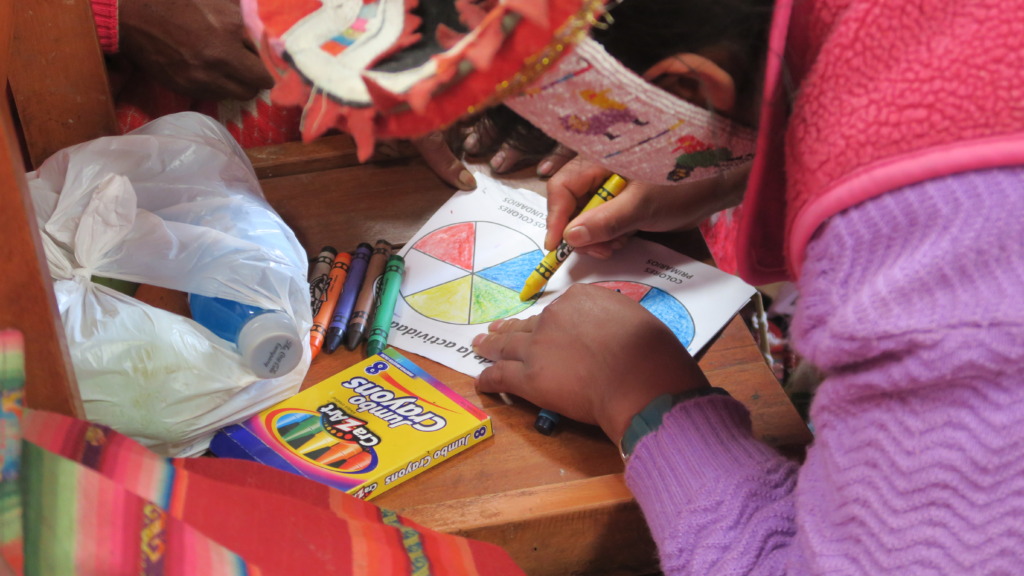
The second part of the workshop was a crowd-pleaser because the women put what they had just learned into practice. We passed out blank color wheels and packs of crayons and tasked the group with re-creating the various color concepts. Interestingly, for the wheel of secondary colors some women chose to mix two colors to make a secondary color, while others sought out the secondary color from the crayon pack. Those that mixed the colors showed that they understood the color combination rules we had just covered.
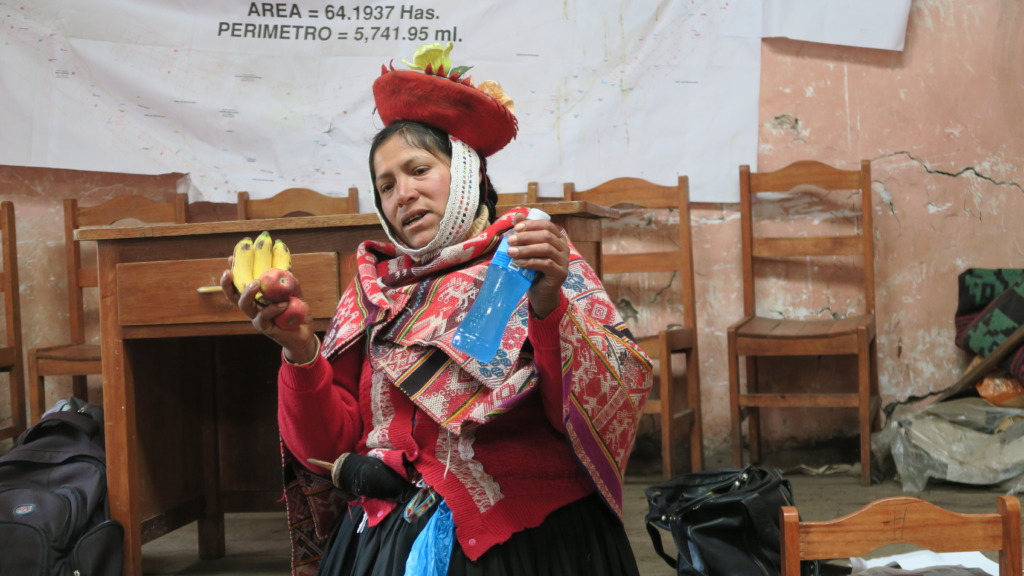
The most difficult part of the workshop came last. We tested the weavers by asking them to hold up fruits that corresponded with the right color concept. The concepts of cool and warm colors were particularly hard for the weavers to remember. This abstract idea did not translate well into Quechua because of the language’s different understanding of the world and the natural environment. It seems silly to assign colors a temperature if you really think about it! Regardless, we reviewed the concepts one more time and then descended into a rainbow fruit feast with the women and their accompanying children.
Immediately following the workshop, Mercedes was skeptical if the women absorbed any of the concepts. She believed that they had fun but thought the ideas were too theoretical to really stick with them. However, a few months have passed since the workshop, and at a recent staff meeting Mercedes announced her desire to continue it with the other cooperatives.
She said, “The compañeras are doing a good job with their weavings. They are completing them on time and are heading in a good direction. I can see that they learned from the workshop on color, it is apparent in their recent designs.”
We are excited to lead the color workshops in the remaining cooperatives, and will update you all on their progress. Thanks to your generous support, we can keep carrying out these fun yet informative workshops!
Project reports on GlobalGiving are posted directly to globalgiving.org by Project Leaders as they are completed, generally every 3-4 months. To protect the integrity of these documents, GlobalGiving does not alter them; therefore you may find some language or formatting issues.
If you donate to this project or have donated to this project, you can receive an email when this project posts a report. You can also subscribe for reports without donating.