By Souad El Khadiri | Program Manager
Nearly three years after the September 2023 earthquake, women in Morocco’s Al Haouz Province continue to rebuild their lives amid economic uncertainty and disrupted education. Yet, despite these challenges, women’s cooperatives have demonstrated extraordinary resilience and a shared commitment to creating sustainable opportunities for themselves and their communities. With support from the Joint Distribution Committee (JDC), the High Atlas Foundation (HAF) is advancing the Tree Sacks Program, an initiative that combines women’s economic empowerment, environmental sustainability, and lifelong learning. During this reporting period, the project focused on two key priorities:
1. Strengthening and expanding women's literacy opportunities.
2. Improving the durability and performance of biodegradable tree sacks.
A Solution Rooted in the Earth
The Tree Sacks Program began with a simple but powerful idea: replacing conventional plastic nursery bags with biodegradable tree sacks that naturally decompose after planting, reducing plastic waste and supporting healthier ecosystems. Between January and June 2025, participating women’s cooperatives produced an impressive 137,721 biodegradable sacks, demonstrating both the scalability of the initiative and the dedication of the women involved.
Field observations, however, showed that the original material degraded too quickly under harsh nursery conditions. In response, HAF and its partners temporarily paused large-scale production and worked with the manufacturer to develop a more durable solution by enhancing UV stabilizers, increasing material thickness, and preserving the sacks’ biodegradable properties. Pilot testing of the upgraded fabric began in June 2026, paving the way for the resumption of full production.
Three Communities. One Movement.
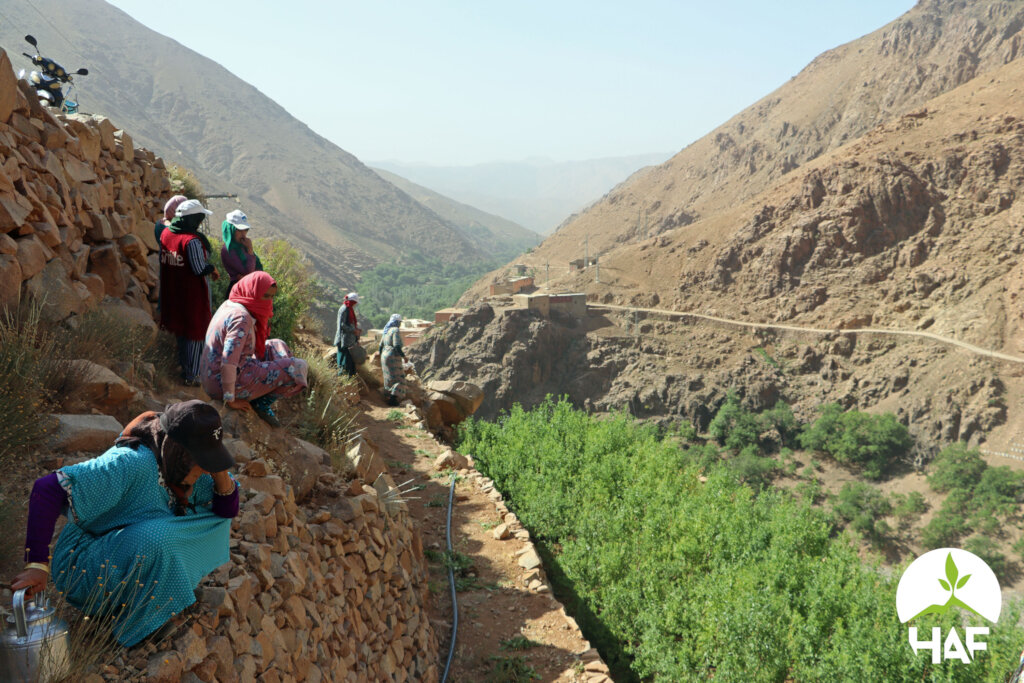
The project operates across three distinct cooperatives, each embedded in a different commune of Al Haouz Province, the region hardest hit by the 2023 earthquake:
- Zarbiat Achbarou Cooperative (Tameslouht Commune)
- Timiyourine Nissae Tinmel Cooperative (Talat N'Yacoub Commune)
- Tifawt Ouidraren Cooperative (Aghbar Commune)
Literacy as a Foundation for Independence
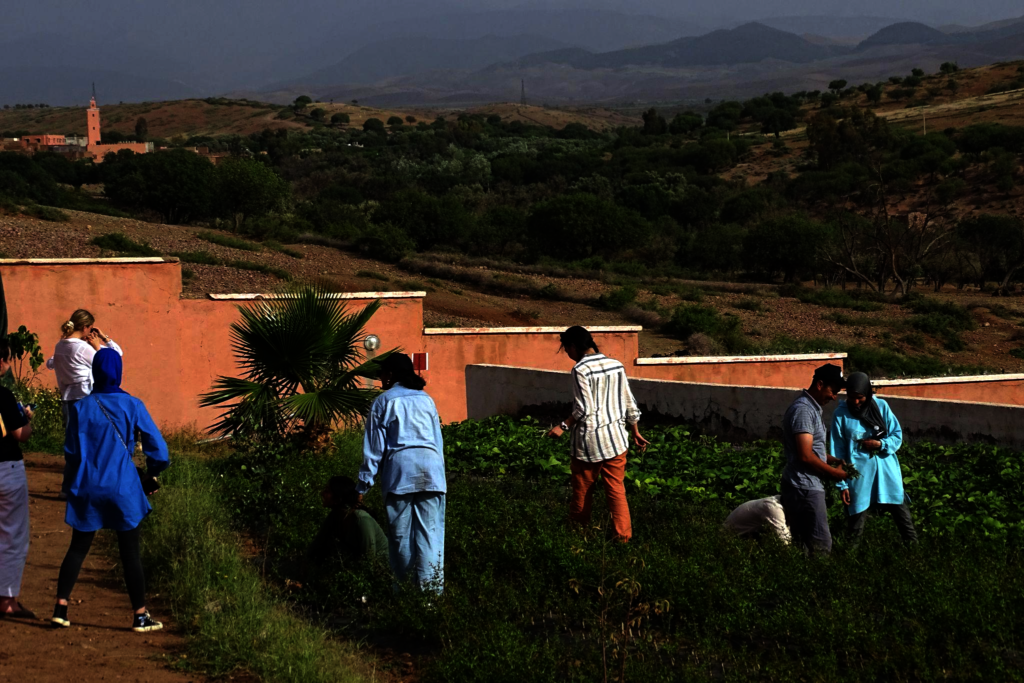
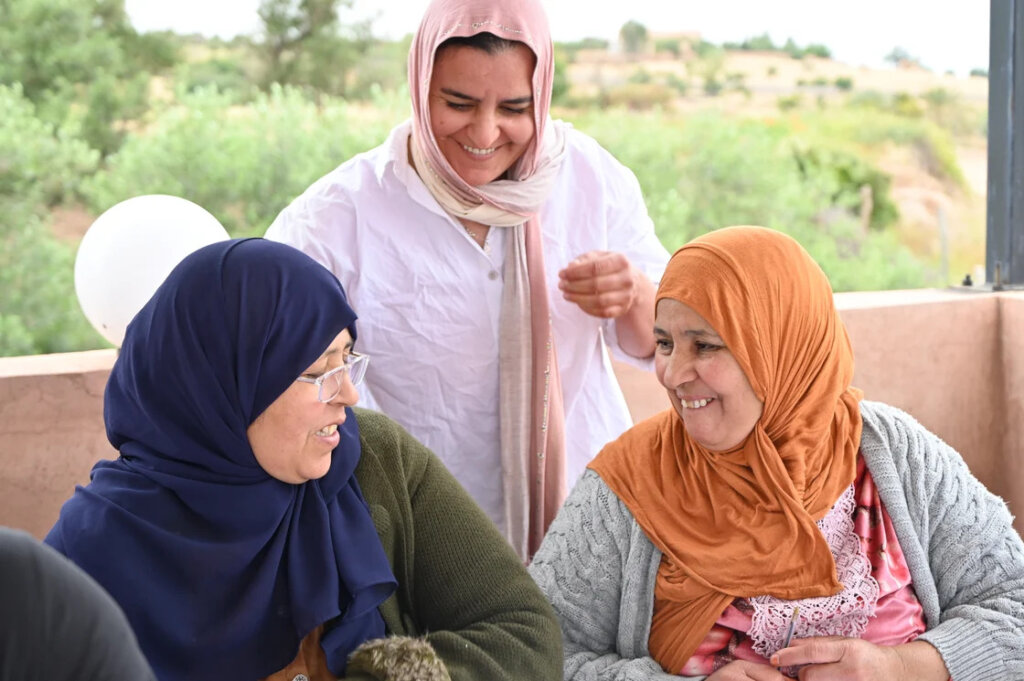
As the project evolved, literacy emerged as a cornerstone of long-term sustainability. In partnership with Morocco’s National Agency for the Fight Against Illiteracy (ANLCA), HAF trained three local instructors to deliver community-based classes tailored to adult learners and their daily realities.
Because most participants speak Tamazight as their first language, instructors adopted a bilingual approach, combining Amazigh oral explanations with Arabic reading and writing exercises. This method has helped women build confidence while strengthening literacy in both languages.
Following a Training of Trainers (ToT) program in Marrakech, the instructors returned to their villages and established supportive learning environments that fostered strong participation and engagement. By May 2026, 55 women were attending classes adapted to their schedules, supported by instructors whose commitment often extended beyond their required teaching hours.
Using specially designed artisanal books, the program goes beyond basic literacy to equip women with practical skills for everyday life. Lessons cover topics ranging from reading prescriptions and using smartphones to bookkeeping, financial literacy, and cooperative management, transforming literacy into a powerful tool for selfreliance, stronger cooperatives, and greater participation in community life.
A Second Chance Through English and Storytelling
At Zarbiat Achbarou Cooperative, ten young women who had left school early asked for an opportunity to continue learning. In response, the project introduced English classes supported by workbooks, bilingual dictionaries, and storybooks.
Through a peer-led approach, participants read stories and present them to one another in English, building language skills, confidence, and communication abilities that can support future opportunities in tourism and entrepreneurship.
"I did not want to give up."
For Fatima, a member of the Tifawt Ouidraren Cooperative, poor eyesight initially prevented her from operating a sewing machine. Determined not to let this obstacle stop her, she sought medical assistance and obtained corrective glasses. “I wanted to sew like everyone else, but my eyesight made it impossible. I decided to visit the doctor and get glasses because I did not want to give up. Now I can sew the bags myself, and I feel proud every time I complete one.” Her story reflects the determination shared by many women participating in the program.
Building Future Together
The High Atlas Foundation extends its deepest gratitude to the Joint Distribution Committee (JDC) for its unwavering partnership and belief in the potential of rural Moroccan women. Together, we are doing more than producing biodegradable tree sacks.
We are helping women cultivate confidence, knowledge, and economic independence, creating stronger families and more resilient communities for generations to come.
Project reports on GlobalGiving are posted directly to globalgiving.org by Project Leaders as they are completed, generally every 3-4 months. To protect the integrity of these documents, GlobalGiving does not alter them; therefore you may find some language or formatting issues.
If you donate to this project or have donated to this project, you can receive an email when this project posts a report. You can also subscribe for reports without donating.



Support this important cause by creating a personalized fundraising page.
Start a Fundraiser