By The International Rescue Committee | The International Rescue Committee
CRISIS OVERVIEW
COVID-19 cases are trending downward in the United States and most of Europe, but some countries the International Rescue Committee (IRC) serves are only beginning to experience the impact of the disease. The IRC is capturing and sharing the lessons learned from countries further along in their responses to the pandemic, and using this information to scale our impact in areas where COVID-19 is spreading.
We know that the scale and severity of the virus’ impact is greater in humanitarian settings that have limited access to reliable information and essential services, especially high-density displacement camps and insecure rural communities. Women and girls, often marginalized in times of crisis, will find it even more difficult to access health facilities or health information when confined to their homes and shelters. The IRC anticipates that gender-based violence will rise during outbreaks. Currently, 65 percent of women and girls in South Sudan experience violence, and 80 percent of at-risk women and girls have no access to gender-based violence (GBV) services. These percentages will grow, which is why the IRC is working to integrate mental health and gender services into our response to the virus from the outset.
COVID-19 has another dire effect on communities ridden with conflict: skyrocketing food prices. New IRC data from Kenya, Pakistan, Iraq, Lebanon, Uganda, South Sudan and other nations show that vulnerable populations are losing income and seeing businesses fail. The IRC is responding with immediate cash assistance to help clients meet basic needs in Colombia, Yemen, Sierra Leone and elsewhere.
Meanwhile, camps in Syria, Greece and Bangladesh represent some of the most densely populated areas in the world where the virus could spread rapidly. In parts of Moria camp in Greece, over 1,300 people share one water tap; over 200 share one latrine. Rohingya refugees in just one site in Cox’s Bazar, the world’s largest refugee camp, could experience 590,000 infections and over 2,100 deaths in a year.
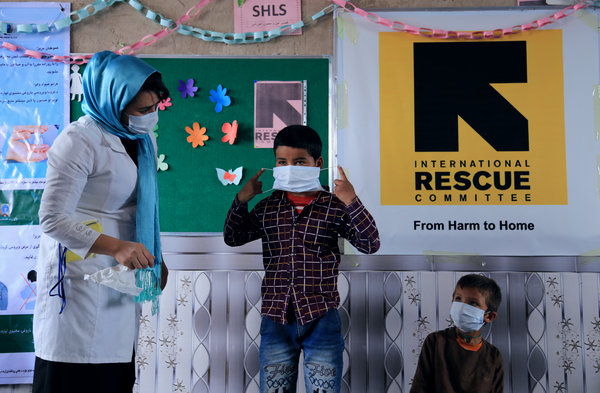
Without swift action in the coming weeks to mitigate the spread of COVID-19, more than 1 billion people worldwide may become infected, leading to 3.2 million deaths in 34 countries served by the IRC. But because of your support, we already are helping vulnerable people in Afghanistan, Syria, Yemen and other crisis-affected nations prepare for and respond to COVID-19.
OUR GLOBAL RESPONSE TO COVID-19
On March 11, the World Health Organization declared COVID-19 a global pandemic. Cases worldwide now exceed 8 million. In response, the International Rescue Committee (IRC) launched a $30 million funding appeal to support preparedness and prevention efforts to staunch the spread of the virus. This appeal to public and private sectors, including our own generous supporters, is helping us slow the spread of the disease, support staff safety, and continue our critical frontline response to the pandemic.
Based on our experience combating the Ebola outbreaks in West Africa and eastern Democratic Republic of Congo, and using this hard-earned medical and technical knowledge to establish best practice, the IRC has designed a bold approach to disrupt and diminish the outbreak in communities where we work.
The IRC’s immediate response aimed to:
• contain the spread of COVID-19, protect communities, and care for the sick;
• meet basic food and security needs, with a focus on cash and voucher distribution;
• provide essential services.
Our longer-term response focuses to:
• keep staff, partners and clients safe;
• build from evidence and adhere to quality standards;
• support the local and national response;
• ensure gender equality is integrated in our response;
• adapt to fast-evolving needs, utilizing technology to reach clients remotely when necessary.
In Bangladesh, 62,148 community members have received COVID-19 awareness-raising messages since the beginning of our COVID-19 response. In Myanmar, our COVID-19 awareness-raising efforts have reached 1,076 community members, educating them on proper prevention methods as well as symptoms.
In Pakistan, the IRC worked with other agencies to develop key information about the disease for the National Disaster Management Authority as part of its mass media awareness campaigns. To date, the IRC has successfully reached over 3,663,396 beneficiaries directly all over the country.
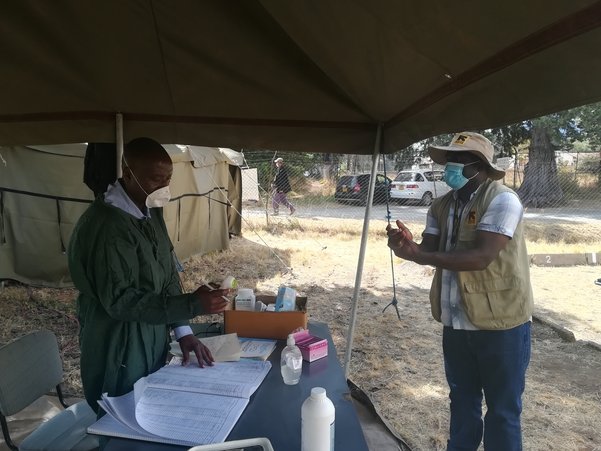
In Kenya, the IRC has trained health workers on COVID-19 and reinforced hygiene and self-isolation procedures. We have recruited 28 additional health care professionals to support our response at newly created IRC isolation units.
After five years of war, Yemen suffers from a dysfunctional health care system that can’t cope with an alarmingly high level of COVID-19 mortality. The IRC country team has provided cash distribution for 281 internally displaced households in southern Yemen while adhering to protective procedures and social distancing protocols. The IRC’s mobile health teams, nutrition services and hygiene awareness campaigns are ongoing, reaching more than 2,000 individuals.
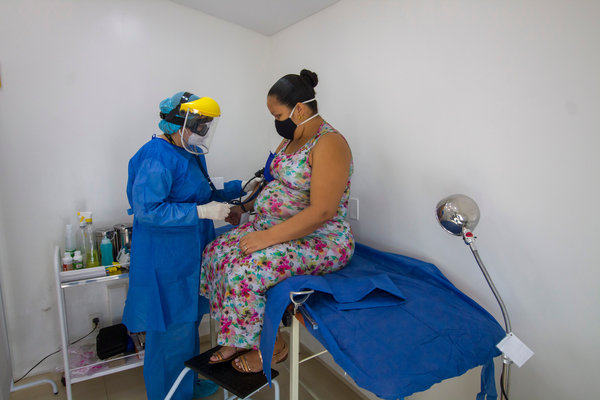
In Cúcuta, Colombia, the IRC health center has added a larger coverage of health services to meet the increase in patients. We are also maintaining medical consultations for migrants arriving at the border with Venezuela. Medical health services (primary health care, antenatal care and family planning) as well as telemedicine services are being provided at a mobile clinic near the border. IRC’s health team has reached more than 2,000 individuals during April and May, mainly women. Remote distribution (e-transfer) is ongoing, and hygiene and education kits are being distributed. Thanks to this contribution, IRC in Colombia was also able to purchase the PPE necessary for its staff and donated to the public health system in Cucuta, Medellin and Bogota.
In El Salvador, lifesaving cash has been distributed to 287 women and their families who are survivors of, or at high risk of, genderbased violence. The IRC country team has delivered 200 basicneeds kits, 100 hygiene kits for female and 100 hygiene kits for male returnees, recently deported from the US and being held in quarantine centers.
In Mexico, the IRC has been actively working on prevention of COVID-19, providing 16 shelters with kits that include a month’s worth of hygiene products. We are also distributing “dignity kits” (feminine hygiene) for women and girls in shelters, while reinforcing messaging on the prevention of violence against women.
In the United States, IRC offices are following CDC and local guidance on best practices in personal hygiene and health, with staff and clients practicing social distancing, canceling nonessential travel, and switching to remote programming whenever possible.
• In Seattle, case managers are creating health and hygiene kits and stocking emergency food supplies for families at higher risk. We are offering home study packets to students in our youth programs and remote mentoring for youth and adults.
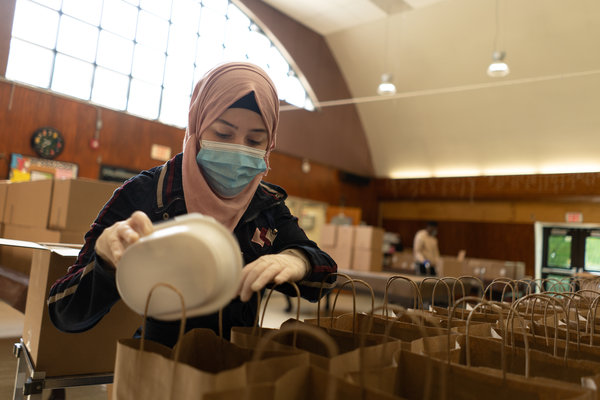
• In New York and New Jersey, we have expanded food distribution sites in partnership with World Central Kitchen and in coordination with local authorities. IRC volunteers and clients have pitched in to distribute 6,000 meals at various sites, and we are partnering with other nonprofits to provide meals for food insecure families. All staff, volunteers and clients are working to reinforce public health messaging, social distancing and stay-athome protocols.
THE IMPACT OF COVID: A MOTHER’S STORY
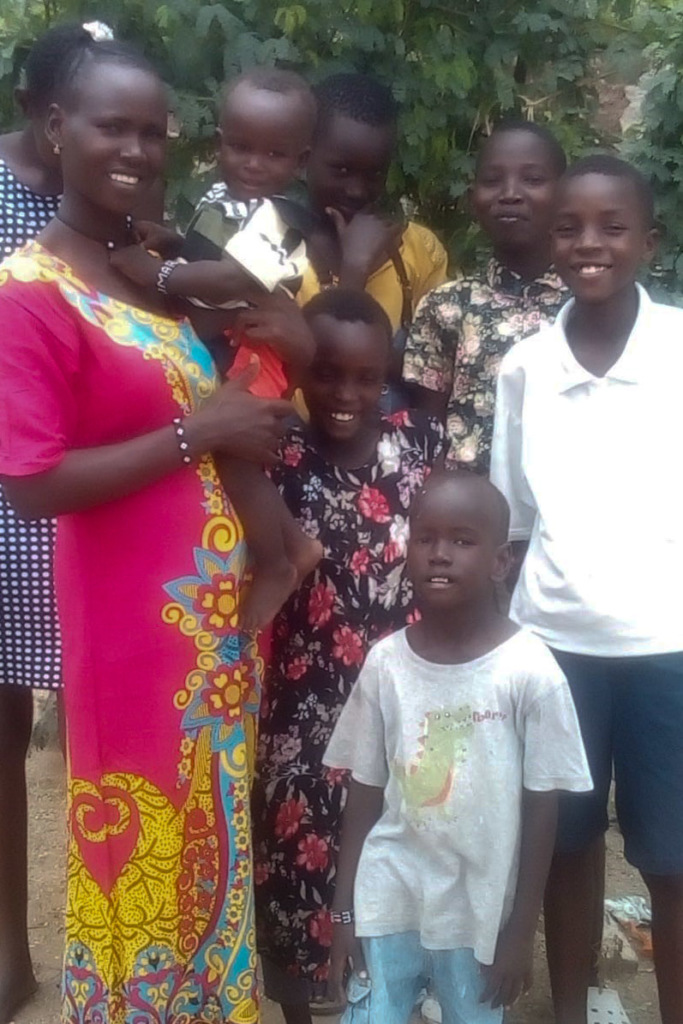
Florence, 35, is a mother of three girls and four boys living in Kenya. She was first introduced to the IRC in 2019 after seeking medical help for one of her daughters who was the victim of sexual and gender-based violence. The clinic referred them to a wellness center managed by the IRC, where her daughter received further medical and psychosocial support. Florence has remained in contact with the IRC ever since.
As a mother, Florence’s priority is to keep her children happy, healthy and safe, which, unfortunately, are all threatened by COVID-19. Says Florence: “My responsibilities have increased: I am mother, teacher and custodian to my children. I monitor their every movement in order to keep them safe. The children are home all the time; hence, I must ensure they have food to eat and are taken care of. My children are worried about their education and whether they will have to repeat their classes. I am highly cautious because of COVID-19 and I do not want my children interacting with others. Financially, we are struggling because I lost my job, since business was not doing well, and my employer was forced to let us go.”
Florence explains that people in her community are facing similar needs. Many families are unable to homeschool their children or provide access to online learning. In addition, Florence notes, “We are also afraid of the safety of our children, watching helplessly as our children deal with anger, confusion, fear, and being unable to make things better for them.”
Despite these many challenges, Florence urges mothers around the world “to be strong for their children, follow the precautionary measures, and keep hope alive no matter how dark it gets.”
The IRC has been providing essential and lifesaving services in Kenya since 1992 and is working swiftly to adapt to the challenges presented by COVID-19. IRC staff in Kenya are hard at work ensuring that preventive and protective measures are in place. In Kenya’s Kakuma camp, home to some 194,000 refugees, IRC health workers and staff are teaching hand-washing techniques and safety procedures through community outreach programs to mitigate the impact of COVID-19.
Links:
Project reports on GlobalGiving are posted directly to globalgiving.org by Project Leaders as they are completed, generally every 3-4 months. To protect the integrity of these documents, GlobalGiving does not alter them; therefore you may find some language or formatting issues.
If you donate to this project or have donated to this project, you can receive an email when this project posts a report. You can also subscribe for reports without donating.