By Caitlin Golub | Account Manager
Each day hundreds of families cross the border from Mexico to the United States in search of safety and security. U.S. policy changes mean an increasing number of people are stuck in Mexican border towns while others are being forcibly returned under the administration’s “Remain in Mexico” policy. These new policy changes mean an increasing number of people are stuck on the U.S.-Mexico border. The U.S. and Mexico border spans almost 2,000 miles. People living all along the border, but particularly in the eastern portion, are struggling to survive the crime and violence associated with criminal gangs -- including trafficking of drugs, weapons, money, and people.
Children are reported to be at risk of sexual abuse, gang recruitment and violence, and women are vulnerable targets of criminal gangs engaging in human trafficking. A recent IRC survey found an unusually high number of families (about 20 percent) citing safety and protection from violence and gangs as priority concerns, neither of which rank so prominently in similar assessments around the world.
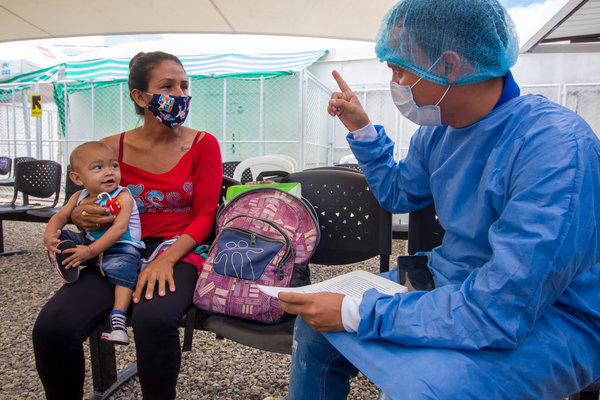
The IRC is working to support programs on the border, but more funding is urgently needed. The IRC is currently setting up programs through local partners in Northern Mexico to aid migrants and asylum seekers stuck in border towns. We are establishing programming to support women and girls who have experienced violence by supporting increased access to services such as medical care and psychosocial assistance. The IRC continues to assess the impact and plan to scale up our response; however, it is urgent that international donors make emergency funding available to shore up a response commensurate with the needs. IRC is also scaling up its work in El Salvador and on the U.S. side of the border to reach those in need.
Links:
Project reports on GlobalGiving are posted directly to globalgiving.org by Project Leaders as they are completed, generally every 3-4 months. To protect the integrity of these documents, GlobalGiving does not alter them; therefore you may find some language or formatting issues.
If you donate to this project or have donated to this project, you can receive an email when this project posts a report. You can also subscribe for reports without donating.