By Robin Van Loon | Founding Director Camino Verde
Happy New Year dear friends,
For Camino Verde, 2021 is off to a jump start. In spite of COVID, in spite of all that has been so hard this past year, now more than ever we are making significant strides on our mission to restore the forest landscapes of the Amazon by strengthening forest communities.
In the first month of the year:
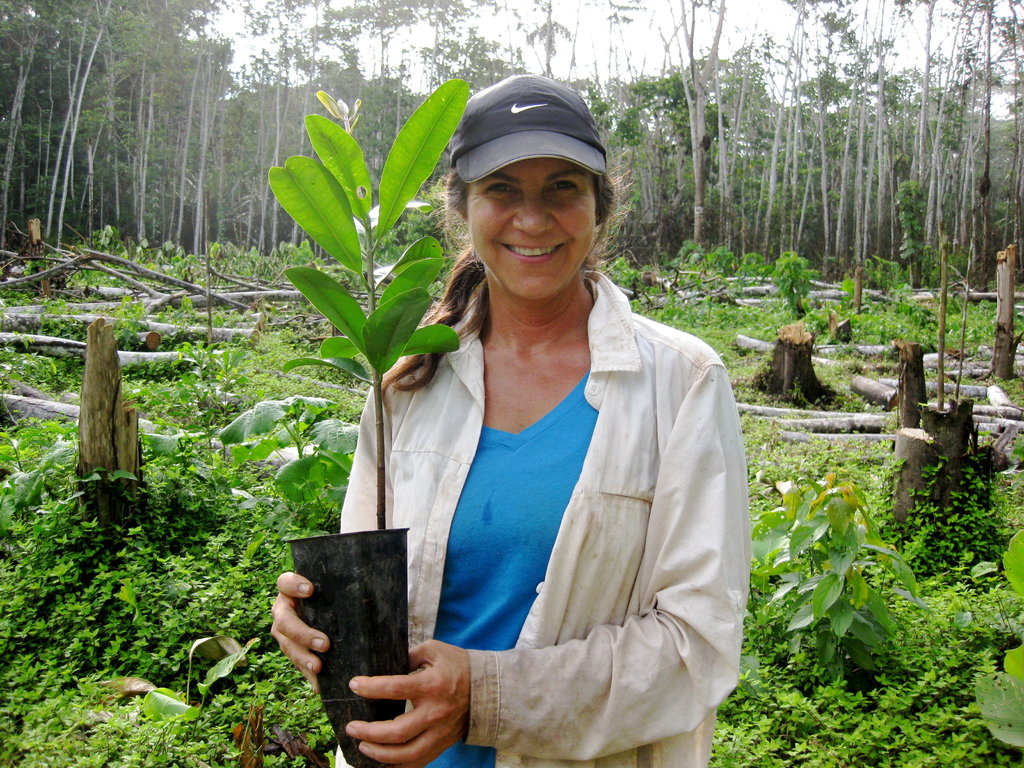
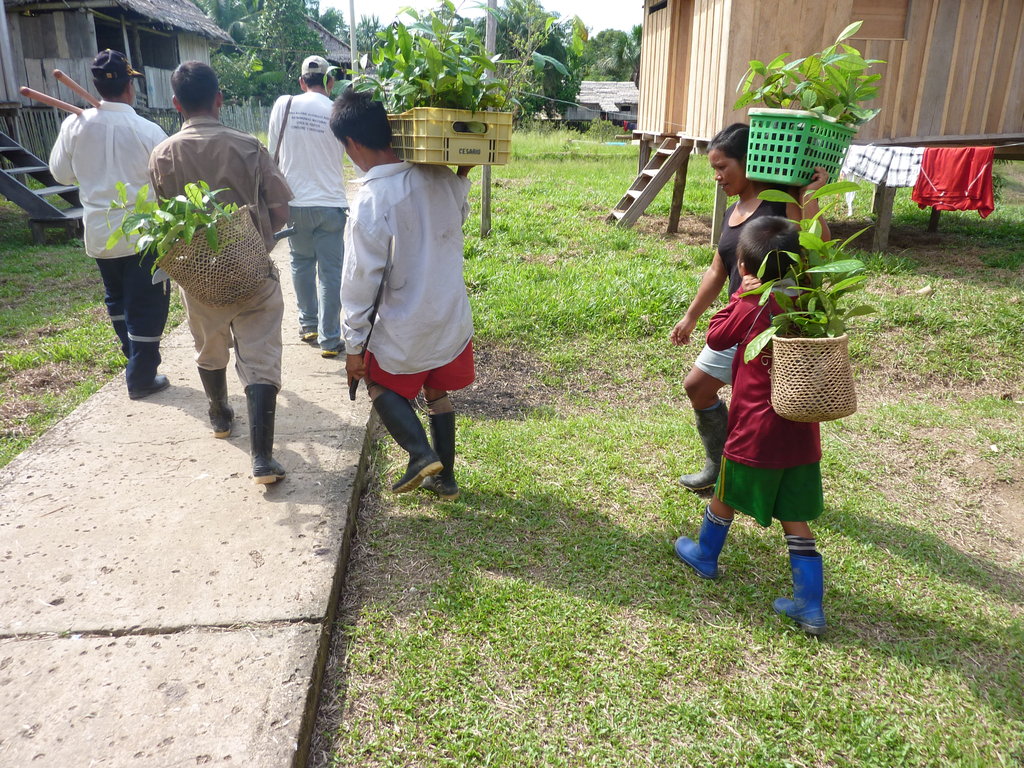
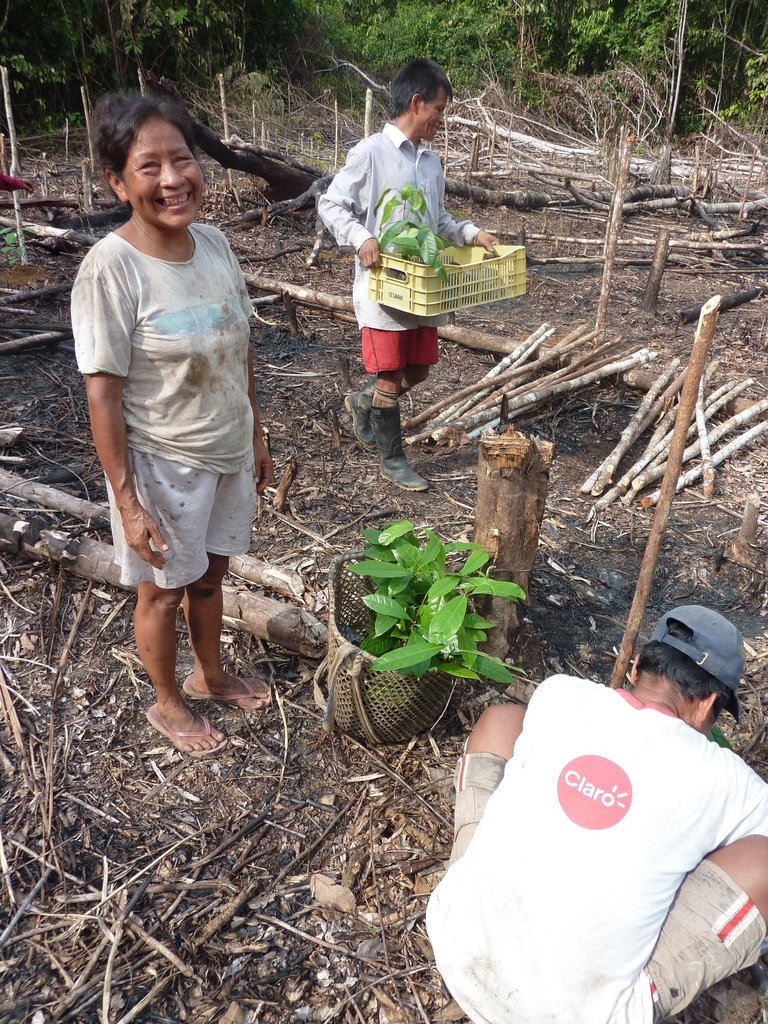
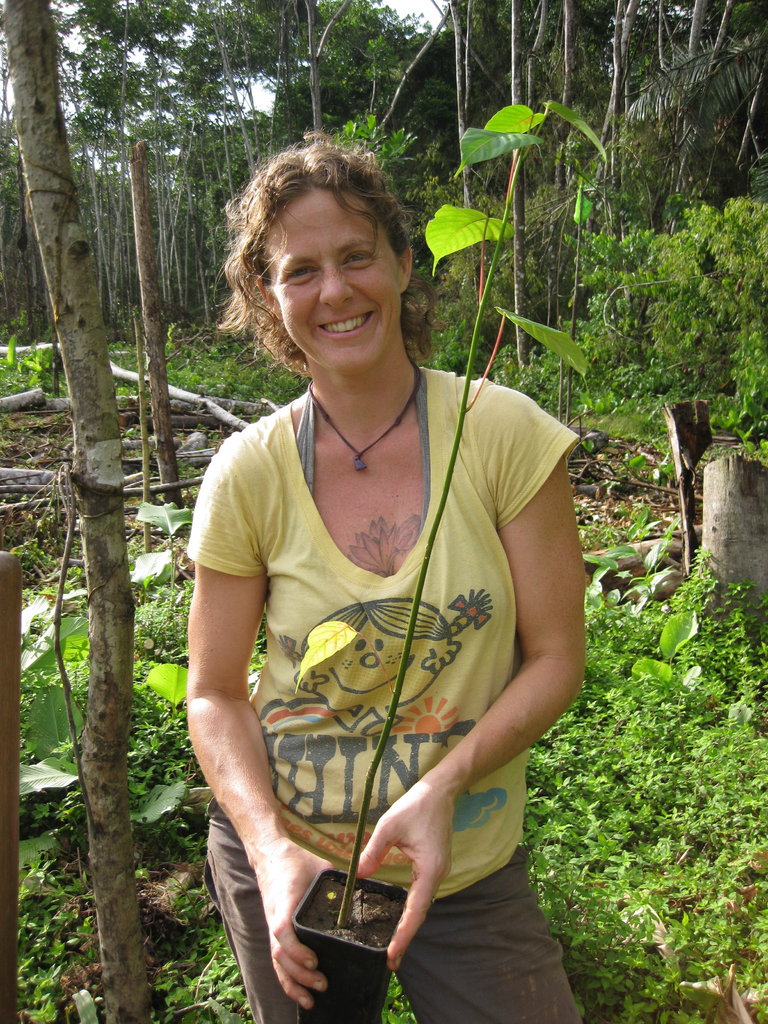
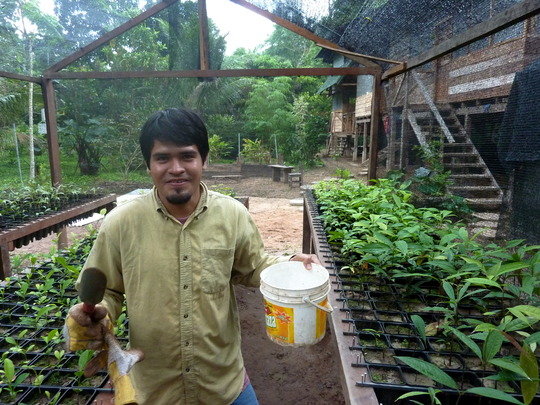
Coming up in the first half of this year, we will plant 50,000 more trees in 6 Amazonian communities. We’re thankful to be able to do it.
Gratitude continues to be the baseline of our experience, as it has been over the last 12 months. We’ve all experienced a new normal, then a different new normal, then something that doesn’t seem so normal after all, and now here we are. We’ve all coped with loss, with solitude, with questions about why the world is the way it is – and how it could be more like the world we know is possible. And despite the depth of the challenges and the lack of familiar sources of support and optimism, we are grateful. We are grateful to be alive, grateful to be on this planet, grateful for the chance to learn, to grow, to deepen, to heal.
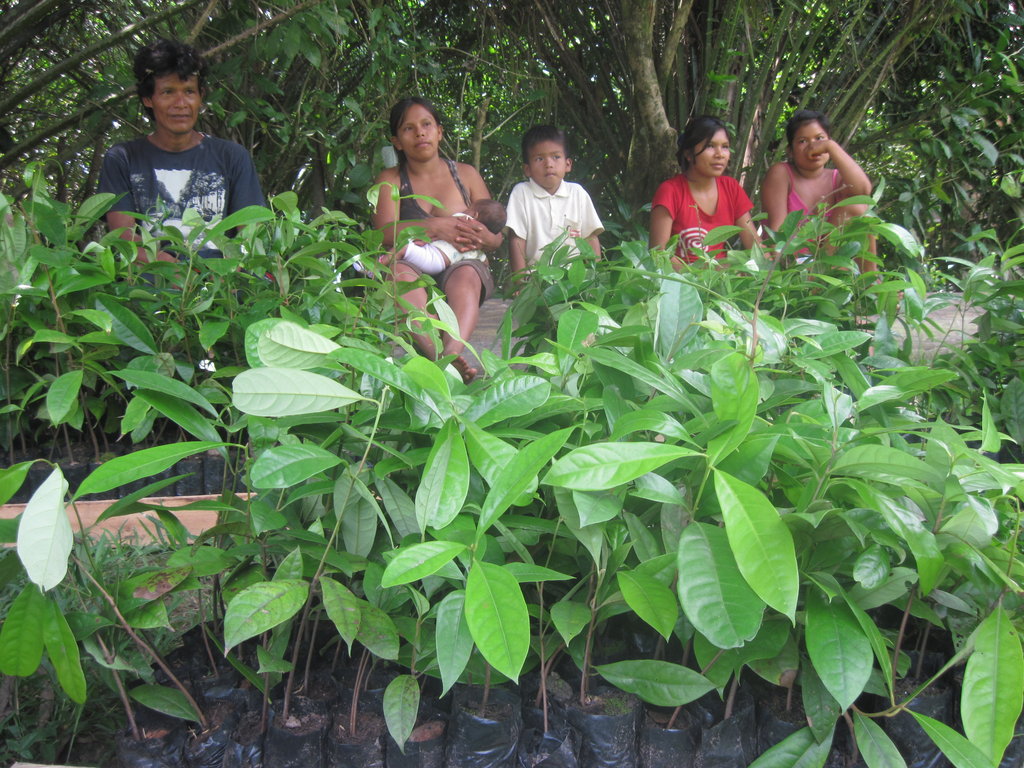
Indeed, we’re grateful for everything you’ve helped us create. Camino Verde as an organization continues to provide livelihood to a team of 20. As the world has shaken all around us and inside of us, our staff and their families appreciate this work more, take it less for granted, than ever before. They and I are humbled by the possibility of continuing to do work that is regenerative rather than destructive to the landscape, to the Earth we call home. I know I’ve said it before, but we can’t do it without you – and we wouldn’t want to. Our community’s belief in what we do is what makes it so meaningful.
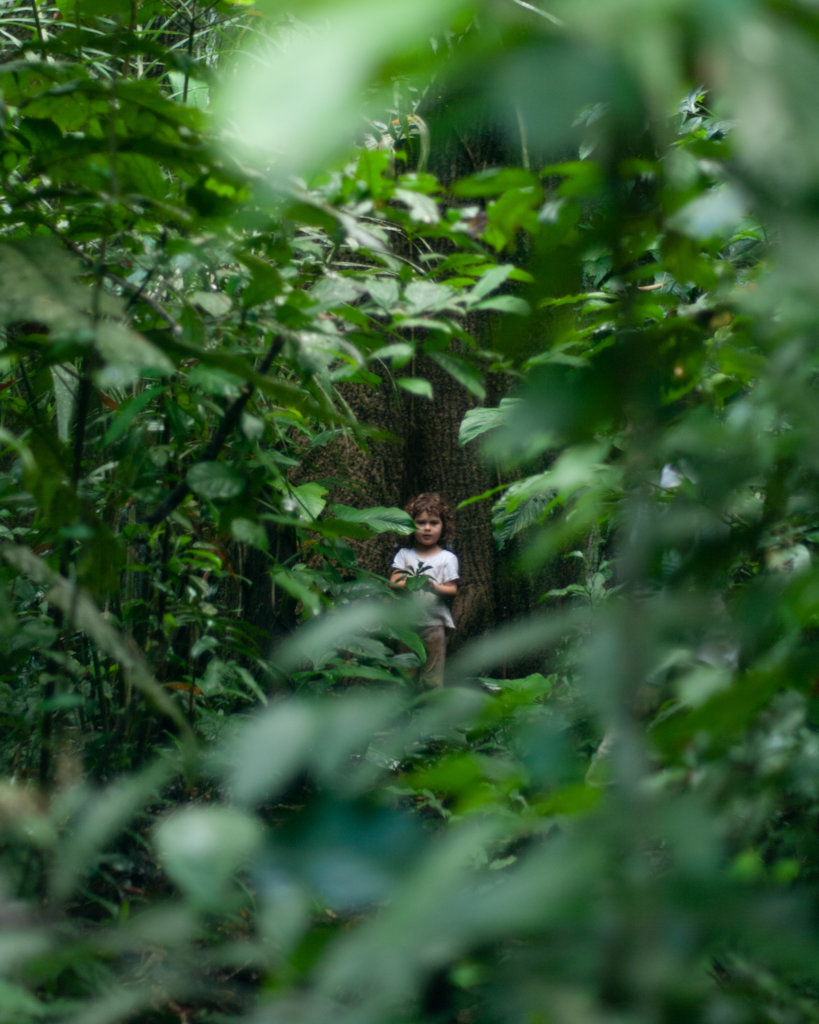
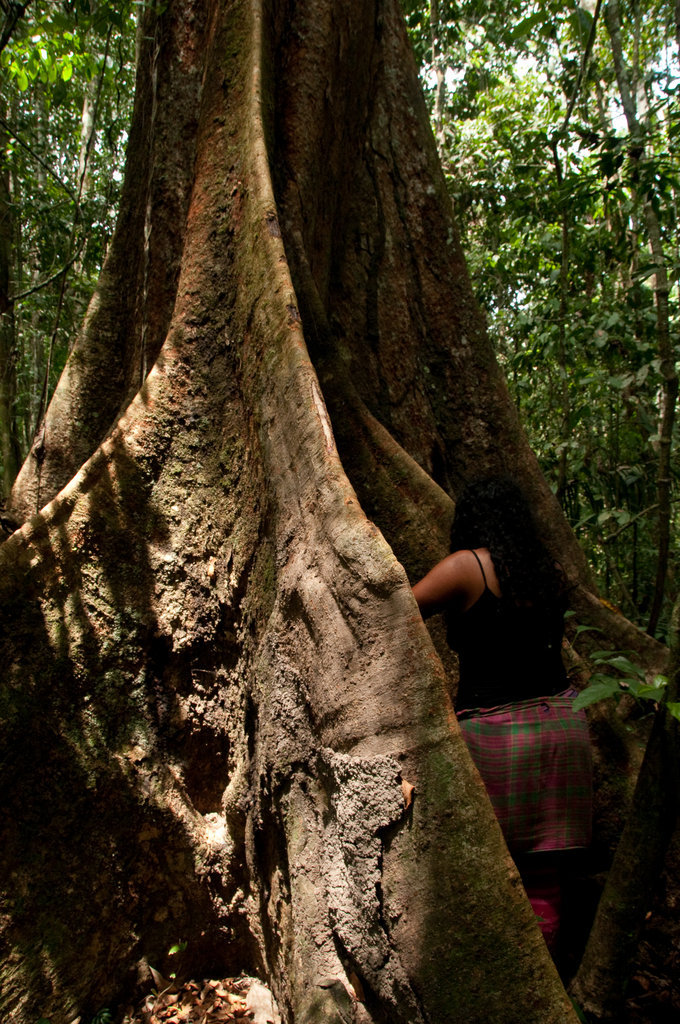
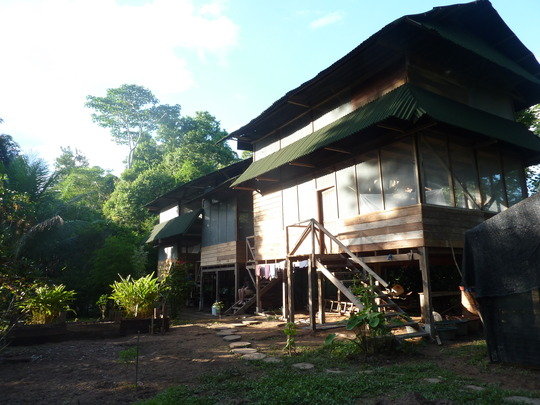
With tremendous gratitude and with optimism for what the future holds, in this month’s Report we’d like to give you a sort of a tour, of one area of our principle reforestation center in Tambopata, Peru. Think of it as a chance to visit the Amazon, to visit Camino Verde, even when travel is impossible, even as snow falls in many of your necks of the woods. So, imagine the temperature rising, the thunder of the rainy season sounding in the distance, and a few dozen species of birds vying for your ears’ attention. You’re surrounded by trees, some of which you probably won’t believe were planted in the last 15 years due to their size. Have you got the mental image?
Well then, come with me for a little walk around the place.
What you’ve helped create
This morning first thing, before the sun was resplendent and hot, while walking the short fifty-yard path from my doorstep to the kitchen, I was surrounded by a sound that reminded me first of an arriving storm, or of distant rain approaching from across the river. A moment later, the slight modulations in the pitch and tone of the noise made me think of an airplane or the far-off sound of an outboard motor. But this was no storm, no motor cutting its way against the current. The hum, growing in volume, was from bees, thousands of them, up at dawn and off to work and filling the trees with motion and with sound.
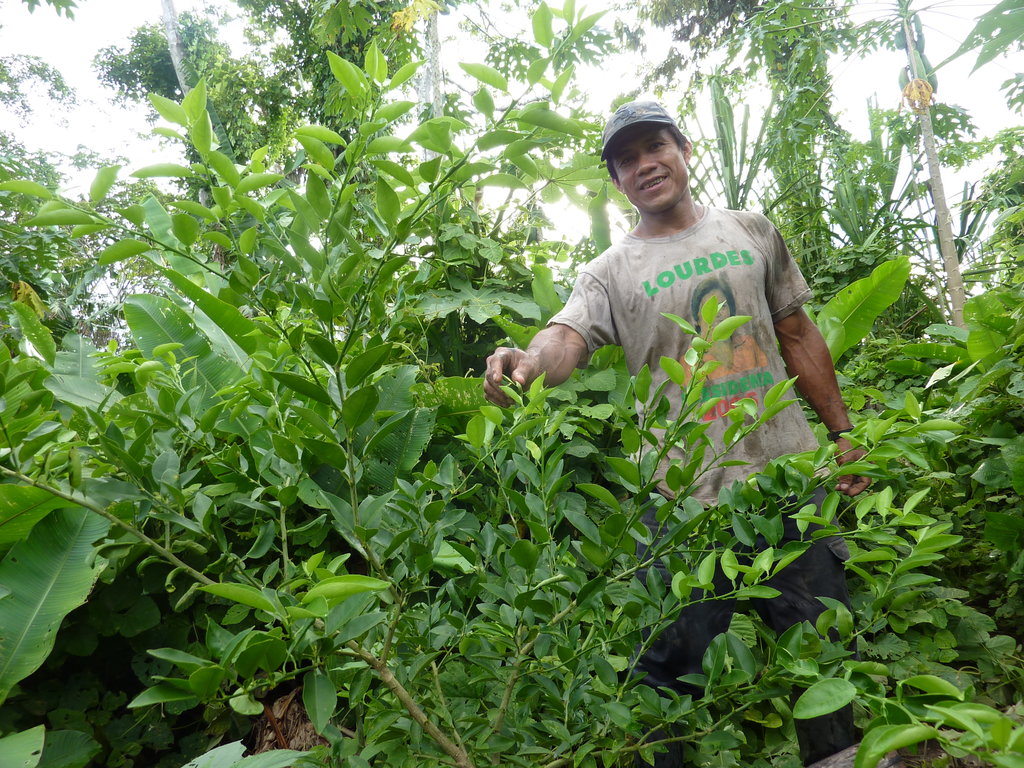
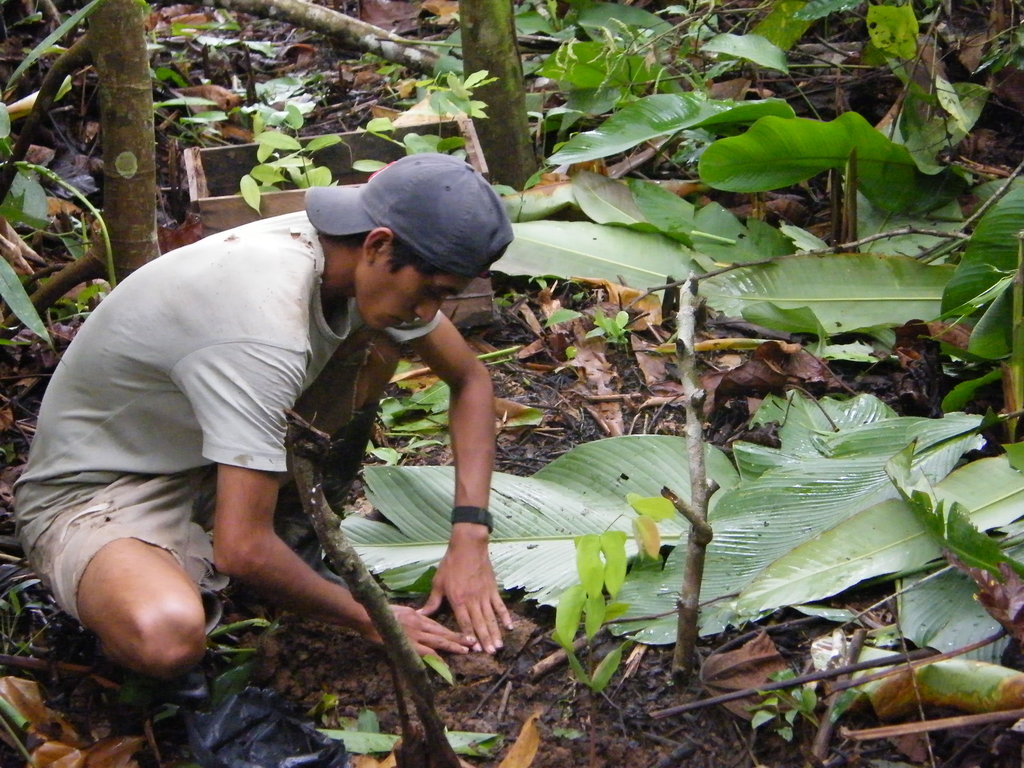
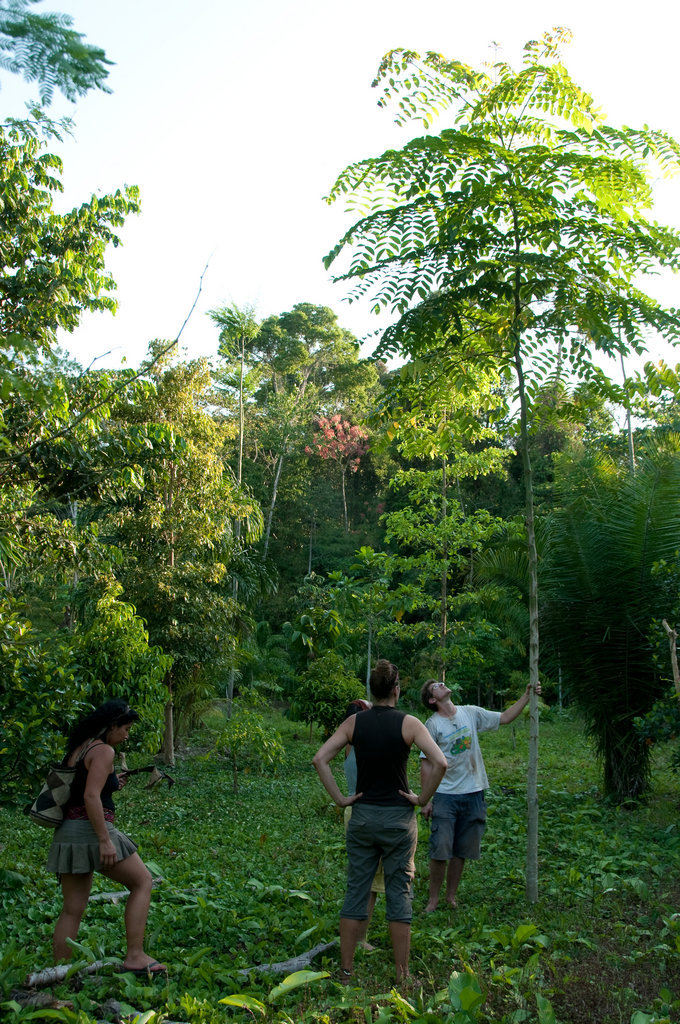
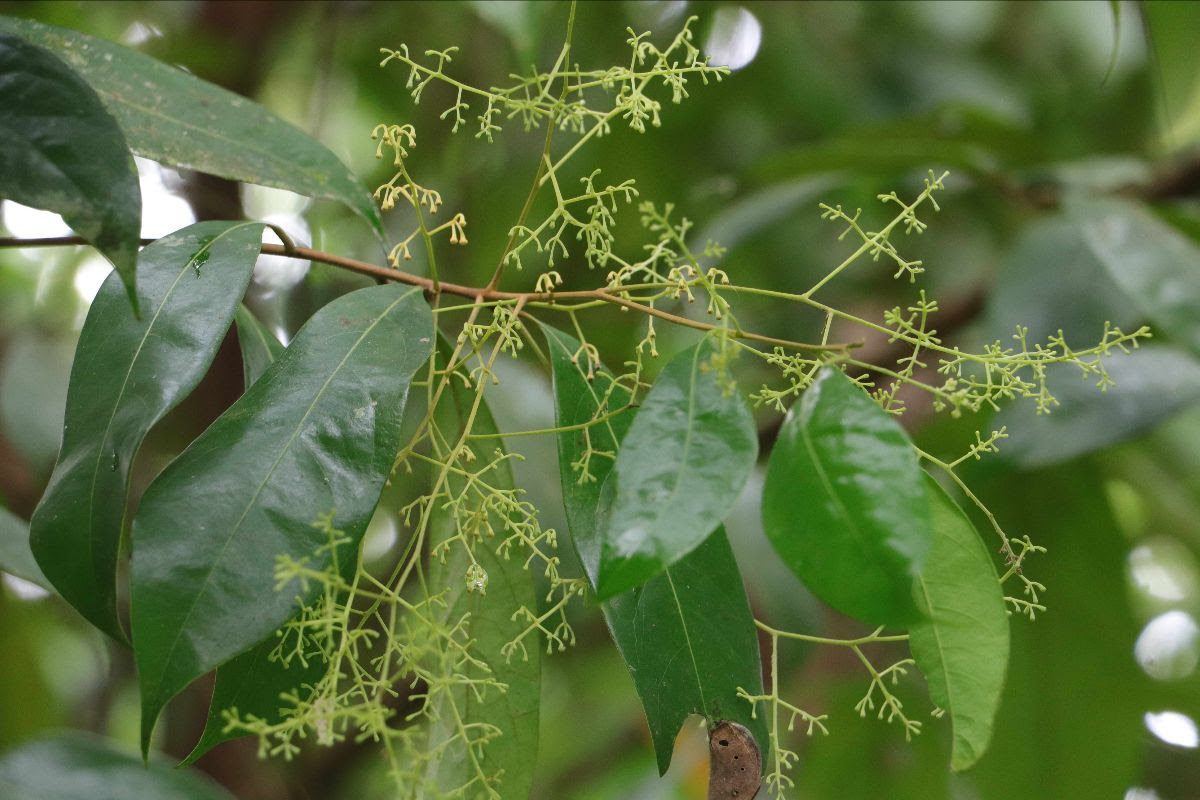
It was no coincidence they were there – the bees were delighting in the flowers of a tree known locally as sangre de grado, a medicinal tree, and I was strolling past an area of a couple acres where 11 years ago we planted 250 of them with a group of young volunteers from the United States. We selected this species to plant because of its medicinal resin. A member of the rubber family, botanical name Croton lechleri, its latex is a dark blood red in color – giving the tree its common name, sangre. When applied to wounds, burns, and bites, the resin dries to form a seal over the hurt spot and proceeds to heal it with incredible speed. Amazonian people have known about the resin’s properties for probably thousands of years, and more recently it has found its way to world markets both in raw form and in sophisticated extracts approved by the FDA.
Sangre de grado typically grows along rivers, meaning it prefers access to abundant water and sunlight, the latter of which is sometimes in shortage in the dense primary forest of the Peruvian Amazon. It behaves like a pioneer, springing up to fill in areas of recently exposed mud left behind when a river changes its course. The tree grows quickly, and many of these 11-year olds are well over a foot in diameter. This, the ecology of the species, was another reason we selected it for planting, and in this precise location. The plot is in a low-lying area along the descent to the Tambopata River, below the highwater mark, experiencing at least one flood rise a year. In fact, last week the chocolate milk-like waters had reached several feet up the trunks of many of the trees for a period of just over 24 hours.
This is great for the sangre de grado, a riparian species, and also great for the native palms we interplanted between the trees. Many of the Amazon’s mega-abundant fruit palms grow naturally in flood zones or areas of forest with months of standing water each year. As such, the species known locally as aguaje, huasaí, sinamillo and ungurahui are planted in the spaces between sangre de grado, along with cacao and a few of its wild relatives who appreciate the shade as well as the fertilization provided each time the river drops Andean sediment at their feet, layer caking over the roots with rich minerals not readily available in the Amazonian lowlands. The planting system was designed to fit its location. You could say that it’s the product of thousands of years of local ecological knowledge, born out of culture and the landscape that the culture inhabits.
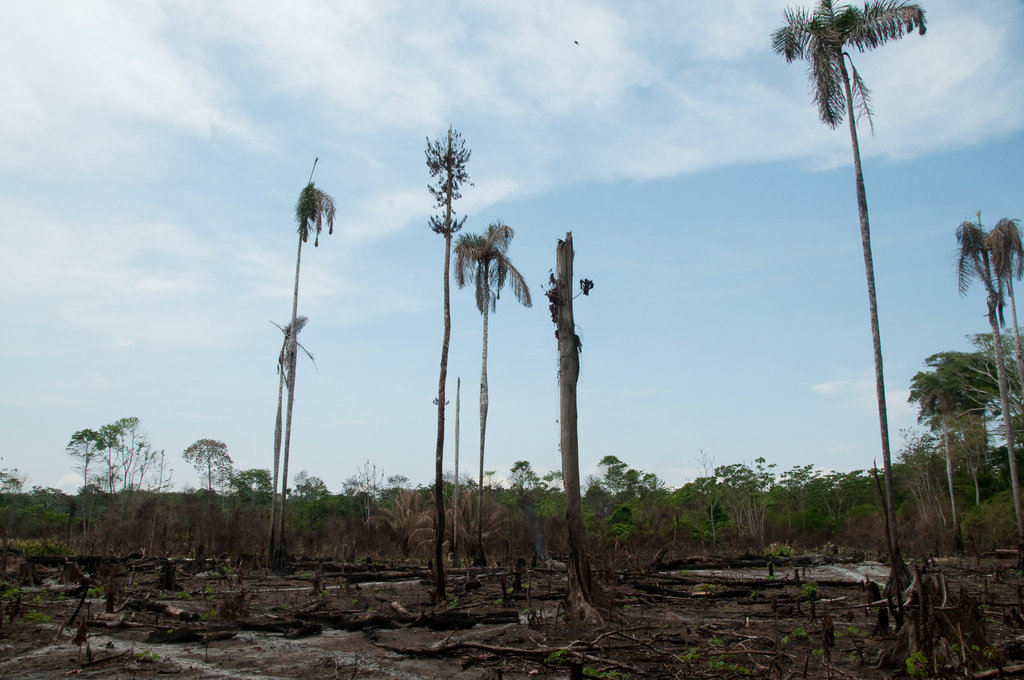
We also chose to plant sangre de grado here in the interest of bringing back forest canopy quickly – as it’s an impressively fast-growing tree, capable of growing 10 feet in 2 years. Like all of our reforestation plots, this was an area that had been slashed-and-burned by the previous owners for production of rice and bananas. The clearing of a farm is like a wound to the forest, leaving its sensitive soils exposed to harsh sun, nutrient-leaching rains, and in this case the possibility of erosion, being washed away by those river rises that could once again be beneficial as soon as the ground is stabilized once more by networks of tree roots. And so, just as this tree’s resin seals human wounds quickly, so too did the trees themselves help seal a cut into the forest in record time.
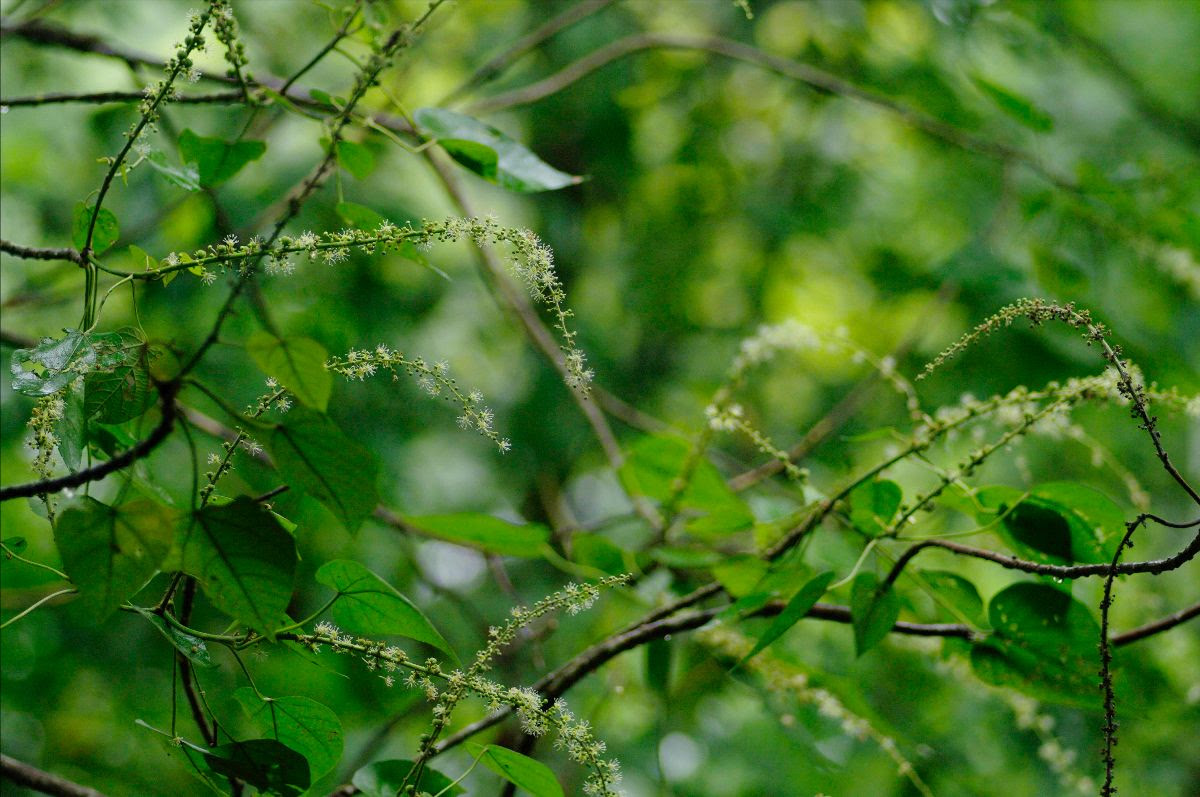
Now the sangre de grado trees are in flower, bursting with bees, impossible to know just how many hundreds of thousands of them packing into the canopy each day. It’s an incredible sight if you can get high enough to see it – the tree crowns spangled with minute white flowers that glisten like tiny jewels a day after a rain. It’s not hard to imagine how each of these trees, covered in flowers, represents an irresistible feast to the bees. And because of the tree’s ecology, riverbanks hosting dozens or hundreds of sangre de grado are found throughout the Amazon basin like natural gold mines for their pollinators. Our planting system has simply imitated, successfully, a form found in the wild. In the months to come, their flowers will transform quickly into green fruits no bigger than a peppercorn, that eventually dry out and pop open in the sun, flinging their sesame-sized seeds as far as possible, some to be carried on a river rise to new banks to colonize.
White bark, bright against a sky dark gray with warning. Roots in the river, blood running through the trunk, a crown full of bees. This is the ecology of a tree that has been referred to affectionately as a doctor in many a native community. It’s just one of over 400 Amazonian species we’ve planted here on the farm, the farms, that Camino Verde has initiated and grown over the past 14 years. Now, as I walk under the hum of its flowers undergoing transformation into honey, there’s no escaping the sensation that these trees are alive. Grown thoughtfully, with consideration to location, diversity, and the cycles of the landscape and its waters, this plantation doesn’t know it’s a plantation. Indeed, it thinks of itself as a forest.
Growing forests for people
A plantation of sangre de grado behaves like a forest, or in other words it is ecologically effective, a closed feedback loop capable of achieving and maintaining its own balance, aligning its forms in harmonious functioning. By including long-lived hardwood trees in the planting mix, eventually, after the first few years, there is no need for third party interventions or corrections enacted by the human planters. Its “ecosystem services” are working, and we can see this clearly in the quantity and enthusiasm of the bees. But they are not alone in enjoying what these trees make possible, as attested by the capuchin monkeys that we observe in the early mornings or at dusk on a weekly basis – who use the 11-year old, quickly established canopy as a helpful corridor running parallel to the river. Yes, the forest is working as a forest.
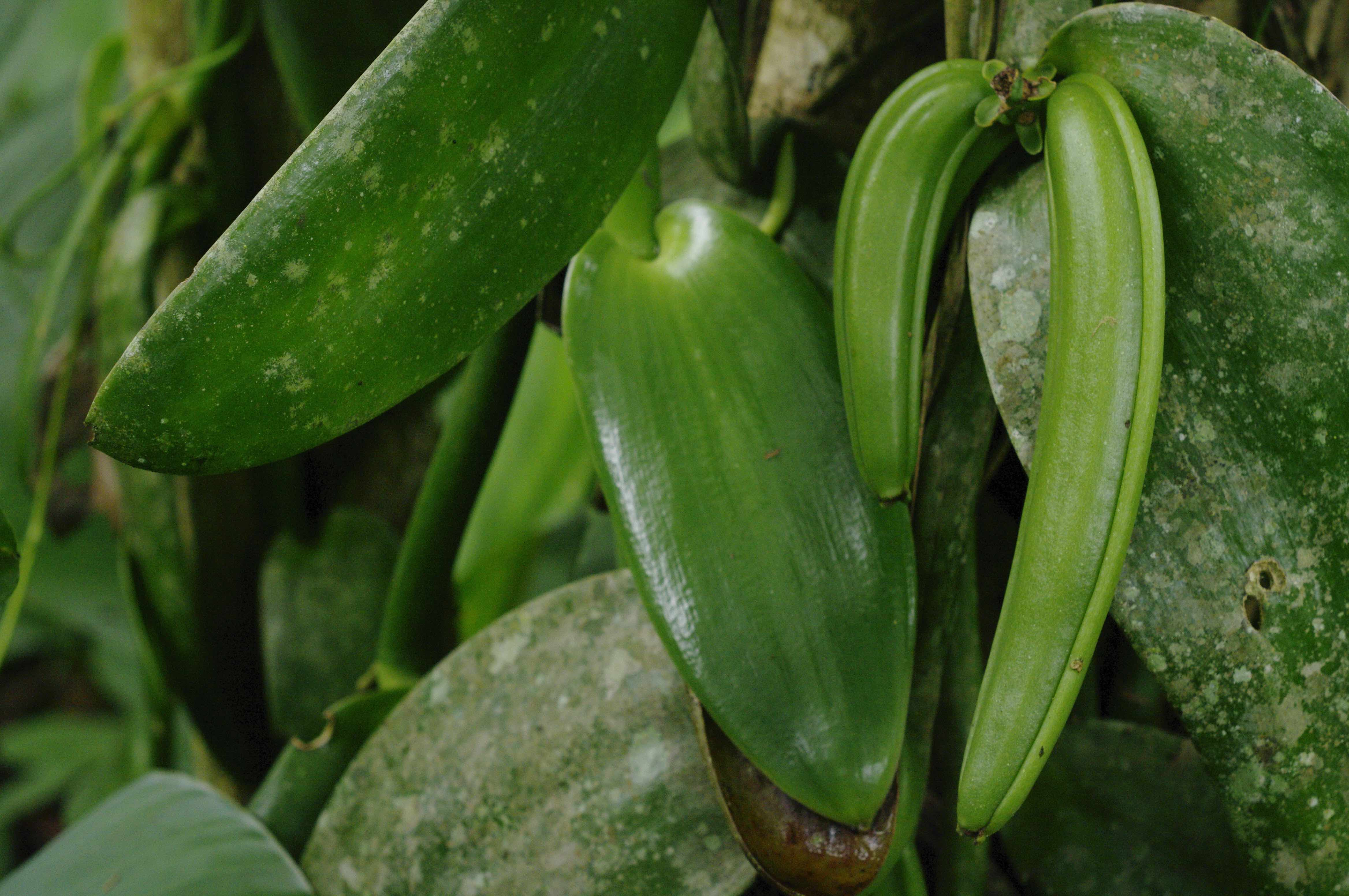
Yet in a manner of speaking, what Camino Verde does is to grow forests for people. You might say these are forests that work for the people, by producing things we find useful, feeding human families along with the bees and monkeys. We have discovered, as so many others have before us, that forests are generous enough to provide for all of us, humans and non. It’s not a zero-sum game where either we win or the monkeys win. Rather, there’s enough to go around for all of us. Besides, we don’t like the same things the monkeys like. In a planting parcel such as the one described here, think of the diversity of products rendered for human benefit: the sangre de grado resin, obviously; the oily fruits of the native palms; chocolate from the cacao; vanilla from the native orchids that climb some of the trees; honey from the bees; mineral-rich fertilizer from the river (well, and from the monkeys for that matter) that we can haul by the wheelbarrow load to our tree nursery to fill planting bags that give a start to more future forests. The list goes on.
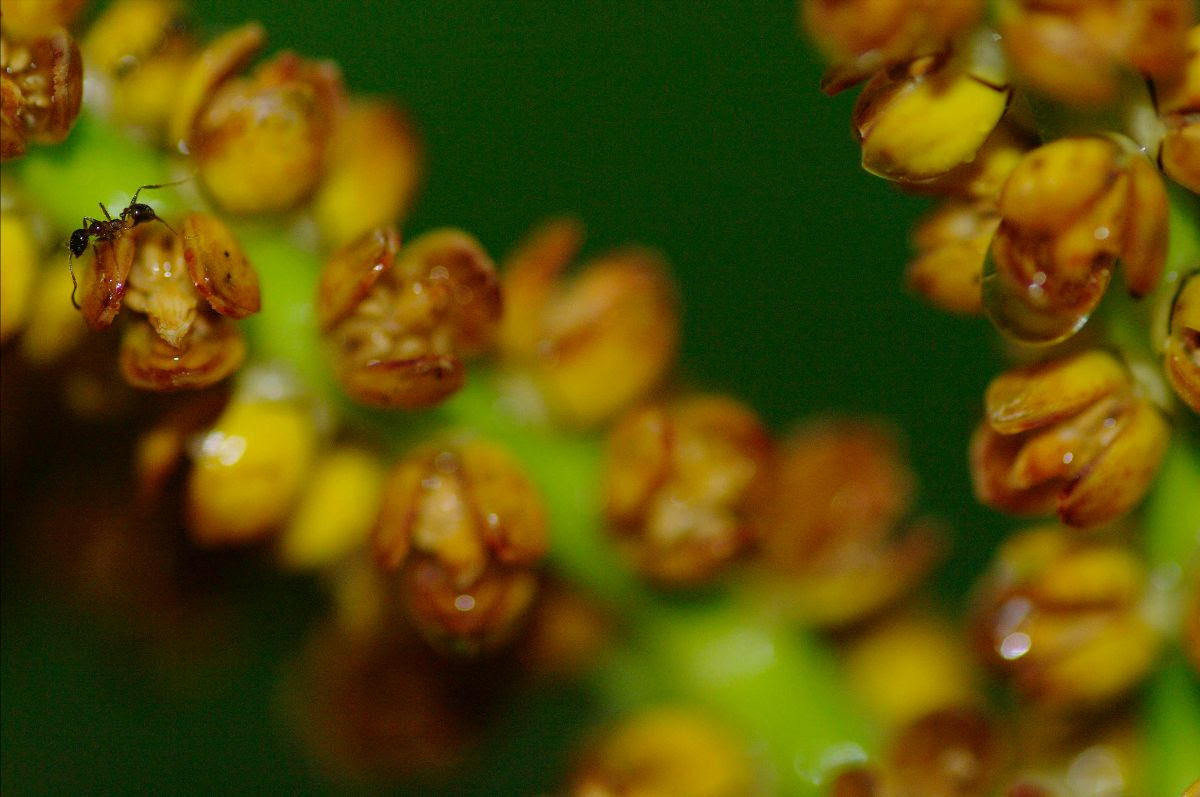
As I make my way walking under the sangre de grado canopy, I am reminded again and again of the variety of values provided by trees, species by species, the many gifts they give us, if only we are able to recognize them. My nose receives the intoxicating perfume of sangapilla, the small palm Chamaedorea angustisecta whose dioecious nature means there are male and female plants. The females produce seeds, the males only flowers. But what flowers they are. Bright yellow and covered in ramichis – golden, silent, tiny, native stingless bees – the male flowers’ aroma is curiously volatile. Taking a close-up whiff often results in little to no scent perceived. But walking in the neighborhood of a sangapilla plant in flower as far as a hundred yards away, sometimes you’ll get a direct splash of a bright, sweet smell that for some reason has evolved to float by at a distance – and to be very attractive to us mammals. People here plant it in the patio so that the aroma will invade the home. Some jungle old timers have even used it as a perfume, soaking the flowers in aguardiente for a month before patting the now-yellow liquid on clothing or directly on the skin. This is just one more aromatic plant, one more sweet-smelling tree in a forest of thousands of them, on a farm that gives hundreds of species a home.
Arriving to the kitchen after these brief minutes’ meander, my eyes take stock of the fruits we have brought in in the past days. Exotics like coconuts, mangoes, jackfruit, oranges, grapefruit and bananas sit elbow to elbow with native fruits like cacao, arazá, caimito, copoazú, moquete de tigre, sacha pitanga, and açaí. Thinking back to the last month or two, the list grows to include a dozen more species, and looking forward to February we can add even more, pijuayo, ubos, and huayo blanco. About a hundred of the species we have planted here have edible fruits or nuts. The wild forest we protect holds several hundred more. And those are just the tree fruits. Diversity and abundance are explosive, but this is not unique to the Amazon. Each landscape has its extraordinary retinue of generous providers. Nature knows how to endure hunger, but famine is a human invention. Scarcity is a product of our systems, not hers.
Coming home
Have you ever stopped and thought about just how many plant species we interact with in a single day? If we were to make an inventory of each plant that we touched and that touched us on any given morning, the list would grow quicker than our ability to keep up. The hardwood floor under our feet, the olive oil on the bread (wheat), our coffee, the flowers on the table, perhaps the table itself (cherry or oak), the trees lining the street (wise sycamores or elegant elm), the grass of the lawn, the fallen leaves we brush off the windshield. If you’re having a salad at lunch, the list grows exponentially. So, who said we are separate from nature? There’s no animal hip to such a diversity of beneficial plants as us humans.
When we acknowledge ourselves as ecological actors, as a part of nature rather than separate from it, we are actually empowering ourselves. We are reigniting ties to our oldest cultural and biological experiences – such as the experience of being an avid observer of life, a naturalist, of caring about the non-human world in a way that is not unlike how we care about the human world. How could you not care about the life upon which your own life depends? This is a deeply rooted part of who we are as a species, thoughtful and knowledgable about the plants and animals we rely on. This comes across strong in our traditions and our societies, most of them, since we first walked upright.
Back here on the farm, in the treetops the atatao is making the call that gives it its onomatopoeic name (“ah-ta-tao!”). Toucans are whistling their insistent, loping rhythm as they swing their beaks upward and side to side. Dove-like ground birds call out in a solemn, almost sad manner. Oropendolas imitate everyone else and then punctuate their mockingbird act with sounds all their own – like water drops amplified over a loudspeaker. So yes, indeed, the forests we grow are not only for people. Or as one of my Peruvian teammates states it, not only for the human people.
Perhaps I speak for you too when I say, this is the legacy we want to leave, and this is the way of life we want to lead. One in which we don’t see humans as the only people, one in which our gifts as a species exist in coordinated service of a greater whole, the web of life. When we think of ourselves as smarter than the rest of nature, we forget that we are nature. That nature is smart through us, in us. That our intelligence is a gift but also a sort of a mission or purpose, has a role to play that extends beyond our own benefit. We are smart enough to provide for the people even at the same time as we provide for the monkeys and for the bees. We can build forests that outlast us. Heaven knows our grandchildren will need them.
If Camino Verde is an organization attempting to rebuild forests, it is also a group of people who carry this mission in their hearts. We believe in it and we mean it. And so, as we seek different tools and wiser strategies to make reforestation contagious, we also operate by necessity at that vital human level of culture, to share and to inspire, to excite others to take the kind of action that we know is possible. Just as a tree produces flowers that are irresistible to the pollinators, nature provides experiences that we, as humans, need. We can’t live without the forest, without the river, without the rain. We can’t survive without the food they provide, but we also owe the beauty of our cultures’ artifice to the raw materials that the land gave us.
In recognition of this truth, and in gratitude for all we receive, the microcosmic act, the minor work, is the planting of a tree. But this act is dedicated in service of a macrocosmic intention, a great work, the seeding of a way of thinking and a way of life. Restoration presents itself in how we walk, the footsteps we leave behind us, but it is also in the song we sing while we walk, the prayers we sustain like an ember kept alive over a long journey. We think of regeneration work as rendered to the land by the people – but also to the people by the land. Perhaps it isn’t too late for us humans after all. Perhaps the forest is just now calling us home. I believe we still have time to heed that call.
Thank you for reading, thank you for walking with us. We are grateful to you and grateful for what the future holds. And we’re honored to get to share this path together.
In the spirit of regeneration,
Robin Van Loon
Founding Director
Camino Verde
Project reports on GlobalGiving are posted directly to globalgiving.org by Project Leaders as they are completed, generally every 3-4 months. To protect the integrity of these documents, GlobalGiving does not alter them; therefore you may find some language or formatting issues.
If you donate to this project or have donated to this project, you can receive an email when this project posts a report. You can also subscribe for reports without donating.