By Robin Van Loon | Executive Director
Dear Friends of Camino Verde,
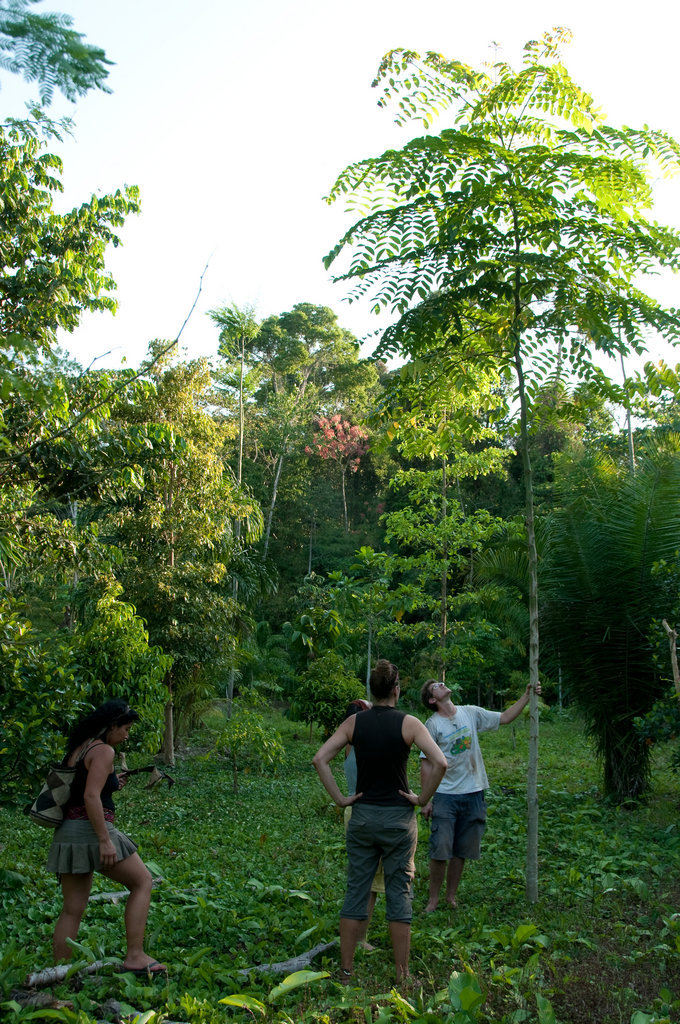
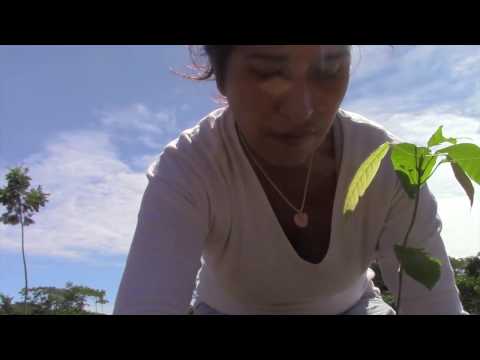
For those of you who are experienced Report readers (and, wow, we’ve been sending these out for over a decade now), you know that we tend to give a mix of concrete news, hard facts on numbers of trees planted, and – as much as possible – compelling stories from the Peruvian Amazon. We’d like to think that the stories and pictures can help make Camino Verde’s work feel a little more real and tangible.
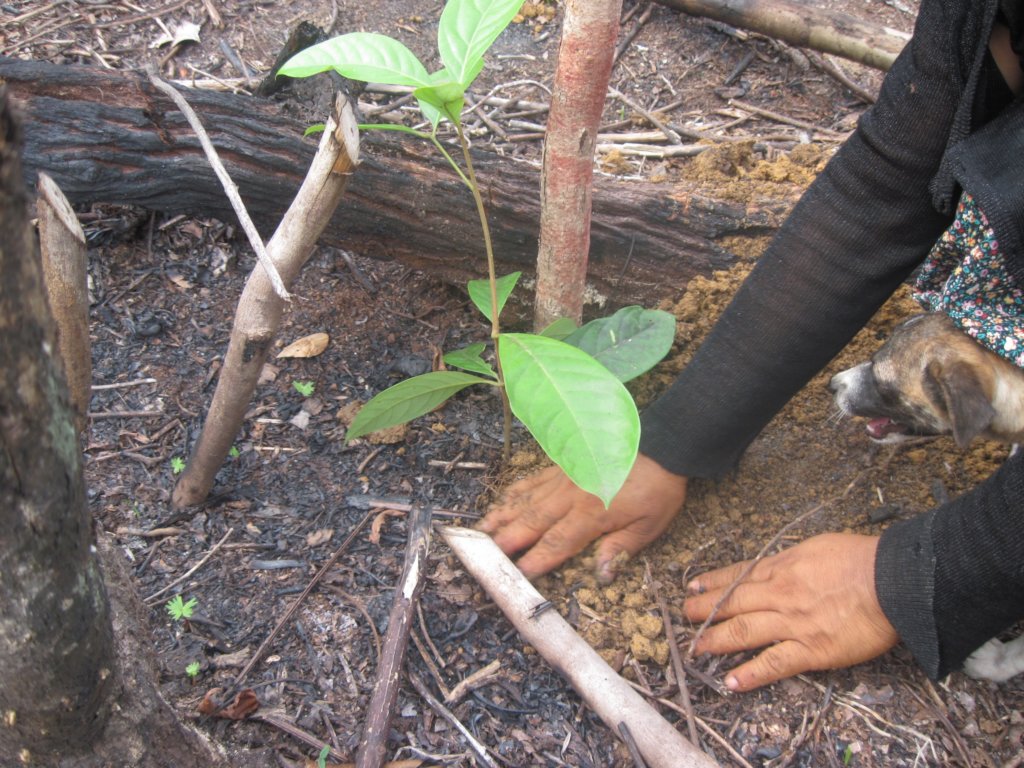
We want the strategies to make sense but we also hope that what you read makes you feels something. It’s meaningful to us, and we hope it’s meaningful to you. Because after all, dear reader, you are the ones who keep us at work. Your donations keep us planting trees, hundreds of species, tens of thousands of individual seedlings a year.
And, it is your interest and awareness and belief that are what really keep the lights on at Camino Verde, really keep the wind in our sails. Did you know? The majority of you receiving this Report have volunteered, visited, or donated. You have impacted – and maybe been impacted by – CV. These reports are notes to a small but worldwide circle for which we are so grateful. Thank you for being a part of our journey.
The story I’m excited to share with you today is about a program years in the making and yet just now turning one year old. It’s a story from Peru, but it comes from a whole other Amazon, far from the region of Madre de Dios that CV has called home for 15 years. That’s right, Camino Verde’s program in the northern region of Loreto – home to the Amazon River proper – is now just past its first birthday. So let’s go to Loreto, let’s meet the team, and talk about what it is that has Camino Verde up there in the first place.
Because I know you’re busy and some of you are here for the hard facts, let me give you a few stats before the story. In our first year in Loreto it looked like this:
With those headlines out of the way, let’s talk about how it all happened. Buckle up, I believe you’re about to be inspired.
A Tale of Two Regions
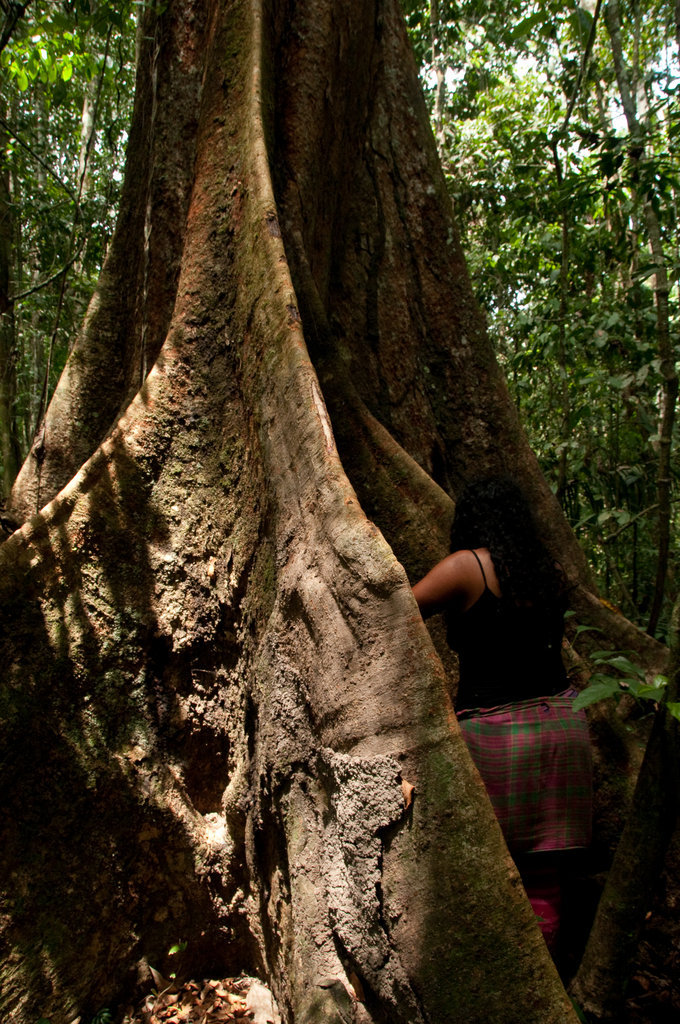
Many will be surprised to learn that the area of Peru that is covered by rainforest is as large as Turkey, is around the same size as Pakistan. Not everyone knows that Peru is big. 60% of the surface of the national territory of a country so often characterized as Andean is in fact east of the Andes, down in the humid tropical broadleaf forest.
Madre de Dios, the region or departamento of Peru where Camino Verde was founded, is at the southern extreme of that C-shaped expanse of Amazon that helps make this one of the top 5 mega-biodiverse countries in the world. Madre de Dios alone is the size of Austria, or South Carolina. It borders Bolivia and Brazil, and its southern- and westernmost portions are in the foothills of the Andes, not that far from Machu Picchu and Lake Titicaca. CV first set up shop in MDD’s Tambopata River basin in 2007, when it all began.
And as of 2020, we finally did the same, set up shop, in a second region called Loreto, the northernmost extent of that Amazonian C-shape and of Peru’s national territory. Loreto is by the far the largest departamento in Peru. Rounding out our size comparison exercise, its territory is one and a half times larger than Ecuador’s (thanks in part to Peru annexing a large piece of Ecuador into Loreto, not that long ago historically). Loreto is the same size as Germany, as Japan, almost as big as Montana, larger than Vietnam and significantly larger than say, New Mexico or Poland.
And Loreto is home to the place where the world’s largest river assumes its name. At the confluence of the Ucayali and the Marañón is the place where the river starts to be called Río Amazonas. Iquitos, the capital of Loreto and the largest city in the Amazonian portion of Peru, technically serves as a seaport, thanks to the Amazon’s deep channel, even though it is thousands of kilometers upriver from the mouth at the Atlantic.
In addition to its impressive territorial size, Loreto is also home to a much higher population than sparse Madre de Dios. Hundreds of native communities representing dozens of ethnicities dot the hinterlands on the squid-shaped river map in the surroundings of Iquitos, placed where it was due to its proximity to important convergences with significant tributaries: the Nanay, the Itaya, the Napo, and indeed the thickest roots of the tree of rivers, the Marañón and the Ucayali.
For those astute readers, you know that it’s nothing new that CV has been in Loreto. Our first report describing CV activities there was in 2011 (10 years ago!). And it’s true, we have been fortunate to get our hands dirty planting trees in the region starting in 2013. But it’s only since 2020 that Camino Verde has a real presence – a team of our own – in Loreto. What a team it is, and what a year it has been.
Let me tell you a bit about how we got there.
Rivers Flowing Together
Believe it or not, it was thanks to some wonderful folks in Pennsylvania. In this small world in which we live, the Marjorie Grant Whiting Center (unfortunately, no longer functioning) provided a small grant for a young Camino Verde to get to know better another MGWC grant recipient that happened to also be working in the Peruvian Amazon, the Center for Amazon Community Ecology (CACE). CACE founder Campbell Plowden of State College, PA visited Madre de Dios that year, and I had the chance to visit a few of the communities where CACE works in northern Peru in – you guessed it – Loreto.
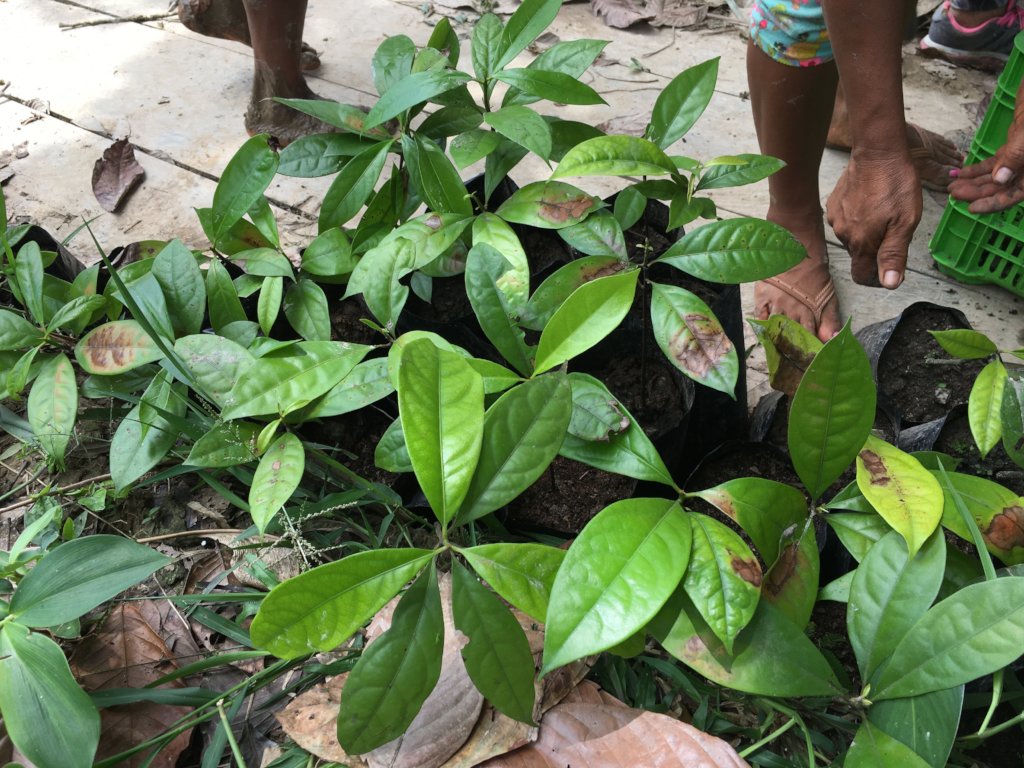
CACE and CV have been close allies ever since, and you’ll probably recall many photos in these reports taken by Campbell, who is an excellent photographer. It was thanks to the relationships that CACE carefully cultivates with native communities that CV was given a warm welcome in these far-flung, deep forest communities. And it was via close and thoughtful collaboration that CV, CACE, and our native community partners first embarked on the reforestation of the highly endangered, highly valued rosewood tree (Aniba rosaeodora).
Rosewood is a special tree. Its fragrant essential oil was an ingredient in Chanel No. 5 until aggressive wild harvesting rendered the species highly endangered throughout its homeland in the area between Iquitos and Manaus, Brazil. Rosewood is a familiar and culturally significant species to our community partners, some of whom also remember seeing trees cut from the forest and distilled back in the rosewood heyday. The IUCN Red List and CITES both consider rosewood endangered and subject to control measures to prevent it from going extinct. Yet a black market continues to fuel rampant unsustainable extraction of the few old growth, seed-producing trees left. Illegal harvest of rosewood continues in the Peruvian Amazon, to the species’ great detriment. Reforestation efforts are needed but are extremely few and far between.
Which, at the same time, represents an opportunity. The same markets driving illegal extraction can also be seen as incentivizing regeneration of the species. As we’ve described before in these reports, it’s an example of the adage popularized by permaculture, that “the problem is the solution.” Because there is demand for rosewood oil still (and thanks to the simple fact that you can produce the essential oil from the sustainably harvested branches just as surely as you can produce it from the tree trunk), rosewood can therefore be reforested profitably, to the benefit of those who plant it.
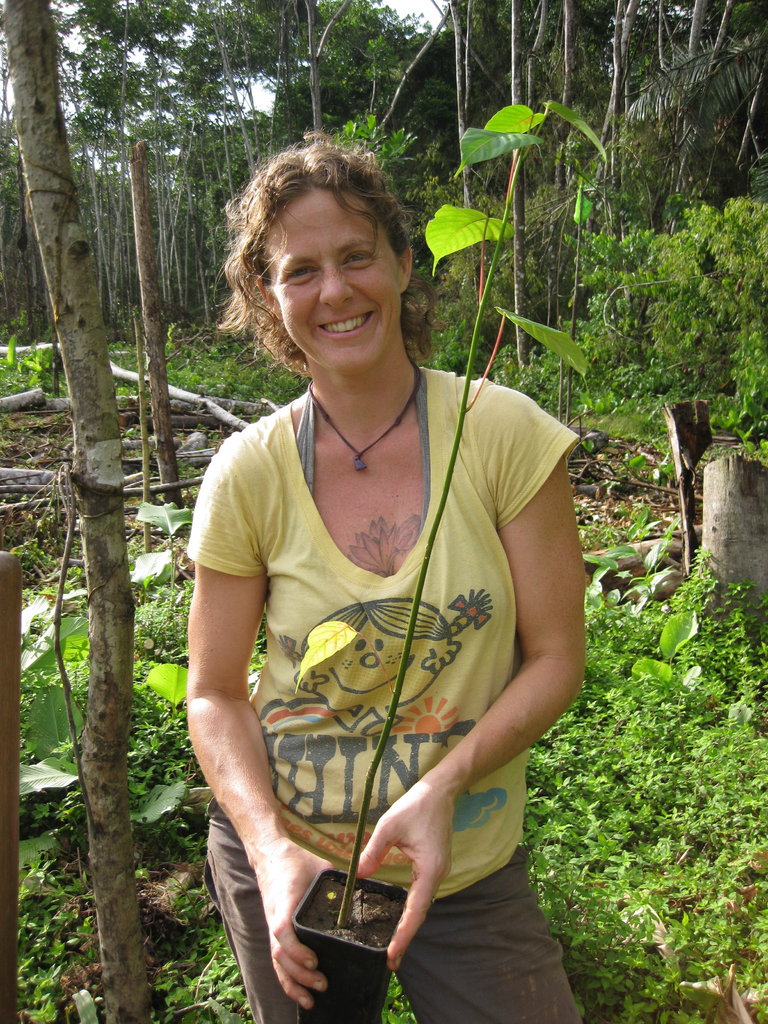
Back in 2012 when planting rosewood was just a seed of an idea, a glimmer in our eye, it actually wasn’t the case that CACE and CV sat down and picked the first community with whom to plant rosewood. Rather, the reason we got to planting rosewood at all was because the community itself approached us about reforesting rosewood, wondered at its viability as an economic activity, remembered its exploitation in the past, reaffirmed in the present its symbolic importance in certain ceremonies, proudly stated the name for the tree in their own language. The decision to plant rosewood came from the community. CV and CACE simply acted as squirrels, seeking out seeds to disperse to new forests.
Growing Back Forests
We were lucky to find the first seeds the following year, thanks to the Research Institute of the Peruvian Amazon (or IIAP, its initials in Spanish), and our first 500 or so trees were planted in the community in 2013. CV and CACE have continued to develop rosewood programs ever since, with growing community enthusiasm. Fast forwarding the following years of proof of concept, we hit some major a-ha moments and breakthroughs along the way:
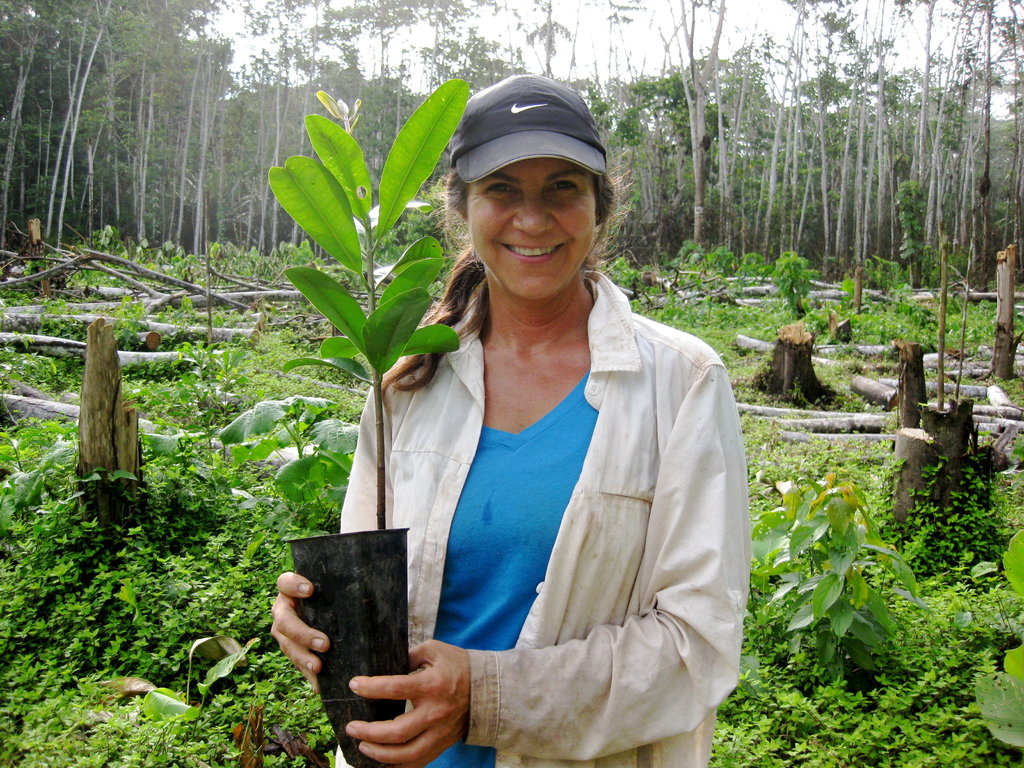
And so it was, with the vocal support of the communities with whom we designed the project, that we proposed to the Flemish Fund for Tropical Forests to expand our rosewood planting in Loreto. The largest grant in CV history, FFBT agreed to contribute to our ambitious 2-year vision to truly take our rosewood proof of concept to the implementation stage.
With the ink still drying on our cooperation agreement with FFBT, I headed out to Loreto to interview and hire the first members of the emerging CV Loreto team. With Campbell and the great CACE crew I’ve known for years, we delivered the project’s first 8,000 seedlings to the first 2 communities participating. We got back to Iquitos, and before we got the muddy boots off our feet, Peru announced that the following day it was shutting down all flights, domestic and international, and initiating the state of emergency for Covid-19.
Adaptation
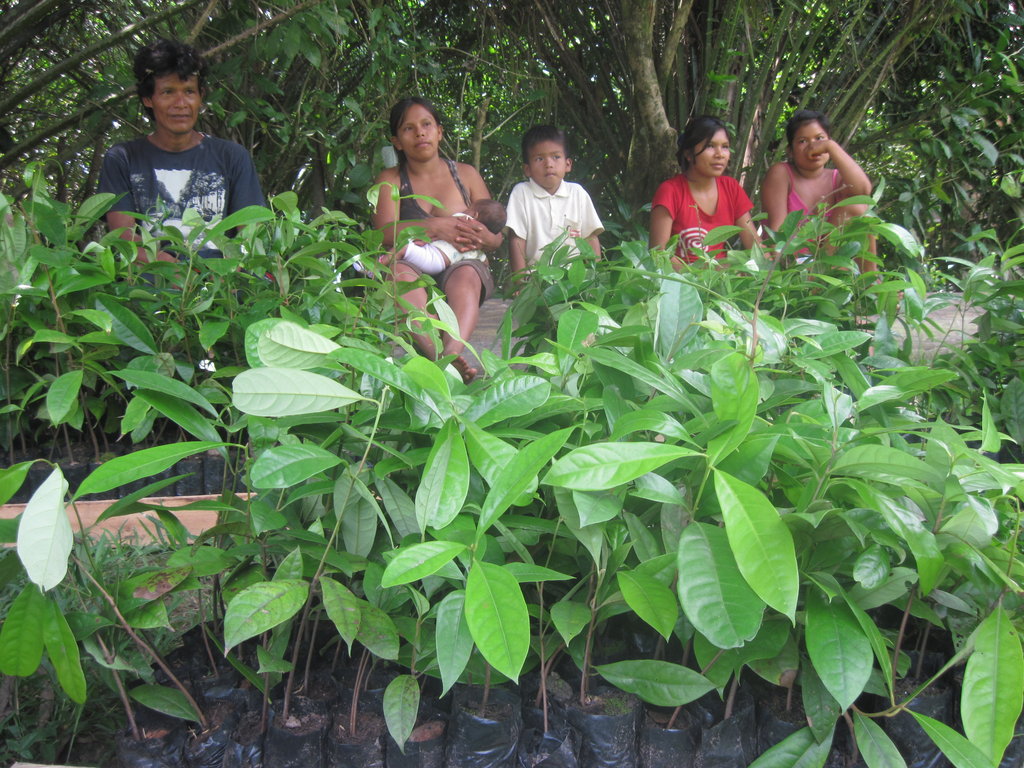
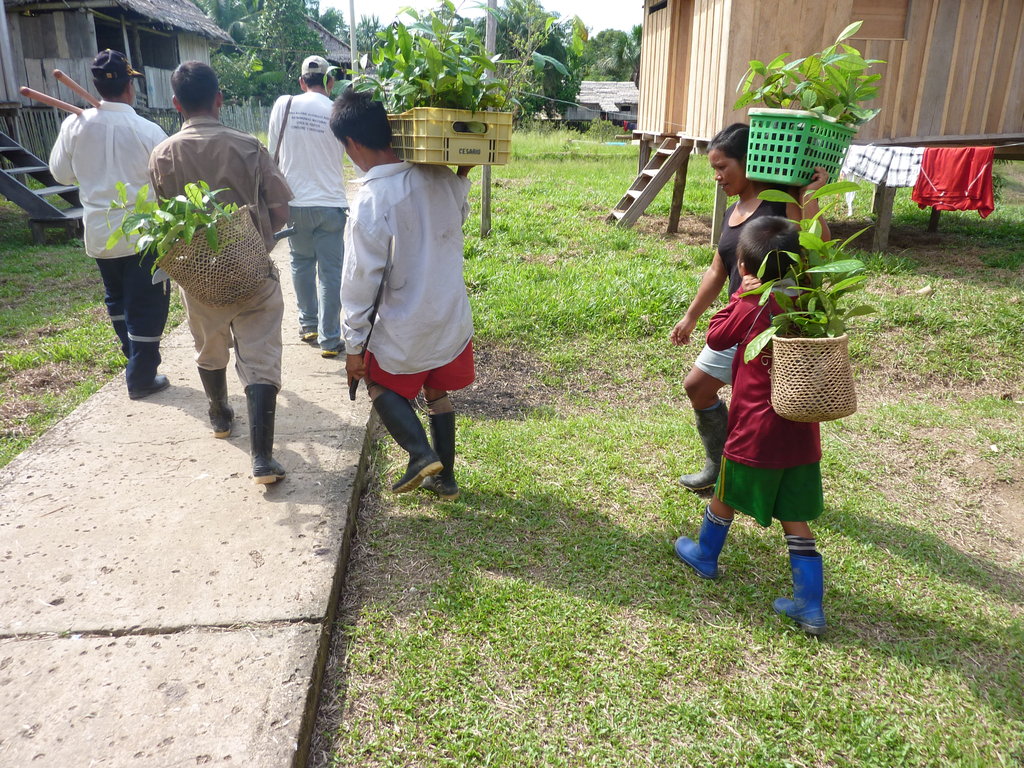
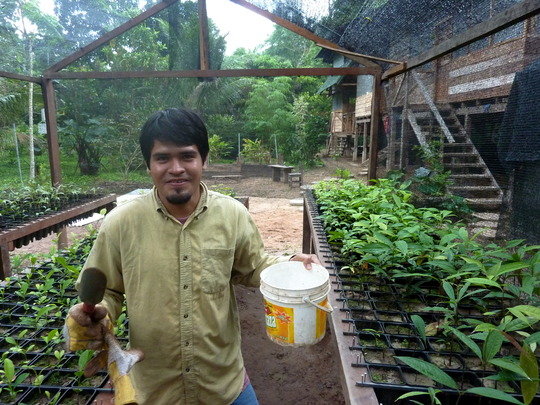
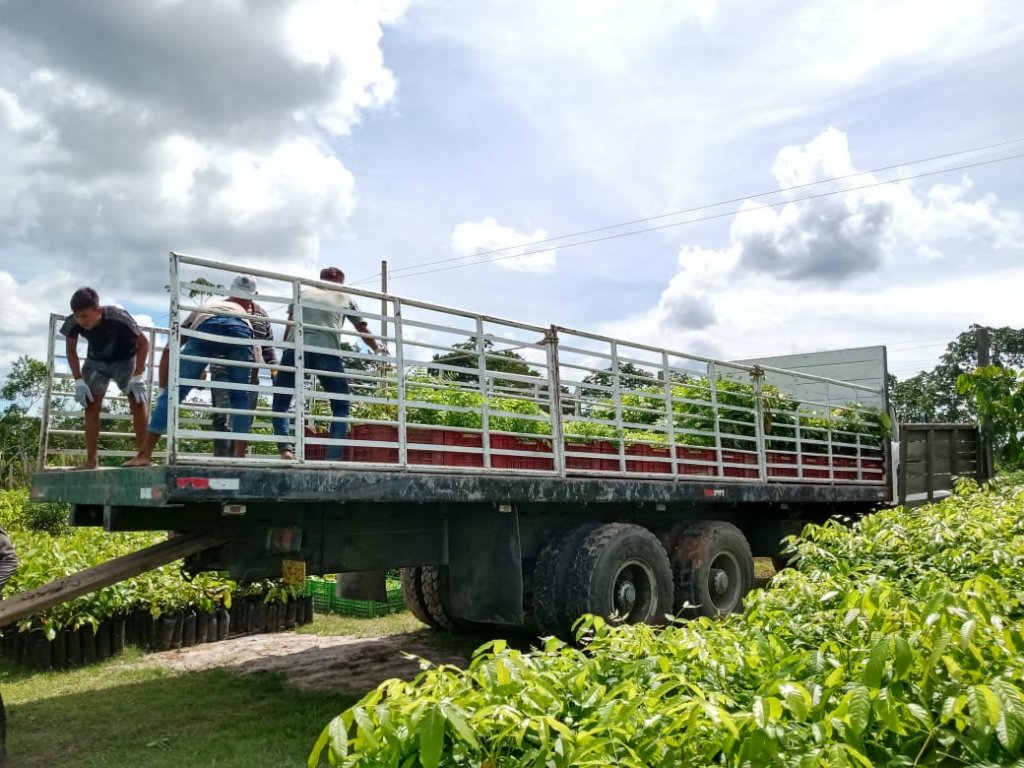
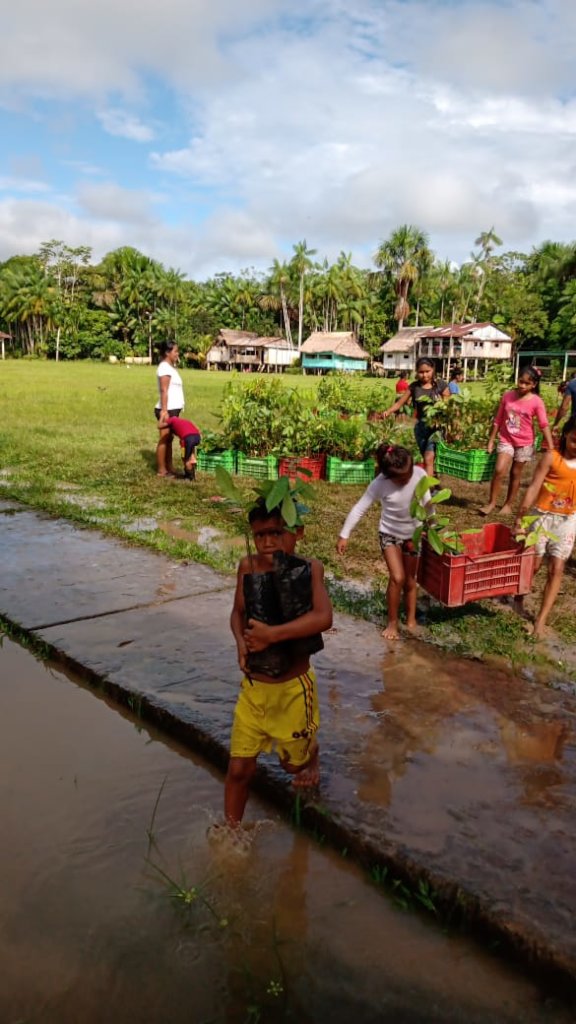
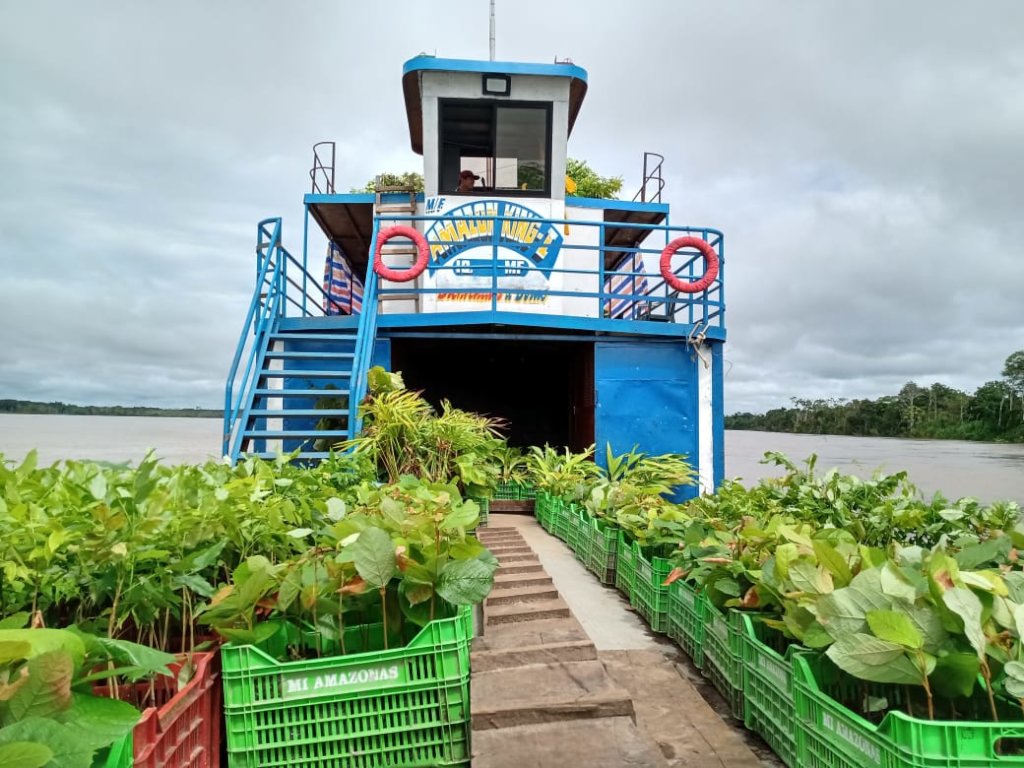
Carlos is a Spanish agronomist 11 years in the Amazon, who trains native community members to raise Amazonian stingless bees. Klaus is an animal rights activist working toward the creation of a rehabilitation center for rescued wild animals. Jacmen is a native community member who for the last 3 years has distilled essential oil with CACE and CV. This is the core team of CV Loreto, hired on just as the pandemic was hitting, stalled at the time in long distance trainings via whatsapp calls and audio messages. Now over a year later, the team is strong, confident, and responsible for reaching additional native communities, with whom CV is interacting for the first time. Last month they took a boat load of seedlings, literally, to 2 newly participating communities. The month before that it was an even larger boat, with a record breaking 18,000 seedlings delivered in one go.
Working in native communities of the Peruvian Amazon is demanding – the mosquitos, the heat, and the complex socio-economic realities of hardworking communities everywhere. And so we’re especially grateful that are team is led by Carlos, with his extensive experience in indigenous communities in the Loreto region and his in depth knowledge of Amazonian farming realities. Klaus and Jacmen are from the region and the latter was born in one of the communities where we work, and that embeddedness in the community is key to our success.
What Comes Next
Now back to the hard facts.
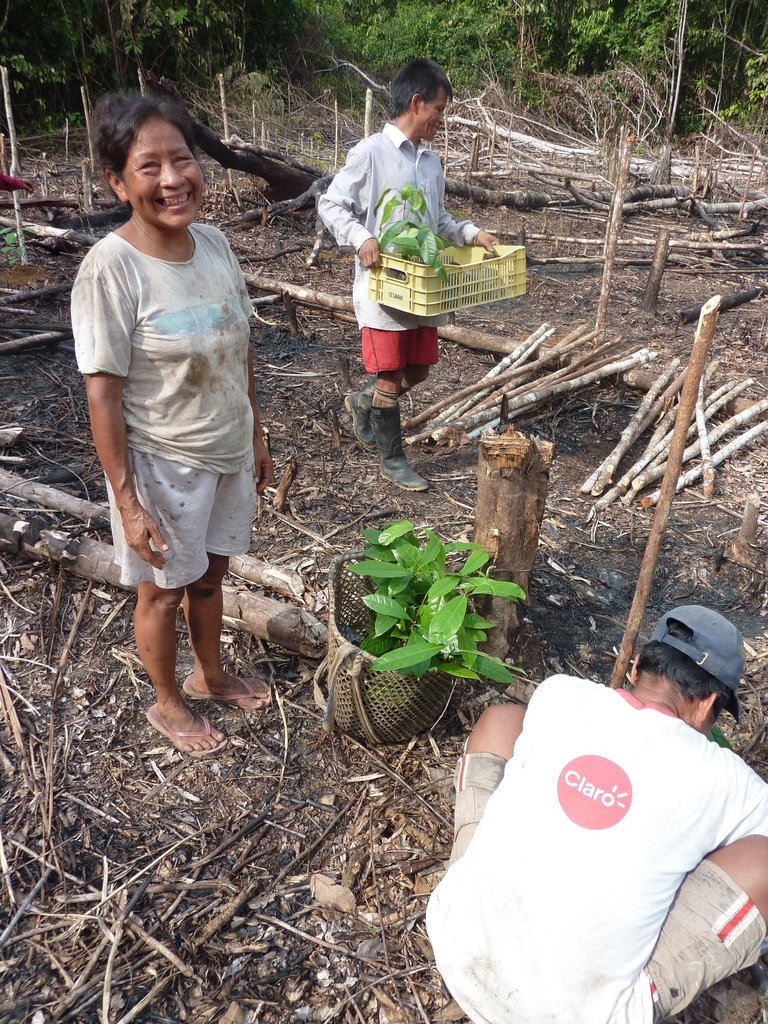
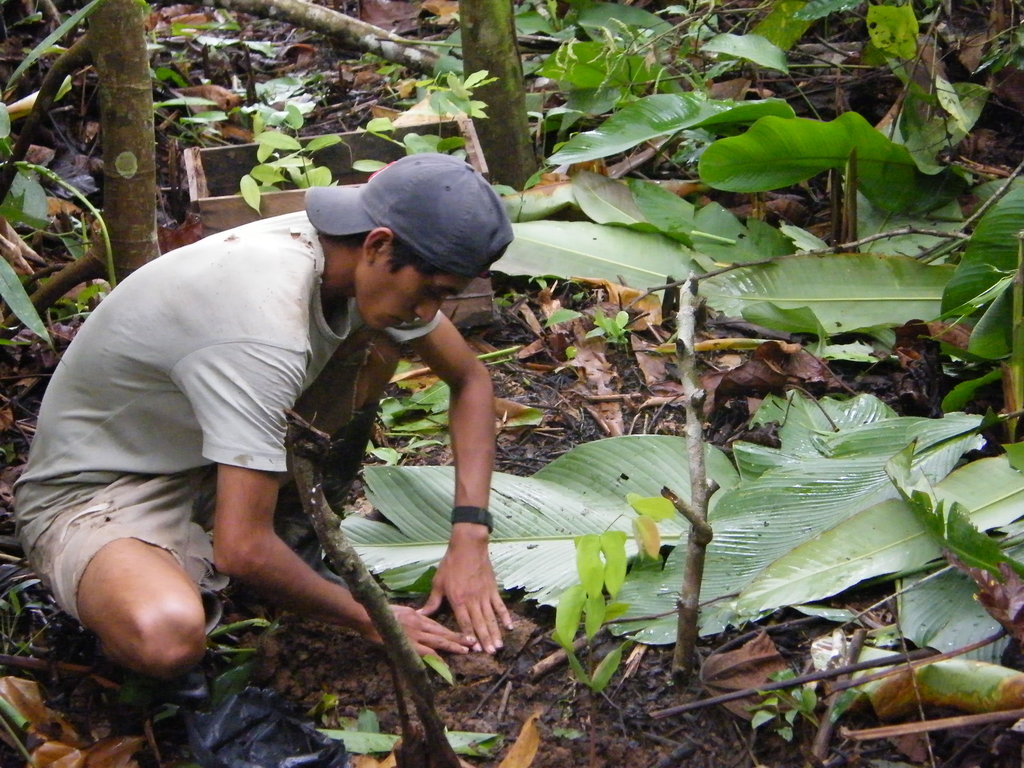
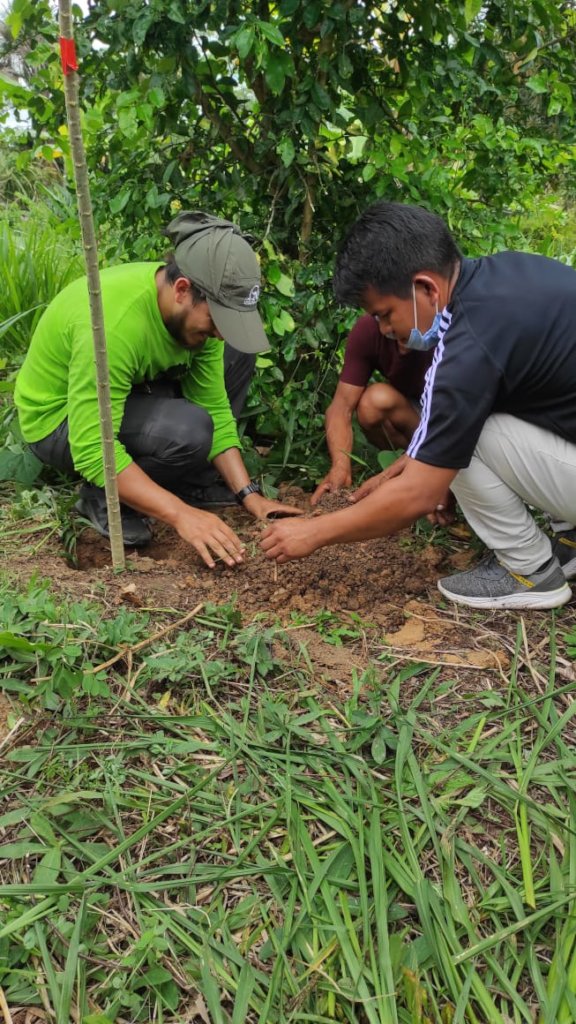
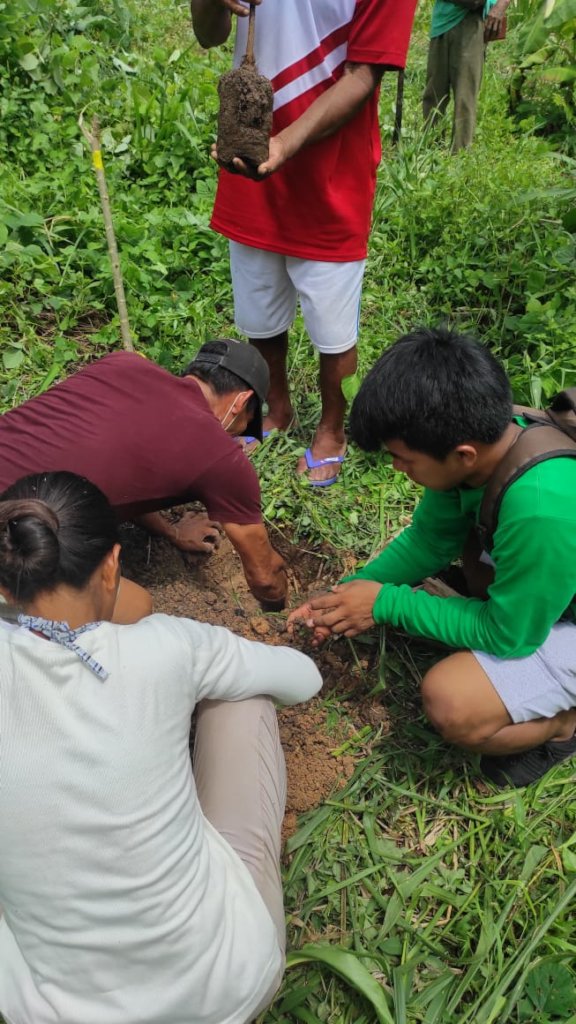
In Loreto in 2021-22, we’ll be planting another 30,000 trees, rounding out our efforts in the first 5 communities we work. By the way, we’ve planted over 40 species of trees in the highly diversified agroforestry systems that define our work. With that, the first 5 communities will have “complete” rosewood agroforestry parcels, able to generate income for families in 3 years’ time. Even as we continue to monitor tree growth in these communities, we will incorporate another 3 native communities into the cohort by the end of 2022.
With 6 families currently selling us rosewood branches, this number will reach 112 families when this year’s trees achieve harvestable age. As we have done with the first 6, we’ll assist each family to register their “forestry plantations” with the corresponding authority, allowing for full legal transparency of origin.
Our tree planting and harvest of tree-sourced products in Loreto is now being documented using CV’s very own RealTrees technology, an innovative approach allowing us to monitor growth of every single tree planted and later to give proof of origin for the harvest of branches from rosewood trees. Look for us to talk more about the new technology in our next report.
The last year has been bright and inspiring. The year to come will consolidate this progress into substantial change. We couldn’t do it without you. If you feel excited about anything you’ve read today, please consider donating to Camino Verde. We are grateful for your support.
Best regards from the Peruvian Amazon,
Links:
Project reports on GlobalGiving are posted directly to globalgiving.org by Project Leaders as they are completed, generally every 3-4 months. To protect the integrity of these documents, GlobalGiving does not alter them; therefore you may find some language or formatting issues.
If you donate to this project or have donated to this project, you can receive an email when this project posts a report. You can also subscribe for reports without donating.