By Robin Van Loon | Executive Director
Dear Friends of Camino Verde,
I'm writing because tomorrow, Tuesday we have a unique opportunity to help restore the world's forests with Camino Verde. If you have a dollar to give, we'll get a buck fifty, thanks to the Gates Foundation.
What is it? It's the biggest matching bonus day ever on GlobalGiving, where the Bill and Melinda Gates Foundation has given half a million dollars in matching funds available for one day only. Any donations received on Tuesday, November 29th will be matched at 50%. So you give $100, we get $150. This is the link to donate.
Matching funds kick in right when Tuesday, November 29th begins – tonight at 12:01 am midnight when Monday ends. Whatever the time of day you're able to be online tomorrow, Tuesday, please take advantage of this great opportunity to hit up the Gates Foundation for matching funds. There will even be prizes given out to organizations with the most donations. Please share with friends!
If you’re thinking of a year-end contribution to Camino Verde and would like to maximize its impact, this is the way to do it. Here's our project page on GlobalGiving, where you'll be able to donate on Tuesday:
https://www.globalgiving.org/projects/cv-1000-trees-a-year-1000-acres-of-rainforest-forever/
Camino Verde is a small organization that leverages our resources to make a great impact in the restoration of the Amazon. This Bonus Day is also a chance to make a little go a long way. If you only donate once this year, please make it Tuesday. And please forward this to a friend who might be interested in contributing to the effort to regenerate the Amazon.
And now on to our regularly scheduled report...
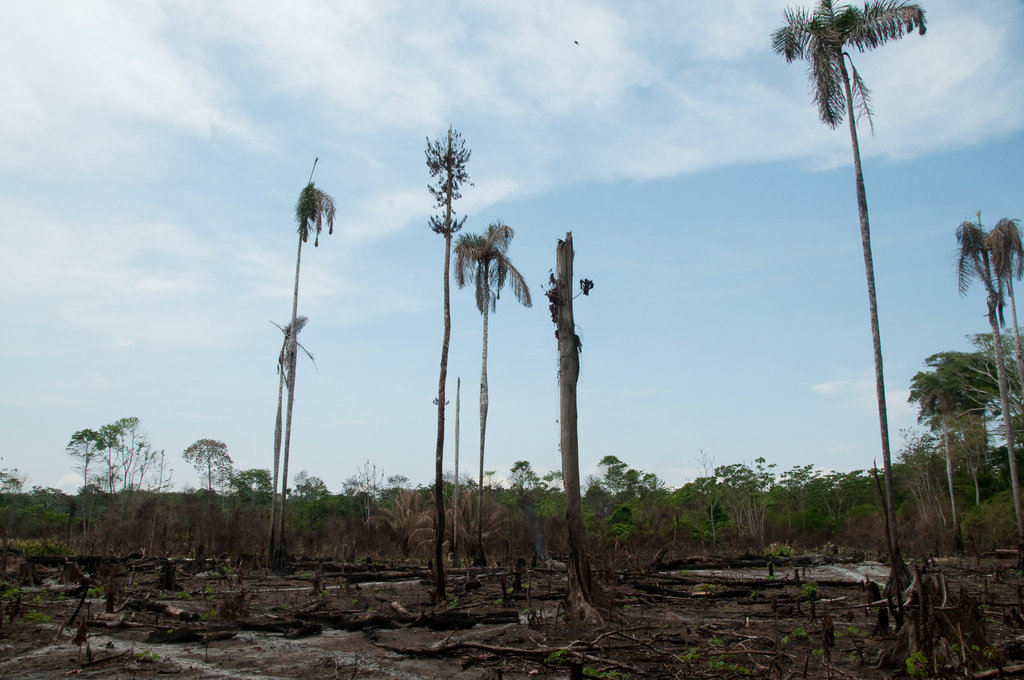
When is a forest a forest? (and when is it a plantation?)
Recently I had the pleasure of meeting the amiable representative of an institutional investors' group that had a stake in a reforestation scheme in Madre de Dios, the region of the Peruvian Amazon that is arguably the world's greatest remaining treasure in terms of a relatively intact, relatively large area of tropical forest. The investors were turning their money into teak trees, which will turn into more money. They had reason to be confident about this: teak is one of the most valuable timbers in the world and its growth and reforestation are ubiquitous in a number of areas of the tropics, including Southeast Asia and Latin America.
Teak is so popular as a species for commercial reforestation it part because it's timber is highly valuable and in part because its growth rate is known – investors know what to expect for their ROI. Similarly, known quantities for species of pine and eucalyptus encourage the reforestation of these exotic trees on a grand scale, while many native trees remain poorly studied and little planted.
While it's hard to expect an investor to take a wild leap of faith – and reforestation is already a risky business – it's also somewhat unconscionable that the greatest impediment to massive restoration of native tree species around the world is our ignorance about how they grow. We don't know what Return on Investment to expect, and therefore we leave these trees to the side. Unfortunate, as many of the native trees are highly valuable and in some cases can give the exotics a run for their money.
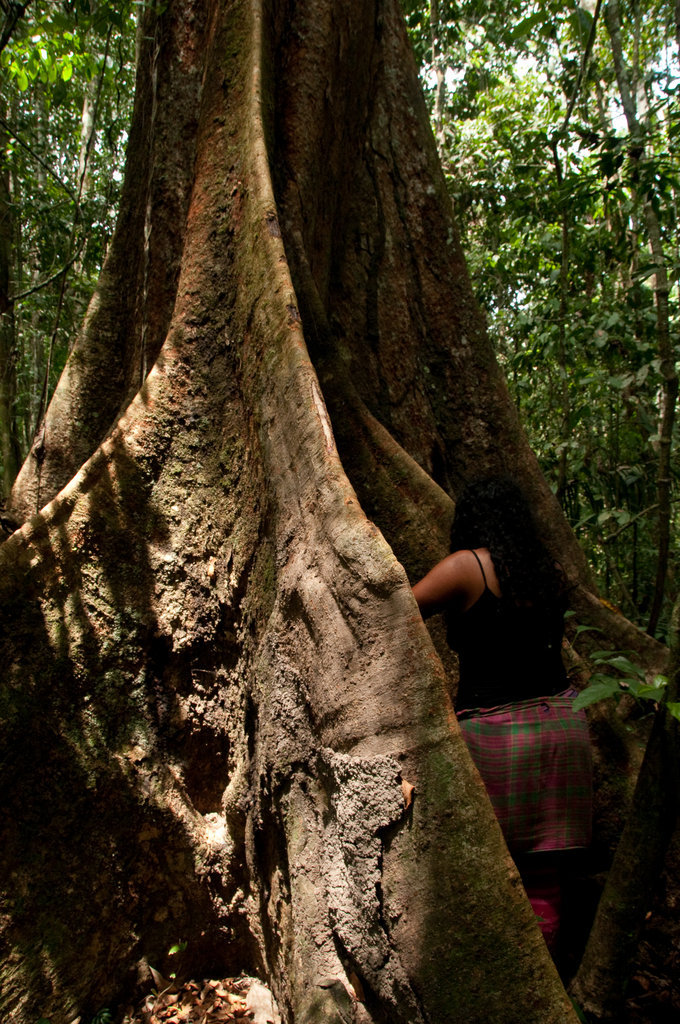
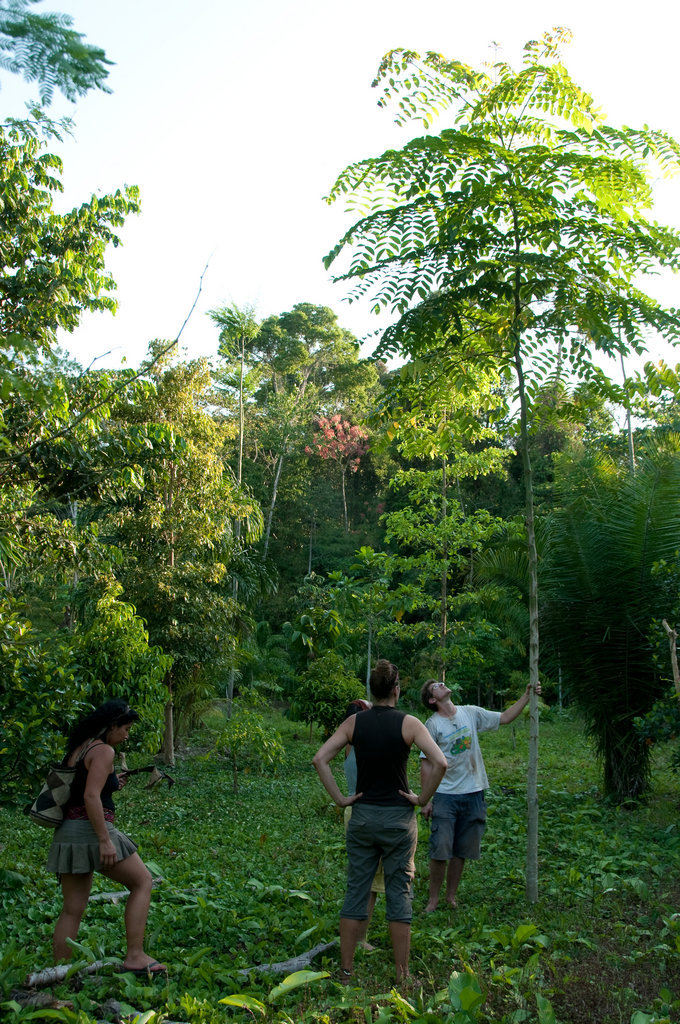
Take Amazonian ironwood, Dipteryx micrantha, a tree whose eligibility as an endangered species was recently questioned by a timber interest group mainly because they wanted to keep logging it. This emergent rainforest giant is the preferred nesting place of the harpy eagle, the world's most powerful raptor and as such an obvious conservation target. Somewhat surprisingly for a tree with wood so dense, the ironwood grows quite quickly, showing amazing vertical gain even without lateral competition for light, a property that makes it well-suited for inclusion in agro-forestry systems.
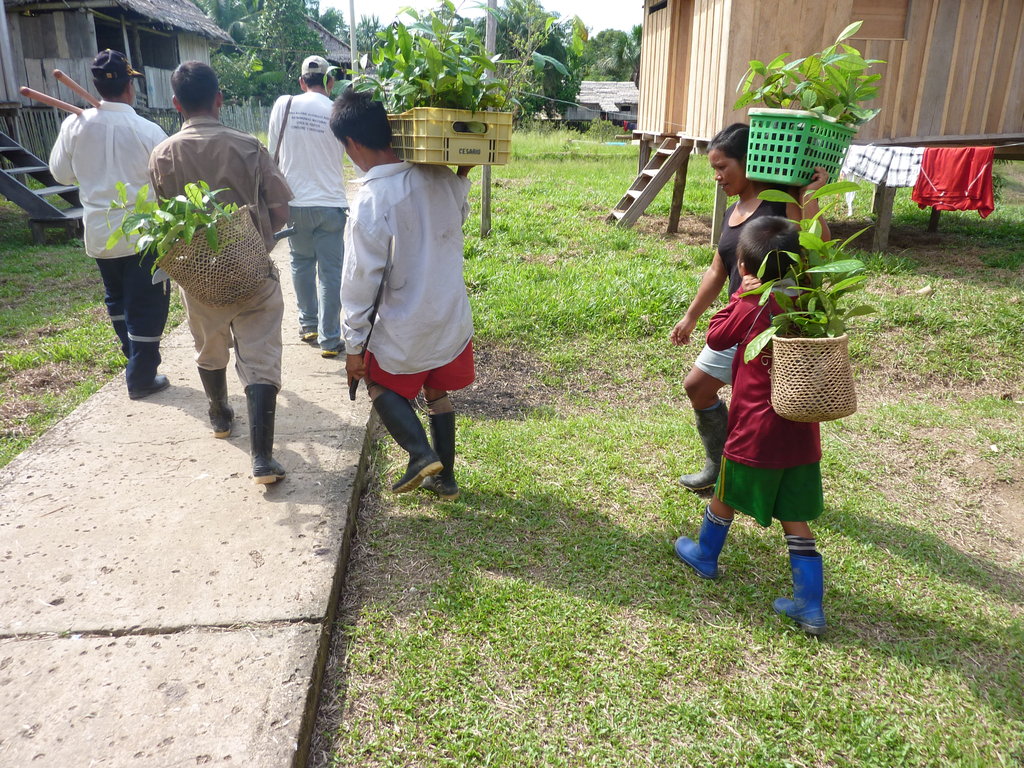
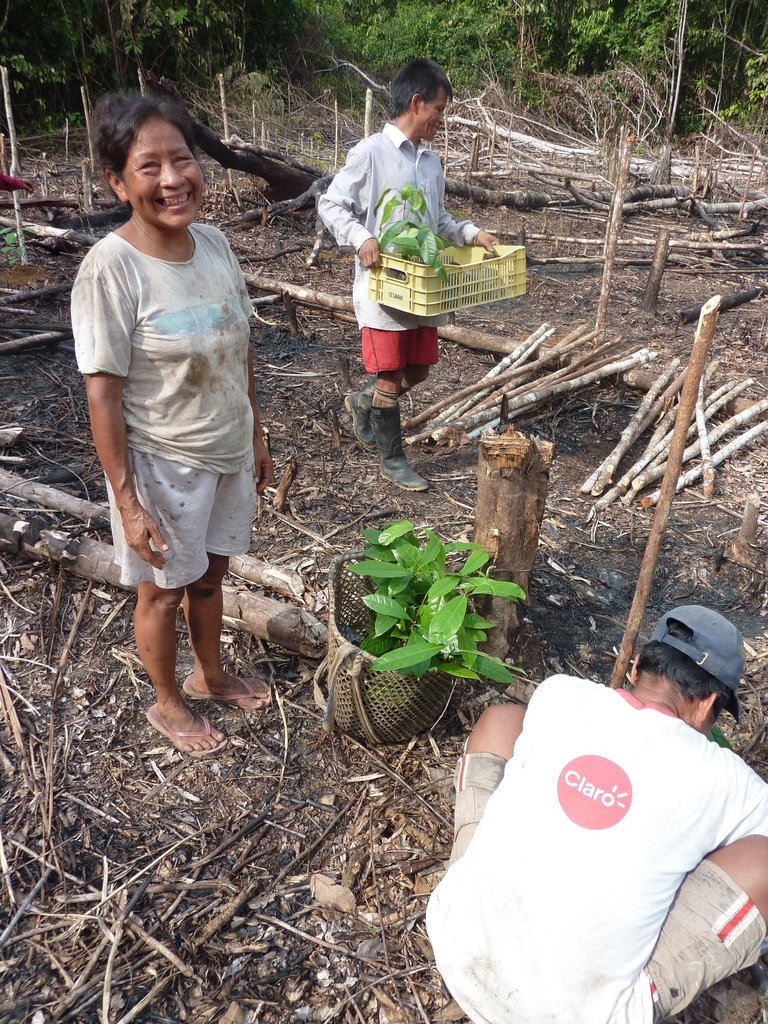
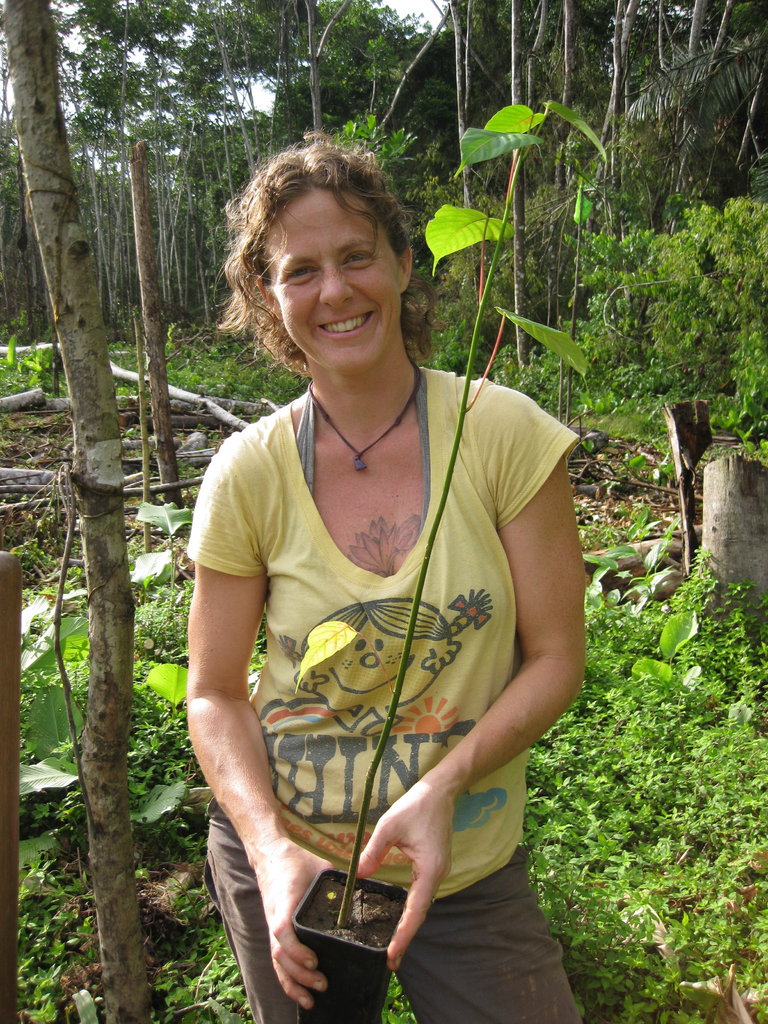
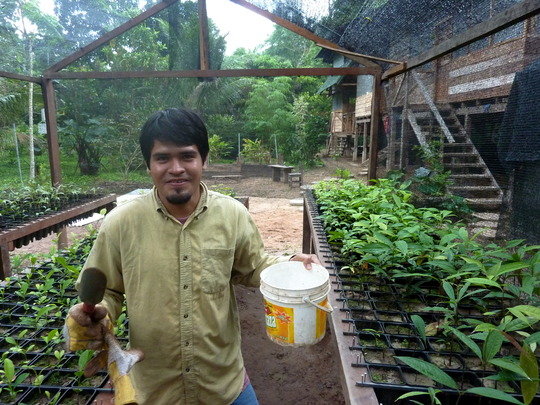
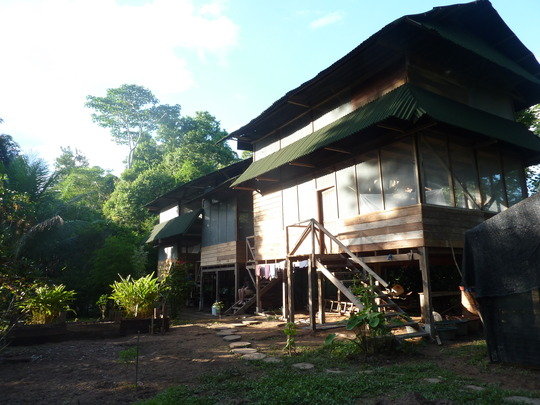
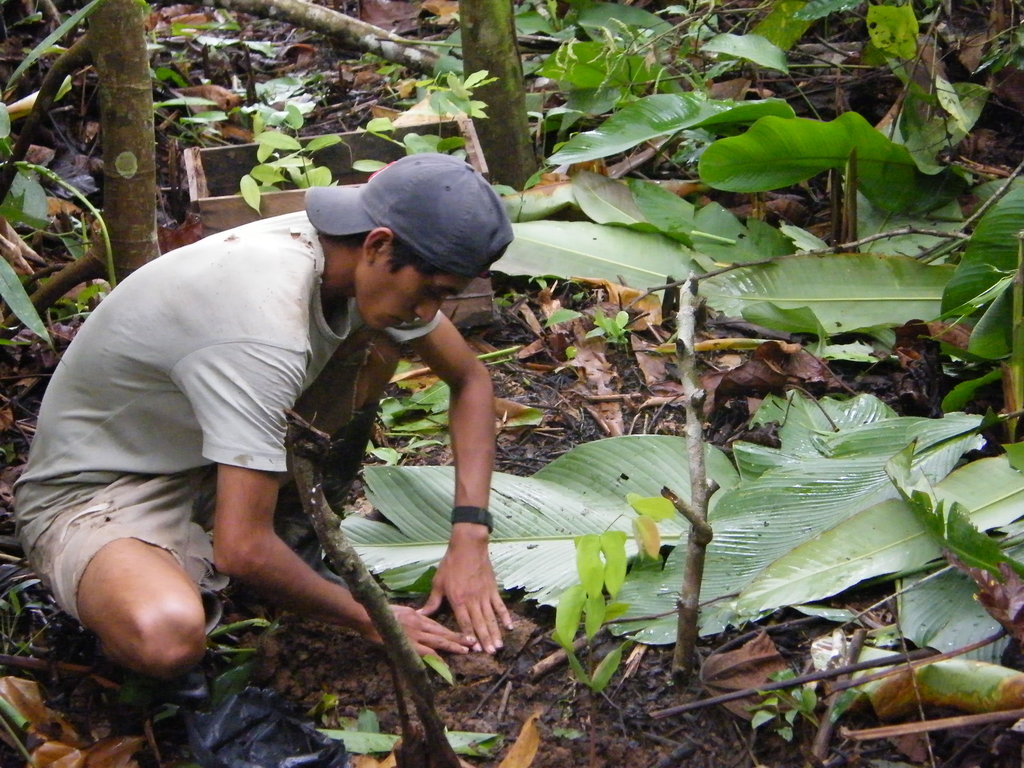
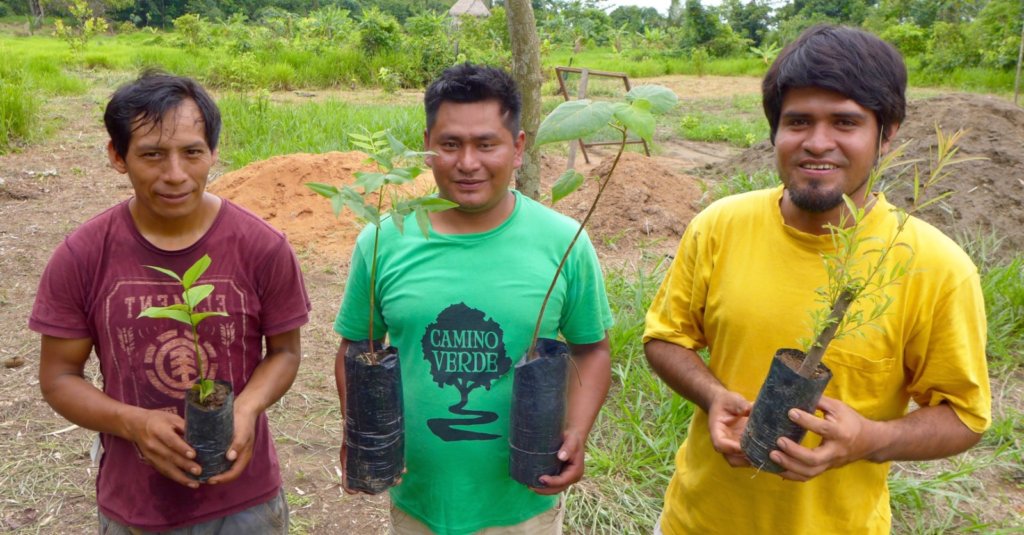
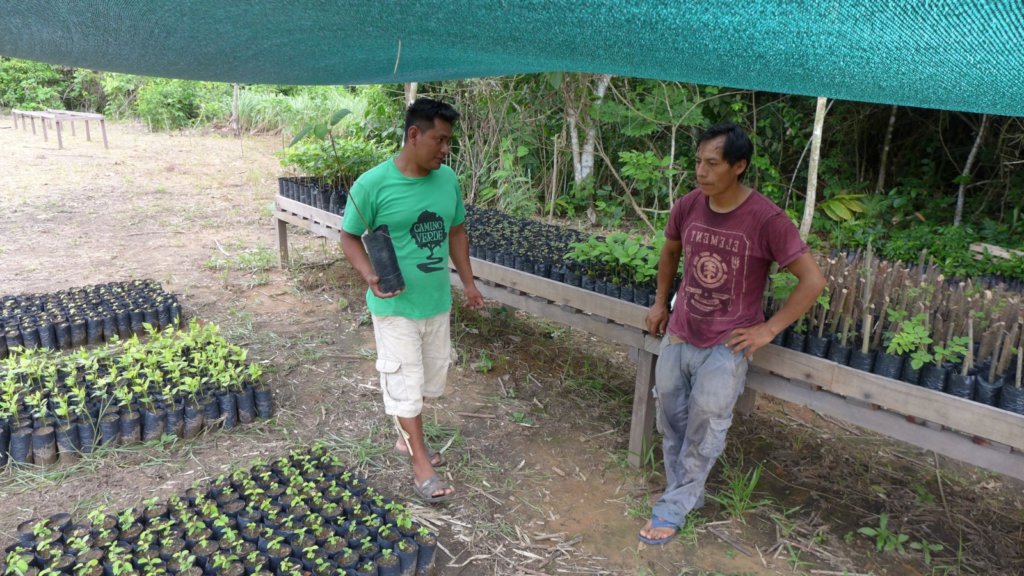
If it's true that the key ingredient missing for more reforestation of native species is more knowledge, the Peruvian Amazon's own organization, Camino Verde, is working to bridge the gap with an ever-growing body of research about the performance of over 300 native tree species. With 2 forestry nurseries producing more than 100 species of trees a year, it is our small team's mission to push the agenda of native species restoration throughout the Peruvian Amazon and beyonod.
Camino Verde's forest nursery manager Manuel Huinga shares, "There are tree species that when I was growing up were abundant, and now are found only deeper and deeper in the forest. It's our work to find the seed-bearing trees and propagate more of these species that will be extinguished without our intervention. Many of these trees grow surprisingly well, making us question why we always prefer the exotics. If we have all the facts, native species will be able to speak for themselves."
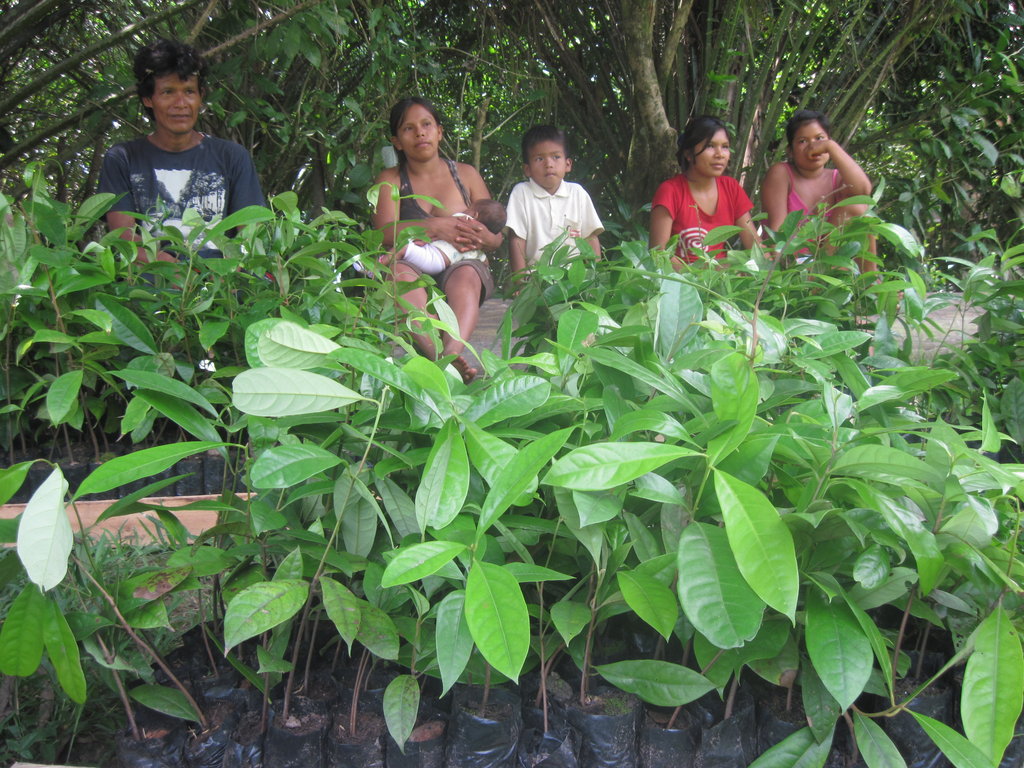
Our nursery is a living commitment to giving native trees – fruits, medicines, timbers, and more – the chance to speak for themselves. The chance for ecologically restorative strategies to demonstrate their value. This year our nurseries will produce 20,000 seedlings representing 120 species. Next year, we hope to do more.
We couldn't do any of this without your support. And tomorrow your support will count extra. If you plan to donate any time this year, please Donate tomorrow.
Thanks so much for your interest and support!
Project reports on GlobalGiving are posted directly to globalgiving.org by Project Leaders as they are completed, generally every 3-4 months. To protect the integrity of these documents, GlobalGiving does not alter them; therefore you may find some language or formatting issues.
If you donate to this project or have donated to this project, you can receive an email when this project posts a report. You can also subscribe for reports without donating.