By Phiona Kabahubya | Project Manager
Venue: Neur Conference Hall.
Background
The Government of Uganda (GoU) with support of the World Bank (IDA) and the African Development Bank is implementing the Albertine Region Sustainable Development Project. One of the components of the project is to upgrade 238km of Kyenjojo-Kabwoya-Hoima-Masindi-Kigumba funded by both the AfDB (138km) and the World Bank (IDA) (100km). The Albertine Rift Valley is a center for rapid growth which is likely to accelerate with the oil development underway in the region. To ensure that the benefits of the oil development reach the residents of the area, GoU is keen to improve connectivity to and within the region and local economic infrastructure.
With the discovery of oil in the Albertine Graben region (Albertine Region), this emerging sector will feature prominently in Uganda’s development in the decades to come, bringing both benefits and challenges. Peak production is likely to be about 150,000 to 200,000 barrels per day for 10-20 years. An estimated 10,000 jobs could be created at peak times with indirect jobs perhaps at 3 to 5 times as high. Government revenue at peak production could be in the order of US$2.0 billion to over $3.0 billion annually, possibly more than double Uganda’s current budget.
However, global experience demonstrates that natural resource wealth in the context of poverty and weak institutions increases the probability of corruption, patronage, instability, and conflict. Whether Uganda’s oil is a blessing or curse depends largely on the establishment of an institutional framework that ensures fair and equitable distribution of resource rents and appropriate consideration of economic, social, and environmental issues.
Looking at the Fort Portal-Kamwenge road, lessons included existence of violation of human rights including sexual abuse of young girls. Since then a lot of changes have been made to ensure safety of people and children in project areas. To avoid a repeat of the Fort Portal-Kamwenge incident that led to the cancellation of the project, UNRA has called on civil Society Organizations to work together to combat any form of abuse and incase where it occurs, to ensure that redress is provided. Joy for Children with support from the Bank Information Center, having worked closely with the community in Kamwenge, was requested by UNRA to guide CSOs in the Albertine Region on how they can collectively work to combat any form of abuse.
Meeting the CSOs in Kagadi
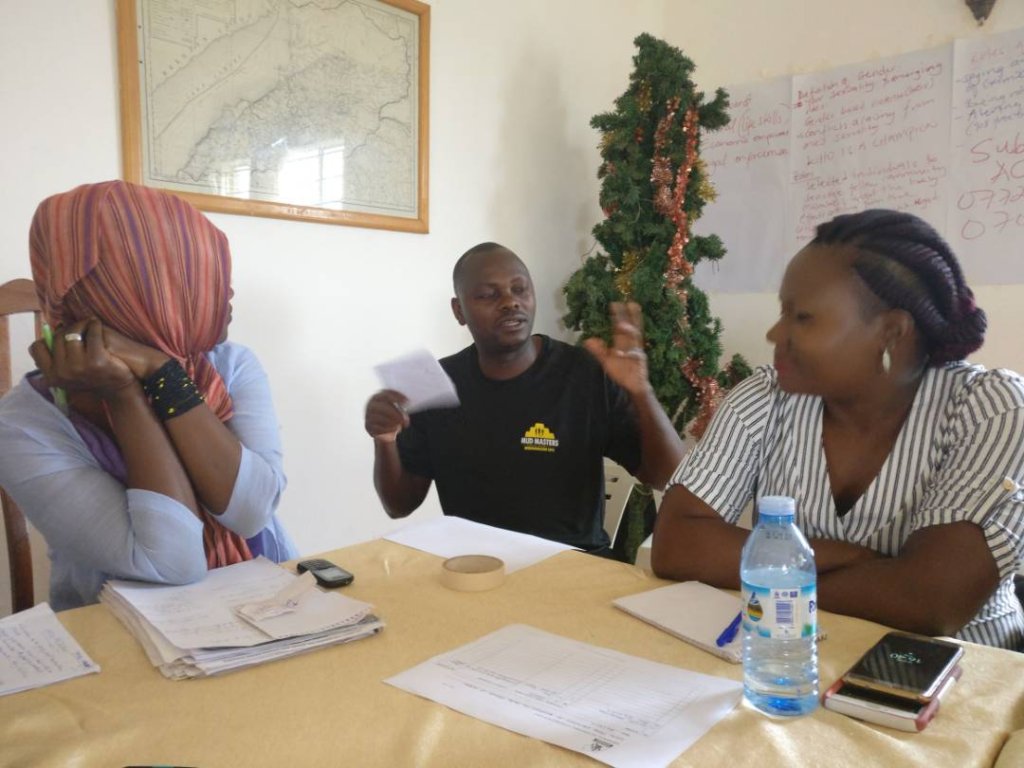
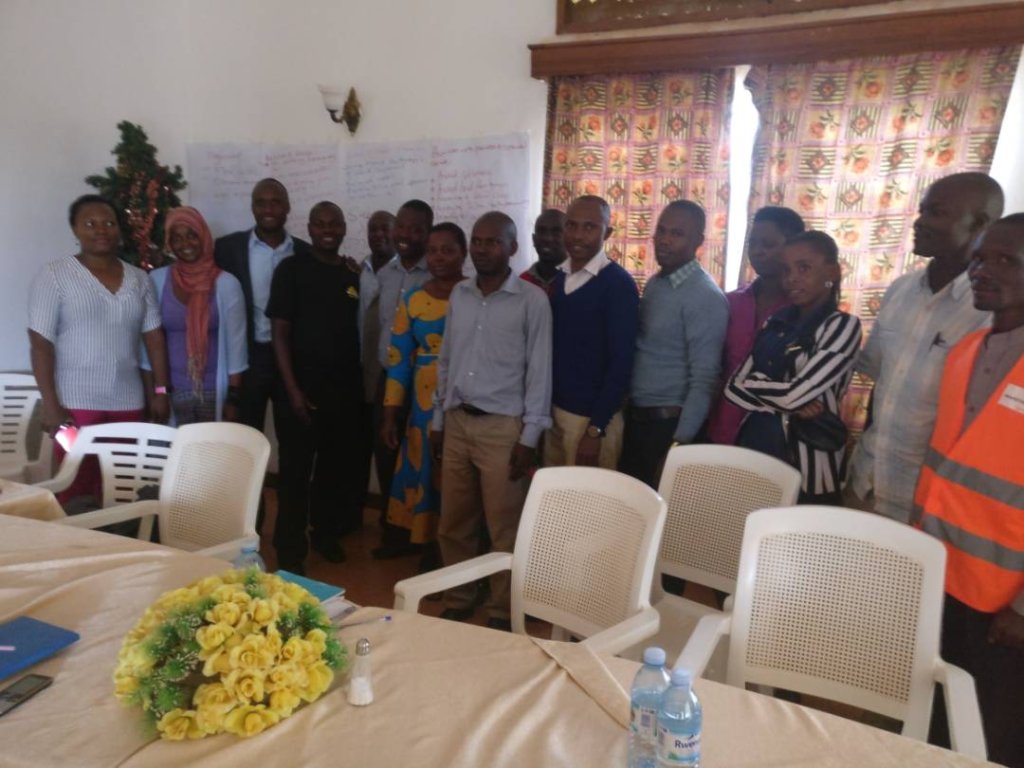
This meeting was held on Saturday, 30 September, 2017. It was organized by JFCU as a way of initiating its activities in Kagadi District. The meeting was attended by leaders from Kagadi District Local Government and members of CSOs.
In his opening remarks, the area Local Council One (L.C. I) Chairperson expressed his gratitude for having been made part of the team that is to advocate for children’s rights in his area of jurisdiction and Kagadi District Local Government as a whole.
The Executive Director, JFCU highlighted reasons why JFCU was interested in carrying out its activities in the district:
There is need to ensure protection of children in the district as the road construction project is likely to affect lives of the residents both positively and negatively
He revealed to the members that the gist of the meeting was engage members in a discussion of matters relating to the safety during and after the road construction.
He reminded members that the road construction project will increase the money circulation in the area which can be a big threat. To justify the point, he made a recount of the Fort Portal- Kamwenge Road incident where it was found out that the activities of a related project caused gross abuse of children’s rights.
He emphasized that when numbers of people in an area increase, they have both positive and negative effects on the living conditions of residents. Because of this reason, he emphasized that the government of the Republic of Uganda needs the effort of the people of Kagadi District to point out all threats that the road construction project is causing on human rights, especially those of the children. Thus, the need for JFCU to work with local CSOs to ensure safety of the child. On this point, members were encouraged to identify all changes noticed in the area since the start of the project.
Following the above submission, members were asked to engage in an open discussion. The following were their views:
A member from UDRT, the local CSO advocating for Girl Child Education, Gender and Skilling the youth, revealed that many challenges were expected ahead of the UNRA road construction project. He suggested that a Holistic Approach was needed in child protection engagements in Kagadi District. He identified the key groups to be engaged in the campaign as: the child, parents/caretakers and the entire community.
He suggested the following:
Raising consciousness in communities as residents of Kagadi District need to know the rights of their children despite the opportunities the project may come along with.
Children need to be protected so that they can live to enjoy the benefits that the first class road will bring in the district.
In a related submission, one of the Kagadi District Local Government representatives demanded:
The Executive Director, JFCU enlighten him more on the activities of his organization.
JFCU should make known to the members what it intends to do for the people of Kagadi District.
Project reports on GlobalGiving are posted directly to globalgiving.org by Project Leaders as they are completed, generally every 3-4 months. To protect the integrity of these documents, GlobalGiving does not alter them; therefore you may find some language or formatting issues.
If you donate to this project or have donated to this project, you can receive an email when this project posts a report. You can also subscribe for reports without donating.



Support this important cause by creating a personalized fundraising page.
Start a Fundraiser