By Paco Alcaide | Regional Director
Sari Feldman, in her article Public Libraries After the Pandemic, says “the value of public libraries is rarely questioned in times of crisis—think of the New Orleans Public Library after Hurricane Katrina, or the Ferguson Municipal Public Library during the unrest there. But this crisis—more specifically, the social distancing required to address this crisis—strikes at the very foundation on which the modern public library rests. And as the days go by, I find myself increasingly concerned about how libraries come back from these closures”.
This is true and public libraries have had a rapid response to minimize the impact of social isolation to which we have been forced. Digital collections have been opened to the public, virtual talks and digital reading club have been organized, story hours are held through videoconferences... We have been forced to digitize our lives from a feeling of social isolation to feel in community. A connected community without touching. However, the priority of the Riecken Community Libraries, since its origins, has been to form the community base that supports the library, as a mechanism for community leadership and empowerment. Because we knew that the most important factor in a public library is organized and committed social participation; as well as our volunteer leaders and librarians.
Riecken Community Libraries are proving that libraries are essential for a democratic society. The libraries are institutions where citizens are encouraged to make informed decisions and achieve their full potential. They deliver knowledge, promote critical thinking and stimulate self-education and lifelong learning. In poor communities, libraries also fulfill the role of providing a sustainable framework, with the library’s operations run by volunteers in the community. Through community leadership, important principles of development and self-government are formed. We always have believed that informed societies are stronger, healthier societies. Riecken Libraries support belief by offering safe and non-partisan gathering places where democratic values and exchanges can be held. Libraries host forums, planning meetings, conferences where NGOs explain their missions and services, and a place where issues of governance can be addressed. Wherever libraries are located, there is growing attention paid to the role, behavior and accountability of public institutions.
Like the world's public libraries, most community libraries have had to close their doors, although that does not mean they are not working for the health of their community. While the libraries are officially closed for the time being due to the COVID-19 crisis, they are providing critical information updates and supporting local relief efforts.
Widespread unemployment, curfews and day-to-day subsistence living make COVID-19 shutdowns extremely difficult for much of Honduras and Guatemala. Though technically closed, Riecken Community Libraries have taken leadership roles in the crisis, with dedicated librarians and volunteers on the front lines keeping information and resources flowing.
The shut down since March of all but essential activity in Honduras and a partial shutdown in Guatemala due to COVID-19 has driven the need for the Riecken libraries to take on a greater leadership role in their communities to support international aid and health officials in their efforts to provide relief where most needed. As trusted resources in their communities, the libraries have already become hubs of updated and accurate information regarding the virus. The Riecken staff – working remotely – helped make this happen.
Many of the libraries have taken action to become hubs or repositories for food, clothes and medicine provided by aid organizations and local government agencies, and are involved in coordination of distribution to those in need. With unemployment running even higher than normal and curfews affecting movement, the need for ngo support continues to grow. In some Riecken library communities, library volunteers help create and maintain rosters of community members most at risk and with the greatest need. This data serves local relief efforts well, ensuring that those in greatest need don’t fall through the cracks.
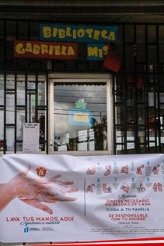
One Riecken library actively involved in minimizing COVID-19 spread in its community is Gabriela Mistral Library in San Juan Chamelco (Alta Verapaz). Library staff used the sound equipment donated by USAID / ASHA to offer information on how the coronavirus is spread and to reproduce messages to prevent its spread, how to protect yourself and others, in Spanish and Maya Queqchi languages. The Riecken Library in Huitán (Quetzaltenango) holds weekly meetings of library staff and community support organizations to share information about How COVID-19 Spreads and How to Protect Yourself & Others from COVID-19. Library staff put up information signs in public areas so that people understand the importance of taking preventive measures.
Ventanas abiertas al futuro Library, in Chiché (Quiché) has become a receiving center for food and other basic supplies for families in greatest need. Its librarias, and library volunteers are key to the coordination of food supplies with the municipality – sorting, organizing and making deliveries to those who need it most.
In summary, while a vaccine for COVID-19 is found, in the rural communities of Guatemala, the most immediate response is based on the application of development strategies (education, health, social participation, responsible political organizations) to prevent contagion, and neutralize the expansion of the coronavirus. And when the activities of daily life are gradually resumed, it will be necessary to urgently promote community social cohesion.
And definitely, community libraries, with their programs and services, are ready and prepared since they have been promoting it since its inception. If, to ensure such cohesion, it is necessary to strengthen social capital by promoting a climate of trust, local association, civic awareness and ethical values; Riecken Community Libraries already do.
Like Frieldman Sari, and as the days go by, we find ourself increasingly concerned about how libraries come back from these closures. But in Honduras and Guatemala, we have an advantage over the rest of public libraries: we know how to get out of this forced isolation to rebuild the sociability of our communities.
Together with GlobalGiving and otjer donors, we will give a concrete response to promote community cohesion, so damaged by the current situation. We are proud to see the flexibility of the Riecken Community Library sustainability model in action, allowing for relevant local response to this worldwide calamity.
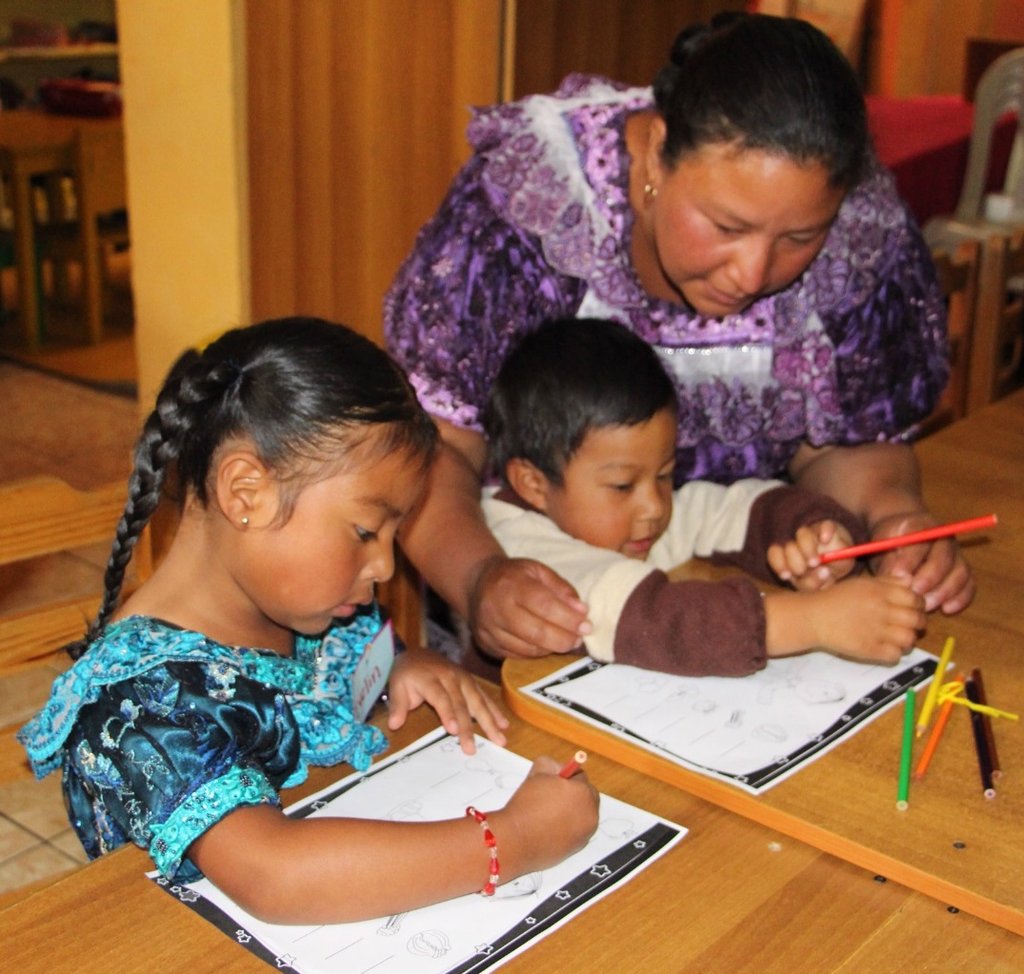
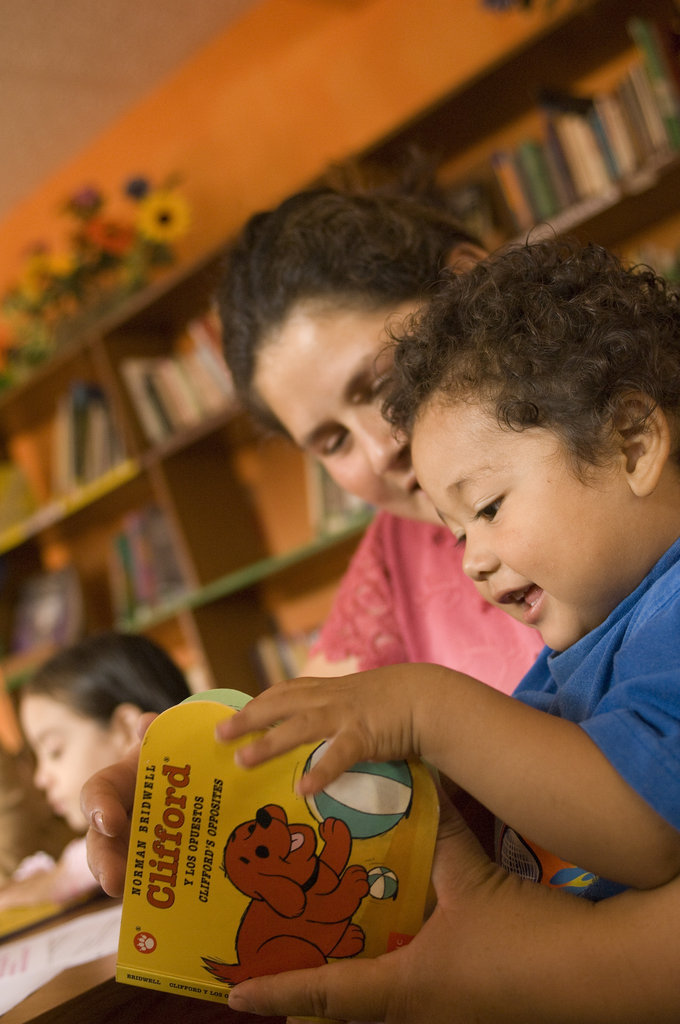
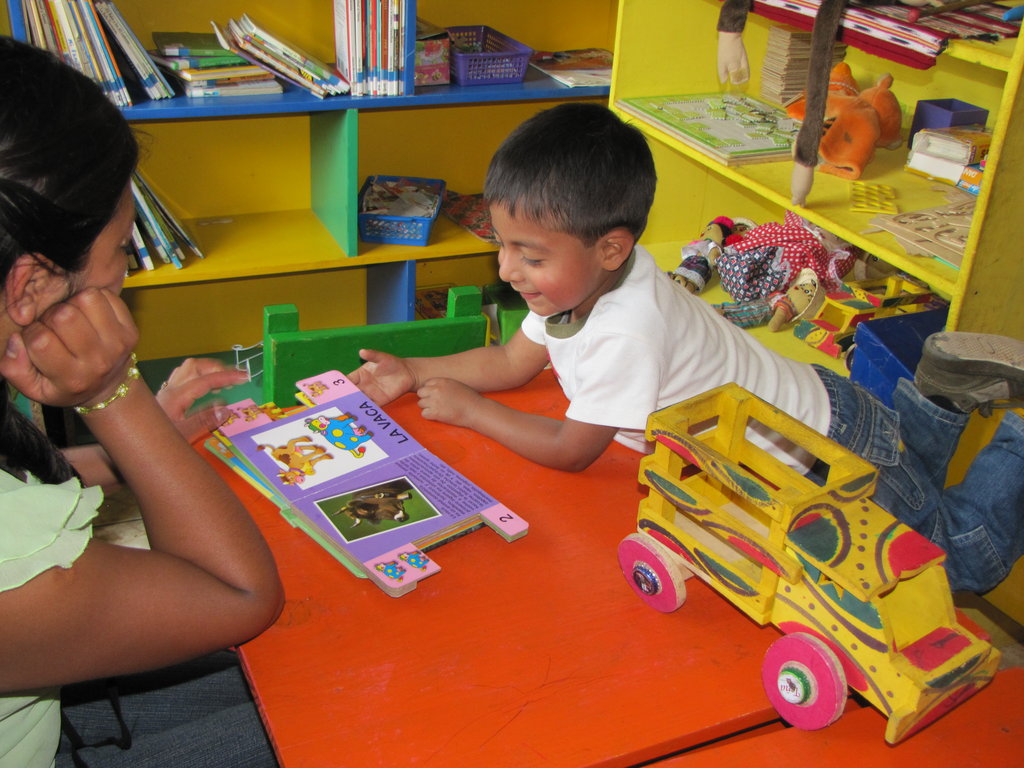
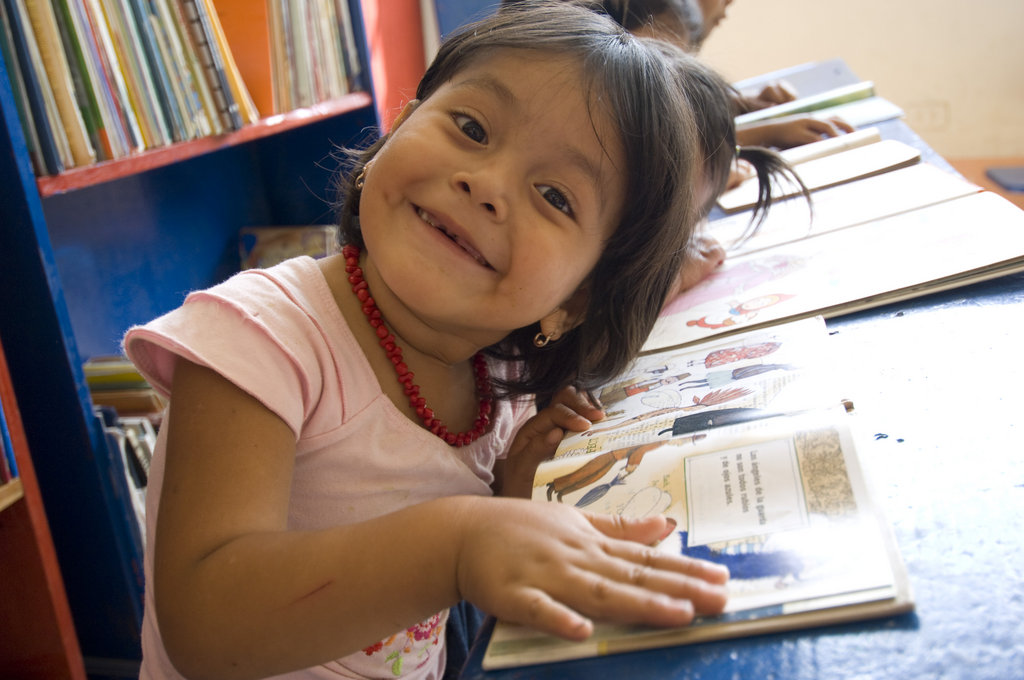
Riecken Community Libraries are a social platform and an essential space for the social cohesion present in 65 communities in Honduras and Guatemala.
Learn more about the work of the Riecken Foundation and its network of community libraries in Guatemala.
Links:
Project reports on GlobalGiving are posted directly to globalgiving.org by Project Leaders as they are completed, generally every 3-4 months. To protect the integrity of these documents, GlobalGiving does not alter them; therefore you may find some language or formatting issues.
If you donate to this project or have donated to this project, you can receive an email when this project posts a report. You can also subscribe for reports without donating.



Support this important cause by creating a personalized fundraising page.
Start a Fundraiser