By Michael Tuerk | Project Leader
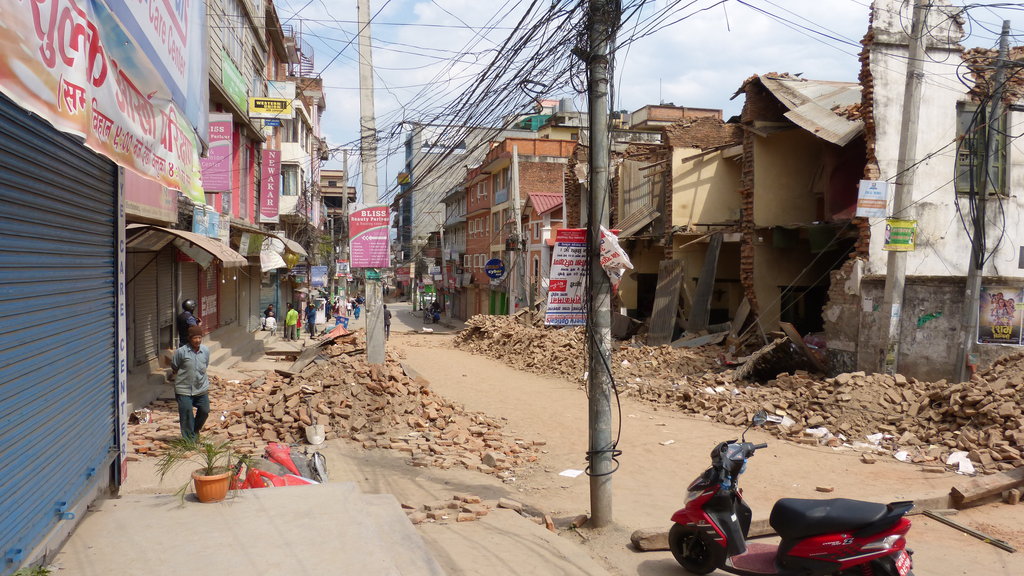
The consequences of the devastating earthquakes of April and May 2015 are still visible in Nepal.
The reconstruction projects of the Diakonie Katastrophenhilfe are running and they show progress. So far we provided more than 8.2 million euros for aid in Nepal. Approximately 635,000 people have benefited from these actions.
Never before had the people in Nepal experienced a natural catastrophe of this magnitude: 8,500 people lost their lives and millions became homeless. 600,000 houses collapsed, 288,000 were badly damaged. Ruins and ruins dominated the picture in the villages. Fields were devastated, aftershocks and landslides worsened the situation. Many people stayed outside and did not know what to eat.
Thanks to its global network ACT Alliance and you as our donors, we were able to react immediately and start emergency relief measures within two hours. In the first two weeks after the earthquake, 100,000 people were supplied with vital necessities, after six months it was already 400,000. In addition to food, water, cooking utensils, hygienic articles and blankets, we spread out in twelve districts tarpaulins, corrugated iron and other building materials as well as tools for initial emergency accommodations and repairs. In this way people protected themselves from the monsoon, then from the winter.
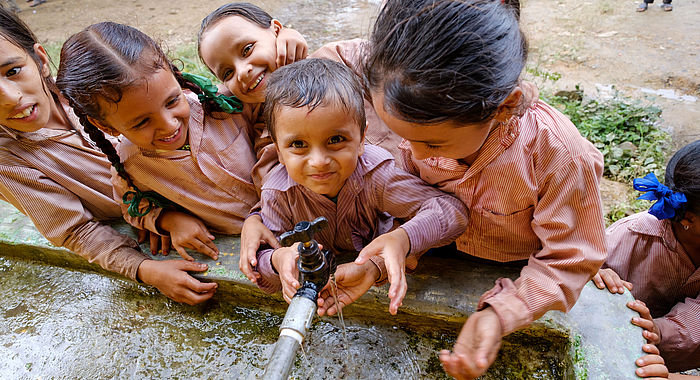
In the district of Lalitpur, which has received hardly any international assistance during reconstruction, despite the immense damage caused by the earthquake, 250 earthquake-proof houses are built. The project will provide training in earthquake-proof construction and repair in six districts of Bajrabarahi. In addition, drinking water plants are being repaired and latrines are being built. In addition to the construction of sanitary facilities, training courses on hygienic practices are carried out, thereby improving the general health of the population.
Since the earthquake, the employees of our partner organizations worked tirelessly in the affected areas. By working with ACT Alliance and local partner organizations, Diakonie Katastrophenhilfe can cover a large area and avoid measures being duplicated or missing. The local and linguistic knowledge and contacts of the local organizations are a decisive advantage. "Through our local partners we were able to help without expensive imports," says Michael Frischmuth, Head of the Asia Department of Diakonie Katastrophenhilfe in Berlin. The proximity also allows the volunteers to get an idea of the situation and the needs as well as to involve those affected in the planning of the relief measures.
Thank’s a lot for your support. We would be happy if you donate for this cause to help even more from the earthquake affected people!
Project reports on GlobalGiving are posted directly to globalgiving.org by Project Leaders as they are completed, generally every 3-4 months. To protect the integrity of these documents, GlobalGiving does not alter them; therefore you may find some language or formatting issues.
If you donate to this project or have donated to this project, you can receive an email when this project posts a report. You can also subscribe for reports without donating.