By Maggy June | Program Assistant
The Weight of a Number
Kenya carries a heavy burden. According to the most recent national estimates, approximately 1.33 million people in Kenya are living with HIV — placing the country seventh in the world for HIV burden. Among them are more than 62,000 children aged 0 to 14. Nakuru County, where Kijiji Mission is located, is not insulated from this reality. Across the country, HIV does not merely affect bodies — it reshapes childhoods, disrupts schooling, and quietly closes doors before young people even know those doors exist.
Nationally, HIV prevalence stands at 3%, a figure that has dropped significantly from 10% in the late 1990s — a testament to what sustained intervention can achieve. Kenya has reduced annual new HIV infections by 75% since 2010. Yet for thousands of children already living with the virus, progress in treatment does not automatically translate into access to opportunity. Stigma persists. Households remain fragile. Education — particularly technical and digital education — often remains out of reach.
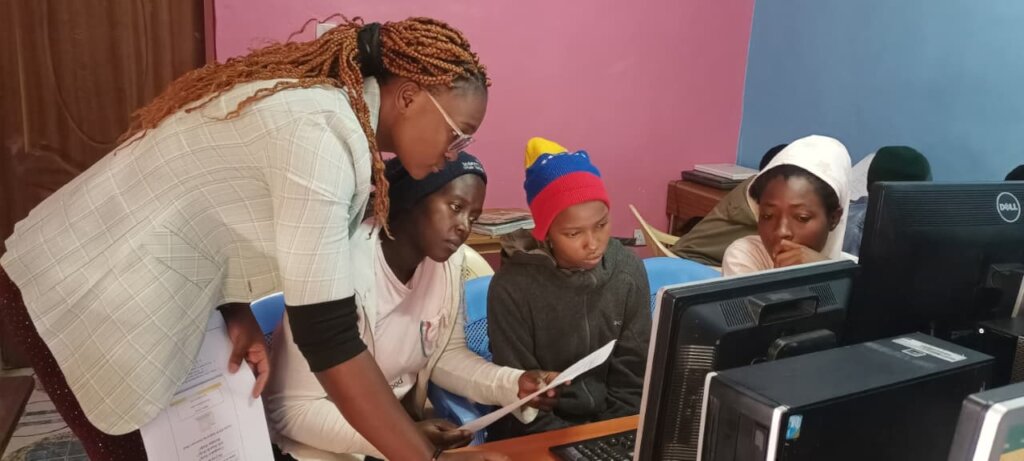
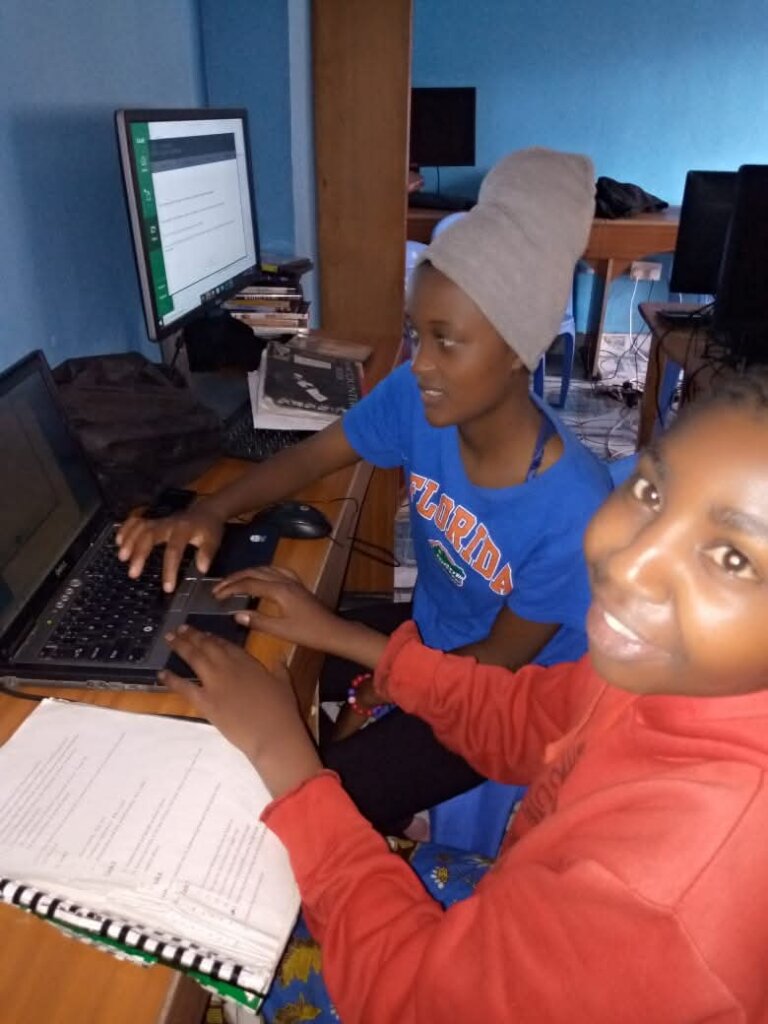
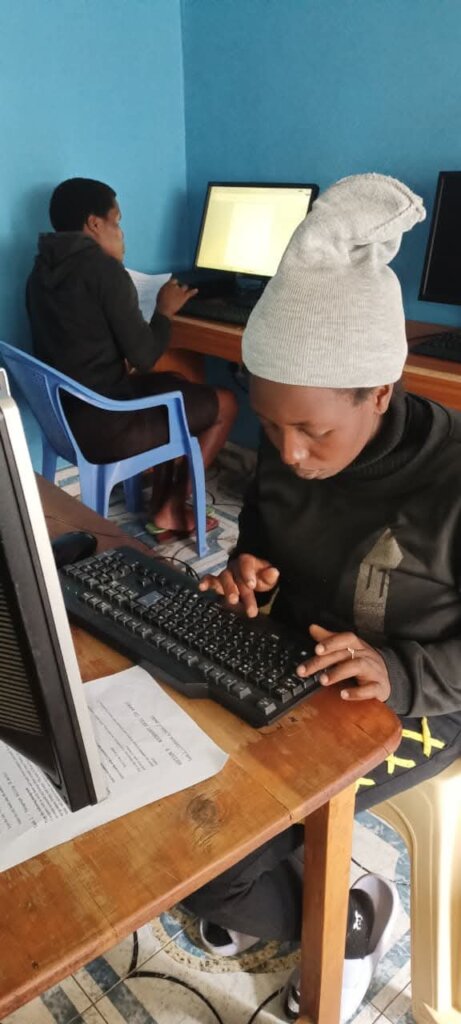
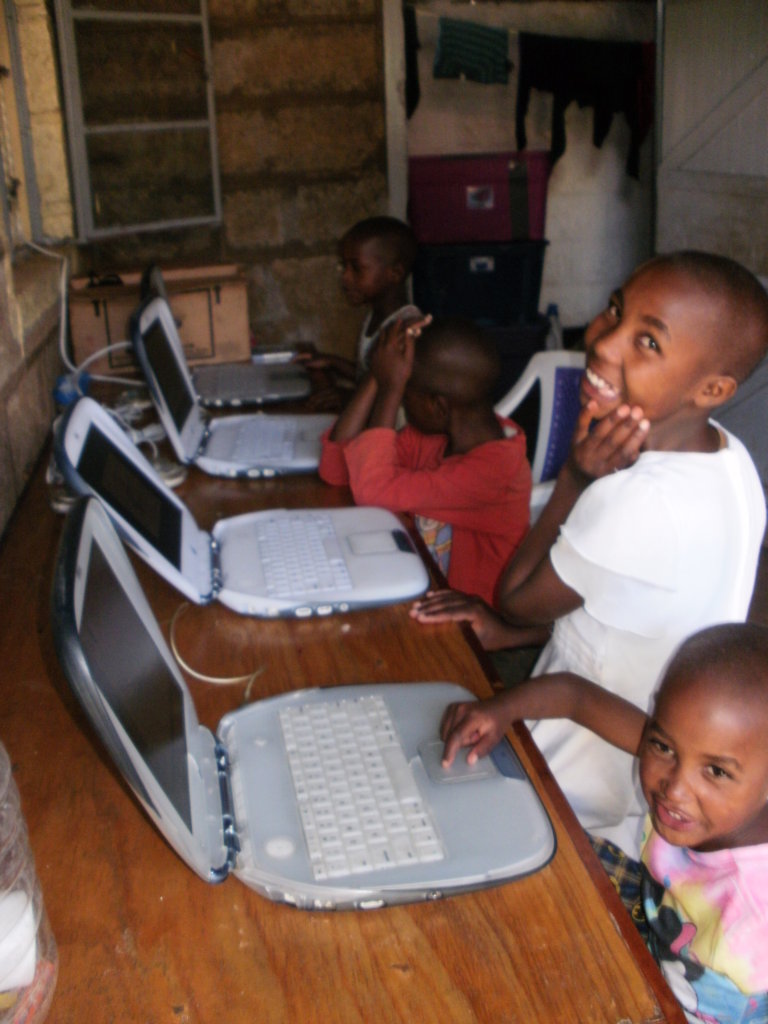
It is into this gap that Kijiji Mission steps. Every Saturday, children from the community who are beneficiaries of our community support project gather at Springs of Hope Foundation's facility in Nakuru for something that, on the surface, looks simple: a computer class. But look closer, and you will find something much larger happening — a slow, deliberate redrawing of the boundaries of what these children believe is possible for themselves.
Josephine
"She sat very still the first day. Just watching it. Like it might move on its own."
Her name, for this story, is Josephine. She arrived at Springs of Hope Foundations's Saturday computer session the way many children do — quietly, with the careful posture of someone who has learned not to take up too much space. She was older than some of the others, old enough to know what she had missed, and young enough that it still stung.
Josephine had never touched a computer. Not once. This is not as rare as it sounds in communities like hers — households navigating poverty, illness, and stigma rarely have space for technology. The device in front of her that first Saturday was, in every practical sense, an alien object. She did not know where to rest her fingers. She did not know what a cursor was, or why it moved when she did not expect it to.
She marvelled at it. That is the word people who were there use. Not frightened, not dismissive — marvelling. There was something genuinely open in the way she looked at that screen.
Learning to Type
The sessions are structured but unhurried. Instructors understand that these are not children coming from computer-rich homes. There is no assumption of prior knowledge, no impatience with the pace at which hands find their way around a keyboard. The environment is specifically designed to meet learners where they are.
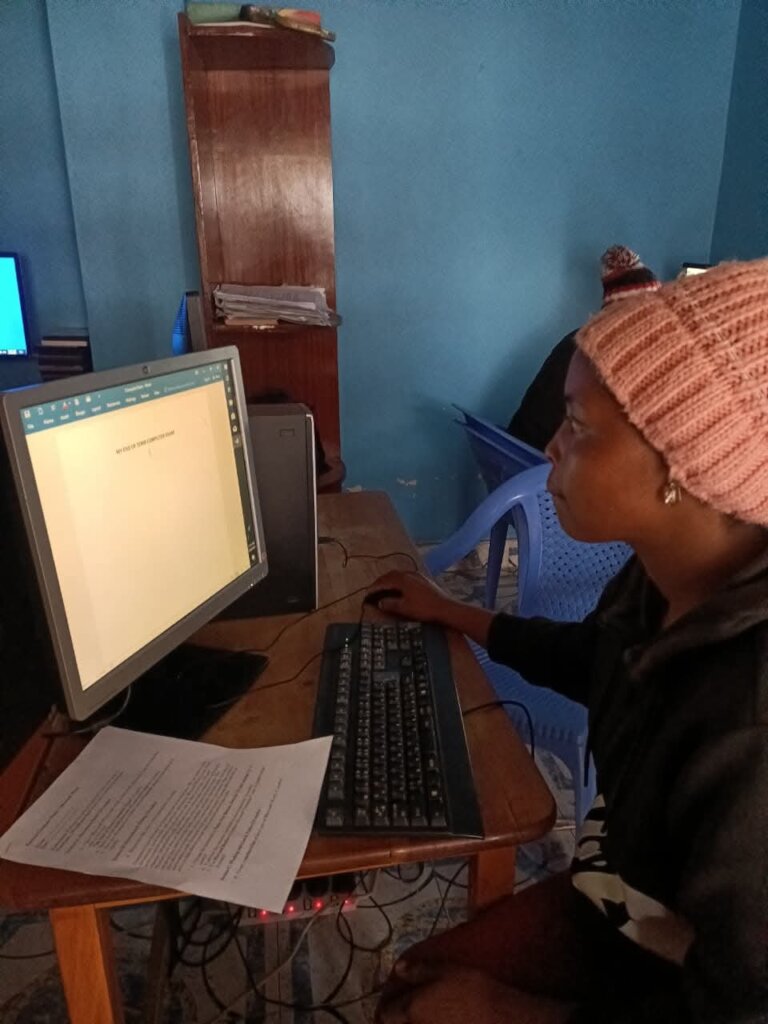
For Josephine, the first breakthrough was typing. Not fast — just typing. Connecting the press of a key to the appearance of a letter on screen. It sounds small. It is not small. It is the moment the machine stops being intimidating and starts becoming a tool.
She practised. Week after week, she came back. She learned the home row. She learned to look at the screen instead of her fingers. She made mistakes — deleted whole paragraphs by accident, typed in the wrong box, lost work before she'd learned to save it — and she came back the following Saturday anyway.
Word, Then Excel
Microsoft Word was where Josephine first found her stride. Under patient instruction, she worked through the fundamentals — formatting text, setting margins, creating lists, inserting tables. But she did not stop at the basics. She learned how to use headers and styles, how to structure a document so it had a beginning, a middle, and something that looked like an end. She learned to make things that looked professional.
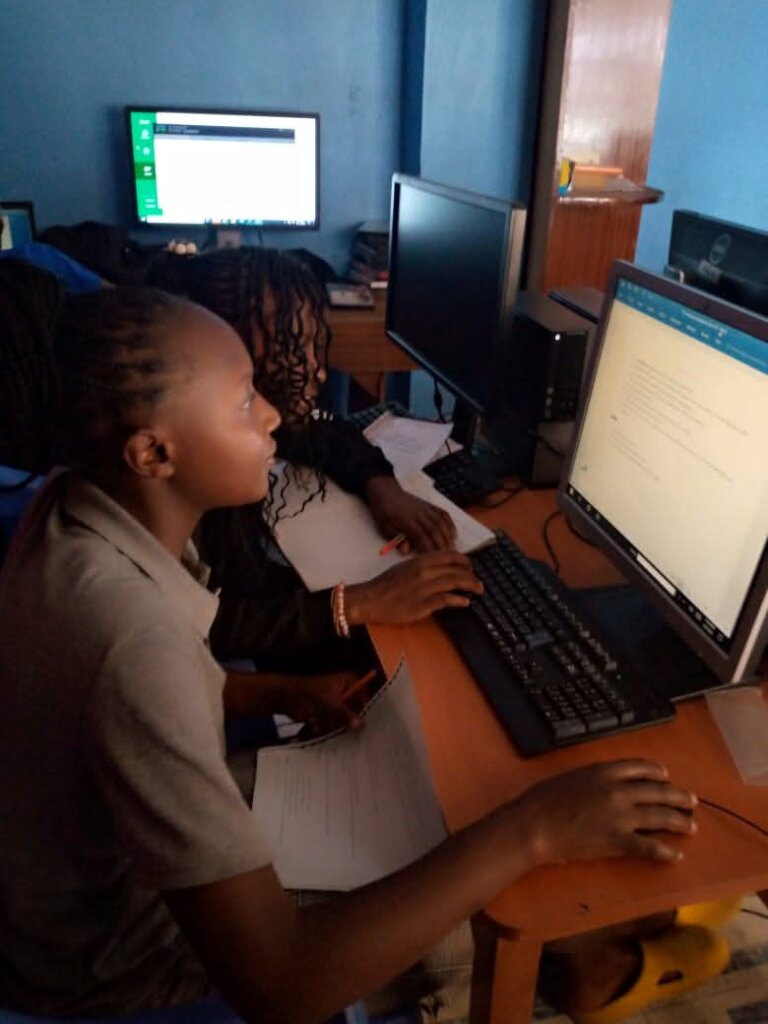
Then came Excel. Spreadsheets are often where confidence dips — the grid feels less forgiving, the logic less intuitive. But Josephine moved through it methodically, the same way she had moved through everything else. Formulas. Functions. Organizing data across rows and columns until patterns emerged from numbers that had previously meant nothing.
She was good at it. Not just managing — good. The kind of good that her instructors noticed, that made them give her harder problems, that made her peers sometimes lean over to watch what she was doing.
What a Saturday Means
It is worth pausing to say something plainly: these Saturday sessions are not charity. They are not a concession to circumstance. They are an investment.
For children like Josephine, the barriers are layered. Stigma means that some families are reluctant to enrol their children in conventional education settings. Illness — in a parent, in themselves — can mean interruptions that cause children to fall behind and never quite catch up. Poverty means that even where schools exist, the hidden costs of attendance can be prohibitive. And beneath all of it, the quieter damage: the erosion of the belief that you are worth educating.
Springs of Hope Foundation's's computer program is designed with these realities in mind. It is free. It is held on Saturdays, reducing conflict with school schedules. It is held in a space these children already know and trust. And it is taught by people who understand that what they are teaching is not just a skill — it is a counter-narrative to everything these children have been told, directly or indirectly, about their futures.
The Context in Numbers
Understanding Josephine's story requires understanding the environment in which it takes place. The following figures, drawn from national and international health data, illustrate the scale of need — and the scale of what becomes possible when children living with HIV are given consistent, structured support.
1.33M
Kenyans living with HIV
62,000+
Children aged 0–14 with HIV
3%
National HIV prevalence
38%
New infections among youth 15–24
Sources: Kenya National Syndemic Diseases Control Council (NSDCC), UNAIDS 2024 Global AIDS Update
HIV disproportionately concentrates along lines of vulnerability. Women face a higher prevalence than men nationally — 7.6% compared to 5.6% — and adolescent girls are four times more likely to be infected than their male counterparts. Among all new adult HIV infections in Kenya, 38% occur among young people aged 15 to 24. Homa Bay County recorded the highest county-level prevalence at 16.2%, against a national average of 3%. Nairobi, with over 151,000 people living with HIV, carries the highest absolute burden.
Despite this, Kenya has made measurable progress. HIV-related deaths have fallen by 64% since 2010. Treatment coverage stands at 94%. The country has reduced new infections by 75% in the past decade. These numbers represent real lives — but they also underline the task that remains, particularly for children who were born into the epidemic and are now growing up inside it.
Stigma remains one of the most persistent obstacles. A 2021 People Living With HIV Stigma Index found that 62% of people in Kenya delayed HIV testing because they feared others' reactions to a positive result. For children, stigma rarely arrives as an event — it accumulates: in the way certain questions go unasked, in the schools never attended, in the futures quietly never planned.
Still Soaring
Josephine is still coming to Saturday sessions. She is, as her instructors put it simply, still soaring. The trajectory is not dramatic in the way that makes for an easy story — there was no single transformative moment, no tearful breakthrough, no date she circled in her mind as the day everything changed.
Instead, there are Saturdays. Accumulated Saturdays. The Saturday she first typed a full sentence without looking at her hands. The Saturday she built her first properly formatted document. The Saturday she figured out a formula in Excel before anyone had to explain it to her. The Saturday she helped another child understand something she had learned the week before.
These are not footnotes. They are the story.
That is what opportunity looks like for a child who was told, in a thousand quiet ways, that opportunity was not for her. We believe it is. And we intend to keep proving it — one Saturday at a time.
Links:
Project reports on GlobalGiving are posted directly to globalgiving.org by Project Leaders as they are completed, generally every 3-4 months. To protect the integrity of these documents, GlobalGiving does not alter them; therefore you may find some language or formatting issues.
If you donate to this project or have donated to this project, you can receive an email when this project posts a report. You can also subscribe for reports without donating.



Support this important cause by creating a personalized fundraising page.
Start a Fundraiser