By Dana Kaltenberger | U.S. Director
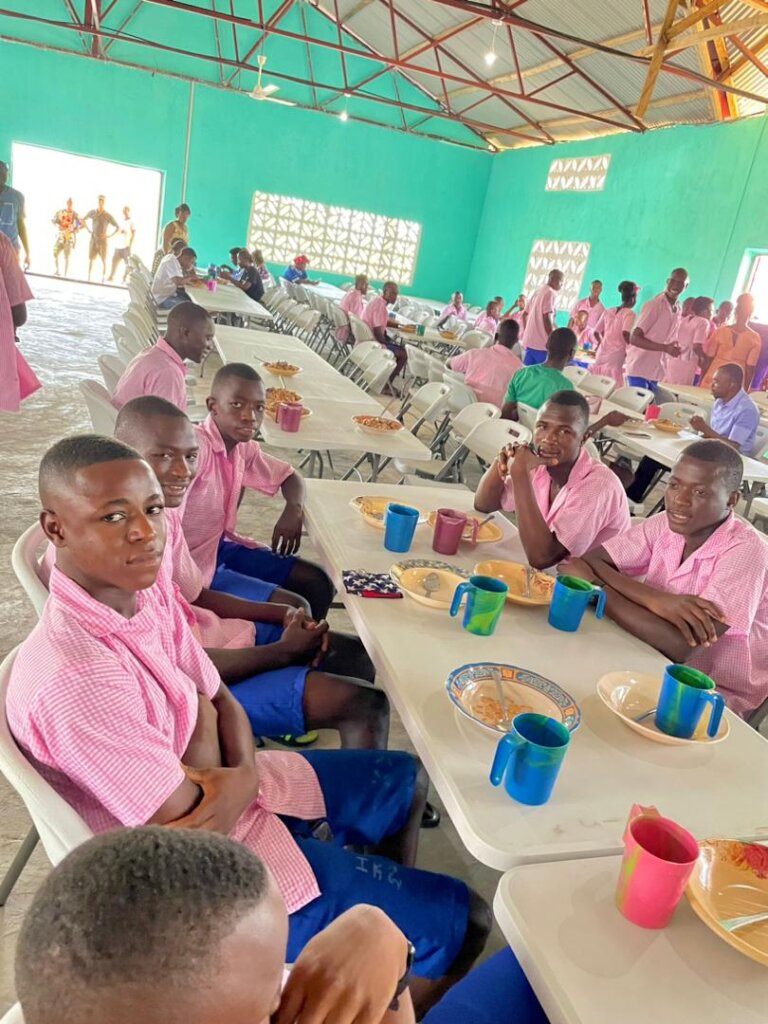
For students at EduNations’ Senior Secondary Boarding School in Sierra Leone, three meals a day provide far more than nourishment. They provide stability, improve students’ readiness to learn, and remove the daily uncertainty of not knowing where their next meal will come from.
Before entering the boarding program, 70% of students attended school without eating breakfast, and approximately 85% came from food-insecure households. Many students arrived from rural communities where families have limited access to food markets, diets often lack sufficient protein, and financial hardship makes it difficult to provide enough food each day.
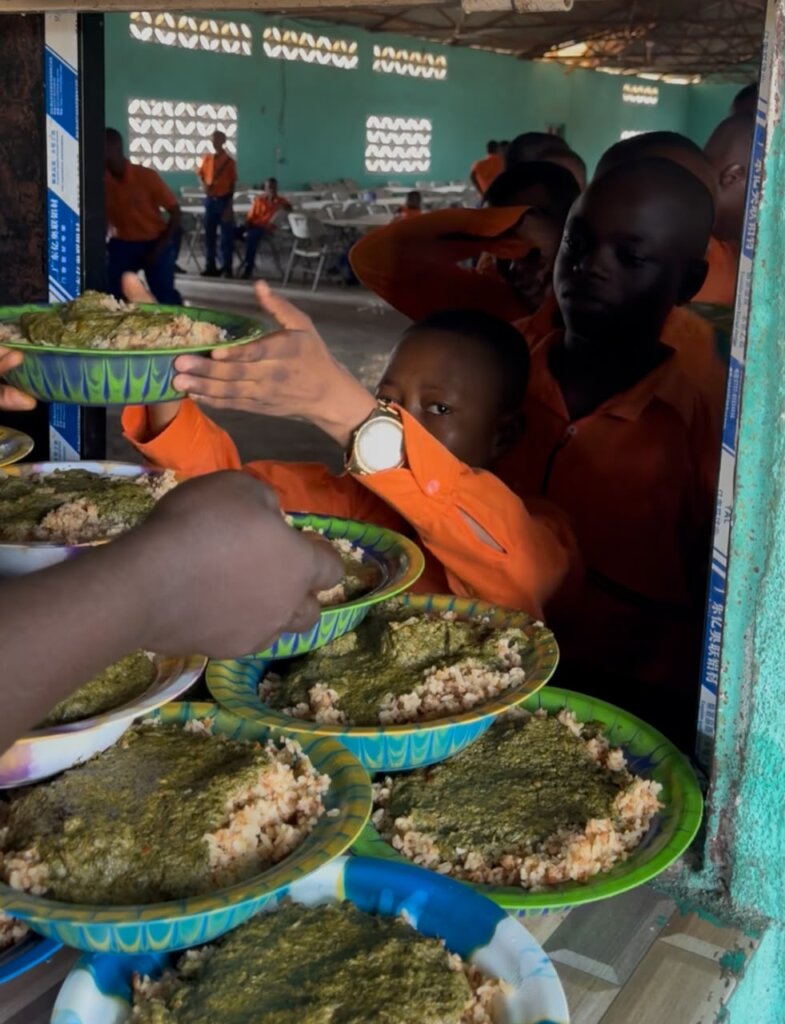
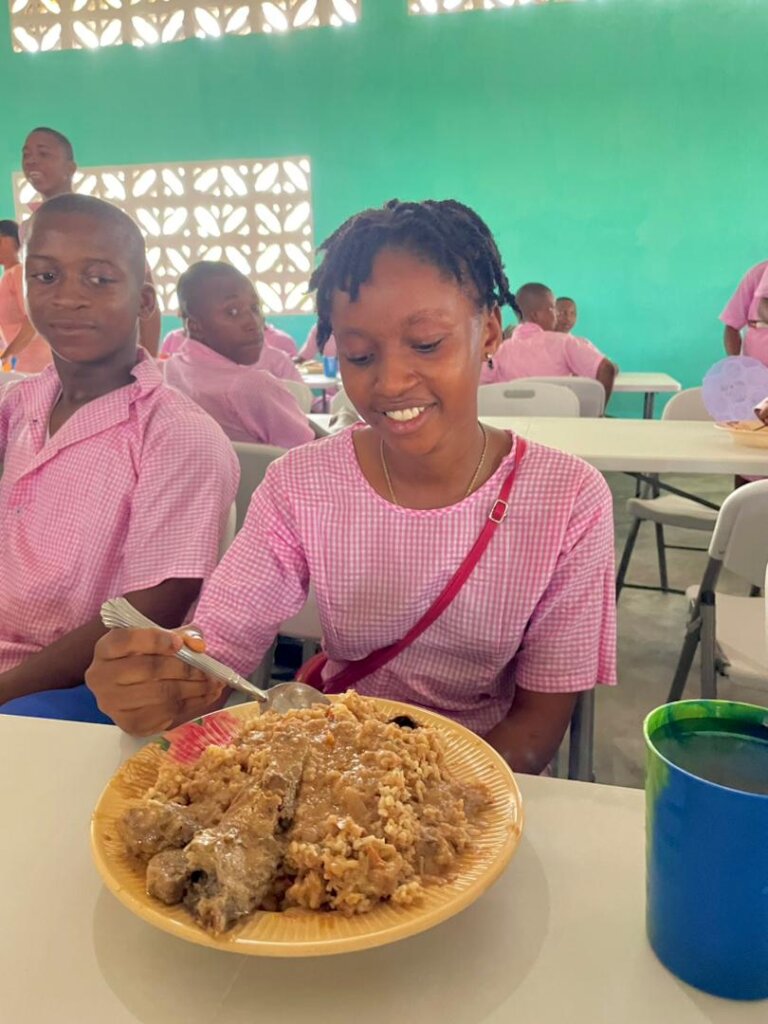
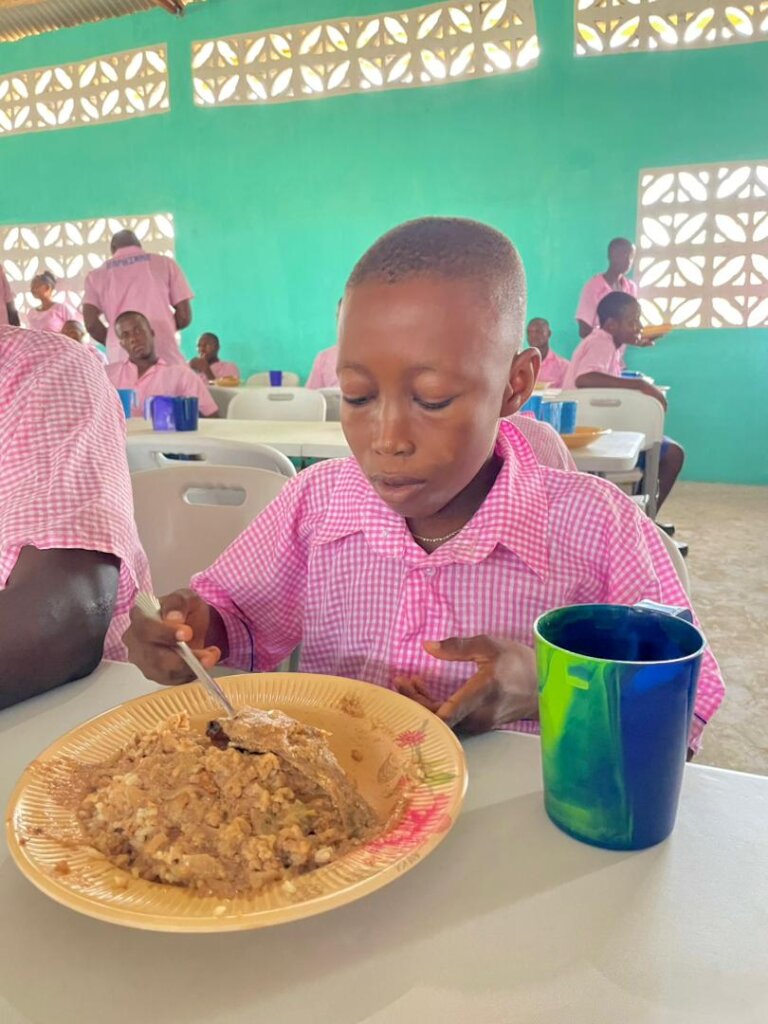
Today, every boarding student receives breakfast, lunch, and dinner. Meals include familiar foods such as cassava leaf, soup, yellow beans, konchion beans, fried rice, and black-eyed beans, typically served with rice. Food is provided through a combination of donated meals from Rise Against Hunger, purchased food, and locally sourced leaves and other fresh ingredients. Twelve dedicated staff members prepare and serve the meals each day.
The impact is being seen in students’ physical health. Our school nurse has observed healthy weight gain and growth, increased energy, and fewer illnesses among students during their time at the boarding school. School clinic records also provide an encouraging indicator. During Term 2, clinic visits rose to 1,003 when new Senior Secondary 1 students entered the boarding program, many arriving with health and nutritional challenges. By Term 3, illness-related visits had fallen to 453—a decrease of approximately 55%.
We recognize that students’ well-being is supported by more than meals alone. Healthcare, clean water, hygiene, safe housing, and attentive staff all contribute to these outcomes. However, feedback from students and staff consistently identifies reliable nutrition as an important part of their improved health.
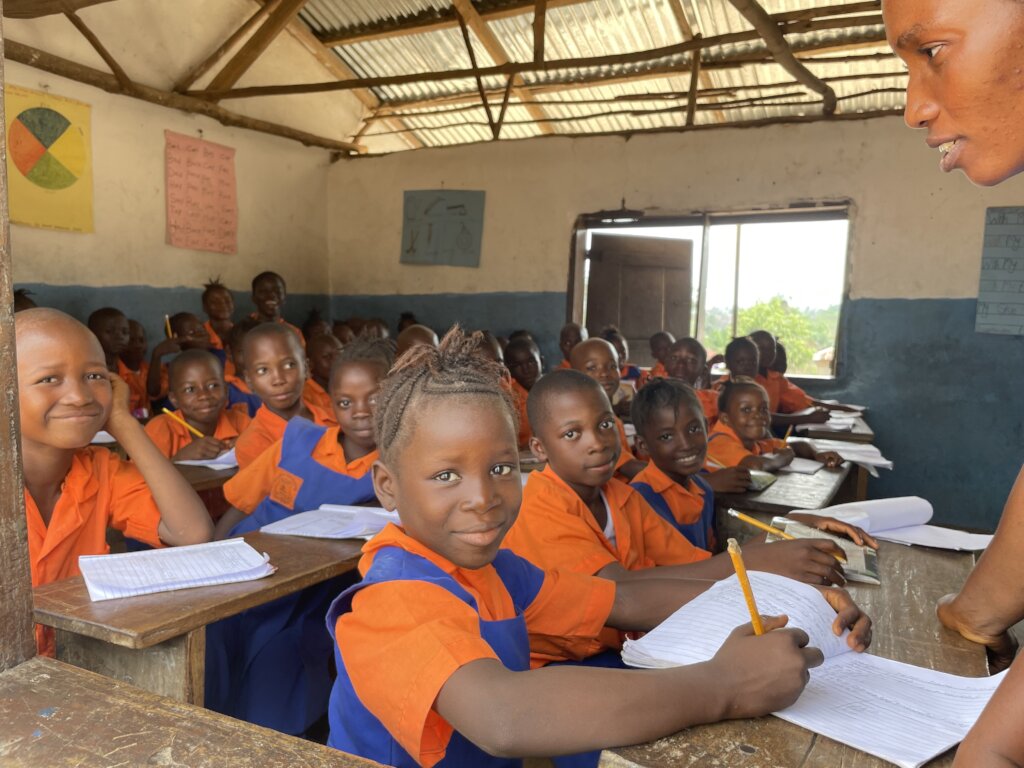
Teachers are also noticing meaningful changes in the classroom. Students are more attentive during morning lessons, participate more actively, complete more assignments, and demonstrate greater academic confidence. They are asking questions, contributing to group work and presentations, and becoming more capable of completing their studies independently. Although official evening study time ends at 9:00 p.m., many students now choose to continue studying beyond those hours.
For students, knowing that food will be available also reduces stress and distraction. As 19-year-old boarding student Osman Kargbo explained, “I no longer face the stress and distraction of wondering where my next meal will come from.”
The benefits extend beyond physical health and academics. Our counselor has observed that students worry less about food and grow in confidence, emotional resilience, and hope for the future. This stability is especially important for new students who are adjusting to life away from their families and home communities.
Meals also help build community. Boarding students from different villages, languages, and tribal backgrounds live, study, worship, serve, and eat together. They share responsibilities, support one another academically, and develop friendships and leadership skills. Staff members report that students are becoming more welcoming, cooperative, and willing to help one another.
Parents experience greater peace of mind as well. Knowing that their children receive three meals each day relieves a significant financial burden while allowing students to continue their education in a safe and supportive environment.
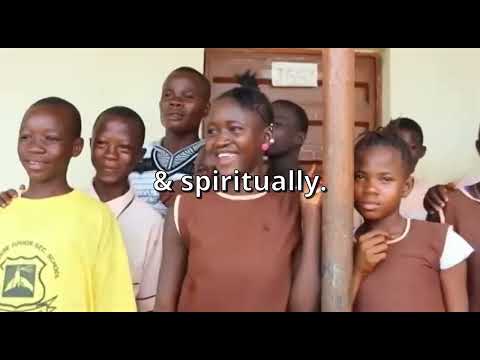
Consistent meals cannot accomplish everything for a student, but they can remove a major obstacle from the path toward an education. Combined with quality teaching, healthcare, safe housing, spiritual guidance, friendships, and dedicated study time, the feeding program helps us care for the whole child—intellectually, physically, socially, and spiritually.
Thank you for helping make this care possible. Your generosity is giving students the nourishment and stability they need to learn, grow, and pursue a brighter future.
Links:
Project reports on GlobalGiving are posted directly to globalgiving.org by Project Leaders as they are completed, generally every 3-4 months. To protect the integrity of these documents, GlobalGiving does not alter them; therefore you may find some language or formatting issues.
If you donate to this project or have donated to this project, you can receive an email when this project posts a report. You can also subscribe for reports without donating.



Support this important cause by creating a personalized fundraising page.
Start a Fundraiser