By Kimberly Laney | Resource Development Officer
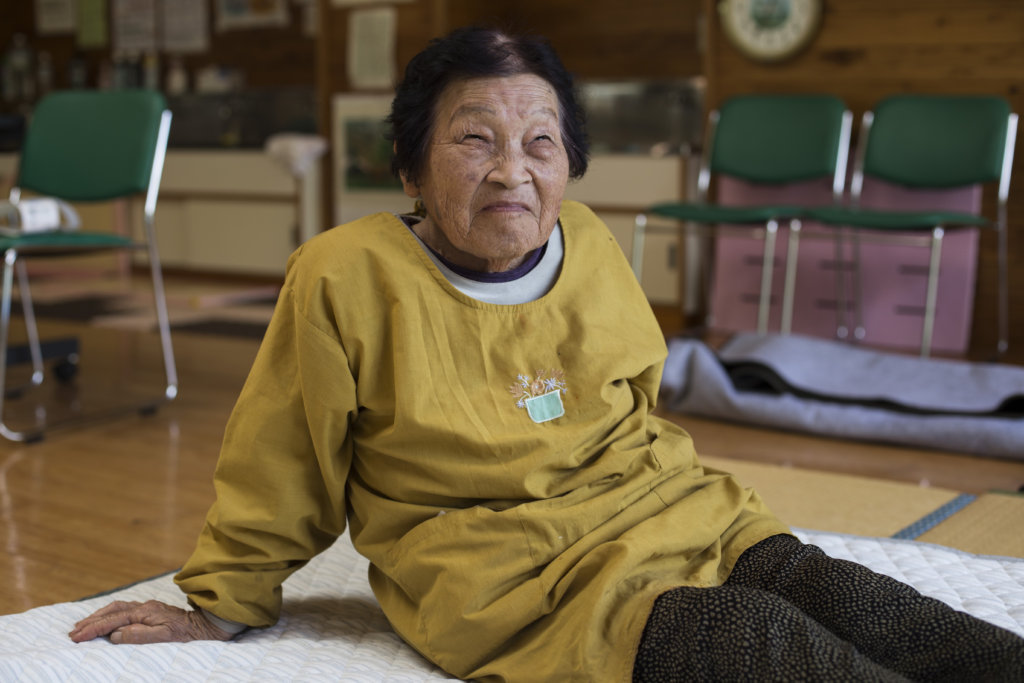
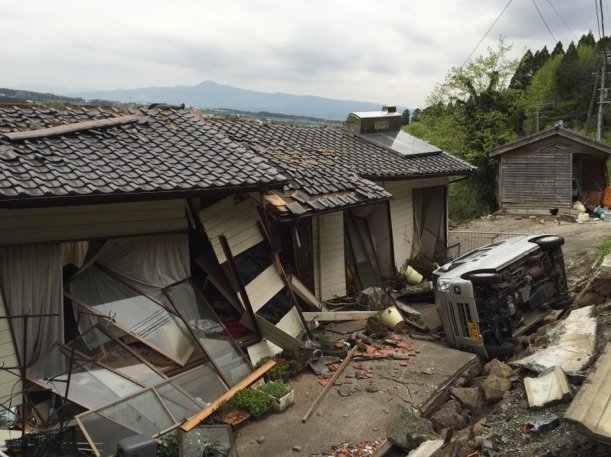
“We never expected this to happen,” said Reiko, 81. “There are no signs that tell us that an earthquake is coming.” Reiko is one of the thousands whose homes were destroyed or damaged in the recent earthquakes in Japan in April 2016.
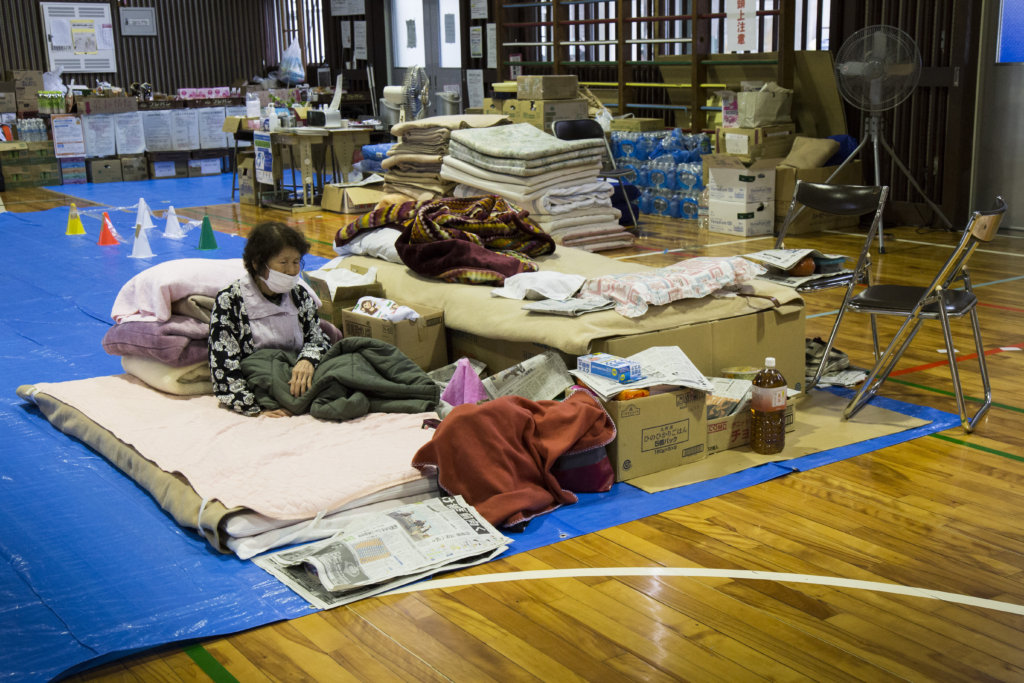
On April 14, a powerful magnitude 6.2 earthquake hit Kumamoto Prefecture of Japan, followed just 48 hours later by a magnitude 7.0 earthquake. More than 1,700 aftershocks hit in the weeks that followed. Our teams deployed from Tokyo and arrived within hours of the second earthquake, reaching the epicenter in Kumamoto. We have been partnering with the government and local authorities to provide surge capacity and respond. Since the quakes, our teams have reached some 2,500 people forced from their homes into more than 20 evacuation centers across the affected areas.
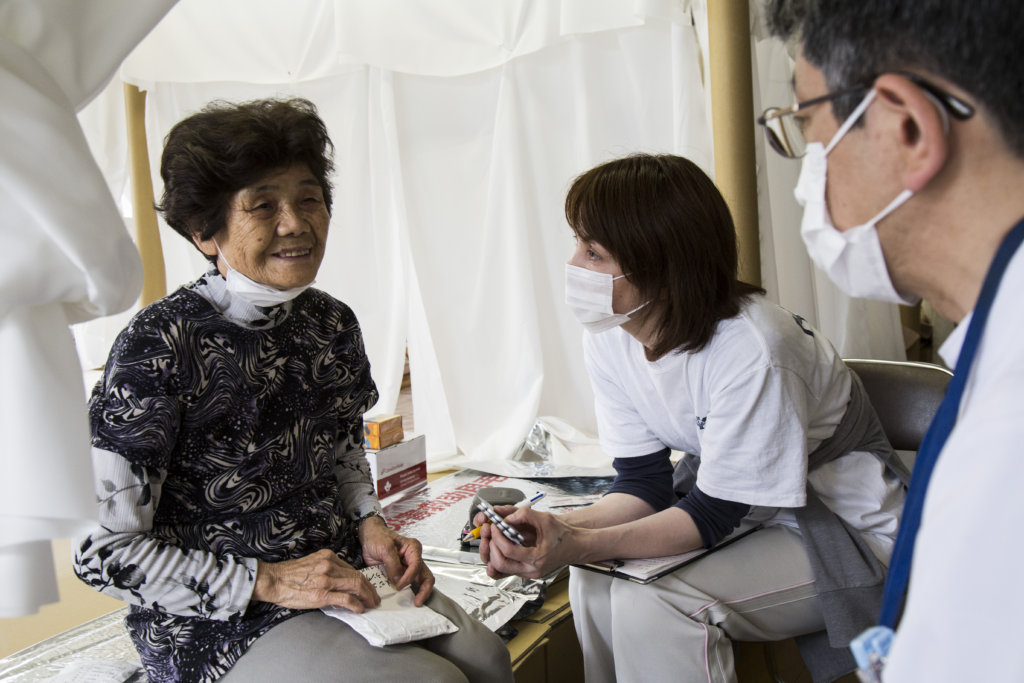
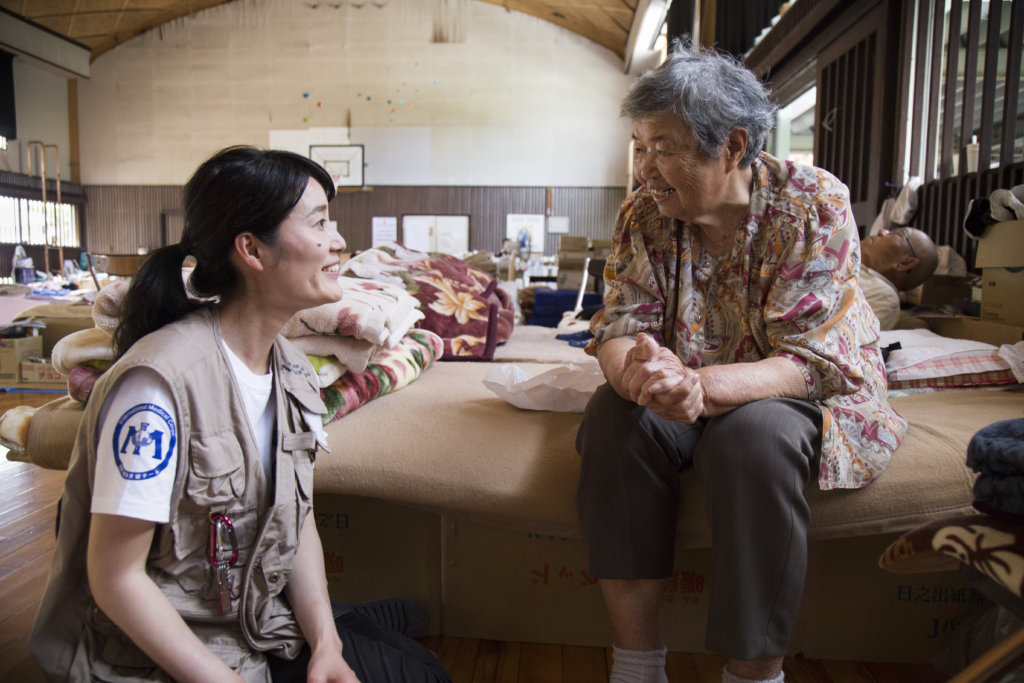
With 49 deaths, 1,400 people injured, and 145,000 buildings destroyed or damaged, water, sanitation and hygiene services, rehabilitative care, and psychosocial support were among the greatest needs for individuals suffering from the impact of the earthquakes. Our teams emphasized care for the most vulnerable – older evacuees – who, when many individuals began returning home, had to stay behind due to limited mobility and need for additional assistance. To address the most urgent needs, we reached 201 older evacuees with occupational and physical therapy to support rehabilitative care and 1,278 people with 5,561 relief materials including clothing, bedding, water supplies, lights, and more.
To accommodate individuals seeking temporary shelter, our teams provided 722 people with hygiene kits containing soap, toothbrushes, and toothpaste to help people stay healthy and prevent the spread of disease. In order to support strained evacuation centers, we provided 10 latrines, which can reach 500 people with additional sanitary care. International Medical Corps also provided psychological first aid training – a core aspect of our approach to psychosocial support in an emergency – for 15 local staff members to help strengthen positive coping strategies and build local capacity.
When recalling the quakes, Yukie says, “I didn’t expect such a huge earthquake. I evacuated by car, which belongs to my neighbor. I was so scared and couldn’t sleep by myself. I spent the night in the car. Then, the second one happened [two days later]. It was beyond imagination. I cannot go back to my house,” she said. At 88 years old, Yukie lived by herself in her home in the bamboo-covered mountains above Mifune, a town in Kumamoto Prefecture. To support evacuees’ mental and physical well-being, our teams worked with 9 physical or occupational therapists, 3 psychosocial support professionals, and 8 nurses to serve evacuees with limited access to care. With 10 doctors from Kumamoto City Hospital, we ensured quality service delivery.
As individuals like Reiko and Yukie continue to recover from the effects of the quakes, our teams are working with our local partner, Peace Boat Disaster Relief Volunteer Center, to provide shelter support, distribute food, and provide relief services to individuals who remain displaced. We thank you and the GlobalGiving community for your timely support as we reach those in need.
Project reports on GlobalGiving are posted directly to globalgiving.org by Project Leaders as they are completed, generally every 3-4 months. To protect the integrity of these documents, GlobalGiving does not alter them; therefore you may find some language or formatting issues.
If you donate to this project or have donated to this project, you can receive an email when this project posts a report. You can also subscribe for reports without donating.