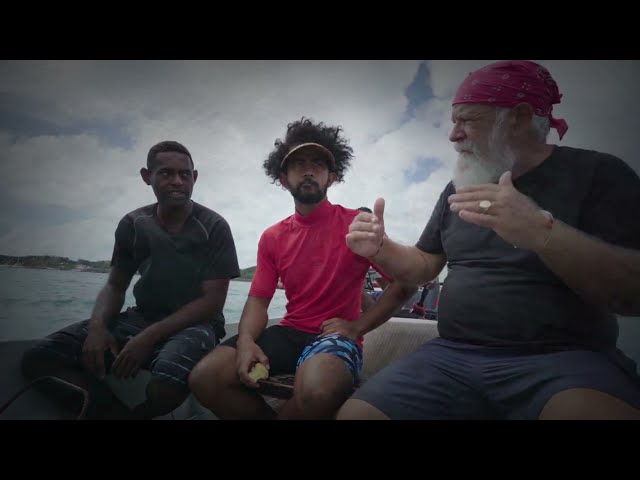
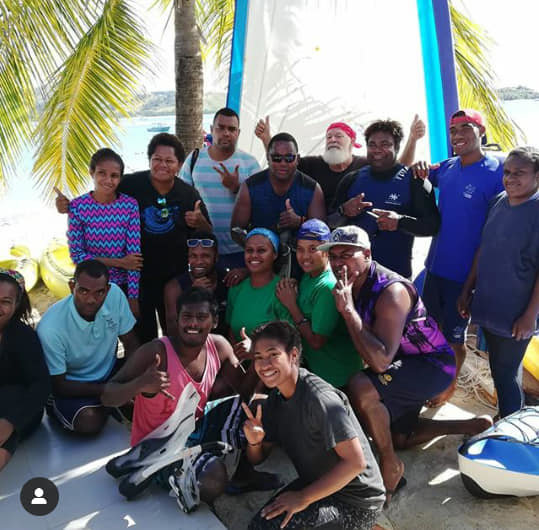
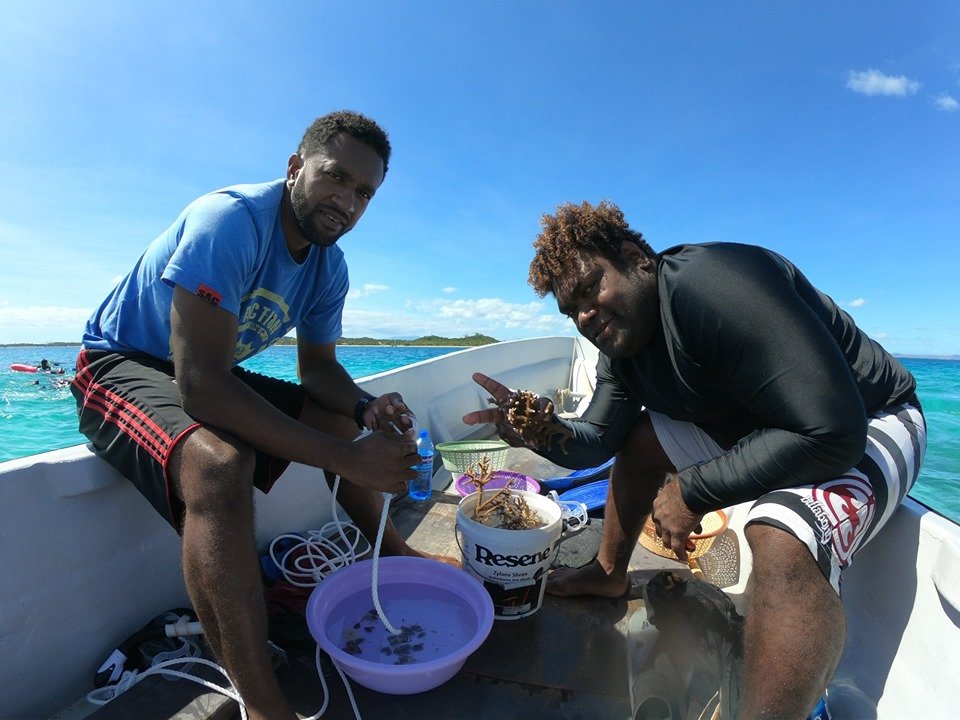
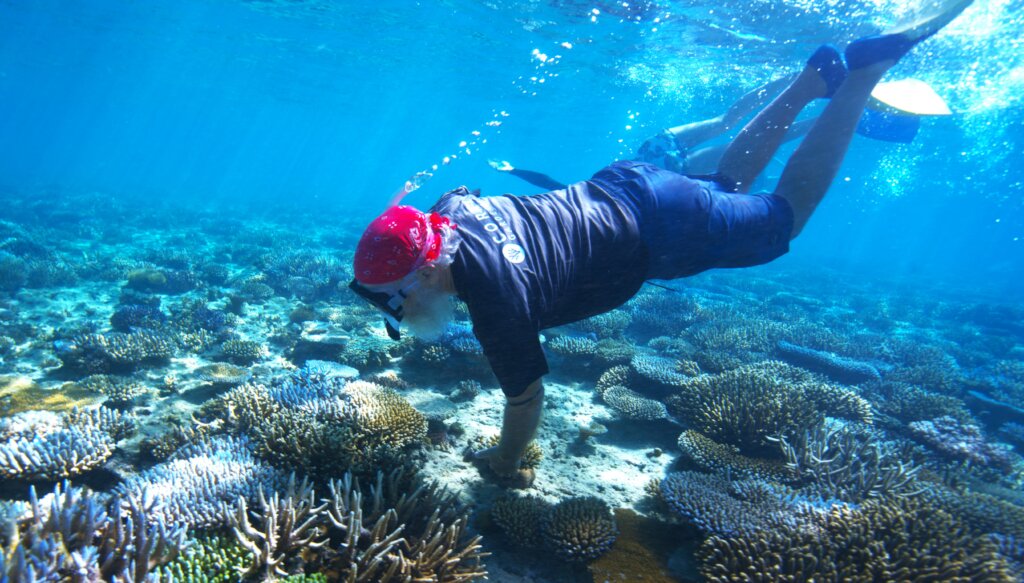
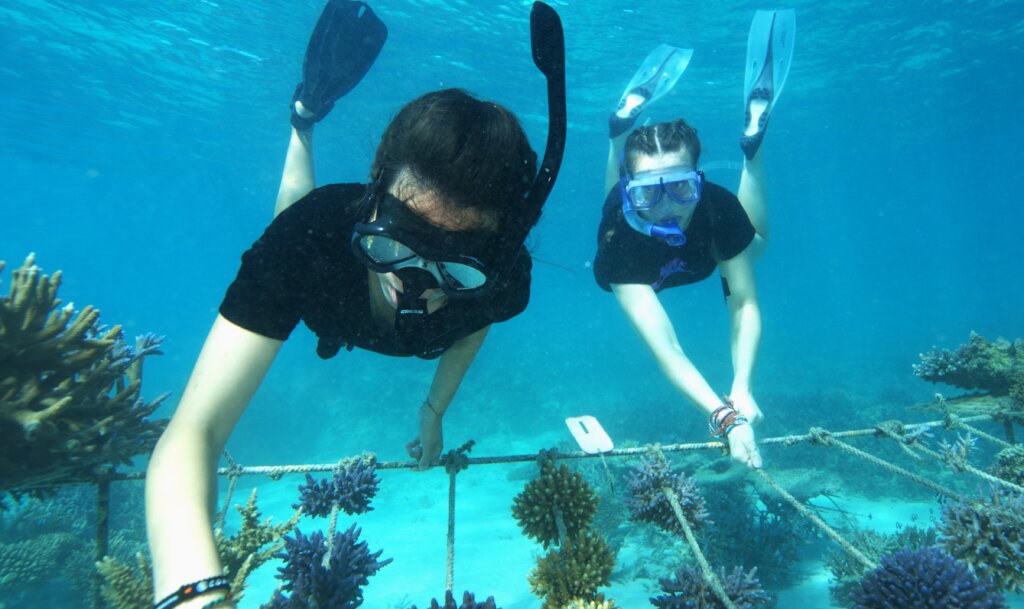
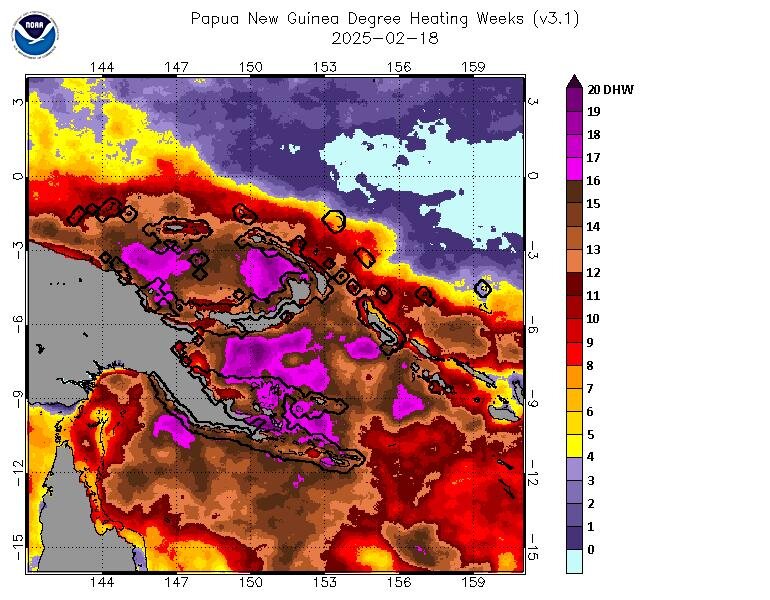
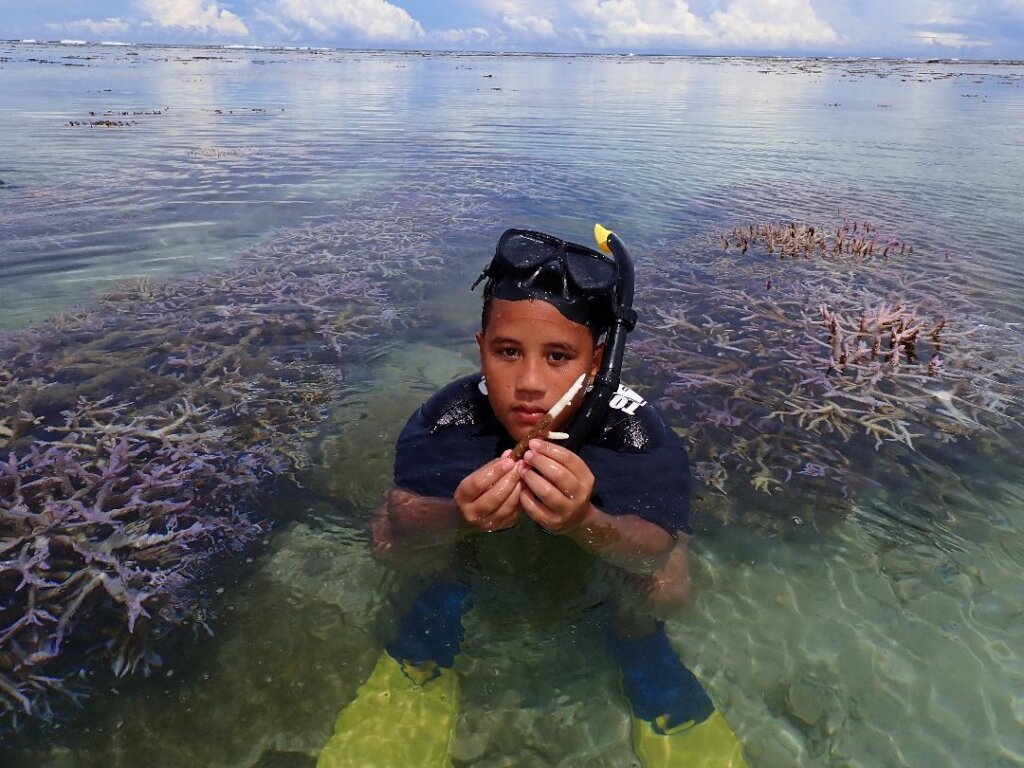
The situation in PNG has gotten much, much worse, our team, funded by Kyeema Foundation in Australia, has just returned from New Brittain Island, and they were only able to find two ssurviving Acropora corals. COTS predators are also present, and soon whatever has survived will be gone. This will be extinction level bleaching for Acropora corals in many areas of PNG, wiping away much of the progress being made.
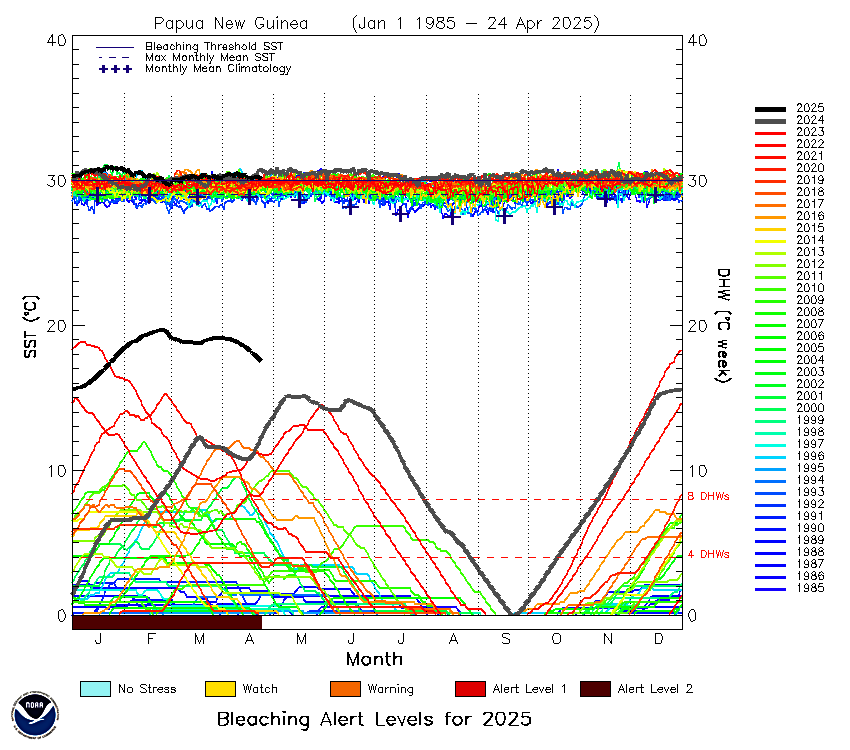
The graph below, shows 2025 heat stress as a black line: it is clear that it has never been so hot in Feb in PNG waters. Grey is 2024, and red is 2023, 2022 and 2021. All record years. It looks like PNG will experience annual bleaching from this point on for the rest of our lives. Tuvalu and Kiribati had mass coral die-offs last year as well, and in our Fiji and Samoa sites, coral reefs lost many corals as well.
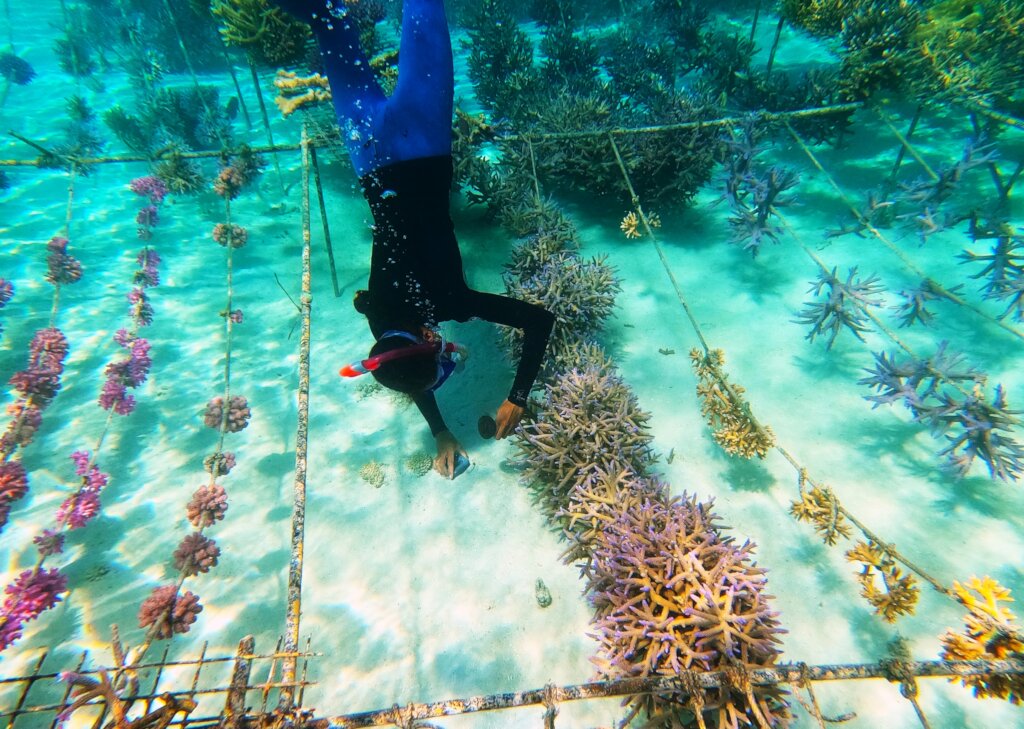
Without urgent intervention, this will become the end game for the most important habitat forming Acropora corals. We must design our work around this new reality. The only solution now is to search the waters for whatever has survived and to get some of it to cooler waters locally, elevated into COTS resistant nurseries, and then to focus on restoring coral reproduction and larval recruitment in reef recovery patches.
Our data focus should no longer be on coral growth, but rather on logging temperatures and securing the few corals that remain, locating and collecting heat adapted surviving corals- if possible 50 genotypes of each species, secured within gene bank nurseries scattered throughout the nation in a dozen sites. We need funds to train and pay for at least 30 coral guardians as keepers of the corals for PNG! This has suddenly become a critical situation. COTS and the harvest of Acropora corals for lime production for the betel lime industry will now potentially kill off the surviving heat-adapted corals, wiping away prospects for natural adaptation.
The Naidiri Hot Pocket here in Fiji reached >35C (95F) on multiple days in February. Even though Fiji never reached the bleaching alert stage, mass coral bleaching nevertheless occurred.
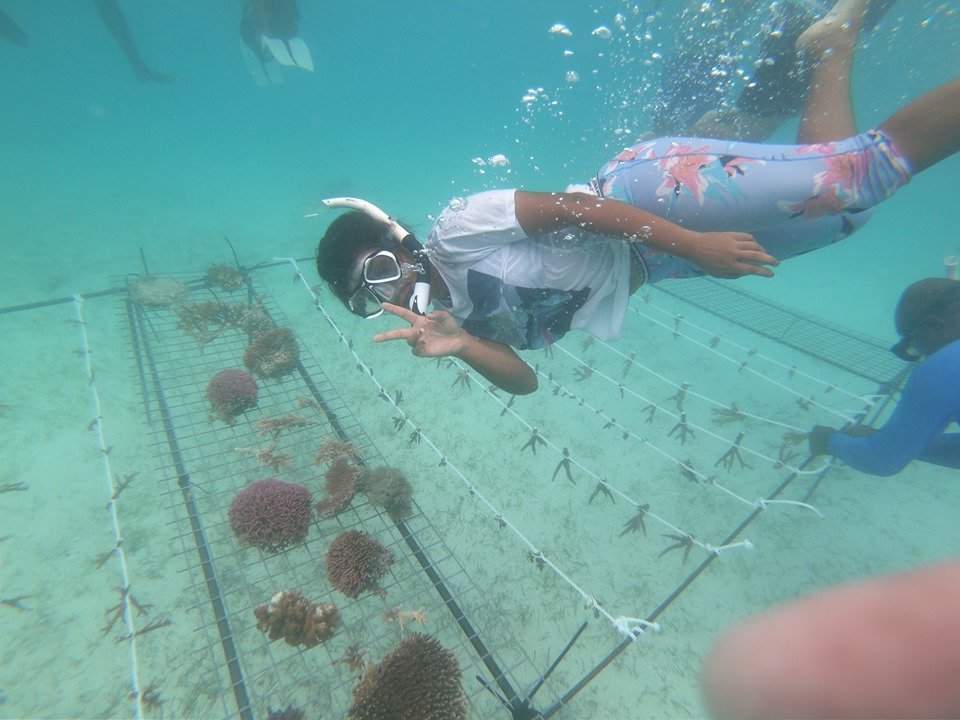
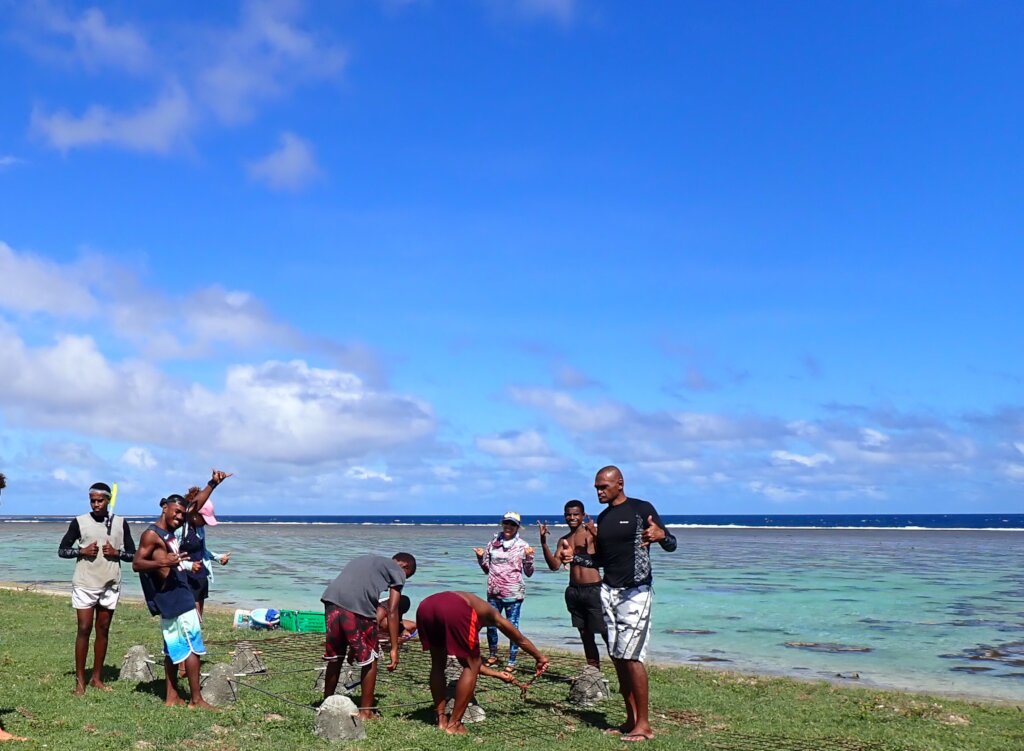
We have succceeded in creating a new type of storm wave-resistant coral nursery, and we have created three of the 3x3M (10x10ft) nurseries, gathering together the heat-adapted corals which remain unbleached. This will enable the commnuity to have a source of super bleaching resistant corals for the coral planting work from this point onward.
These recommendations for immediate action were conveyed:
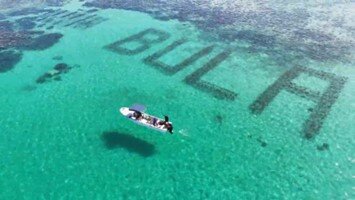
My recommendation is to use this time to identify bleaching resistant corals in the hottest reef areas and to ensure that they survive the heat, to move the entire colony a bit deeper and a bit cooler. If there is no nursery is no nursery vailable, move onto clean rubble beds as a temporary measure until a proper table nursery can be built. Putting the corals on elevated underwater nursery tables protects against silt contact and disease and prevents COTS from finding and killing the corals. It is necessary to move whole colonies from shallow to deeper, from hotter to cooler--this is not the time for breaking corals as the added UV stress from exposing the shaded inner portions can kill the corals. We proved this hot to cooler relocation strategy lst year, moving 1,300 corals here in Fiji to our Bula Nursery, film link below. All survived unbleached, while 80% of all corals left behind perished.
Thank you donors--hope you appreciate one of my more detailed reports featuring the field work.