By Ramla Batool Naqvi | Communication/Reporting Coordinator - Pakistan
Around the world, vaccines are one of the most studied, successful and cost-effective ways to improve health outcomes and save lives. However, vaccines work only if people recognize the need and value of immunization, and agree to be immunized.
Although approved COVID-19 vaccines are safe and effective, mass vaccination in Pakistan remains a challenge. According to the World Health Organization (WHO), vaccine hesitancy is one of the 10 most severe threats to global health. The WHO also reported that there are three main reasons behind refusal or unwillingness to be vaccinated: inconvenience in accessing vaccines, complacency and lack of trust.
Pakistanis have traditionally shown high levels of vaccine hesitancy, making it difficult to eliminate the spread of highly infectious diseases.
“There is a need to enhance public trust and share evidence-based knowledge on vaccine efficacy and safety through major sources of COVID-19 information, such as television, social media and healthcare workers,” says Dr. Khalid, Associate Professor at Khyber Medical University in Peshawar. “The community can be convinced to get vaccinated if more published data on vaccine efficacy and safety is available.”
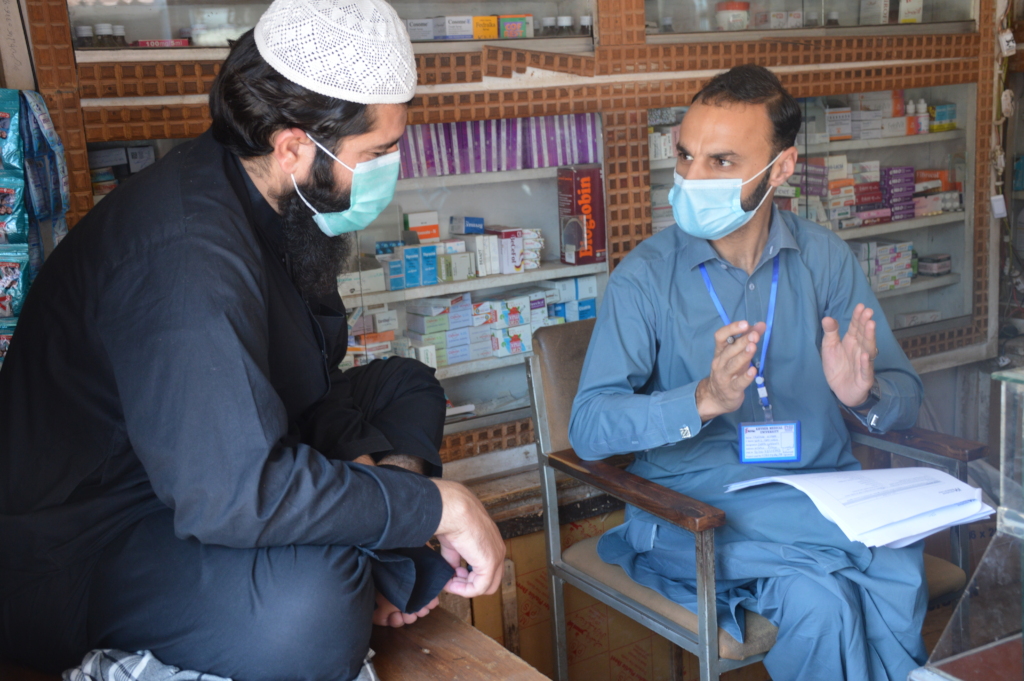
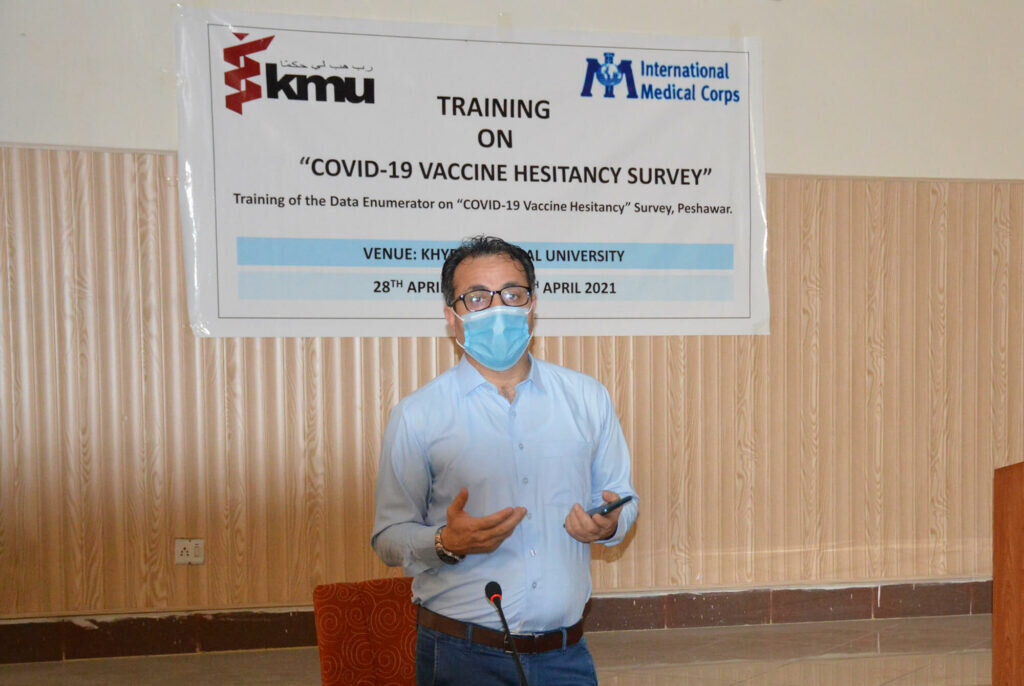
To identify and assess the reasons behind vaccine hesitancy in Pakistan, International Medical Corps worked with Pakistan’s Department of Health in Khyber Pakhtunkhwa province and Khyber Medical University in Peshawar to survey nearly 200,000 people.
The survey revealed that the majority of the respondents received information about COVID-19 vaccines from television, social media and healthcare workers. They said that healthcare workers are the most trustworthy source of information because they believe doctors are knowledgeable and informed.
However, when several healthcare workers were interviewed, they expressed concern about not receiving up-to-date and accurate information about the virus.
“Lack of correct information among healthcare workers harms vaccination drives and leads to a higher refusal rate,” explains Dr. Bhisham, Program Director with International Medical Corps in Pakistan. “We need to raise awareness and train healthcare workers at every facility to share accurate information with their communities. Also, religious and community leaders must be involved, as they are important, trusted sources of information.”
Of those surveyed:
Based on the results, International Medical Corps has made a number of recommendations to the Provincial Health Ministry of Khyber Pakhtunkhwa aimed at reducing vaccine hesitancy such as ensuring healthcare workers have the most accurate information, implementing mobile vaccination campaigns, sharing images and videos of public figures getting vaccinated, using media to counter misinformation and ensuring media outlets engage in responsible reporting.
With support from GlobalGiving and its community of donors, our teams in Pakistan, and around the world, can continue to combat vaccine hesitancy and help bring an end to the COVID-19 pandemic.
Project reports on GlobalGiving are posted directly to globalgiving.org by Project Leaders as they are completed, generally every 3-4 months. To protect the integrity of these documents, GlobalGiving does not alter them; therefore you may find some language or formatting issues.
If you donate to this project or have donated to this project, you can receive an email when this project posts a report. You can also subscribe for reports without donating.