By Kimberly Laney | Resource Development Officer
“In our family and according to tradition, women are created to meet any need a man may have.” Theophilus, chief of Ufamandu locality in the Democratic Republic of Congo (DRC), recalled of his previous beliefs. “Three years ago, I was invited to participate in International Medical Corps’ community awareness sessions on protection and the prevention of sexual violence and gender-based violence. As a traditional chief and very proud, I rejected the invitation, replying that sexual violence does not exist. A year later, after repeated invitations, I said I would go and listen. After two sessions, I was in a deep state of reflection. I saw that I was a prisoner of custom.”
Although the decade-long civil war in the DRC, which affected up to six million lives, officially ended years ago, the eastern region of the country remains one of the world’s worst humanitarian crisis zones. As fighting persists, people find themselves needing to move to safer and calmer areas. As those displaced lose their property, means of livelihood, and social support, acts of sexual violence against women and children continue, which can result in forced and unwanted pregnancies, sexually transmitted infections including HIV, and/or emotional trauma.
Since the height of the conflict, International Medical Corps has been committed to supporting the Congolese Government and other partners in the fight against sexual- and gender-based violence in volatile areas in eastern DRC. Our behavior change communication project reaches men, women, and youth. International Medical Corps also encourages religious and local leaders to play a role in preventing sexual and gender-based violence within their communities. To date, we have reached 2,609 leaders with training to create and adopt new attitudes and perceptions about sexual- and gender-based violence. As a result of this work, there has been more concrete movements, like undertaking advocacy action at the provincial level to protect women and girls, which can continue for years after the end of this project.
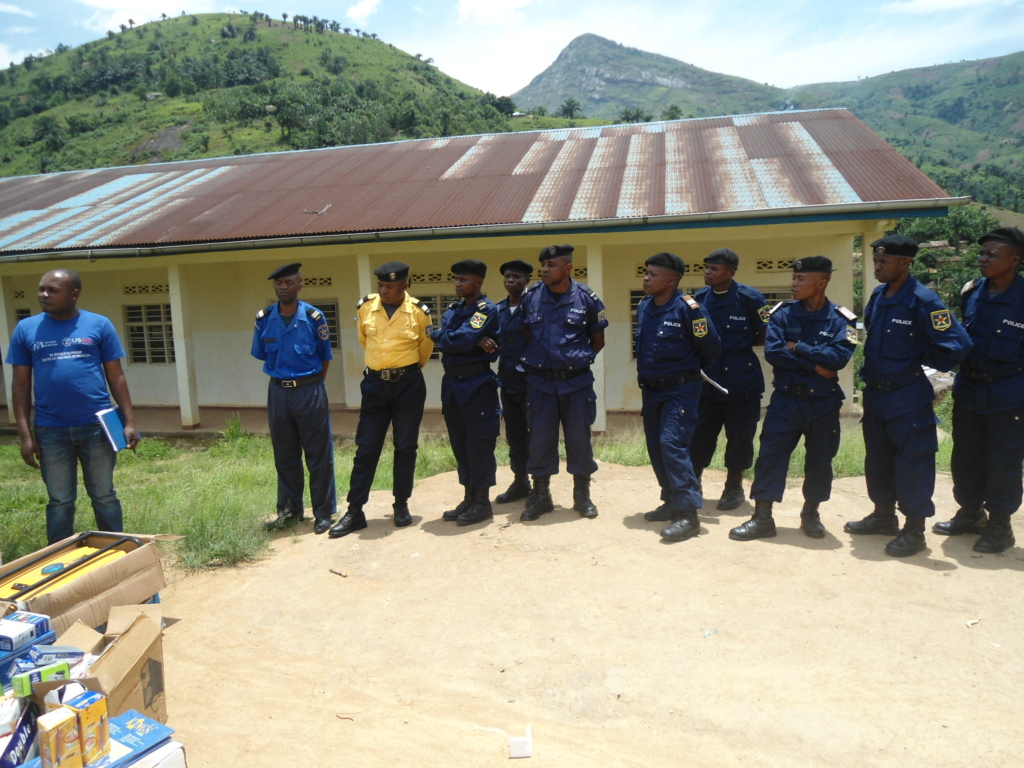
Our teams do not stop there. We are also working with police officers and law enforcement officials, training 4,146 officers and officials on how to prevent sexual violence. We are helping to establish police prevention committees to continue the critical sessions on sexual- and gender-based violence with their peers. The police prevention committees discuss the impunity of perpetrators of sexual violence, early marriage, consequences of out of court settlement, consequences of harassment in the professional environment, and different forms of sexual violence.
Theophilus has taken the key learned messages back to his family. He says, “I explained to my family that no work will only be completed by my wife and the girls within our family. We must help each other. Girls and women are not our slaves, but human beings. At first, my brothers were very hostile because they felt that their power was threatened, unlike my wife and my sisters who jumped for joy.” Today, his brothers also perform household tasks. “I sincerely thank International Medical Corps for this humanitarian action. I especially thank the community facilitator, who managed to remove me from this prison of customs.”
With the generous support from you, GlobalGiving, and other donors, International Medical Corps is making lasting behavior change in the Democratic Republic of Congo, empowering both men and women to stop sexual- and gender-based violence and save lives.
Project reports on GlobalGiving are posted directly to globalgiving.org by Project Leaders as they are completed, generally every 3-4 months. To protect the integrity of these documents, GlobalGiving does not alter them; therefore you may find some language or formatting issues.
If you donate to this project or have donated to this project, you can receive an email when this project posts a report. You can also subscribe for reports without donating.