By Kimberly Laney | Resource Development Officer
“My name is Nathalie. I am 15 years old and in the third year of secondary school. In February, my parents told me they did not have the money to pay for my school fees as well as my brother’s school fees. I would have to stop attending school. I realized that I was going to be a victim of discrimination and that my right to an education would be violated. I told my parents that they must make the effort to pay my brother’s school fees as well as mine, as their decision to remove me from school is a form of sexual- and gender-based violence. I am now able to continue my studies because I had the courage to stand up for my education.”
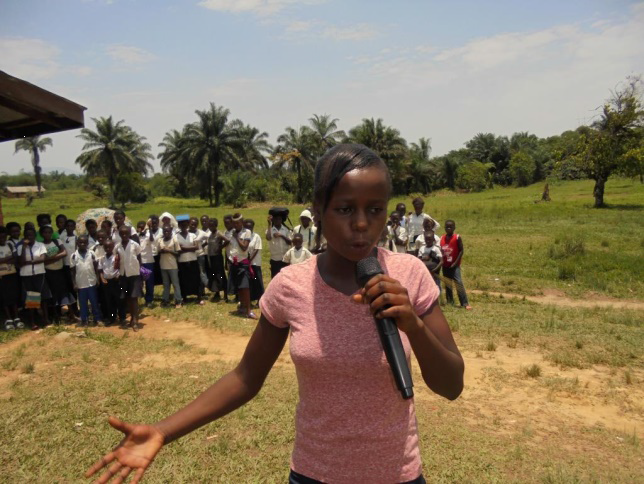
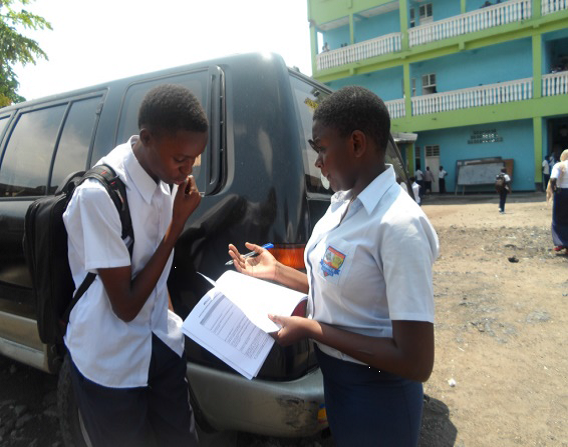
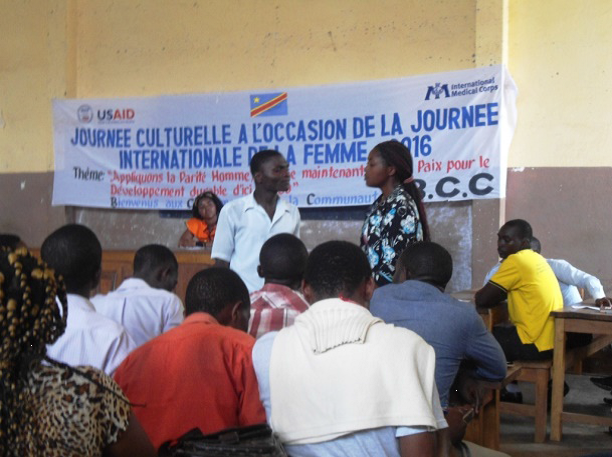
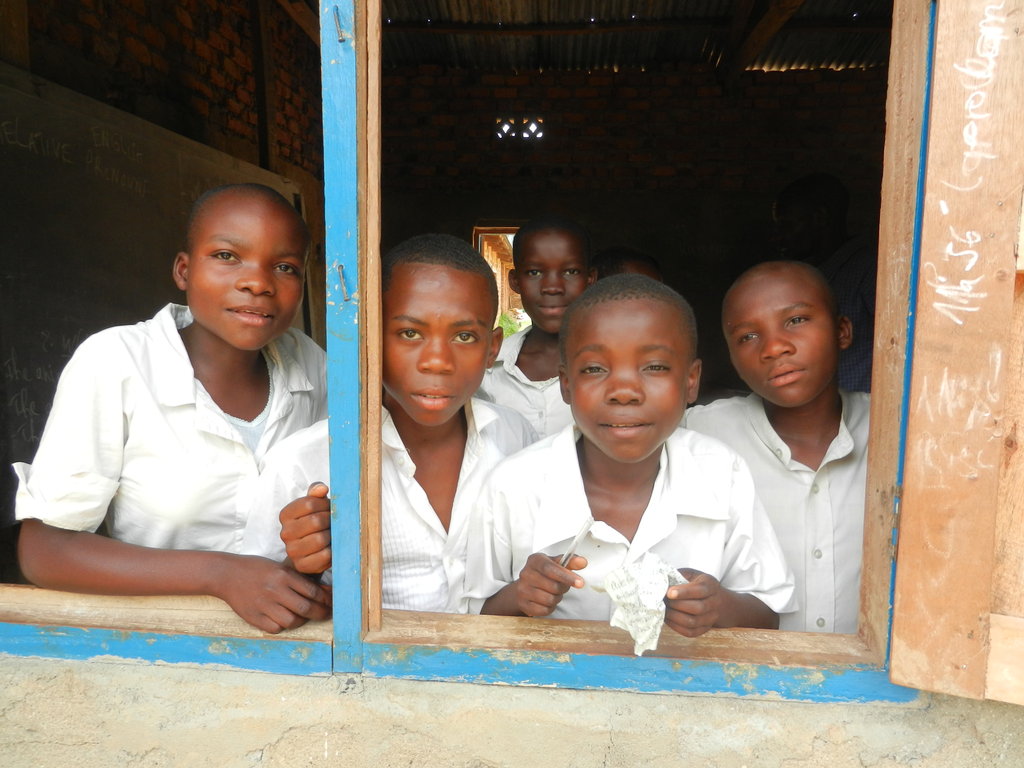
Nathalie is part of a school club, created by International Medical Corps in the Democratic Republic of the Congo. Its members lead communication activities with their peers on topics related to the sexual- and gender-based violence that can be experienced in school settings and within families and communities. Students participate in educational events like theater, individual sensitization on topics related to sexual- and gender-based violence, and debates. As we emphasize sustainable interventions, we provide gender-based violence sensitization activities for new school club members.
Since 2010, with support from USAID, our teams have been focusing on increasing community knowledge, awareness and capacity to prevent sexual- and gender-based violence at all levels, including individual, community and societal. The aim of this Behavior Change Communication program is to increase survivors’ access to services, improve quality of services, reduce vulnerability and prevent violence. Men, women, youth, community leaders, and government officials reached by the project are involved in activities that promote gradual positive change.
Mrs. Maombi, a teacher and leader of a school club, is the only women among twenty-five teachers at her school. She encourages students to report any sexual violence they encounter and sensitizes them for what to watch for. Partly because of her promotion of a safe and gender friendly school environment, the committee in charge of Mrs. Maombi’s school recently nominated her to be the headmistress of the largest institute in Walikale territory. Mrs. Maombi says she is extremely grateful for the collaboration with International Medical Corps’ Behavior Change Communication project.
Nathalie adds that, “I am proud to be a member of the school club that gave me such confidence. Any opportunity I have, I encourage my peers to never give up in similar situations and have the courage to face their parents.”
We thank you for your continued support as reach students like Nathalie and teachers like Mrs. Maombi to promote behavior change in the Democratic Republic of the Congo.
Project reports on GlobalGiving are posted directly to globalgiving.org by Project Leaders as they are completed, generally every 3-4 months. To protect the integrity of these documents, GlobalGiving does not alter them; therefore you may find some language or formatting issues.
If you donate to this project or have donated to this project, you can receive an email when this project posts a report. You can also subscribe for reports without donating.