By Dr Bhushan Punani | General Secretary
Dear Valued Donor,
Warm greetings from the entire team.
We write to you with heartfelt gratitude for your generous support, which has transformed the life of a young boy named Aniket from a small village in Madhya Pradesh.
In a small village in Madhya Pradesh, an 11-year-old boy's dream of becoming a railway driver seemed impossible—until an artificial leg gave him wings to fly.
Aniket sits by the window of his modest home, watching the other boys run through the dusty lanes of his village. Their laughter echoes through the air as they chase each other, kick footballs, and race their bicycles. His eyes follow their every move, sparkling with a longing that only a child denied simple joys can understand.
"Kya main bhi kabhi khel paunga?" (Will I ever be able to play?) he whispers to himself, the question that has haunted him for seven long years.
A Dream Born on Steel Tracks
Despite the physical limitations that have defined much of his young life, Aniket's mind races faster than any express train. In school, he outpaces his classmates academically, his sharp intellect evident in every answer he gives. But his real passion lies elsewhere—in the rhythmic sound of trains passing through the nearby station, in the powerful engines that cut through the countryside with purpose and speed.
"I want to drive the fastest train in India," Aniket declares with the unwavering confidence of childhood dreams. His eyes light up when he talks about locomotives, about speed, about the freedom of movement that others take for granted but he has never known.
His mother, watching him speak, smiles through tears that are never far from the surface.
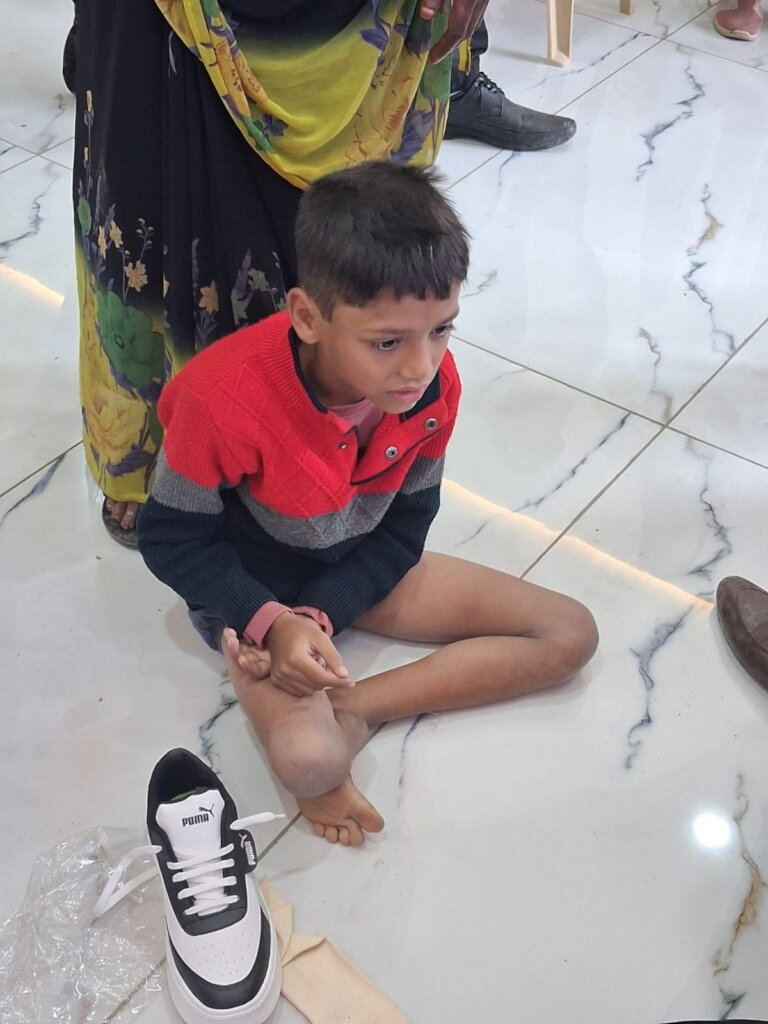
Seven years ago, when Aniket was just four years old, a moment of childhood curiosity turned into a family's worst nightmare. An electric shock—sudden, violent, irreversible—changed his life forever. To save his life, doctors had to amputate one of his legs.
"Woh din maine kabhi nahi bhulayi" (I have never forgotten that day), his mother says, her voice breaking. As a farm laborer working under the harsh sun to provide for her son, she carries two burdens—the physical exhaustion of daily labor and the emotional weight of that tragic day.
She watches her brilliant boy drag himself across the ground to get to places, dependent on others to reach school, unable to join his friends in play. Every time she sees him sitting alone while other children run free, her heart breaks anew.
One day, project staff members noticed Aniket struggling, pulling himself along the ground with determination etched on his small face. They approached his mother with information about something that could change everything—an artificial leg.
Hope, that fragile thing with feathers, began to stir in a mother's heart.
The journey to the Indore camp felt longer than any distance they had traveled before. Aniket's mother held her son's hand tightly, afraid to hope too much, yet unable to stop the flutter of possibility in her chest.
At the camp, medical professionals carefully measured Aniket's residual limb. But they were measuring more than physical dimensions—they were measuring the space between despair and hope, between limitation and possibility, between a child sitting by the window and a child running through life.
The staff explained patiently how the artificial leg would work, how Aniket would need to practice, how he would learn to walk again. Aniket listened with the intense concentration he usually reserved for solving difficult math problems or reading about trains.
His mind, always spinning like train wheels searching for answers, finally found one.
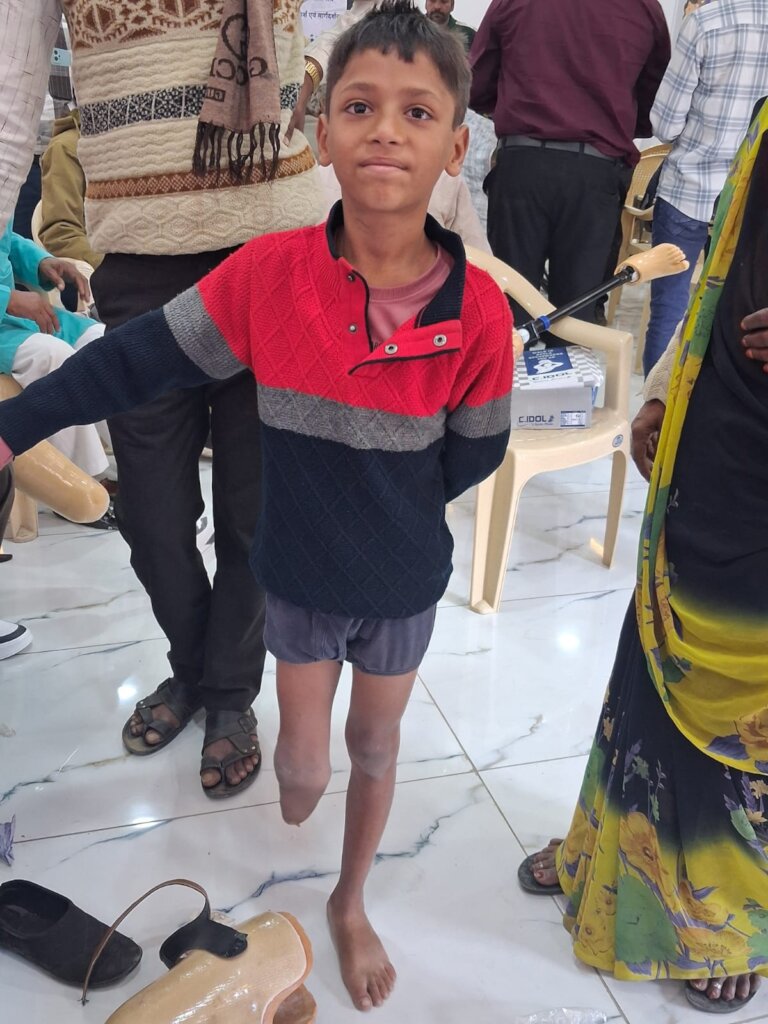
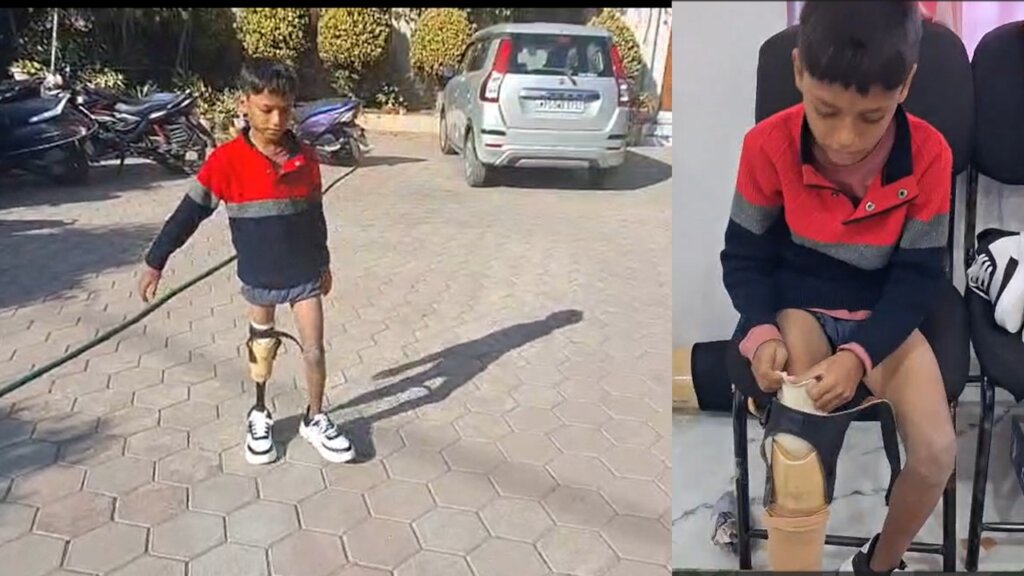
When the artificial leg was finally fitted, something magical happened. Aniket stood—truly stood—on both legs for the first time in seven years. The leg felt foreign, mechanical, different from the flesh and bone he remembered. It didn't work perfectly, not yet. He wobbled, uncertain, his body learning a language it had forgotten.
But in that moment, everything changed.
"Dekho Maa, main khada hoon!" (Look Mother, I'm standing!) Aniket's voice rang out, filled with a joy that transcended the physical act. His mother couldn't speak. Tears streamed down her face—not the tears of sorrow she had shed for seven years, but tears of relief, of gratitude, of witnessing a miracle in the form of modern technology and human compassion.
The artificial leg didn't immediately make Aniket run or play football or race bicycles. But it gave him something infinitely more valuable—it gave him possibility. It gave him a future where his dreams weren't automatically impossible. It gave him the belief that if he could learn to walk again, he could learn anything.
"I will become a train driver," Aniket says now, not as a distant dream but as a promise to himself. "I will drive the fastest trains in India."
The determination in his voice carries the weight of every struggle, every moment of watching others play, every question that haunted his small mind, every tear his mother shed.
Today, Aniket practices walking every day. Each step is a victory. Each wobble a lesson. Each fall an opportunity to rise again—literally and metaphorically. His mother no longer has to carry him everywhere. His teachers no longer have to help him to his classroom seat. His friends are beginning to include him in their games, adapted to his current abilities but filled with the inclusion he always craved. The artificial leg represents more than mobility—it represents dignity, independence, and the radical notion that physical limitations don't have to define one's future.
When Aniket stood up and said, “Look, Mother, I’m standing,” his mother’s tears spoke louder than words. Your contribution made that moment possible.
Your generosity is not just financial support—it is a lifeline for children like Aniket and families who have nowhere else to turn. You are helping build futures, restore dignity, and ensure that disability does not define destiny.
On behalf of Aniket, his family, and all of us, thank you for believing in the power of compassion to change lives.
With sincere appreciation and warm regards,
Project reports on GlobalGiving are posted directly to globalgiving.org by Project Leaders as they are completed, generally every 3-4 months. To protect the integrity of these documents, GlobalGiving does not alter them; therefore you may find some language or formatting issues.
If you donate to this project or have donated to this project, you can receive an email when this project posts a report. You can also subscribe for reports without donating.



Support this important cause by creating a personalized fundraising page.
Start a Fundraiser