By Jennifer Schechter | CEO and Co-Founder
INTEGRATE HEALTH
EXPANDS THE INTEGRATED PRIMARY CARE PROGRAM
This quarter, Integrate Health has driven forward multiple plans to expand the Integrated Primary Care Program (IPCP), with one critical change. To ensure sustainability and scalability, the replication of the IPCP will be led, first and foremost, by the governments of target countries. During this quarter, Integrate Health began discussions with Togo’s Ministry of Health to expand the IPCP to a second region of Togo. Integrate Health also entered into partnership discussions with the Ministry of Health in Guinea to expand Integrate Health’s support to a second country in West Africa.
While Integrate Health began reflections on expansion into a new country nearly two years ago, the past quarter has deepened these efforts. First, Integrate Health believes that West Africa, specifically francophone West Africa, requires additional support and attention to achieve national health goals. That said, Integrate Health does not wish to infinitely expand as an international NGO. As Integrate Health grows intentionally, we aim to contribute to strengthening a “winning coalition” for primary healthcare in each country where we work by reinforcing the existing ecosystem of government and civil society organizations.
The selection of Guinea, as a second country for Integrate Health to support emerged following extensive country scoping activities and was based on compelling need, strong political will, an explicit invitation from the Guinean Ministry of Health, and the existence of an evidence-based national community health strategy aligned to Integrate Health’s approach.
Integrate Health aims to leverage the lessons learned in Togo to support government and civil society organizations in Guinea to replicate, study, and scale key innovations in primary healthcare. Integrate Health believes that we can learn more and faster by partnering with governments and communities in two comparable but different country contexts, both dramatically underserved francophone West African nations. We look forward to providing further updates as this expansion work continues.
PROGRAM HIGHLIGHTS
Successes
Ultrasound Training Program Updates: In April, the ultrasound program launched in the Kara region. Nineteen machines are in use in 25 health centers. Prenatal consultations are done according to a schedule, and health centers communicate their schedule to the district authorities, who deploy the machines accordingly. Trained midwives conduct ultrasound screenings free of charge, and women in the communities are notified in advance of the ultrasound screening schedules. A focal point in the regional health office is responsible for compiling data and reporting on the ultrasound program, as well as overseeing financial management. This is an exciting example of the Ministry of Health regional health team taking ownership of key components of the Integrate Health approach. To date, 1,202 women have already benefited from free ultrasound screenings.
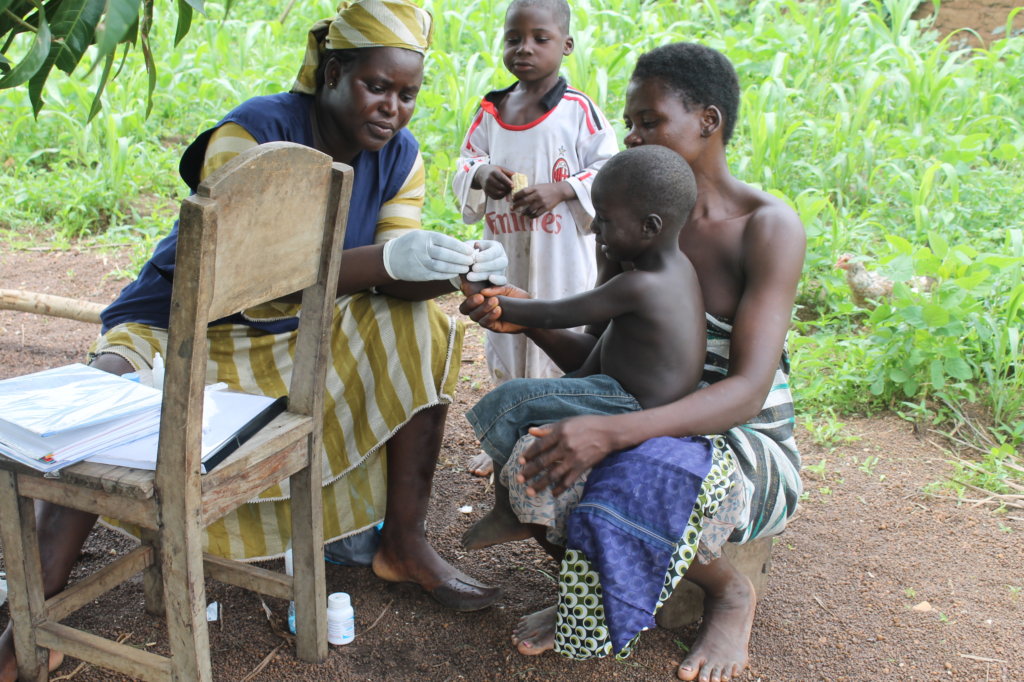
Community-Based HIV Testing Initiative: On April 28, Integrate Health’s partner organization, Association Espoir Pour Demain, launched a community-based HIV testing initiative in the Bassar district as part of the Togolese government’s new initiative for proactive case detection and care delivery. A total of 125 Community Health Workers, associated with 22 health centers, have been trained to conduct HIV testing in their communities. This is a pilot initiative supported by Integrate Health that will be expanded to other districts and regions based on implementation results.
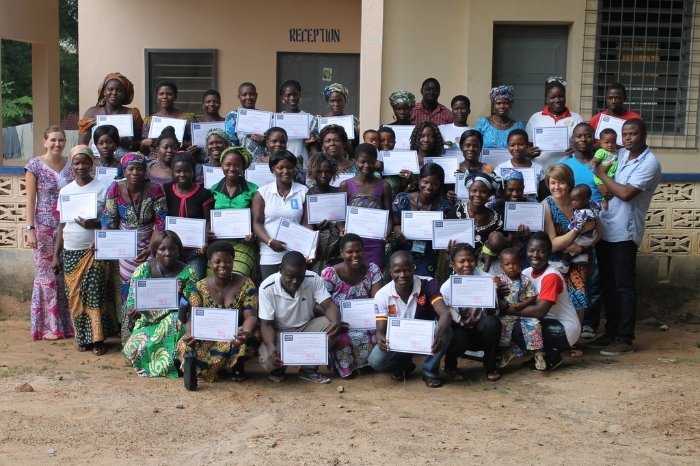
Clinical eHealth Trainings: The Integrate Health e-Health team and Monitoring, Evaluation, and Quality Improvement (MEQI) team have been working together to digitize paper-based reporting forms used by clinical mentors and Community Health Worker (CHW) supervisors. The forms were digitized using the District Health Information Software (DHIS2) and were designed to sync directly to Integrate Health’s instance of DHIS2. In May and June, the e-Health and MEQI teams trained all coordinators, clinical mentors, and CHW supervisors on how to use the new digital tools as well as how to use spreadsheet programs such as Microsoft Excel. The team has worked tirelessly to move from a paper-based reporting system to a digital system where all information will be in one place and easily accessible to other teams. This training is an important step towards achieving that goal. The new reporting system will be piloted and tested, with full rollout scheduled for July 2022.
Challenges
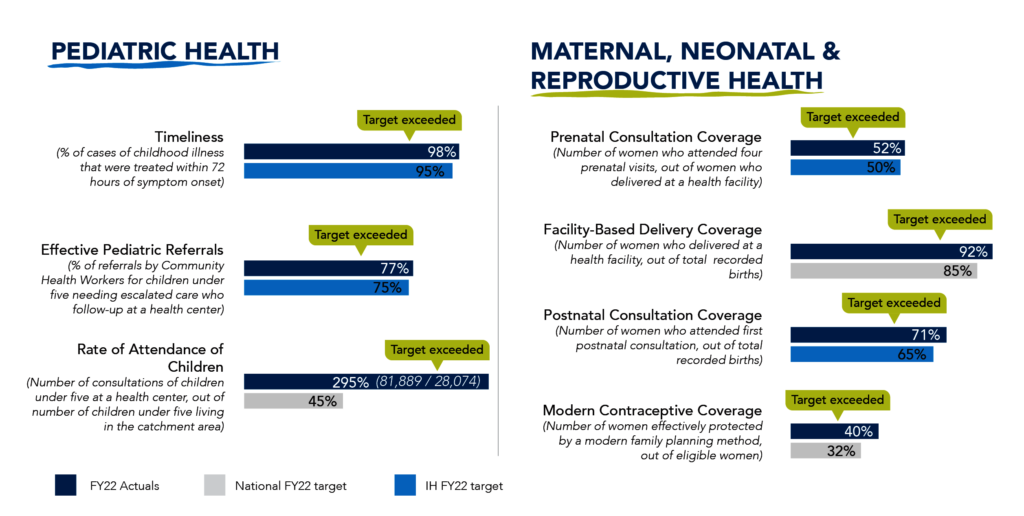
Contraceptive Coverage Measurement: This quarter, Integrate Health has continued to address measurement challenges with the indicator for modern contraceptive coverage. The MEQI team has implemented a data quality initiative and continues to work with regional and district health officials to identify the root cause for the discrepancy between paper register and DHIS2 entries. In addition, efforts to improve digital data collection have been intensified. Integrate Health expects this challenge to be resolved in the coming months.
EXPANSION HIGHLIGHTS
Successes
Expansion into Plateaux and Savanes regions of Togo: Integrate Health is in the early planning stages of supporting the rollout of the IPCP in a new region in Togo, directly implemented by the government. In June, program team members conducted site visits in two regions of Togo, Plateaux and Savanes, to meet with health workers and see firsthand how the primary health system currently functions. Integrate Health is in conversation with the Ministry of Health at the national level to co-create the implementation plan for this expansion.
Challenges
Slow rate of transfer of the IPCP within Togo: While expansion plans are underway in Togo, the transfer of the IPCP ownership in Kozah district has been stalled due to other government priorities. During the last quarter, Integrate Health held five work sessions with the Kozah district health management team to discuss the transfer process and highlight next steps to endure smooth transfer. Discussions are still ongoing, and Integrate Health is on track to begin transfer activities in July 2022. In the meantime, the Integrate Health program team will focus on building leadership capacity to implement these planned activities over the coming year.
ORGANIZATIONAL HIGHLIGHTS
SUCCESSES
Green community center: Integrate Health is excited to begin work on the construction of a new training center—a model of environmentally sustainable design that will also serve as Integrate Health’s headquarters in the city of Kara, in northern Togo. The “Green Center,” as the building is called, is designed as an energy-efficient, regenerative, and community-centered building with the goal of providing a hub for primary healthcare experts. The building will also serve the Adabawéré community, who donated the land on which the center will be constructed. To design and construct the building, Integrate Health is partnering with MASS Design Group, an architecture firm based in Rwanda, and Construction for Change, which has a project manager embedded with the Integrate Health team in Kara. The concept for the building was inspired by the traditional Togolese Tata Somba homes with origins as far back as the eighteenth century, which, in addition to being symbols of Togo’s landscape, were built to be socially and environmentally efficient. The Green Center will highlight what is possible in sustainable design and underscore Integrate Health’s commitment to work at the intersection of health and climate justice.
Challenges
Phishing attempts: Integrate Health is seeing a major increase in phishing attempts and was the victim of an attempted fraud incident in April where hackers obtained access to an Integrate Health email account. Fortunately, the issue was detected early, and there were no losses. All Integrate Health employees participate in ongoing cybersecurity training, including test phishing attempts. Integrate Health aims to build on current practices by performing a risk assessment and developing a cybersecurity strategy to protect our organization and staff.
FINANCIAL HIGHLIGHTS
Successes
This quarter, Integrate Health received generous renewal funding from two partners. We remain grateful for their continued support. In addition, the Board voted for and approved Integrate Health’s FY 23 budget. We are excited to be able to continue providing lifesaving primary care to communities in need in Togo and Guinea.
Spotlight on Kpatchama Lattah, Midwife
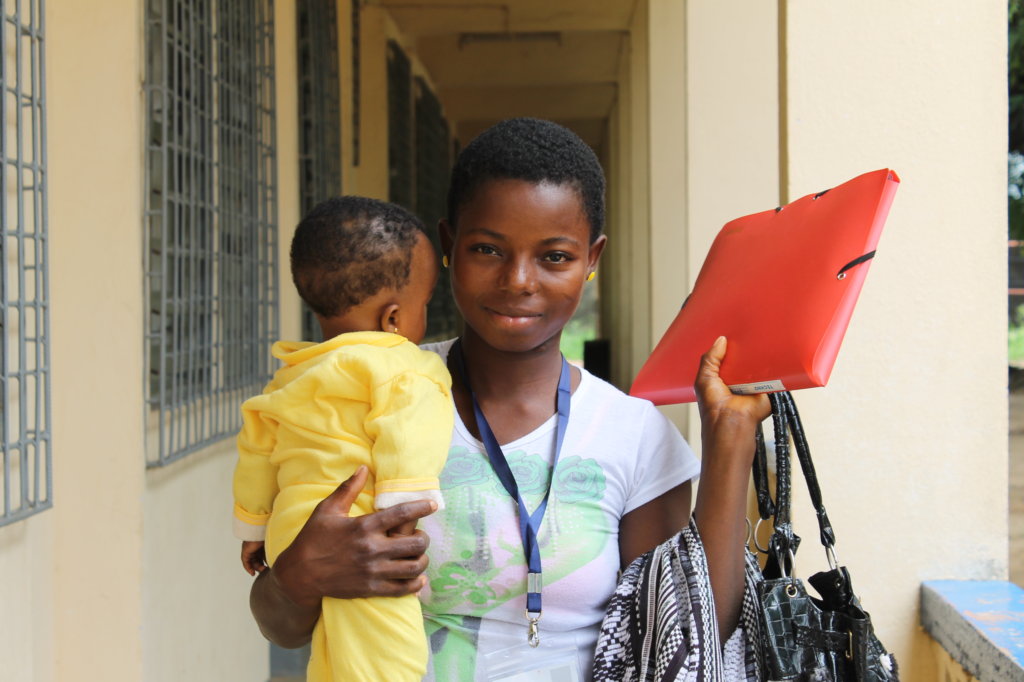
Kpatchama Lattah directs the maternity ward at the Adabawéré health center in the district of Kozah. She received a diploma of midwifery in 2012 from the Midwifery School of Kara and has been working in Adabawéré since 2014. Kpatchama always wanted to become a midwife as far back as she can remember. The mother of one of her childhood friends was a midwife, and Kpatchama admired how her friend’s mother helped women in their community to improve their wellbeing.
At the Adabawéré health center, Kpatchama attends to about 30 women per day, sometimes more. When she first started working there, she realized that the health center was already well-established in the community, and many patients came there for their medical care. Kpatchama realized soon, however, that for pregnant women, there was a lack of access to ultrasound services. She observed that there were two main reasons for this. The first was a reluctance among women due to religions reasons. Some women were reluctant to have ultrasound screenings because they felt trying to determine information such as the sex of their baby would be against God’s will. The other, more common reason was due to the cost of the screenings.
Before Integrate Health started providing ultrasound screenings in April, women were referred to another hospital farther away to receive this service, and the cost of both the transportation to the hospital and the ultrasound screening was a major barrier to access. Since the ultrasound program was launched in April, more women have been able to access ultrasound screenings. Kpatchama is happy to have participated in the training program and is pleased that the maternity ward of the Adabawéré health center is now able to provide this much-needed service to patients free of charge.
Links:
Project reports on GlobalGiving are posted directly to globalgiving.org by Project Leaders as they are completed, generally every 3-4 months. To protect the integrity of these documents, GlobalGiving does not alter them; therefore you may find some language or formatting issues.
If you donate to this project or have donated to this project, you can receive an email when this project posts a report. You can also subscribe for reports without donating.



Support this important cause by creating a personalized fundraising page.
Start a Fundraiser