By Charles Olupot | Director
Dear friends,
Thank you so much for helping out with Disaster's in Uganda!
Uganda is at risk to natural disasters. The country experiences extreme weather events which lead to mudslides, landslides and flooding, particularly for the country’s mountain regions and related districts such as Mbale in the Mt Elgon region. Extreme events leading to disasters such as floods, droughts, and landslides have increased over the last 30 years. Flooding has become more frequent, largely due to more intense rainfall. Over the past two decades, an average of 200,000 Ugandans are affected each year by disasters. Increased intensity of heavy rainfall has led to greater impact of floods and are causing more damage due to expanded infrastructure, human settlement and general development of the country.
Flooding, particularly in low-lying areas of the country, presents the largest risk. Each year, floods impact nearly 50,000 people and costs over $62 million. Uganda experiences both flash floods and slow-onset floods, which are common in urban areas, low-lying areas, areas along river banks and swamplands. Areas most prone to floods are the capital city, Kampala, as well as the northern and eastern areas of the country. Heavy rainfall in arid areas has led to flash flooding causing infrastructure damage. Areas such as Gulu District, face large challenges in the rainy seasons as large areas of the district become impassable, often resulting in food shortages and inaccessibility to health facilities and schools due to the destruction of roads and bridges from flooding.
Uganda’s vulnerability is exacerbated due to its high level of poverty and its high dependence on ‘climate sensitive’ sectors: agriculture, water, fisheries, tourism, and forestry. The country is at high-risk to natural disasters such as flooding, drought, and landslides, however, its topographic diversity and highly marginalized segments of the population, make it additionally vulnerable. Additional, non-climate stressors such as inadequate infrastructure to handle the increasing population are also impacting the vulnerability to natural disaster sensitivity and climate change vulnerability.
While Uganda natural climatic is moderate, the country has also been experiencing increased frequency and severity of extreme weather events. Uganda has in past decades experienced more erratic rainfalls leading to frequent busting of rivers, mudslides and landslides that lead to loss of lives and property of communities especially those living in the mountainous areas. At the same time those in low lands experience floods. Prolonged dry seasons are also frequent leading to loss of crops and livestock. From 1900 to 2022, the country has encountered over 20 floods, 40 epidemic, 9 drought, and 5 landslides events. The accumulative damages caused by those natural disasters amounts to over 200,000 deaths and at least $80 million economic loss.
Uganda’s Perennial Floods- Record from SHARE NGO Baseline Survey Report 2023!
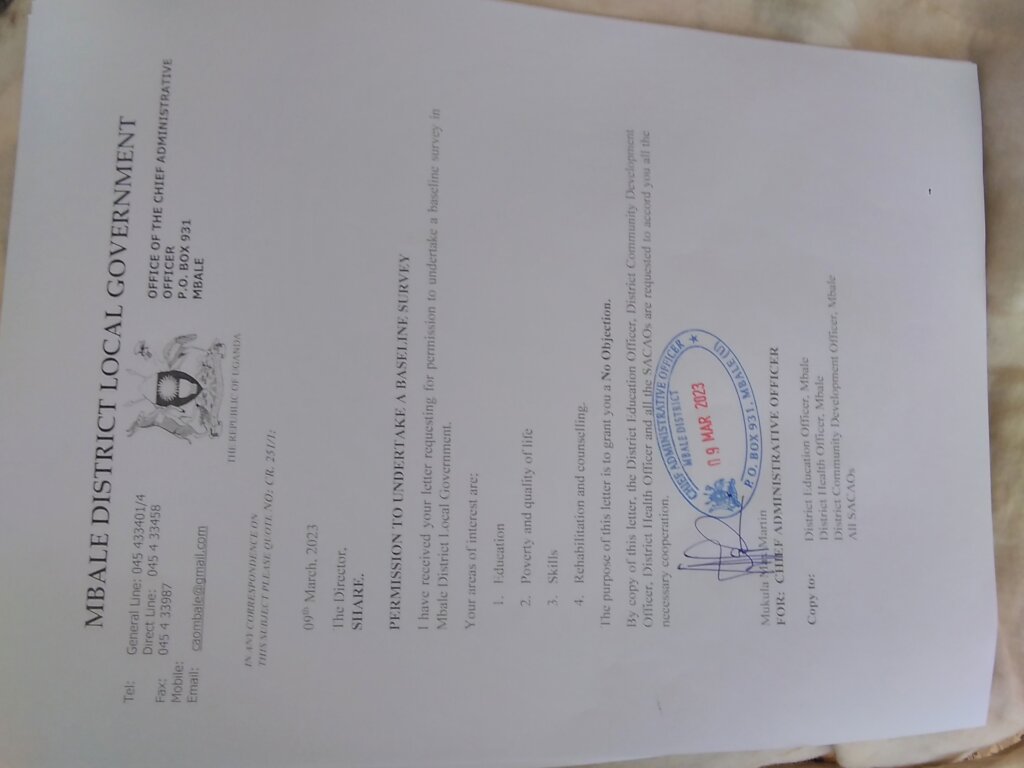
Permission given by CAOs office, Government Administrator Mbale City.
Eastern Uganda, 29 August 2022 – Bonnie 39 was asleep when he received a phone call from a friend to tell him that his shop had been washed away, following torrential rains that pounded the town of Mbale in eastern Uganda.
“The water was [a lot] and it came from the hills at a very high speed. It uprooted trees and whatever it found, and carried them downhill, knocking everything else, including my shop.”
Two rivers burst their banks after heavy rainfall and led to severe flooding, leaving home, shops and roads submerged and other infrastructure destroyed. In the end, at least 26 people were killed. The flooding took place in Mbale and surrounding districts, some 220 kilometers east of the capital, Kampala.
Following torrential rains that pounded the area, parts of Eastern Uganda experienced floods and landslides, specifically the districts around the Mt. Elgon region including Mbale, Kapchorwa, Bulambuli, Namisindwa, Sironko, Manafwa and the surrounding areas.
In 2010, the country had to relocate and resettle more than 3,000 people from the Mt. Elgon sub-region, Bududa district in eastern Uganda and Kiryandongo district in western Uganda, since their villages were devastated by landslides in March 2010.
Historically, Uganda has been characterized by stable rainfall patterns; however, the global effects of climate change that have resulted in the frequency and magnitude of disasters and weather-related hazards have not spared the country and a region that has been experiencing shorter or longer rains, and even drought.
In 2021 alone, there were 23.7 million internal displacements resulting from weather-related events, including floods, storms and cyclones. With the expected impacts of climate change and without ambitious climate action, the numbers will likely increase in the coming years.
What are the effects of disaster in a community?
In a disaster, you face the danger of death or physical injury. You may also lose your home, possessions, and community. Such stressors place you at risk for emotional and physical health problems. Stress reactions after a disaster look very much like the common reactions seen after any type of trauma.
What we need to know about disasters, their effects on the poor people.
Types of Disasters - Natural and Human-Caused Disasters.
Social impacts of disasters
Whole communities can be uprooted, friends and family divided, homes, livelihoods and, of course, lives can be lost.
What are the 7 effects of disaster?
It distinguishes between effects in the immediate aftermath of the disaster – mortality and demographic recovery; land loss and capital destruction; economic crisis; and blame, scapegoating, and social unrest and longer-term structural consequences – societal collapse; economic reconstruction; long-term demographic.
What are 3 effects of disasters on the economy of a community?
A decrease in resource capacity and a decrease in productivity can occur as a result of a disaster. Disasters will result in economic losses in the form of assets and community income. The severity of the disaster will differ based on the socio-economic conditions of the affected community
What are 5 man-made disasters?
Such man-made disasters are crime, arson, civil disorder, terrorism, war, biological/chemical threat, cyber-attacks, etc
What is the example of disaster?
Examples include war, social unrest, stampedes, fires, transport accidents, industrial accidents, conflicts, oil spills, terrorist attacks, and nuclear explosions/nuclear radiation. Other types of induced disasters include the more cosmic scenarios of catastrophic climate change, nuclear war, and bioterrorism.
What are the 3 types of disasters?
Disasters are classified into natural disasters, man-made disasters, and hybrid disasters
What is an example of a natural disaster in a community?
Examples of natural hazards include: avalanche, coastal flooding, cold wave, drought, earthquake, hail, heat wave, hurricane (tropical cyclone), ice storm, landslide, lightning, riverine flooding, strong wind, tornado, typhoon, tsunami, volcanic activity, wildfire, winter weather
What is a community disaster?
Disasters are serious disruptions to the functioning of a community that exceed its capacity to cope using its own resources. Disasters can be caused by natural, man-made and technological hazards, as well as various factors that influence the exposure and vulnerability of a community.
What is the biggest impact of the disaster in the community?
Natural disasters can cause destruction of property, loss of financial resources, and personal injury or illness. The loss of resources, security and access to shelter can lead to massive population migrations in many countries
What factors worsen disaster impact to communities?
Climate change.
Enviromental degradation.
Globalized economic development.
Poverty and inequality.
Poorly planned urban development.
Weak governance.
Our Strategy & Action Plan 2024–2030
Humanitarian crises are changing: they’re becoming more frequent, often more intense and the politics concerning response more complex, while the competition for funding has escalated. The technologies we are using to communicate with and engage communities are both advancing and fragmenting, with online and digitally connected communities stratifying and distorting traditional social structures.
One thing has remained steadfast: the desire of communities served by humanitarian action to have control over their futures and to participate in decisions made in their name.
Since its inception, SHARE NGO has brought together local, regional and global actors to catalyse the ability of communities to connect, communicate and access the information they need in a crisis. Our 2024–2030 Strategy doubles down on our efforts to put power back into the hands of communities and to reverse the focus of humanitarian and development decision-making from global to local.
The mission of the NGO has not changed. But information alone, while critical, does not address the pressing need to shift the loci of power from the global north to the local community, to equip ground-level leadership in communication, community engagement and accountability, and to drive a recognition that expertise cannot be decoupled from context.
The world we want to see!
Our vision is that communities will have the information and resources they need to determine their own solutions and be central stakeholders in humanitarian and development decision-making.
The NGO's plan for achieving this vision is underpinned by four strategic aims.
Strategic aims!
Enable local drivers by supporting efforts to place national governments, local civil society, local communities and private sector actors at the centre of disaster management initiatives.
Provide a strategic global voice for inclusiveness through championing local and national approaches within the international aid system.
Responsibly leverage digital technologies, including fostering efforts to democratise digital access and advocating for responsible use of technology.
Sustain and grow our impact to ensure the NGO has a sustainable foundation of support in order to expand its reach to more communities.
A focus on intentional inclusion.
A focus on intentional inclusion runs through our 2024–2030 Strategy. SHARE NGO is uniquely positioned to advance an approach to GlobalGiving that contributes to greater inclusion of diverse people and entities in decision-making and practice. We want to ensure that inclusion is central to our planning, advocacy, debate, research and policy.
Horrible Shocking accounts.
1 March 2010. The landslides buried houses, markets, and a church in three villages, killing an estimated 400 people and displacing 5,000.
Uganda has mostly a tropical climate characterized by stable rainfall patterns. However, the effects of climate change have turned the seasons around with the country experiencing shorter or longer rains and harsher droughts – especially in the eastern and north-eastern Uganda.
Yet the signs of climate change are apparent in other parts of Uganda too, providing extreme weather patterns that are drying out what used to be wet areas, and making the dry areas even drier.
Across the plains of Katakwi district, 188 kilometers from Bududa, Petua Adongo also faced the effects of climate-change-induced disasters.
In Amudat district in the north-eastern sub-region of Karamoja, drought has hit pastoralists and surrounding communities. Adapting to agriculture has become even harder.
The biggest challenge is for families to find enough food, along with securing pasture and water for the livestock. Poorer families are faced with even harsher realities.
Famine in Karamoja. Adults survive on vegetables, maize, and sorghum stalks from Mbale and surrounding districts whereas the little available milk is reserved for toddlers, the sick and the elderly.
Lack of water. With many streams being seasonal, residents are forced to travel even further to find water, distances of 90 kilometers are not unheard of. This trend takes place between December and April and pastoralists only move back to Ochorichor during the rainy season, which is usually around June. And yet when the skies do open, houses and gardens near water streams are promptly washed away.
Uganda Acute Food Insecurity.
Consequently, crop production in Karamoja is anticipated to be below last year's and the five-year average in 2023. In April and May, a resurgence of famine.
Currently, drought is in the Teso subregion mainly in Katakwi, Amuria and Kapelabyong districts. People having no food to eat and local begging government to interven.
Overall, Uganda is experiencing significant impacts of climate change, and increased frequency of extreme weather events, like floods and droughts.
Our appeals to all donor's and willing partner's!
Our NGO disaster committee recently conducted baseline survey, and found out that when large-scale disasters hit countries without the capacity to respond, the number of casualties are usually very much higher. Take the examples of Landslides, to and fàmine in Uganda.
The SHARE NGO runs an annual disaster appeal to maintain the balance of funds required to meet National Society demand on GlobalGiving organization fundraising platform but we continue to get no or very little interested, this limiting our capability to help at the time of critical need.
We usually want our part ers and potential donors to see 3 types of relief for our community. For example. Basic disaster assistance which falls into three categories: assistance for individuals and businesses, public assistance, and hazard mitigation assistance.
The outbreak of COVID-19 affected many businesses and economic growth of developing countries, we should learn from that experience, Uganda not exceptional.
Conclusion!
Finally. SHARE NGO Disaster Management Plan.
To deal with the human, material, economic or environmental impacts of said disaster, it is the process of how we “prepare together, it's not a "One Man Show."
Our current needs.
Volunteers local and international.
Donor support, individuals, families, organizations.
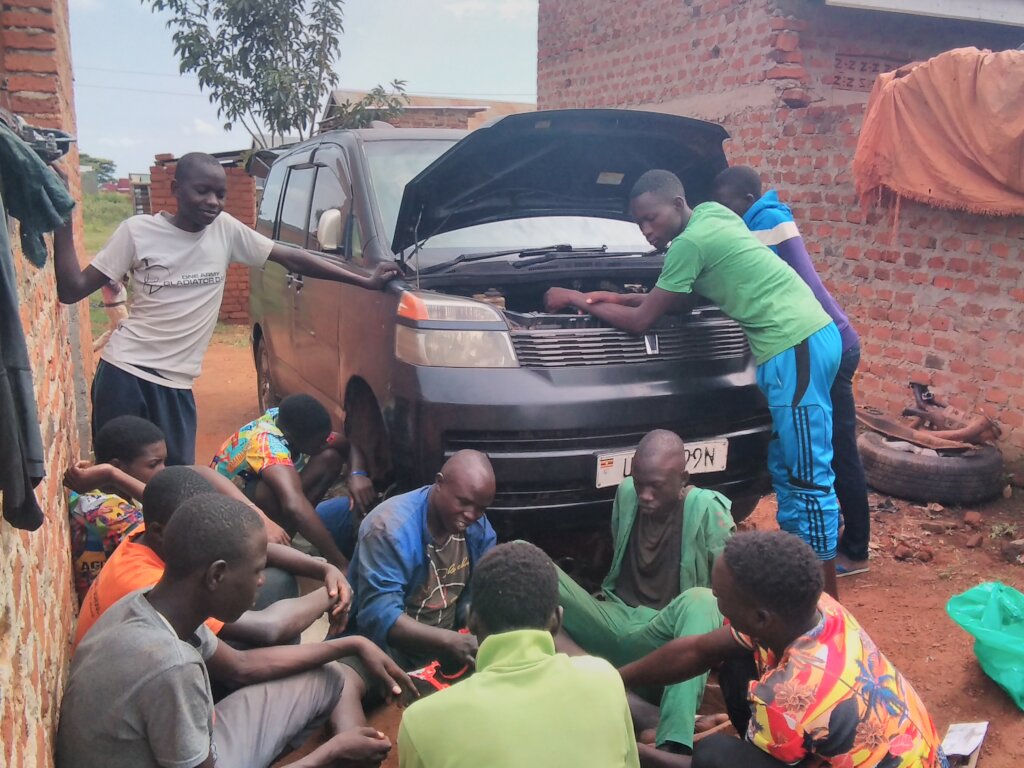
Grants, by NGO relief vehicles, food transportation to karamoja, Teso and Mt Elgon sub-regions. You can donate a new or used Toyota hard top vehicle directly to our NGO. Or give funds through our link below.
https://goto.gg/56482
Thank you for being our community of great donors.
Project reports on GlobalGiving are posted directly to globalgiving.org by Project Leaders as they are completed, generally every 3-4 months. To protect the integrity of these documents, GlobalGiving does not alter them; therefore you may find some language or formatting issues.
If you donate to this project or have donated to this project, you can receive an email when this project posts a report. You can also subscribe for reports without donating.



Support this important cause by creating a personalized fundraising page.
Start a Fundraiser