By Jess Baron | Executive Director
This month, we are launching specialized musical residencies for students with disabilities that prevent them from participating in regular school. For some children, this is a temporary situation, one from which they will emerge and return to school. But these children are in the minority. For majority, their lives will be lived at home, or in a specialized hospital setting because they are profoundly affected by disabling conditions. Some must be supported by machines and medical equipment that makes moving beyond the front door a transportation and medical ordeal.
No matter where children with profound disabilities live, in the United States they are protected by the legislation known as the I.D.E.A., aka The Individuals with Educational Disabilities Act. IDEA is a law that makes available a free appropriate public education to eligible children with disabilities throughout the nation and ensures special education and related services to those children. Unfortunately, music education has not been one of the related services that most districts have been able to provide. But in 2015, our charity started making inroads to change that, with help from donors.
The IDEA governs how states and public agencies provide early intervention, special education, and related services to more than 8 million (as of school year 2022-23) eligible infants, toddlers, children, and youth with disabilities. How could such a huge, vulnerable, and musically receptive population of children be deprived of music? The problem has been one, not only of budget restrictions, challenging logistics, and social biases that marginalize people with disabilities. It has also been a problem of lacking methodology, teacher training, and tools. Today we are tackling it all.
In the law, Congress states "Disability is a natural part of the human experience and in no way diminishes the right of individuals to participate in or contribute to society. Improving educational results for children with disabilities is an essential element of our national policy of ensuring equality of opportunity, full participation, independent living, and economic self-sufficiency for individuals with disabilities." These kids are OWED music. The amazing truth is that music doesn't care how well someone's eyes, hands, ears, intellect, or coordination functions. It moves straight into the body, mind, heart, and spirit to awaken, excite, and engage each one of us. Vibrations travel and change our physiology, our mood, our ability to relax. At GITC, we want to make music accessible, achievable, and enjoyable for children with disabilities, whatever that takes.
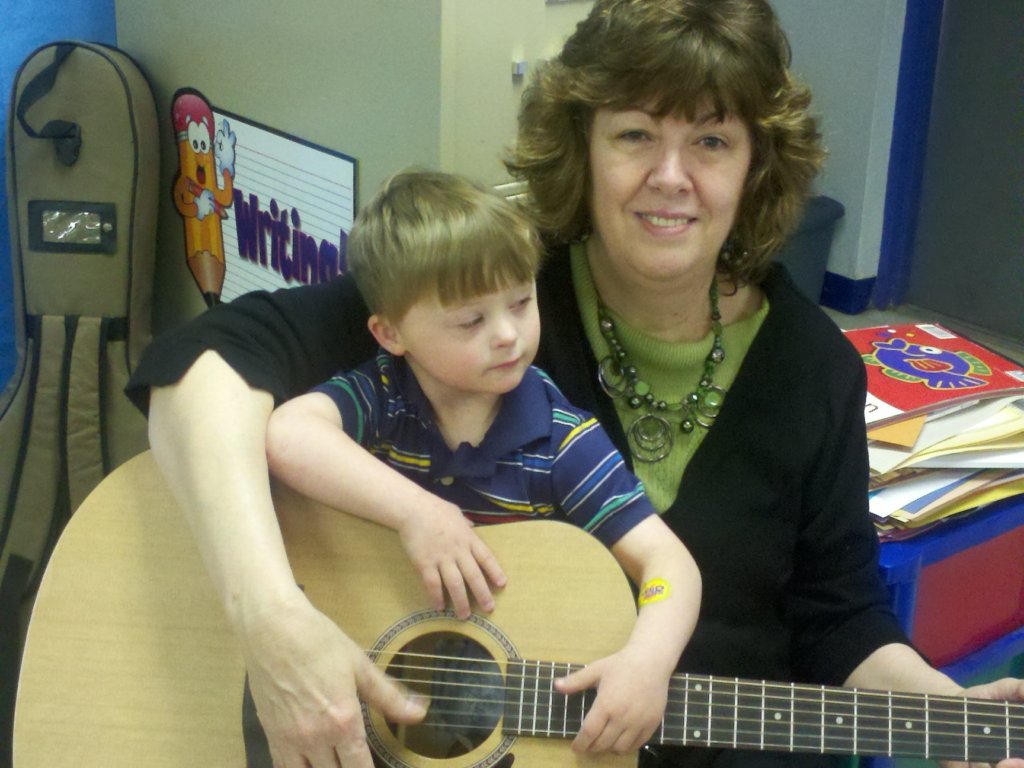
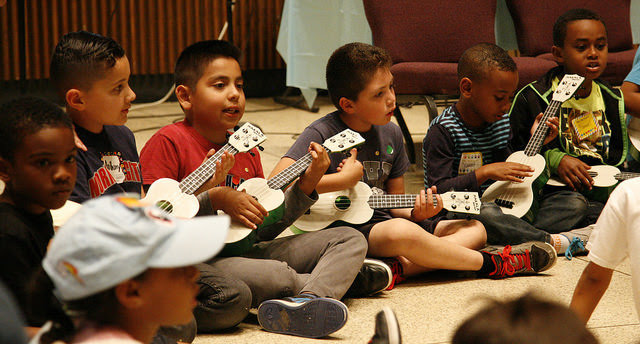
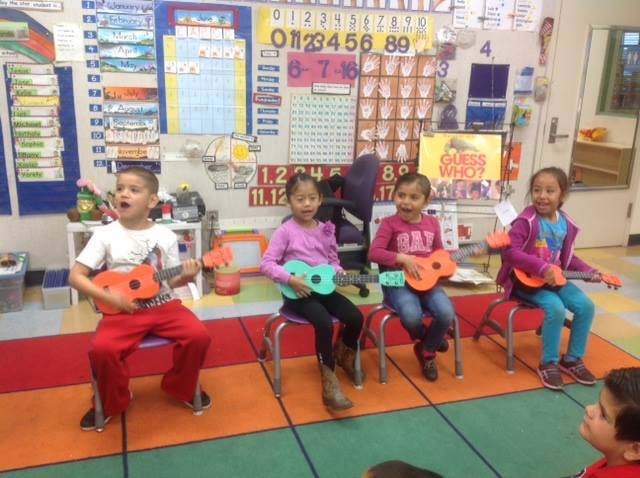
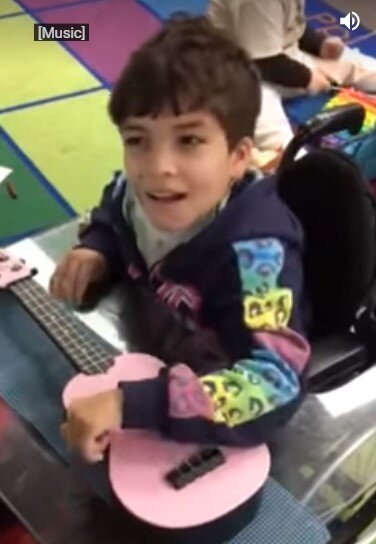
With ukuleles and guitars, we have many different holding positions, straps, traction mats, and adaptive picks that make strumming a breeze, even for a child missing a limb, a hand, or fingers. These troubles hard things to read about. We know. But imagine the joy kids feel when they make the musical connection for the first time! Troubles melt like lemon drops way up on the chimney tops. Music relieves pain, sorrow, and limitation.
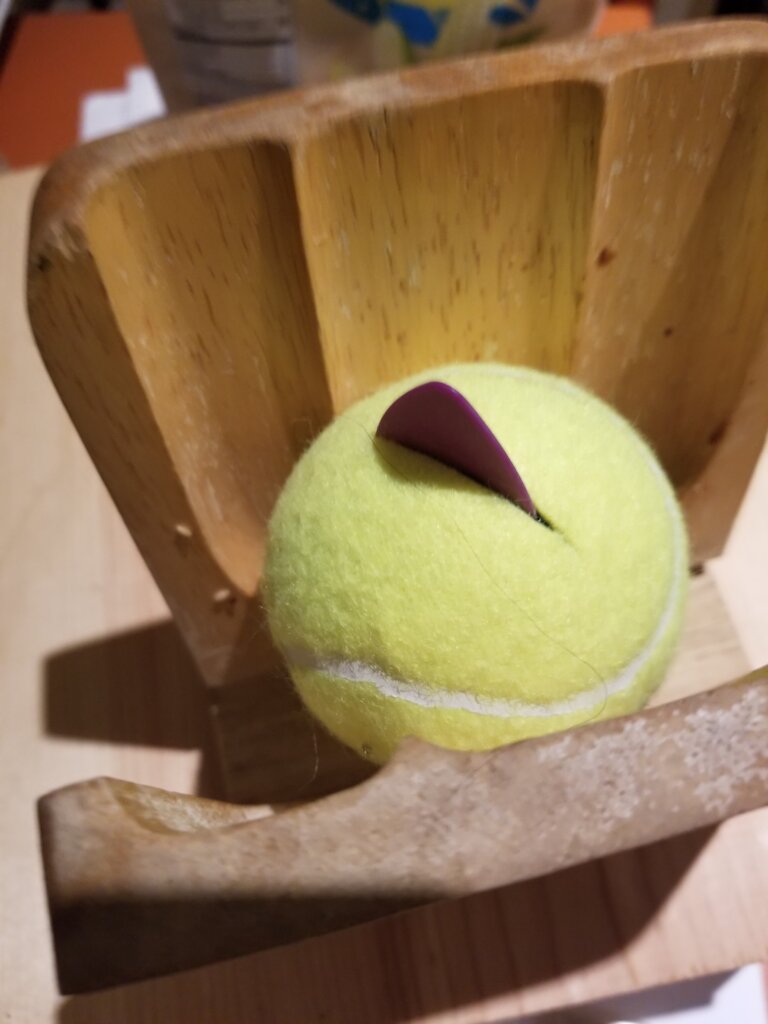
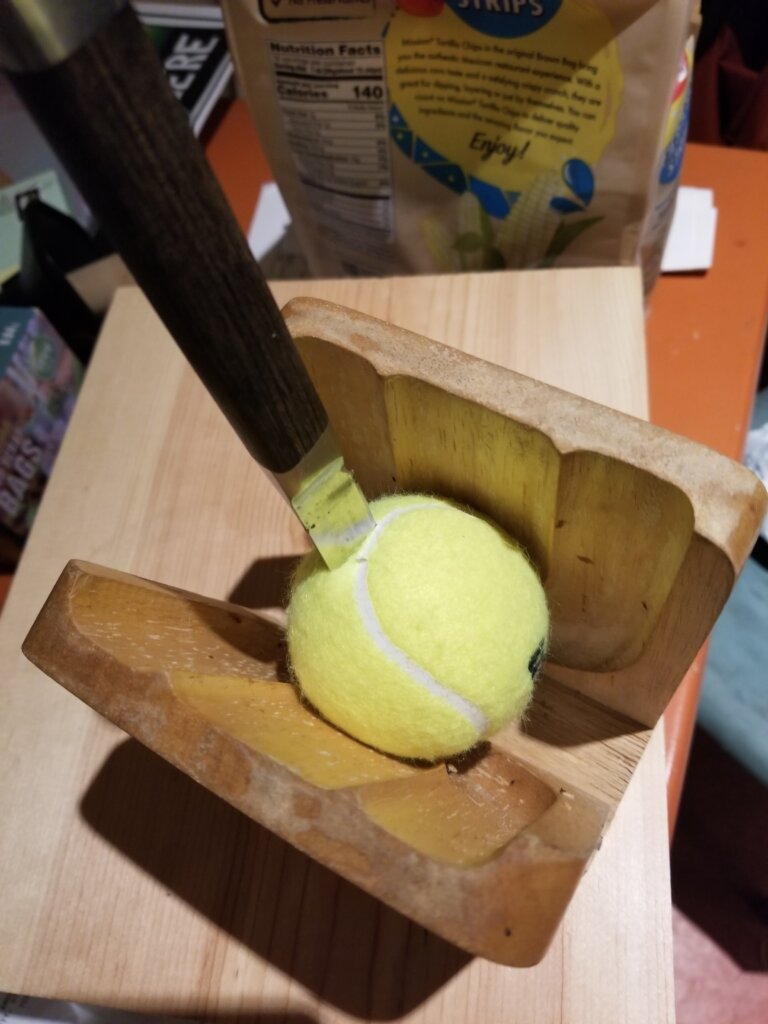
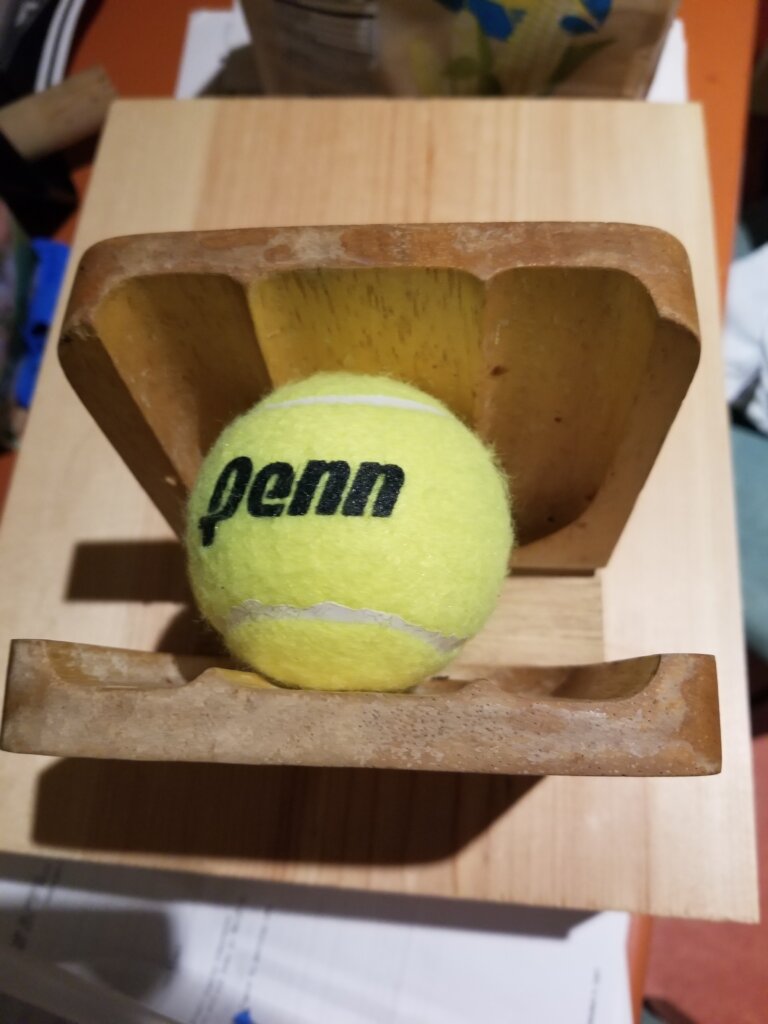
We'll be making videos this year to teach others how to use- and devise- creative and adaptive tools and strategies. In the meantime, you can see everyone's favorite Home Hospital ukulele and guitar pick in our photo. It feels wonderful, requires no hand strength, and sounds terrific.
Know someone who could use one?
1. Take a new tennis ball, secure it in place, and make sure it doesn't rotate or roll.
2. Keeping the ball stable, carefully cut a 1 inch slit in the ball. (By any means, please do not let a child do this. It requires adult accuracy, caution, and strength to make the cut.)
3. Place a flat pick (invented by Luigi D'Adrea in 1922 and made famous by Doc Watson) into that slit and press it into place. Tennis balls have natural compression and they hold the pick in place without a drop of glue. Now it's ready to use.
4. Cup the tennis ball in your palm, and turn the pick point toward the strings of the ukulele or guitar and strum, move your arm from the elbow joint so your hand moves across the strings. This puts no pressure on the wrist to move or the fingers to squeeze. The ball stays in place in the cup of your hand. Now you can strum.
In a specialized hospital called Totally Kids in Los Angeles, Mr. C. is training 4 teachers and even more caregivers to lead music for a group of 11 students with a variety of chronic and acute conditions. Everyone loves learning to play together, and this musical residency is giving students important social contact while the caregivers get transformational training in music leadership. Your gift of $25 to this campaign buys enough tennis balls and picks to supply an adaptive pick for every child participating in that GITC residency A gift of $35 buys two synthesizers that fit on wheelchair trays. A gift of $1000 funds a high quality, short instructional video that teaches others ways of doing this work, one tool and skill at a time.
Where there is a will, there is a way. Thank you for your good will that supports us to discover and create new ways to include every child including those who need someone to go the extra mile. Your caring gets us there. We hope that by 2027, we will have made a video series so good that anyone, anywhere, can see the work in action, make their own tools, and learn new ways to make a musical difference for homebound and hospitalized children, their caregivers, and their teachers. If we just keep going, I know this can happen. People want to help. They simply need a chance to learn, and support to try.
Let's keep doing this together. Someday we will all be able to look back, remember the journey, and know in our hearts that we helped make this change possible. The future can and will be immeasurably brighter if we all keep going.
With appreciation for your generosity and continued support,
Jess
Links:
Project reports on GlobalGiving are posted directly to globalgiving.org by Project Leaders as they are completed, generally every 3-4 months. To protect the integrity of these documents, GlobalGiving does not alter them; therefore you may find some language or formatting issues.
If you donate to this project or have donated to this project, you can receive an email when this project posts a report. You can also subscribe for reports without donating.



Support this important cause by creating a personalized fundraising page.
Start a Fundraiser