By Natalie Miller | Project Advisor
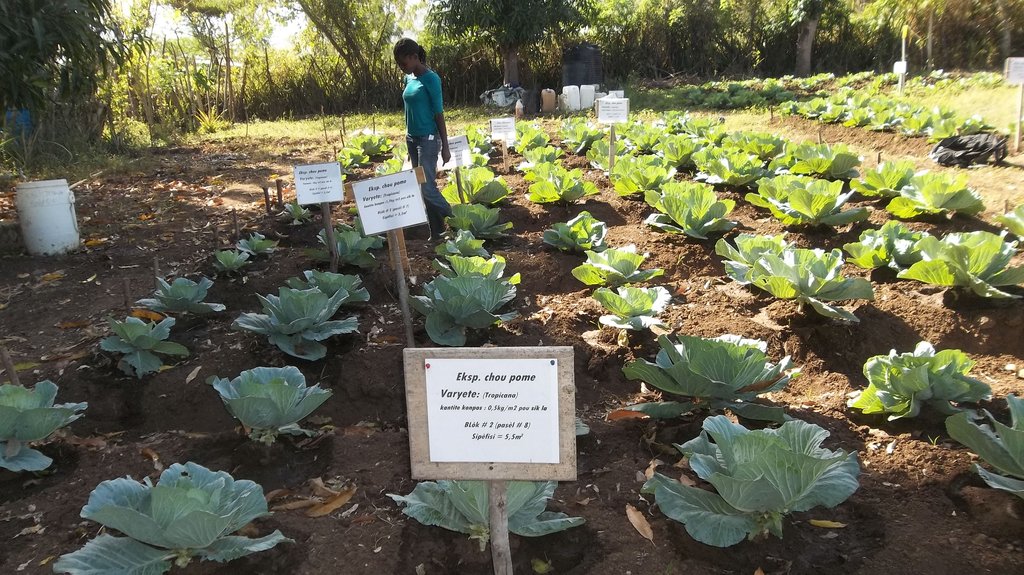
Last summer, we shared results from a research project that was taken on by master’s students at Cranfield University. The students compared the efficiency of SOIL’s organic compost, Konpòs Lakay, to commercial grade chemical fertilizers available on the market. This comparison was used two core Haitian crops: tomato plants and moringa trees.
When the preliminary results were made available last summer, we were excited to share that the plants that were grown in soil with SOIL’s agricultural grade compost had actually out performed their counterparts that were grown using traditional chemical products. Now that the final results have been released, a couple of other important findings regarding Konpòs Lakay’s nutrient use efficiency and long term soil health are now available. What did we learn?
Restoring the Soil for Years to Come
When comparing fertilizers, it’s important to look at how easy it is for the plant to access the nutrients (often referred to as nutrient uptake). As it turns out, Konpòs Lakay not only makes desperately needed nutrients highly available for immediate plant uptake, but it also provides a variety of other nutrients, like ammonium nitrogen, that, though less immediately available for consumption, contributes towards replenishing soils in the long term.
We’ve seen that research typically recommends the use of a blend of chemical and organic fertilizer when working on rebuilding nutrient-poor soils. Why? The chemical amendments gives an immediate boost that facilitates a robust first harvest, but they don’t provide any of these nutrients that support long term soil restoration or agricultural production. Organic soil amendments like Konpòs Lakay provide critical long-term support to the plant, restoring the soil for the crop cycles in the seasons to come. Over time, when the soil is restored to its full potential, chemical fertilizers will not be needed at all!
Increasing Nutrient Uptake and Absorption
Nutrient uptake is not the only important indicator of fertilizer efficacy, it’s also necessary to analyze nutrient absorption. The difference between nutrient uptake and absorption gets a little complicated, but a helpful way that helps think about it the difference between eating and digesting. What’s the point of eating a lot if you can’t digest your food in a way that allows your body to use it? Nutrient use efficiency (NUE) is an indicator that looks at both the ability of crops to absorb nutrients from the soil as well as the efficiency with which they convert those nutrients into plant growth and crop yield.
The Cranfield University research using moringa trees showed that, even when compared to chemical fertilizers, Konpòs Lakay significantly improves NUE, especially at lower concentrations. This means that the less compost is used, the more efficient it is! Once again, we see that too much fertilizer is not a solution to poor soils, just like overeating is not the solution to malnutrition.
One other cool takeaway from the final results? The tomatoes that used Konpòs Lakay ripened faster than those grown with chemical fertilizer!
Researching the agricultural impacts of Konpòs Lakay is one of our favorite things to do, and we hope you’ll stay tuned next month for upcoming results that are on their way from radish experiments conducted by our dear friends and research partner at UC Merced!
Project reports on GlobalGiving are posted directly to globalgiving.org by Project Leaders as they are completed, generally every 3-4 months. To protect the integrity of these documents, GlobalGiving does not alter them; therefore you may find some language or formatting issues.
If you donate to this project or have donated to this project, you can receive an email when this project posts a report. You can also subscribe for reports without donating.



Support this important cause by creating a personalized fundraising page.
Start a Fundraiser