By German Red Cross | Corporate Partnerships
Ukraine: How the Red Cross Helps People Get Through the Winter
26 November 2025 – Ukraine
To help people in Ukraine get through the coming winter, the Ukrainian Red Cross (URC), supported by the German Red Cross (GRC), provides a wide range of services. Mobile health units travel to remote areas, home-based care and rehabilitation promote independence, and psychosocial support helps protect people’s mental well-being.
Contents
Hardship Grows in Winter
When wind whistles through shattered windows and frost settles indoors, every helping hand counts. As the population prepares for another harsh winter, Ukraine once again faces major humanitarian challenges. Temperatures dropping to minus 20 degrees Celsius threaten many lives—especially older people, children, those with chronic illnesses, and people living in damaged homes or collective shelters.
Almost four years after the escalation of the conflict began, the situation remains dire: 12.7 million people depend on humanitarian assistance, 3.7 million are internally displaced, and another 6.7 million have sought refuge outside the country. Power outages, destroyed supply networks, and rising energy and food prices further exacerbate the situation.
“Our assistance is not only about the sheer number of people we reach,” explains Christof Johnen, Head of International Cooperation at the DRK. “We focus on helping those most in need in a sustainable way. That is why we strengthen local structures—especially in remote areas.”
Medical Care Where No One Else Can Reach
On muddy roads in a small village in the Odesa Oblast, a white minibus with a red cross appears early in the morning. Inside are doctor Olha and nurse Iryna—part of a Mobile Health Unit (MHU). They visit villages where basic medical care has been disrupted.
“In winter, remote communities are often completely cut off from medical services, as snow, ice, and poor roads make trips to hospitals almost impossible,” says Oleksandra, the project manager. “Sometimes our vehicles are the only link to the outside world.”
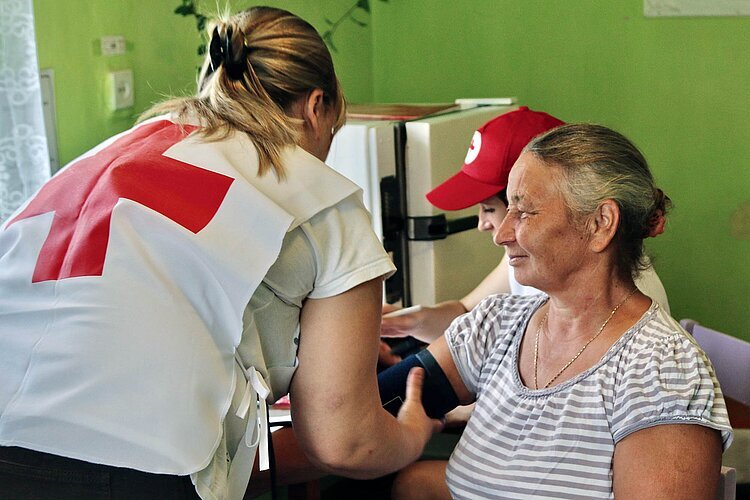
MHU teams treat high blood pressure, diabetes, and respiratory illnesses, administer vaccinations, and distribute medications. Fifteen MHUs have already reached more than 15,000 people in 2025—visits that are literally lifesaving for many.
Home-Based Care Against Cold and Loneliness
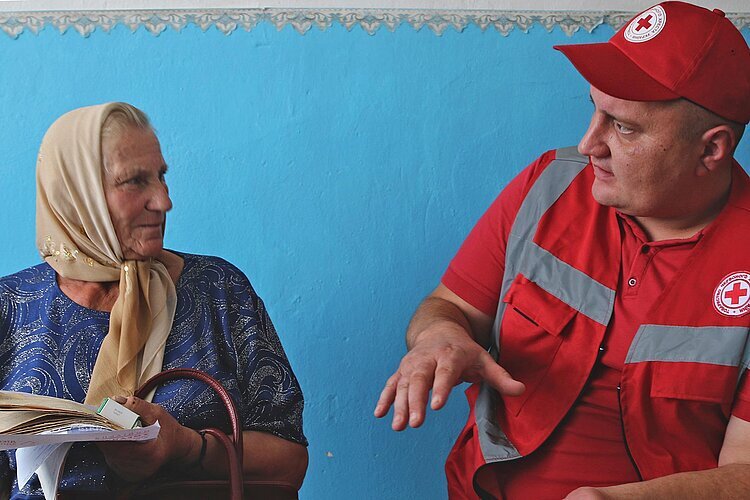
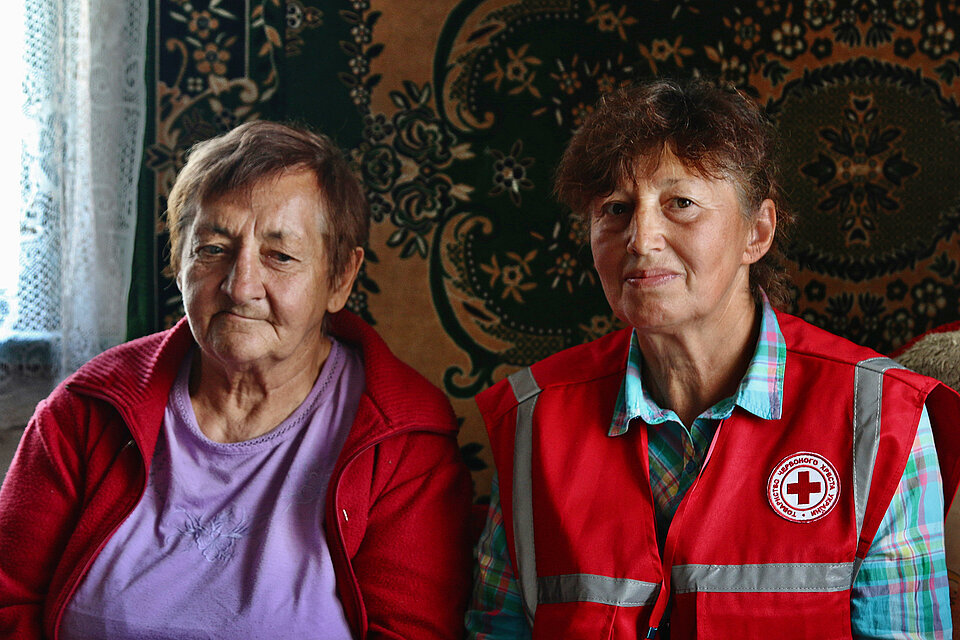
In a small house near Rivne, 78-year-old Nadia carefully opens the door. Inside, the air is damp and smoky from the wood stove. Since becoming widowed, she has lived alone—until Natalja, a social worker from the Ukrainian Red Cross, began visiting her regularly.
“Natalja has been coming three times a week since May and has been an incredible help. Everything is so much easier. She immediately sees what needs to be done and just does it—from chopping wood to cleaning the house,” Nadia says with a smile.
In 2024, the URC supported more than 7,000 elderly and ill people with home-based care in 24 regions, carrying out a total of 183,500 home visits. In addition to direct assistance, the DRK also supports training for social workers on topics such as psychological first aid, protection, and gender equality.
Mental Health: Staying Strong Together
To ensure that older people can also connect with others outside their homes, nine active-aging clubs have been established. In community halls or repurposed libraries, more than 200 seniors meet to cook, do crafts, sing, or take part in first aid training. In 2025, around 2,000 participants are expected to be reached.
“The armed conflict has affected everyone; it has become part of our daily lives,” report a team of volunteers from Tomyna Balka. “Many of our visitors sleep poorly, feel anxious, or are exhausted. Our weekly meetings help them regain trust.”
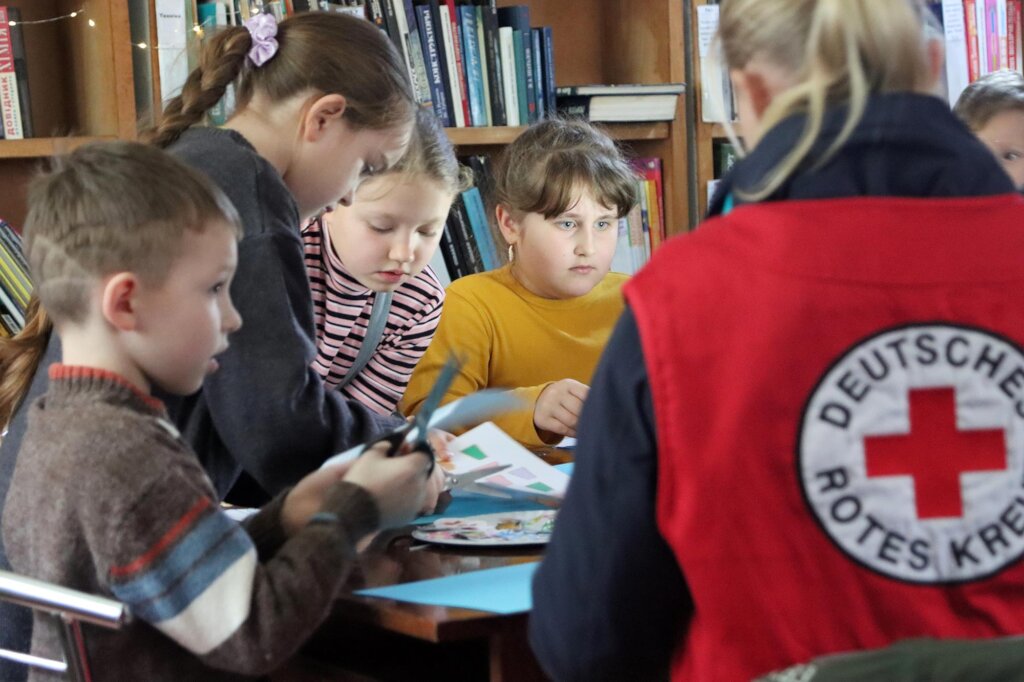
Community centers offer activities focused on psychosocial well-being. Children sit at small wooden tables, drawing what they cannot yet express in words, while volunteers read stories aloud. In nearby rooms, social workers—and sometimes psychologists—talk with adults about their fears, worries, and stresses.
Rehabilitation: Hope for Mobility and Participation
At a rehabilitation center near Odesa, 32-year-old Serhii, who was injured in an attack, carefully practices walking with a prosthesis. Beside him, physiotherapist Kateryna encourages him with a smile: “Every step counts.”
The URC has expanded its rehabilitation program to Rivne, Volyn, Odesa, and Zaporizhzhia. The aim is to combine physical recovery with social reintegration.
People across many regions of Ukraine are grateful that care can be provided as close as possible to where they live, as distances—especially in rural areas—are often very long.
Rapid Response and Local Strength
Whether responding to emergencies, evacuations, or sudden snowstorms, the URC’s Emergency Rescue Teams (ERTs) are ready to deploy within minutes. In the first half of 2025 alone, they assisted more than 2,200 people. In parallel, the DRK supports the establishment of volunteer fire brigades in communities. They rescue, extinguish fires, and provide first aid—often before state emergency services arrive.
Strong Partnership – Strong Mandate
“Our goal is that Ukrainians do not merely survive in the most difficult times, but retain their dignity,” says a URC project manager.
Currently, 16 international GRC staff members are deployed in Ukraine—in Kyiv, Odesa, Rivne, Volyn, and Zaporizhzhia. They provide technical support and strengthen the URC in its work, while the implementation of all activities remains fully with the URC. The aim is to sustainably enhance the URC’s capacities.
Links:
Project reports on GlobalGiving are posted directly to globalgiving.org by Project Leaders as they are completed, generally every 3-4 months. To protect the integrity of these documents, GlobalGiving does not alter them; therefore you may find some language or formatting issues.
If you donate to this project or have donated to this project, you can receive an email when this project posts a report. You can also subscribe for reports without donating.



Support this important cause by creating a personalized fundraising page.
Start a Fundraiser