Project Report
| Jun 8, 2011
Erica gives hope to daughter, Jessica
By Benjamin Kusi, Project Officer | Merry Fredrick, Executive Director
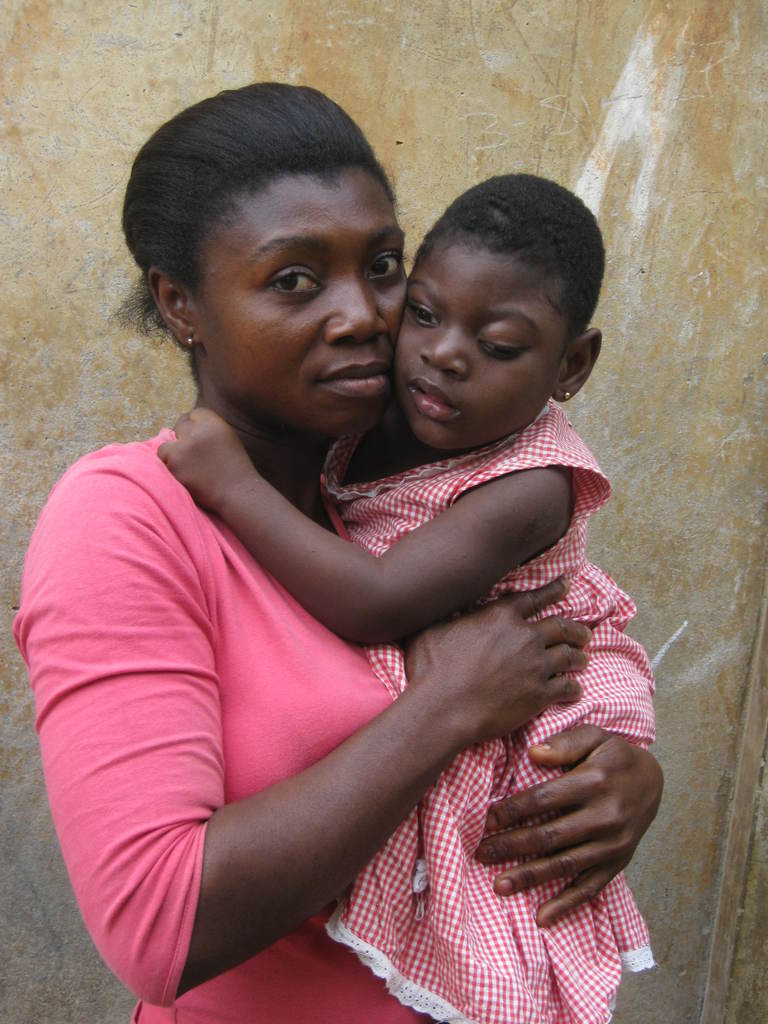
![Erica and Jessica]()
Erica and Jessica
Erica gives hope to Jessica
Akua Erica, 37 and a mother of three, became a beneficiary of Self-Help's Ghana Micro Credit program in 2009. She was a hairdresser and had witnessed improvement the program had made in the lives of her community members.
One late afternoon in 2009 she pleaded with the leader of Adom group who allowed her into their group. Erica used her loan to purchase wig/weave-on, which attracted more customers to her salon. Her savings went up in a matter of months and living conditions of her family also improved. She has taken 3 loans so far. Today Erica and her family no longer live in a single room. They live in a chamber and a hall (2-room apartment). She purchased a good used double door refrigerator which she plans to use to sell ‘ice-water’. In recounting benefits derived from becoming a member of the program this is what she had to say;
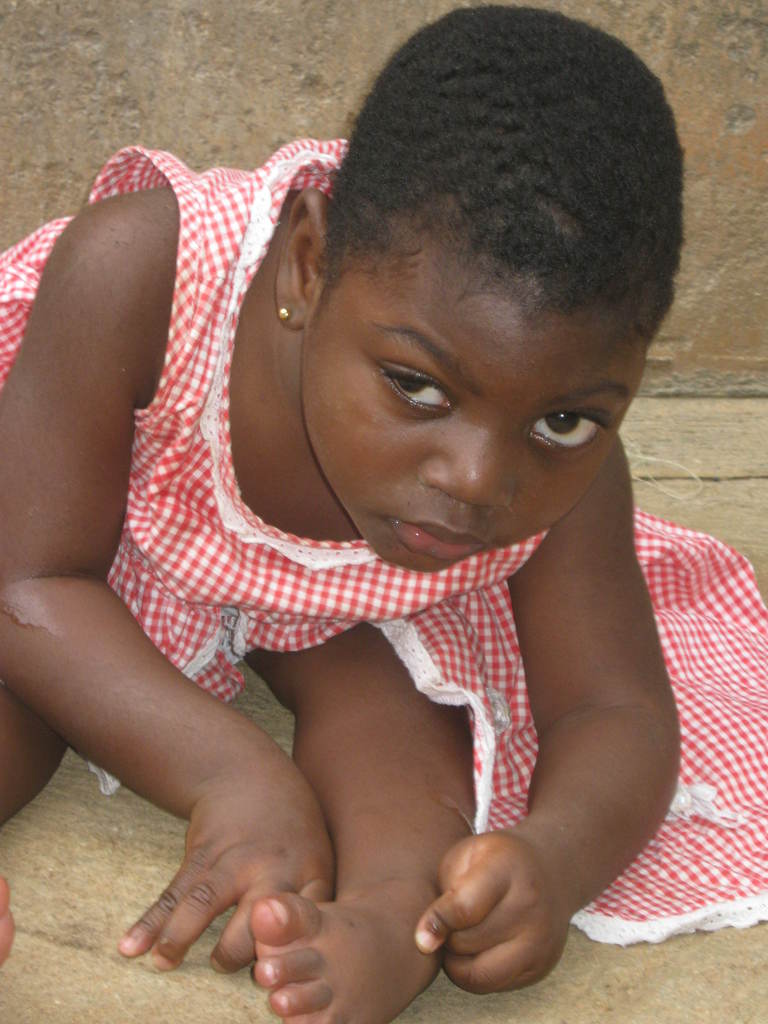
“....my greatest joy from joining the program is my ability to provide health care and support for Jessica..” Jessica is Erica’s second child, 4 years old and suffers from Autism. Erica and her baby move from one health center to another in search of a cure. “...at first Jessica could not do a thing on her own, but now she is able to feed herself...I am confident she will continue to improve....”
![Jessica]()
Jessica
Mar 15, 2011
Agnes Jaka's Perseverance
By Ally Kwikkel; Benjamin Kusi | Development Director; Ghana Project Officer
![Agnes with screw press]()
Agnes with screw press
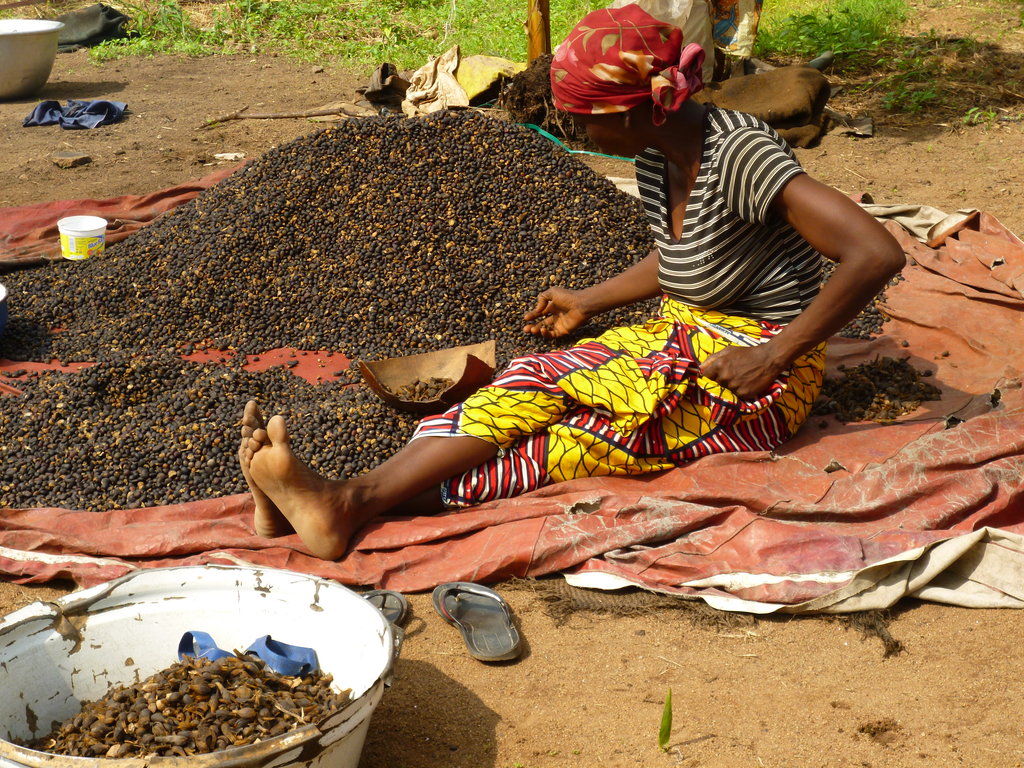
Agnes Jaka, 70 is a farmer and palm oil producer living in Bomfa, Ghana. In 2007 Agnes decided to expand her farming to include animal husbandry. She saw this as an opportunity to further develop her farming practices and add another source of income.
In February of 2008 Self-Help trained Agnes on animal care and gave her a loan of 140 cedis (US$127.30). Agnes purchased 2 female sheep and a ram. Each female gave birth to a lamb. Agnes was excited to see the progress her farm was quickly making. Unfortunately illness struck in 2009 and only the ram survived. Agnes had no choice but to sell the ram in order to pay off her loan. She was determined to get back on her feet and find success.
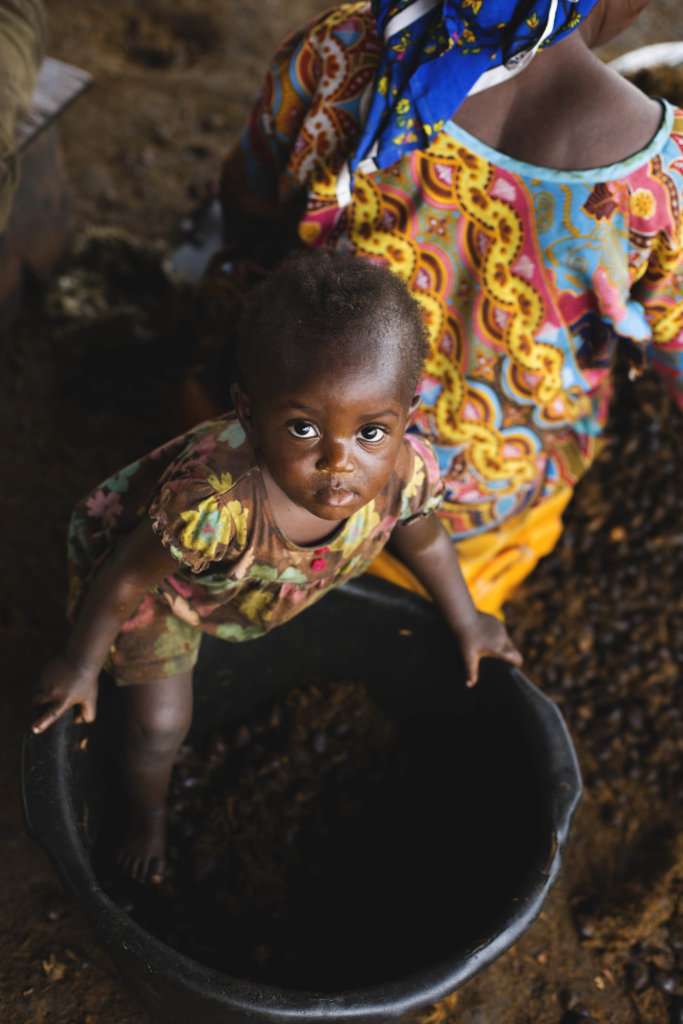
In 2010 Self-Help granted Agnes a loan to buy a screw press to improve her palm oil processing. The screw press has increased her production, decreased processing time, and allowed her to rent the equipment to other farmers. This success has allowed Agnes to pay off her screw press a month ahead of time. She is grateful to Self-Help for a new opportunity. Agnes said, “Given the opportunity, I would like to receive a loan to buy a digester so I can stop using mortar and pestle which is laborious and time consuming”.
Self-Help stands by its beneficiaries helping them to find success, new opportunities and sustainability.
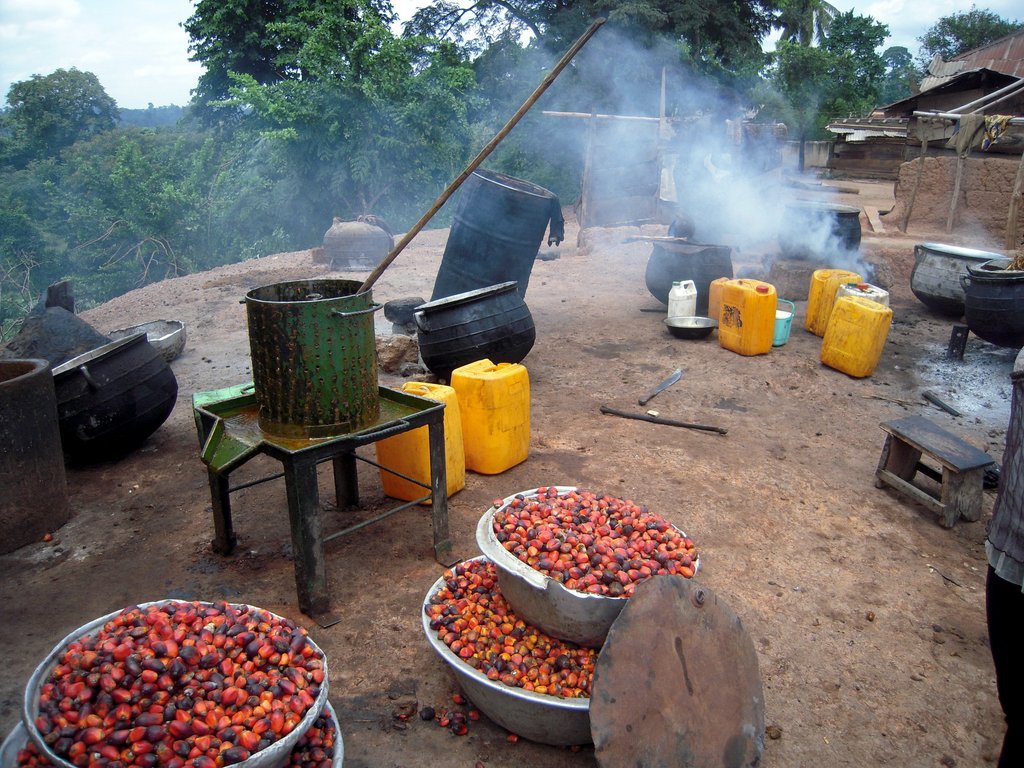
![Palm oil fruit before processing]()
Palm oil fruit before processing
Links:
Feb 7, 2011
Soap Making Important Value Added Product
By Merry Fredrick | Executive Director
![Olivia with soap ready for market]()
Olivia with soap ready for market
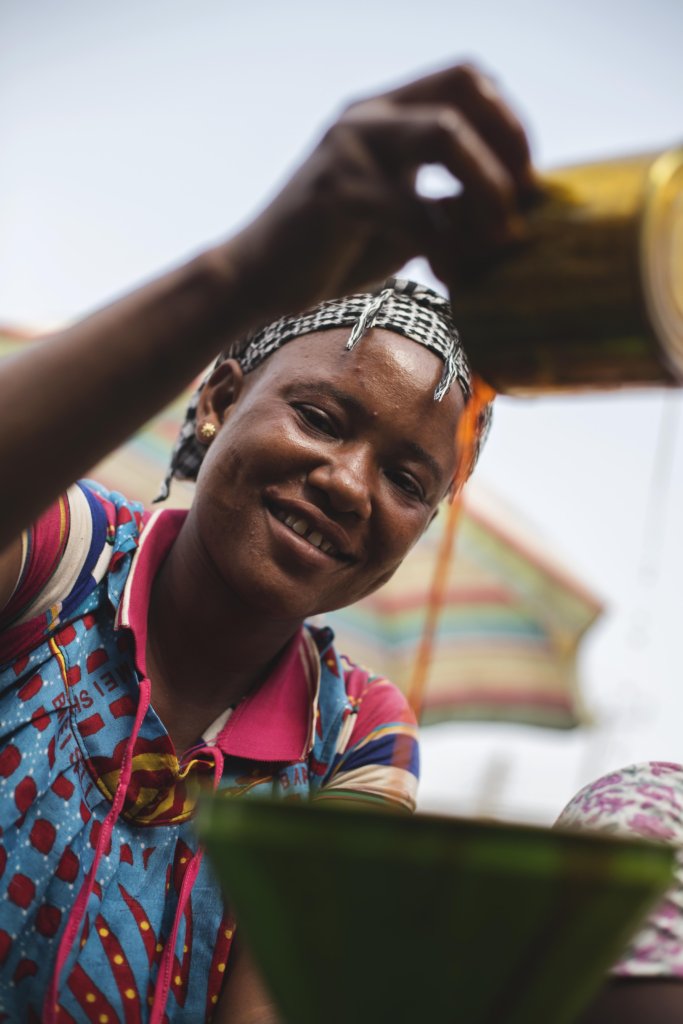
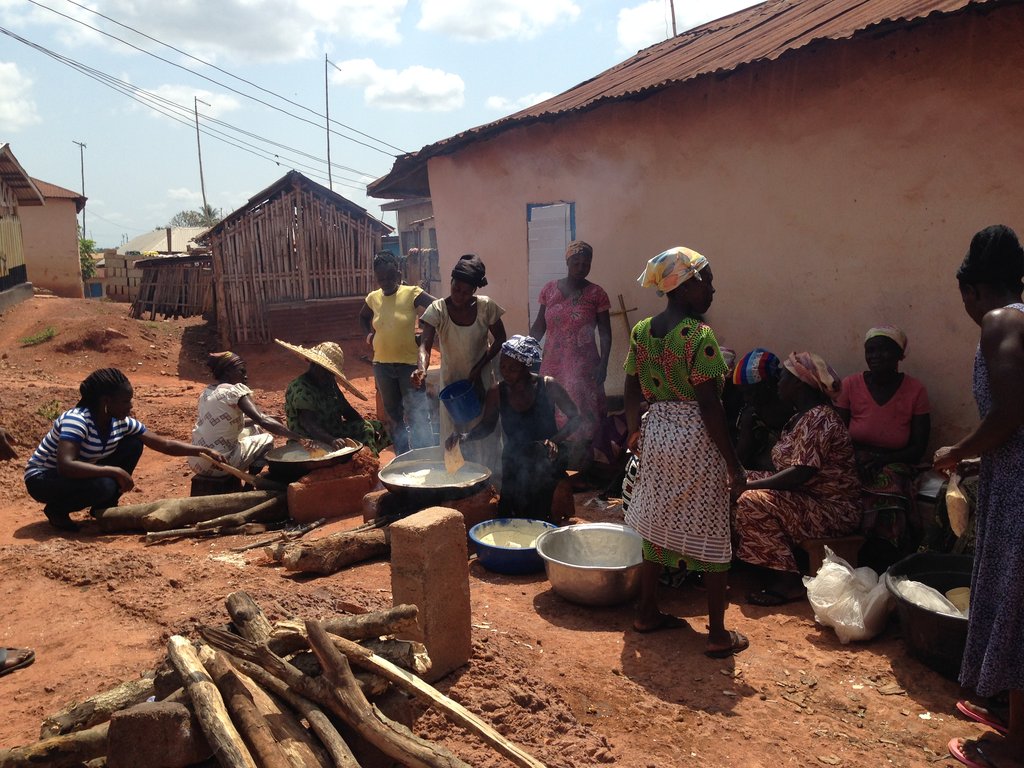
In January, the Self-Help executive director had the opportunity to watch the Nokware women in Ghana make soap from their palm oil. It was a real treat that must be shared with all of you! Enthusiasm and excitement among 30 women was contagious. They proudly demonstrated their new trade - making laundry soap from their palm oil - and with each step in the process their faces were beaming!
In review, screw presses (purchased through your gifts) squeeze more oil from palm fruits increasing the amount of oil extracted. In addition, presses reduce time the required to process oil. Increased oil, harvest time for palm oil, and bumper crops can cause gluts in the market and low prices for palm oil. Having the alternative to make and sell laundry soap is proving to be a real asset by adding value to their oil and family incomes.
Currently the six groups have three molds. Each mold makes 72 bars, usually sold within two days. An average family in Ghana uses two bars of laundry soap each week, so the market is ever present. The next step is to acquire funding to purchase more molds so that each women's groups have molds! The women are so proud of their product and thank you for believing in them through your support!
![making soap]()
making soap