By Nicole Wexler | Director of Development
Hello Aquarium supporters!
We are especially proud to celebrate publicly a major milestone achieved over the last year: the successful breeding of second-generation jellyfish right here in Jerusalem – a first for the Aquarium and a source of tremendous pride.
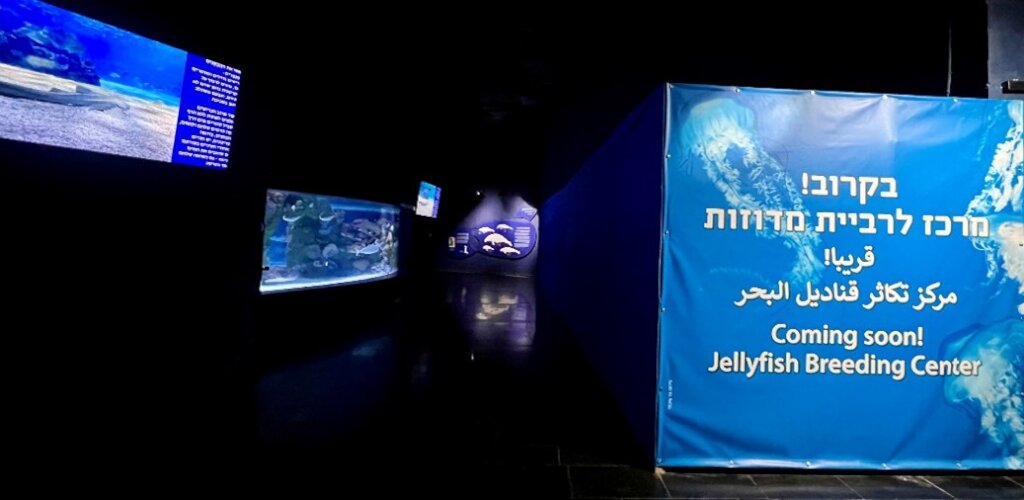
We decided to utilize this milestone as both an educational and professional opportunity by establishing a jellyfish breeding facility which will display the behind-the-scenes breeding process of the jellyfish to our visitors. This dynamic new addition to our Red Sea Gallery that will bring visitors face-to-face with the magical world of jellyfish and will unveil the behind-the-scenes work of our expert team as they care for and breed jellyfish, offering a rare glimpse into their unique life cycle – from tiny polyps to mesmerizing adults. It’s not just an exhibit; it’s an immersive educational experience that showcases the vital ecological role of these delicate marine creatures.
Currently, the exhibit area is being prepared and the design and content is being finalized. Specialized breeding equipment has arrived from Hong Kong, designed to support every stage of jellyfish development. The two rooms of the facility have already been constructed and viewing windows installed. The next phase is finalizing the exhibit's design and educational content. In addition, we have invested significantly in the professionalism of the team – two of our keepers have received specialized training at the Paris Aquarium. Aside from significantly increasing their knowledge and skills base, their new abilities allow us to work with polyps of many new species instead of only with moon jellyfish.
Jellyfish play a vital role in our fragile marine ecosystem, offering shelter and food to various marine species. As they drift through the ocean, they provide baby fish with a moving refuge from predators, allowing them to travel safely and feed on small organisms around the jellyfish or stunned prey caught in their tentacles. This safe haven helps fish populations—including commercially valuable species like whiting in the North Sea—recover and thrive.
Jellyfish are also key players in marine food chains. By consuming larvae and eggs, they help regulate species populations and maintain ecological balance. At the same time, jellyfish themselves serve as food for sunfish, spadefish, crabs, marine turtles, and even other jellyfish, such as the Lion’s Mane feeding on Moon jellies. After death, their remains continue to nourish deep-sea creatures like hagfish.
Additionally, jellyfish contribute to nutrient cycling. As they move through ocean layers, they transport essential nutrients like nitrogen and phosphorus. Their excretions support the growth of other marine life—studies show jellyfish waste can provide over 10% of the nitrogen and nearly 25% of the phosphate required by phytoplankton.
Jellyfish have a bad reputation in Israel because they prevent people from enjoying the beach. A discussion of their importance within the ecological fabric shifts the focus to the importance of species diversity.
Stay tuned for more updates soon!
Project reports on GlobalGiving are posted directly to globalgiving.org by Project Leaders as they are completed, generally every 3-4 months. To protect the integrity of these documents, GlobalGiving does not alter them; therefore you may find some language or formatting issues.
If you donate to this project or have donated to this project, you can receive an email when this project posts a report. You can also subscribe for reports without donating.



Support this important cause by creating a personalized fundraising page.
Start a Fundraiser