By Jason Graber | Resource Development Officer
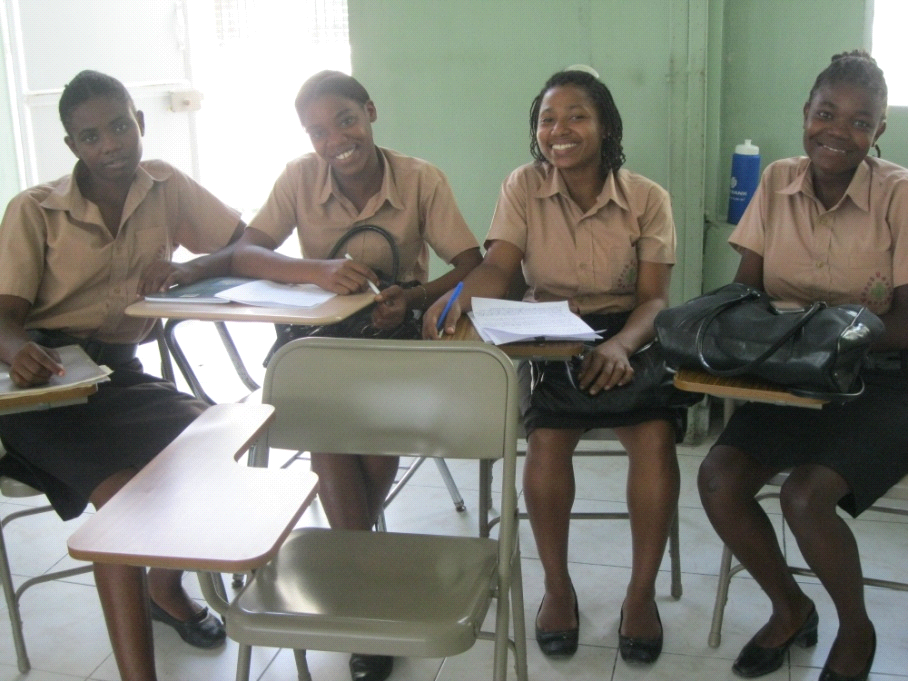
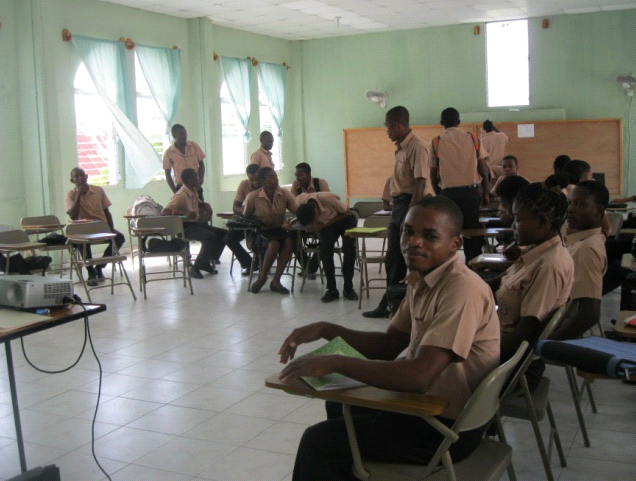
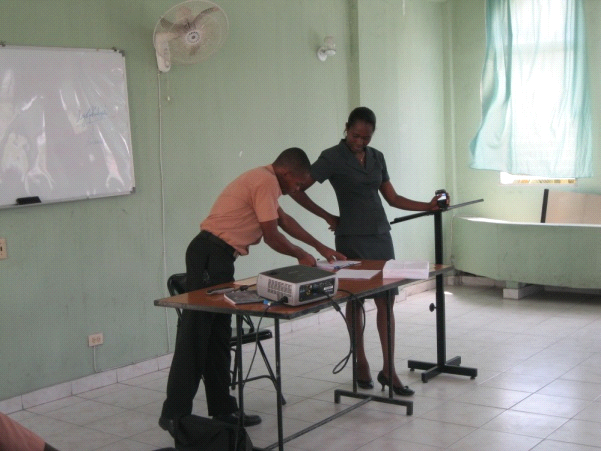
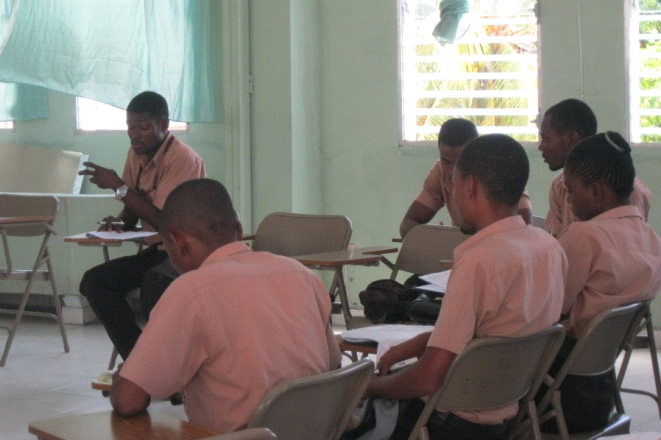
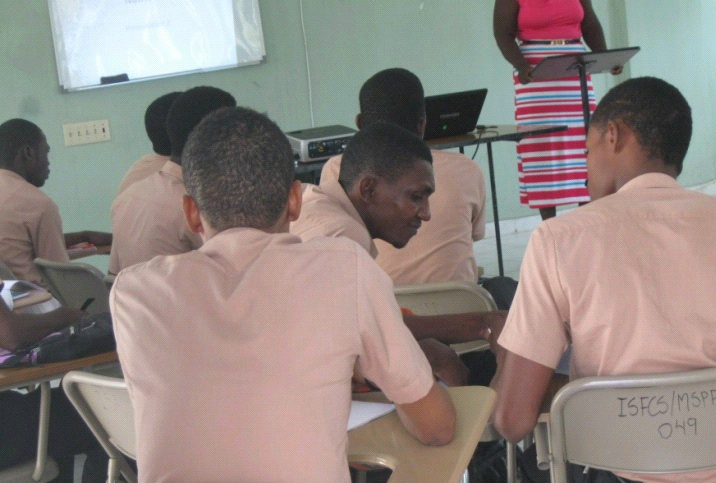
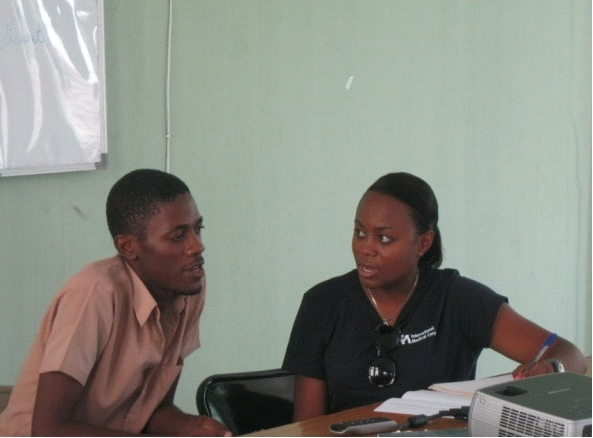
International Medical Corps, in partnership with the Haitian Ministry of Public Health and Population (MSPP), supports a Multi-Purpose Health Worker training program at the Higher Institute of Health Leadership Training of Cayes. This program puts into place a standardized education system that is supported by the MSPP. The current program is located in Les Cayes which is located in the South Department region of Haiti. International Medical Corps’ program officer in the area interviewed six students about their future after participating in this training program that was launched last year. Below are the responses from the interviewed students:
While looking for work after graduating high school, Pierre found an announcement for a health officer training program in the newspaper. Pierre wanted to learn more about being a health officer before he joined the program, so he consulted his uncle who currently works as a health officer and could explain the duties of the job. After his conversation with his uncle, Pierre decided to enroll in the program. After he passed the training program’s entrance exam, he was confident that being a health officer could lead to a successful career. Pierre, whose personal motto was “health for all”, wished to help the people in his community who are suffering from behavioral issues.
Pierre did very well in school, and said that the key to achieving good grades was to study very hard every day. Ultimately, his goal is to attain a master’s degree in community health and health education pending completion of his training as a health officer. For Pierre, the health officer training program provides an excellent opportunity to develop a meaningful career directly out of high school, because approximately 90% of the trainees from this program find work in their local communities. Given current economic conditions, Pierre is a little concerned about the ability of the Ministry of Public Health and Population (MSPP) to continue to place such a high proportion of graduating students in the health system. However, he remains confident in his decision to pursue this training because the program will endow him with the skills necessary to be compliant with national health standards. Pierre is determined to achieve success in his career by the age of 30 and says, “A health officer career will provide for the needs of my family in the future.” He continues by stating that “Decentralization of the program is also good idea for the welfare of students.”
Two of the young ladies in the health officer training program talked about how they felt about the program and their desired outcome of their participation:
Gracieuse learned about the health officer training program from a friend. She was most interested in the aspects of the program regarding housing, nutrition, transportation and the formation and delivery of training materials. Gracieuse believes the program will ultimately benefit the entire country of Haiti. She hopes to apply the skills learned in this program to benefit the general population, with support from the government. When asked about what she sees in the future for the program, Gracieuse replied: “Given the economic situation, I am concerned for the future of the program, however, I intend to perform the job of health officer as necessary to improve our community and our lives.”
Medina also learned about the health officer training program through a friend that attended the first run of classes. When she first enrolled in the program, Medina was worried that the training program would teach her some basic skills and then leave her without support. After spending more time in the program, she now believes that it will allow her to teach people in her community to take control of their health while keeping her supported as she becomes acustomed to her new profession. When asked what she will do after classes end, Melinda said “I will continue to use the concepts to preserve my health, the health of my family and my community as a whole. If the program is delivered as intended, we can improve the health of ourselves and our community. I plan to use my education to provide effective services to the community for health promotion and disease prevention.”
Mackenson first heard about the health officer training program through radio commercials. Wanting to hear more about the program, he contacted a recent graduate to ask them about the training and the careers it can lead to. At first, Mackenson thought that he would only receive enough financial and material support to meet the training requirements for the position of health officer. Now he believes that the health officer program and its focus on improving the entire Haitian healthcare system is good initiative that will not only benefit him as an individual, but the community as a whole.
When asked what he will do after classes have ended, Mackenson replied that he wants to be hired quickly so he can apply the concepts he learned in the program. He believes that educating people about essential health topics will be beneficial to the population, because they will be able to protect themselves against diseases related to the environment (e.g. diarrhea, cholera, etc.) and act to remedy factors that may affect their health negatively. Mackenson stated, “In my opinion, this program will allow me to have the means to meet my needs, support my family and help others who are vulnerable. I will use my skills, knowledge and expertise to serve the community to which I am assigned.”
Jean first heard of the health officer training program through a poster from the Ministry of Public Health. For Jean, this program seemed to offer skill training that is critical to the health of individuals and ultimately the community in general. He said “At the end of this program, I will enter the labor market and demonstrate the knowledge I have acquired by serving the community.” Jean hopes that the Ministry of Health will achieve the objectives of this program. “People in the community need our presence so that they can learn basic concepts of hygiene and safeguard their health,” Jean explained. “Health is a right that must be preserved. I will work with the community to promote health education and teach the basic principles of hygiene. Eventually, I hope to become an expert in that subject.”
Genel learned about the health officer program through a friend. He first thought that this program would be identical to many other training programs, but he now believes that this program has the ability to address most of the existing problems facing the country in regards to environmentally spread communicable diseases. He hopes that all the students currently in the program are able to find work in the public health sector. When asked how he saw this program’s future, he replied: “The program will change the point of view of many in regards to health, and the community will be less affected by epidemics. After I graduate from the program, I will be ready to serve the entire Haitian population; my knowledge and skills will help people take charge of their health by taking into account their environment.”
Project reports on GlobalGiving are posted directly to globalgiving.org by Project Leaders as they are completed, generally every 3-4 months. To protect the integrity of these documents, GlobalGiving does not alter them; therefore you may find some language or formatting issues.
If you donate to this project or have donated to this project, you can receive an email when this project posts a report. You can also subscribe for reports without donating.