![Rangorango Chicken Farmers]()
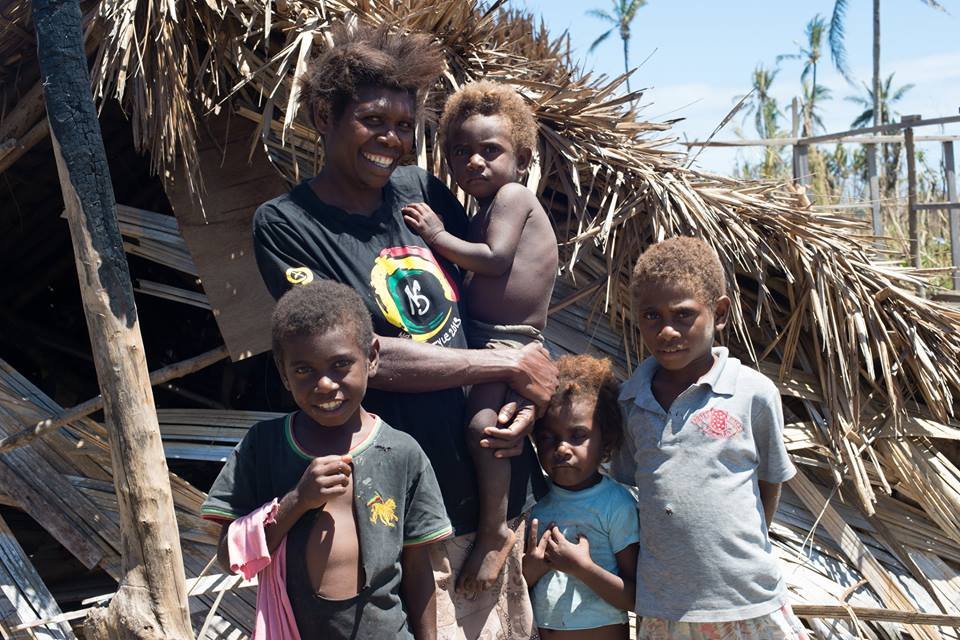
Rangorango Chicken Farmers
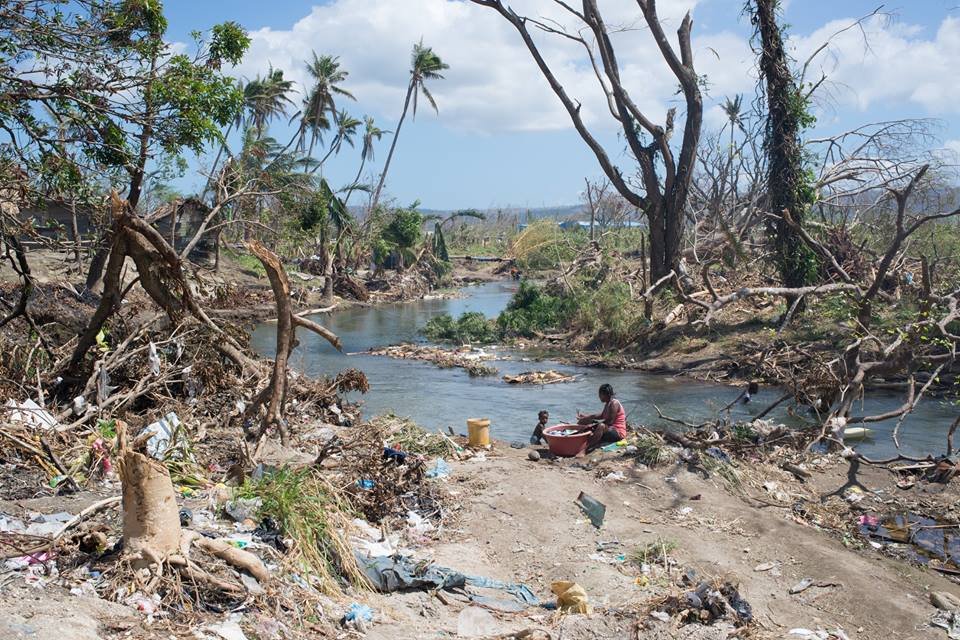
The Happy Chicken Project is focused on improving the well-being of communities through focusing on chickens as a high quality protein food source, both for eggs and meat. Rural communities rely on wild caught fish, shellfish, birds, and stream fauna for much of their protein, and improving the productivity of chickens in rural communities can thus decrease this reliance on these wild-caught foods, helping nature recover from overfishing and overhunting. For areas far from the sea, chickens are a particularly vital food security resource. Chickens create new resources for communities, as free range village chickens are able to access feeds that otherwise cannot be used by people: worms, bugs, wild plants and grasses, etc., and converting them into usable high protein food. The Vanuatu project is initiated in response to the severe category 5 Hurricane “Pam” which hit Tanna and Efate Islands in 2015.
The Vanuatu host and partner organization was the newly registered Vanuatu NGO, Human Capacity Development International (HDCI), which arranged all field visits, meetings with government, airport pickups and drop offs, and Efate transport. Housing at Port Vila was kindly provided by Caren Bough, board member of HDCI and the Bough family.
Ministry of Agriculture 5th November: Met with Acting Director of Livestock, and Senior Livestock Officer. The purpose of the meeting was to share the vision of the project and to get their input as far as how we might proceed in accessing more highly productive chicken breeds. They expressed support for the project and offered the names of people and companies who we should contact.
Farmers Support Association 6th November: Met with administrators of FSA. The organization runs a store to supply seeds and farming supplies, as well as imported chicken feeds etc. They also provide chicks to farmers. They are very much interested in local feed sources and feel it is a very important objective of the project. They also might be interested in accessing improved local breeds and Muscovy ducks from Fiji should we become certified for export. FSA has a poultry project through Live and Learn Foundation. FSA provides chicks every two months to farmers. They are brought in by Pepe’s Farm as fertile eggs from New Zealand and New Caledonia and are then purchased as day-olds and raised for two weeks (the most critical time for the birds). At two weeks, they are subsequently sold on to the farmers. Breeds provided are: Shaver sex-linked egg birds- the females are brown and males are white. The cost to the farmer at two weeks is 500VT for females and 350VT for the males.
Pepe’s Farm 15th November: We met with the owners of the only Vanuatu Hatchery, which brings in fertile eggs from New Zealand and New Caledonia. Day-old Shaver egg producing chickens are 360VT for females and 150VT for males. Cob meat birds are 180VT each for day-old unsexed chicks. Three dual purpose (for both meat and eggs) heritage breeds are also being brought in: Sussex, Plymouth Barred Rocks, and brown Naked Necks, available for 270VT each as day-olds. These heritage breeds are brought in from Ferme de Koe, New Caledonia. An inspection of the farm indicate that Marek’s disease may be present, with several paralyzed adult chickens observed in the pens. It is possible to vaccinate against Marek’s disease by adding vaccine to the chick’s water.
Efate Communities
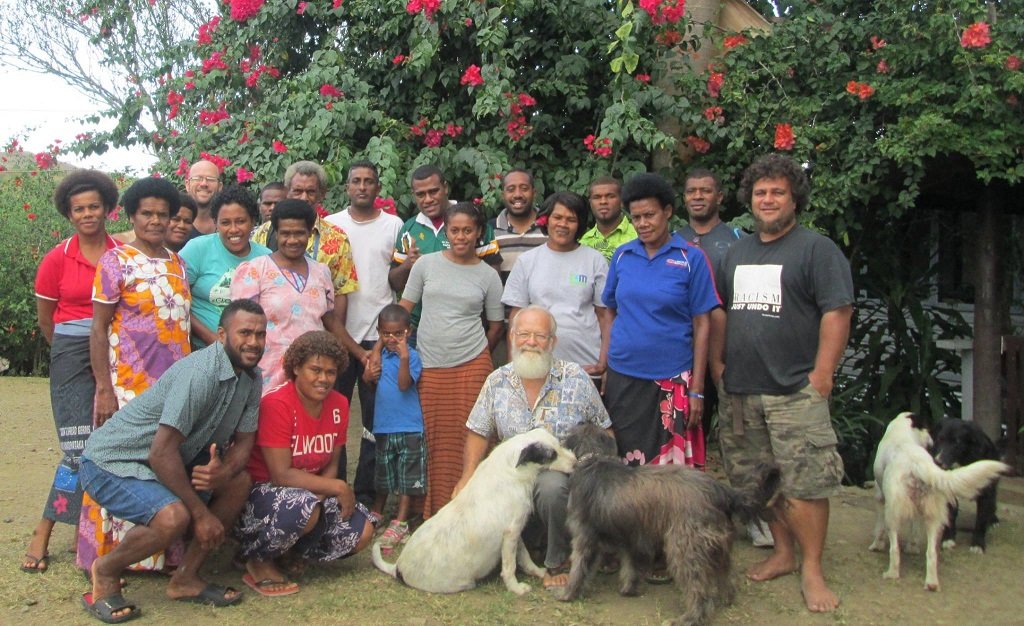
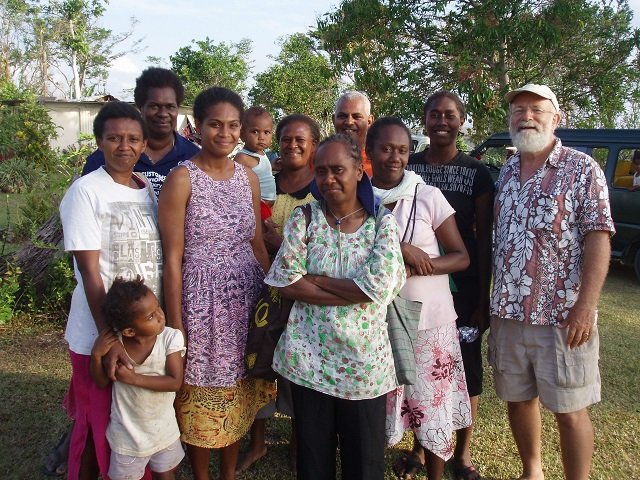
We visited Waden’s farm in the Rangorango community. We produced a mobile rearing pen and gave the materials for the production of an additional one to Ms Waden. The main problem of dog and cat and hawk and rat predation can be solved by using this simple technology, greatly increasing chicken numbers. We were very pleased to see a rooster among the chickens of Rangorango that appears to be nearly full blood White Leghorn, an extremely productive chicken, a “heritage breed” that was the mainstay of egg production up until two decades ago. We encouraged the farmers to breed this rooster with the hyline hens that they are keeping, and to hatch the fertile eggs under some local broody hens.
Care Office and Agriculture Station, Tanna 11th November: Met with the staff in the Care office, followed by a visit to the Agriculture Station to view the chickens.
In partnership with Agriculture, Care has brought in the three heritage breeds plus the standard commercial breeds through Pepe’s Farm, and they have distributed thousands of chicks plus feed to the communities, with the concept being that the chickens would be eaten when the feed ran out. A pen with about a hundred heritage chickens of the three breeds are housed at the Agriculture station in Lanakel.
We discussed with Care staff the value of the heritage breeds as genetic resources and how they were well adapted to the village free-range life, while being vastly more productive than the local breeds. We stressed the importance of not killing the heritage breeds for food, but rather to encourage the communities to use them as breeding stock to cross with the local chickens to greatly improve the productivity: both egg laying and meat production. This was much appreciated, as the plan was for communities to eat the chickens rather than improve the local stock. There is no plan for the long term maintenance of the heritage breeds as pure stock, nor any plans to set up a hatchery on Tanna, nor to continue with the chickens over the long term, the project was designed as a short term food security measure.
Site Visit to Isila Village Chicken Project
Agriculture has provided this interior village with chickens and feed as a post-cyclone food security measure. 60+ birds have survived but many have reportedly died. The chickens are housed in a large local materials house, and it looks like only recently a smallish chicken yard has been added to allow for some free-range foraging. The feed provided is chick starter, one bag for two weeks and it is nearly finished. The managers are still feeding them the original ration advised by Agriculture- far less feed than a growing chicken requires. The deaths are likely related to poor nutrition or to starvation. The roosts are of sharp spilt bamboo, and need improvement, the water source is a half bamboo and with low capacity, so that it would have to be refilled several times each day, with potential for times of lack of access to water. The breed provided to the community is white meat birds, a breed with low capacity for foraging and with too high a feed requirement. We advised that all of the birds be eaten and change to egg producing heritage chickens and local chickens if they want to continue with the project. We also gave our recommendation to increase the feed by triple, using local foods (leaves, kumala, compost, mile a minute vines, copra meal, etc), and to increase the water available, plus change the roosts to larger poles. The chickens also need a source of small stones for their digestion, and access to coral gravel or sand as a calcium source.
Community Discussions
Many discussions with small groups and individuals regarding chickens and chicken farming took place during the trip and this information was included in the recommendations and findings below.
Summary of Findings
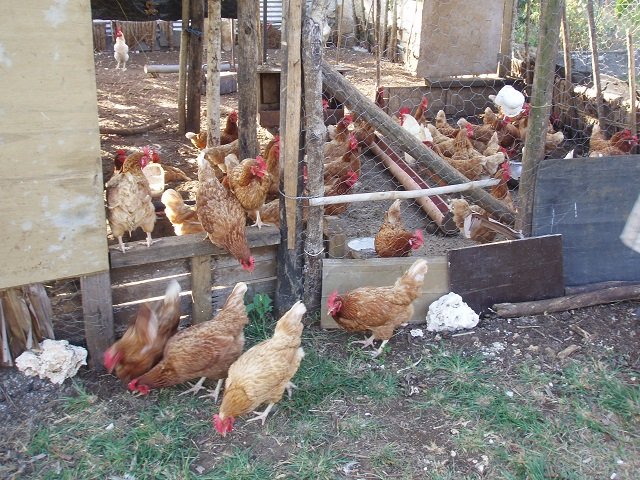
Village free range chickens on Tanna and Efate fared surprisingly well during the hurricane, as the storm hit during the daytime, and as people knew the storm was coming well in advance. Many of the chickens were protected or were able to find shelter on their own and to thereby survive. Local chickens are smallish, but there is a lot of diversity present, with some obviously of mixed introduced breeds in the distant past. Frizzy chickens, with up-curled feathers are very common, as are small short-legged chickens.
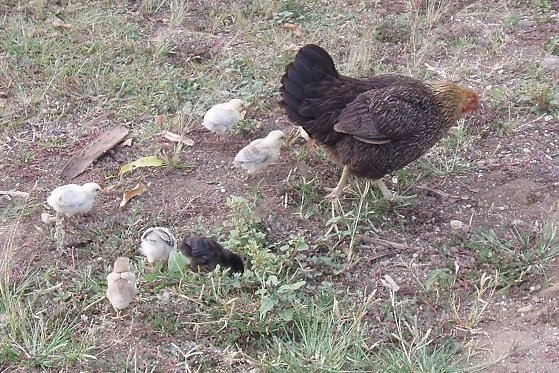
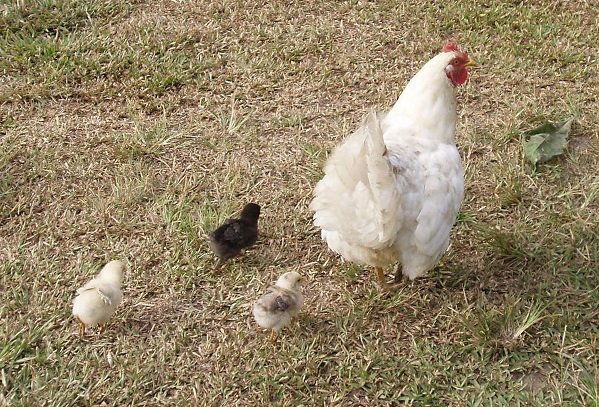
The main chick predators are feral cats and two species of hawks, the smaller hawk being the worse of the two. Dogs can also sometimes be a problem, as well as rats. Mobile rearing pens, built as a demonstration on Efate, would greatly increase chick survival in areas with high predation rates. An increase in chick survival will be the most effective way to increase poultry production in the communities. Improvements in nesting (and thus hatching) may also be in order, to protect the clutches of eggs from heavy rain and predators, especially rats.
Feed is a major limiting factor for increasing chicken productivity, and so active focus on feed sources needs attention. Free range raising of adult chickens is recommended, rather than cage culture, to allow for access to forging foods. However, even free range chickens require supplemental feed in order to grow quickly and to breed effectively. Coconut and starchy roots or corn would be the most important supplemental food sources to provide to the chickens daily, at the ration of at least two cups per adult animal per day (2-3 times that for caged or penned chickens- plus the vital green matter). The coconut cream can be extracted beforehand as a human food, or for virgin oil production, before feeding the waste coconut to the chickens.
To improve the foraging of the chickens, all leaves and grass clippings etc should be composted rather than burned, to produce worms and insects. The compost piles should be opened once mature to allow for easy access buy the chickens. Papayas should be grown and the skins and seeds used as chicken feed, which greatly helps the chickens utilize protein in their food. Papaya leaves stems etc can also be added to large compost piles to accelerate the rate of decomposition and compost formation. Fences should have mile a minute vine or passion fruit vines planted on them, the leaves of both of which are eaten by the chickens. If gravel is not present in the soil, as is the case for many areas on Tanna dominate by volcanic ash soil, pea sized gravel must be brought in and provided for the chickens. Chickens have no teeth and so the gizzard requires small stones to grind the food. Coral grit and gravel can serve this purpose and also can provide a calcium source for the growth of bones and the production of strong egg shells.
The Way Forward for the Happy Chicken Project
We are planning a second trip for the end of February, to conduct workshops on Tanna and Efate communities focusing on the production of chicken feed through composting, the use of wild plant feeds, and production of coconut waste from virgin coconut oil production. A second focus will be increasing chick survival through the production and use of mobile rearing pens, plus the production of worms as a feed supplement. A selective breeding program, using the heritage breeds crossed with local chickens will also be encouraged.
As no development agency is yet planning on breeding superior village adapted chickens to increase the productivity of eggs and meat, there is an opportunity to advance this for Vanuatu, and at the community level. We are ow planning to import small Styrofoam “Hovabator” type incubators that have a capacity of 60 eggs each, for use by farmers with electricity, to hatch chicks to improve their flocks, with more emphasis on cross breeding and selecting the largest local roosters and crossing with imported egg birds or of possible with the heritage breeds ready in country, and then to select the best from this offspring for additional crossing and improvements in the chickens.
Happy Chicken: Fiji versus Vanuatu
There has emerged an amazing contrast between Vanuatu and Fiji. In spite of the severe cyclone, Vanuatu is filled with chickens abundantly foraging around village compounds, plus a great abundance of wild chickens in the forest, while in Fiji, where mongoose were introduced decades ago, chickens are not at all common in the villages, and the once abundant wild forest chickens “jungle fowl” have become completely extinct on Fiji’s two major islands, only surviving on the smaller islands where mongoose were not released. The Happy Chicken work in Fiji, especially with the mobile rearing pens, appears to be of far greater importance over the long term to food security and nature conservation than it is for Vanuatu, where local methods can certainly be improved on, but where the environment is much more stable and where chickens continue to thrive.
The work is continuing in Fiji, with over eight thousand chicks distributed to farmers and communities since 2015, and with mobile rearing pens sent out or built on the islands of Taveuni, Vanua Levu, Kadavu, and in at least three villages on Viti Levu Island. This work must now be expanded, and workshops carried out to train communities in raising poultry successfully in conditions of severe predation.
Exciting Developments!
We received a visit from the New Zealand Overseas Volunteer Organization in December, and they have a great need in Tonga and potentially other nations for the improved village appropriate chicks that we are breeding and producing in our hatchery. We are working on getting approved for exporting chicks to these worthy development projects.
We just broke ground today on our much needed new breeding facility, funded in part by the Ford Motor Company.
Stay tuned for more developments!
![Rangorango Chicken Farmers]()
Rangorango Chicken Farmers
![Tanna: Mother Hen with Chicks]()
Tanna: Mother Hen with Chicks
![Mother Hen With Only Three Chicks Surviving]()
Mother Hen With Only Three Chicks Surviving
![Share on Twitter]()
![Share on Facebook]()