By Austin Bowden-Kerby | Project Leader
Our Happy Chicken farm in the Sigatoka valley of Fiji was recently visited by a representative from SPREP, the South Pacific Regional Environmental Organization, and they have produced an article on our project. The article discusses the connection between poverty and overfishing of coral reefs, and how community-level production of chickens and eggs can help provide an alternative food source and livelihood for communities seeking to conserve their environment by setting aside no-fishing and no-hunting areas as part of community-based management. One slight error in the report is that the maximum size of the chickens being produced should read 12 pounds, not 12kg. Our largest breeding rooster recently weighed in at 6.4kg- over 14 pounds- WOW!
http://www.sprep.org/attachments/Publications/Newsletters/PEBACC_Newsletter_March_2017_FINAL.pdf
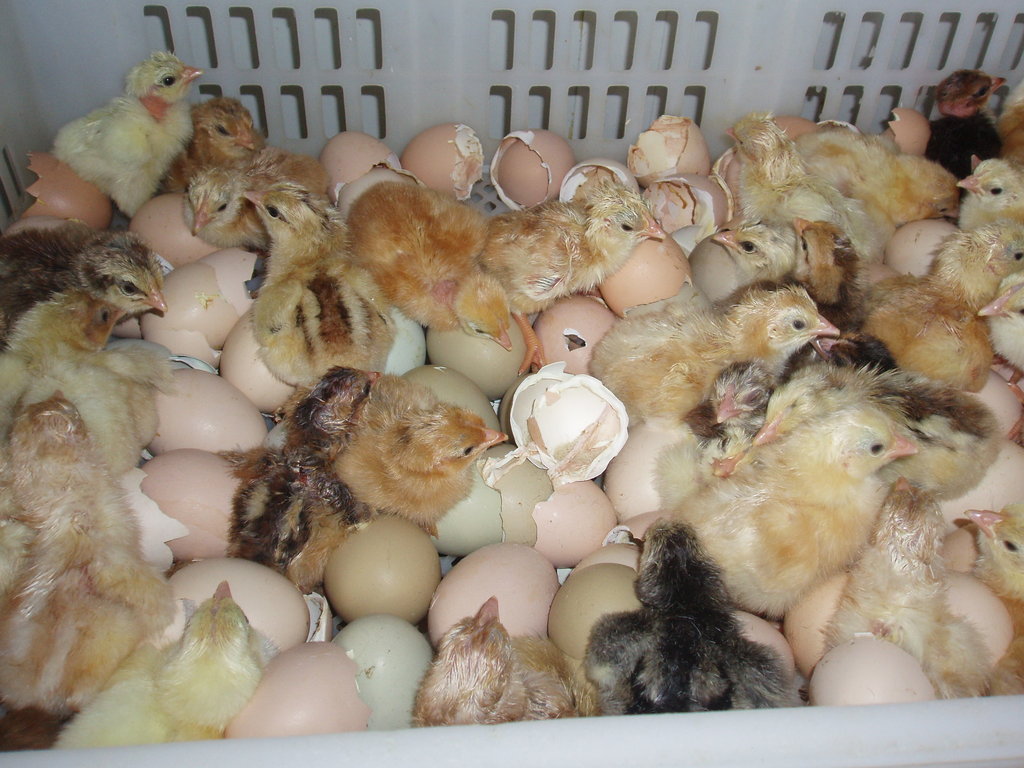
After producing over 20 thousand chicks over four years, and after many repairs, our main incubator finally broke in March. Fortunately it happened during the ‘’low season’’- the hot summer, when many hens are in their annual molt and resting, building up resources for another year of laying. The several hundred eggs inside the machine were mostly saved by putting them under broody hens and transferring them into two small incubators.
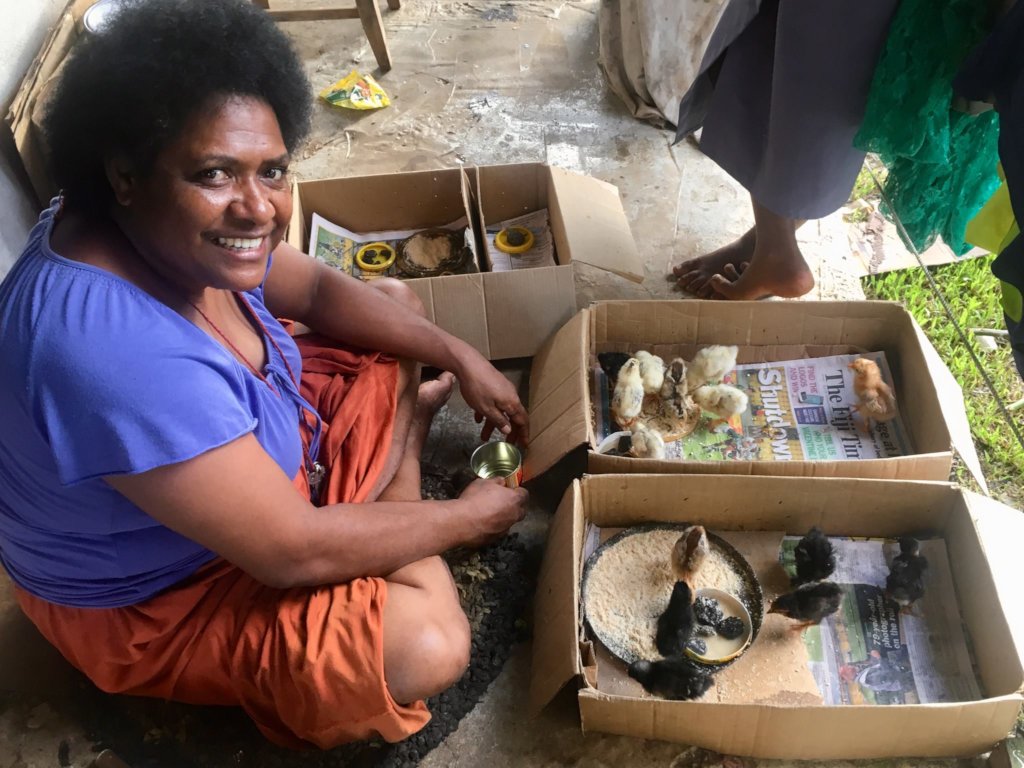
The good news is that new incubators have been given by SPC, the South Pacific Community, and are expected to arrive within the month. Ten portable incubators are also on their way from Australia. These 60-capacity incubators will be used to set up small hatchery businesses for women farmers in Fijian villages where electricity is dependable. Two will also be sent to the Vanuatu project, where breeding flocks are being established on Efate and Tanna islands by our two special trainees there- Joel and Iopil.
Upcoming Happy Chicken workshops are planned for June, July, and August and will be facilitated in Fiji by US Peace Corps volunteers, with exciting plans for bringing in five farmers from each of 17 communities for training at our Sustainable Livelihoods Farm. With this new development, more effective follow-up with communities will occur, and with our new incubators we plan to increase production of chicks to ten thousand per year. In mid August we will be back in Vanuatu for more workshops in partnership with HCDI, a local NGO, and using the new Pidgin English translation of the Happy Chicken handbook ‘’Hapi Jiken’’, which we have jointly developed.
Never-ending thanks to our donors for making all of this work possible…. in spite of challenges, we do seem to be making a transition to greater effectiveness and local empowerment. We hope to focus on individual stories from farmers in the villages and bush for our next report- where the real impact of all of this work is being felt.
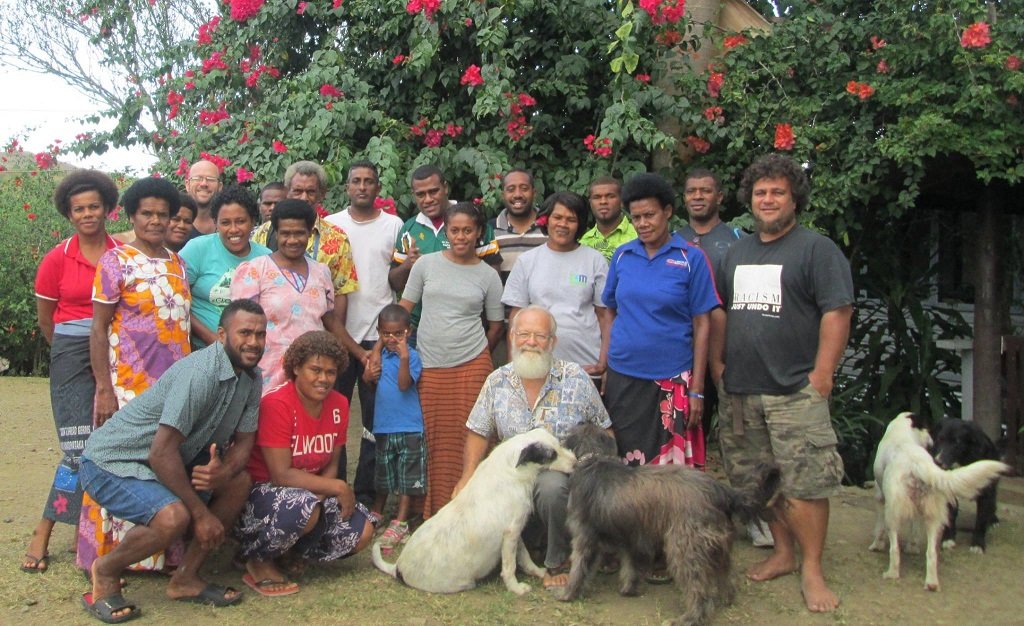
I leave you with an overview of the Happu Chicken hatchery building and staff, and trainees
Links:
Project reports on GlobalGiving are posted directly to globalgiving.org by Project Leaders as they are completed, generally every 3-4 months. To protect the integrity of these documents, GlobalGiving does not alter them; therefore you may find some language or formatting issues.
If you donate to this project or have donated to this project, you can receive an email when this project posts a report. You can also subscribe for reports without donating.



Support this important cause by creating a personalized fundraising page.
Start a Fundraiser