You subscribed to email updates from Help babies with congenital heart defects - UK, a project on GlobalGiving
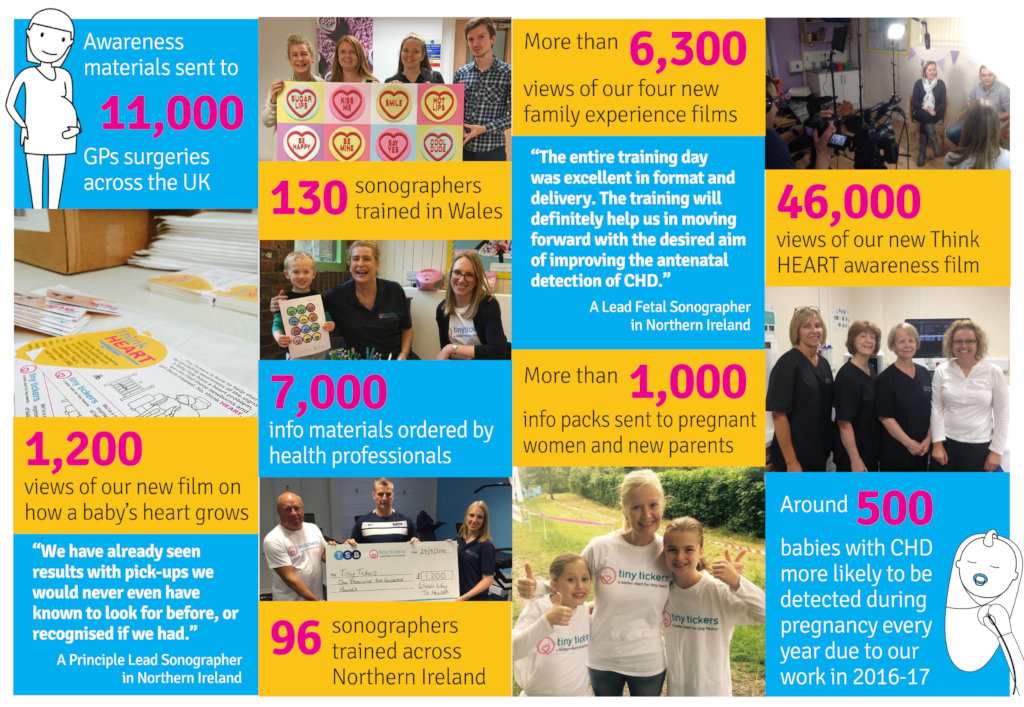
Tiny Tickers continues to go from strength to strength in 2017. We have developed and grown across all areas of our work - and are very, very grateful to our incredible supporters who have made this happen
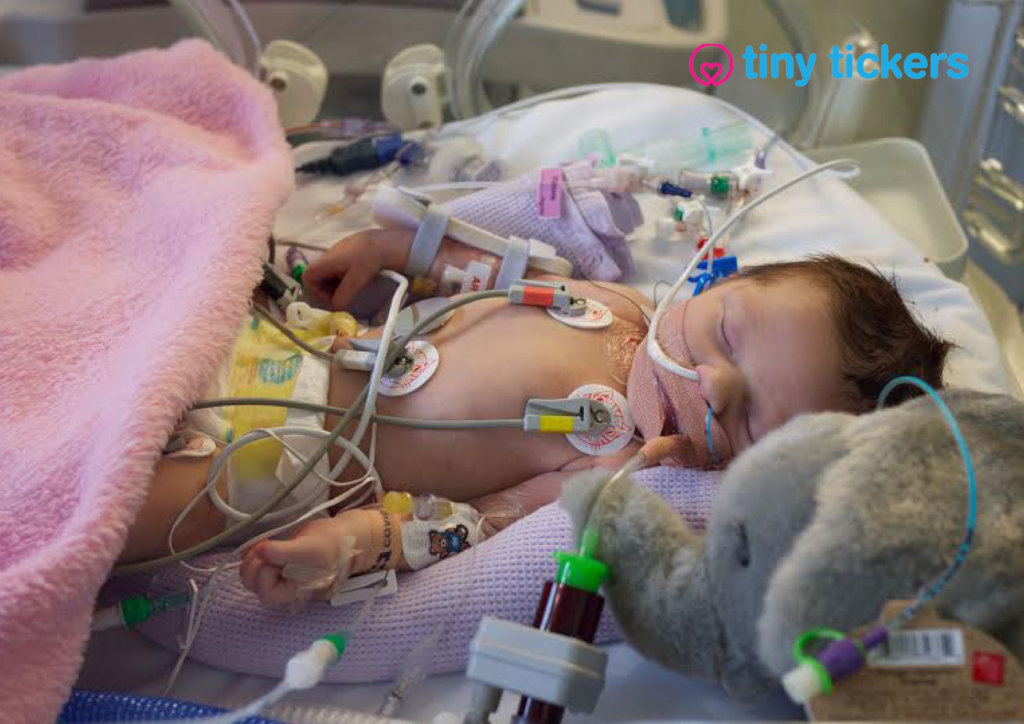
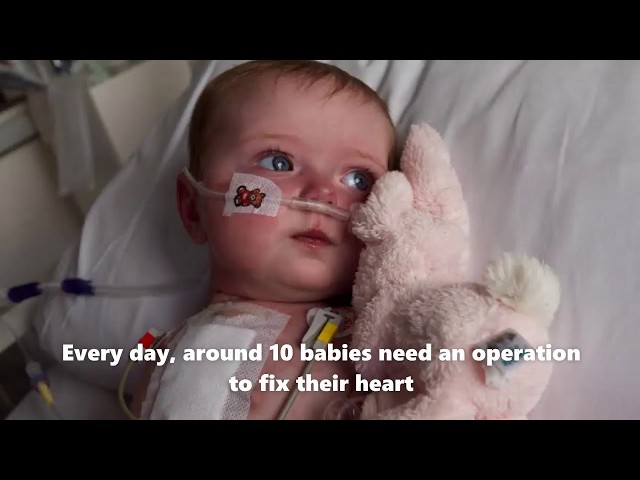
Every two hours a baby is born  with a heart defect. Tiny Tickers exists to improve the early detection and care for these babies, giving them a better start in life.
Every year 1,000 babies leave hospital with their heart defect undetected, putting their lives in grave danger.
Babies born with serious heart problems are at significant risk of disability or even death if not diagnosed before or very soon after birth. Tiny Tickers is dedicated to the early detection of heart defects in babies; our sonographer training has helped doubled detection rates at the 20-week scan, but not every condition will or can always be diagnosed -“ so we are providing another way to detect heart defects - by placing pulse oximetry machines in maternity wards.
Pulse Oximetry testing helps to detect heart defects by measuring oxygen levels (oxygen saturation) in the blood. It uses a light sensor to assess the level of oxygen in the baby's blood. This test takes a few minutes at no discomfort to the baby. Not every baby will be born displaying signs and symptoms and without this machine serious defects could go undetected.
Tiny Tickers wants Pulse Oximetry testing to be part of all new-born tests – so we are making this happen.
Tiny Tickers are piloting pulse oximetry placements in maternity wards across the region of Yorkshire and the Humber giving pulse oximetry machines to all local hospitals that need them. Initial interest has been high. So far, we have successfully raised £15,000 to fund the placement of the first 20 machines (each machine costs £750) and will look to publicly launch this campaign in the region in November 2017. At the end of this pilot we will then look to expand this UK wide, enough local corporate and community fundraising to support local hospitals.
This project is widely endorsed, Dr E Brown, Lead Clinician, Yorkshire and Humber Congenital Heart Disease Network has said:
"Despite advances in fetal diagnosis of congenital heart disease there are still a significant number of babies with severe problems which are not detected before delivery. Checking oxygen saturations in new-borns not only offers another opportunity to identify these babies before they become seriously unwell but has also been shown to detect other problems such as infections which can therefore be treated more successfully. We really welcome this initiative from Tiny Tickers which will undoubtedly save lives."
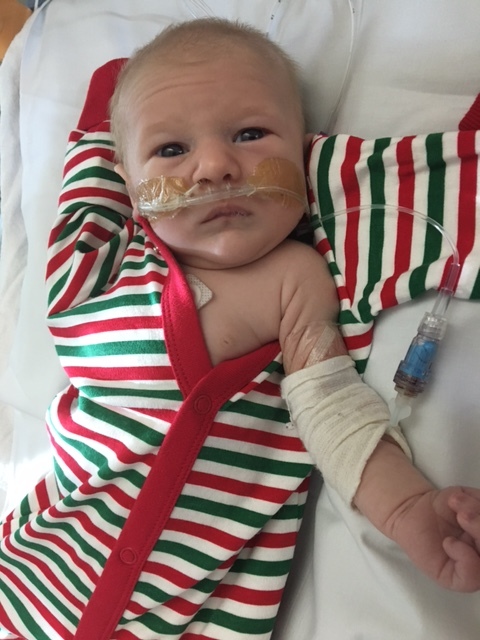
Nicola, Mum of Tom, knows only to well how important a pulse oximetry machine is; if Tom hadn't been tested, his heart condition may not have been picked up and they may have a very different story to tell today
"My son, Tom was born on the 24th November 2015. We had no idea that there was anything wrong with his heart when he was born. The following day he had a routine check by a paediatric doctor who detected a heart murmur- he wasn't concerned and said it would likely resolve by the next day. The paediatrician returned and checked Tom again, this time with a pulse oximeter- his oxygenation was around 80% (levels should be 95-99%). He was immediately transferred to neonatal intensive care. There then followed a very worrying few hours while they tried to establish what was wrong with him. He had transposition of the great arteries (TGA), ventricular septal defect (VSD) and atrial septal defect (ASD). He had to have open heart surgery the following weekwhich luckily was successful. Tom is now a bright, very tall and perfect toddler who will be two in a couple of months.
My husband (Jonathan) and I truly believe that the use of the pulse oximeter saved his life. TGA cases are relatively stable initially until a duct closes and they can then die suddenly. We cannot bear to think what may have happened if we had been allowed to go home on that occasion. Luckily Tom was born in a hospital well equipped to deal with these cases; had he been born in a smaller midwife-led unit we may not have been so lucky".
Thank you to our supporters for helping us raise money so we can launch life-saving projects like this.
Identifying CHD at the 20-week scan through training
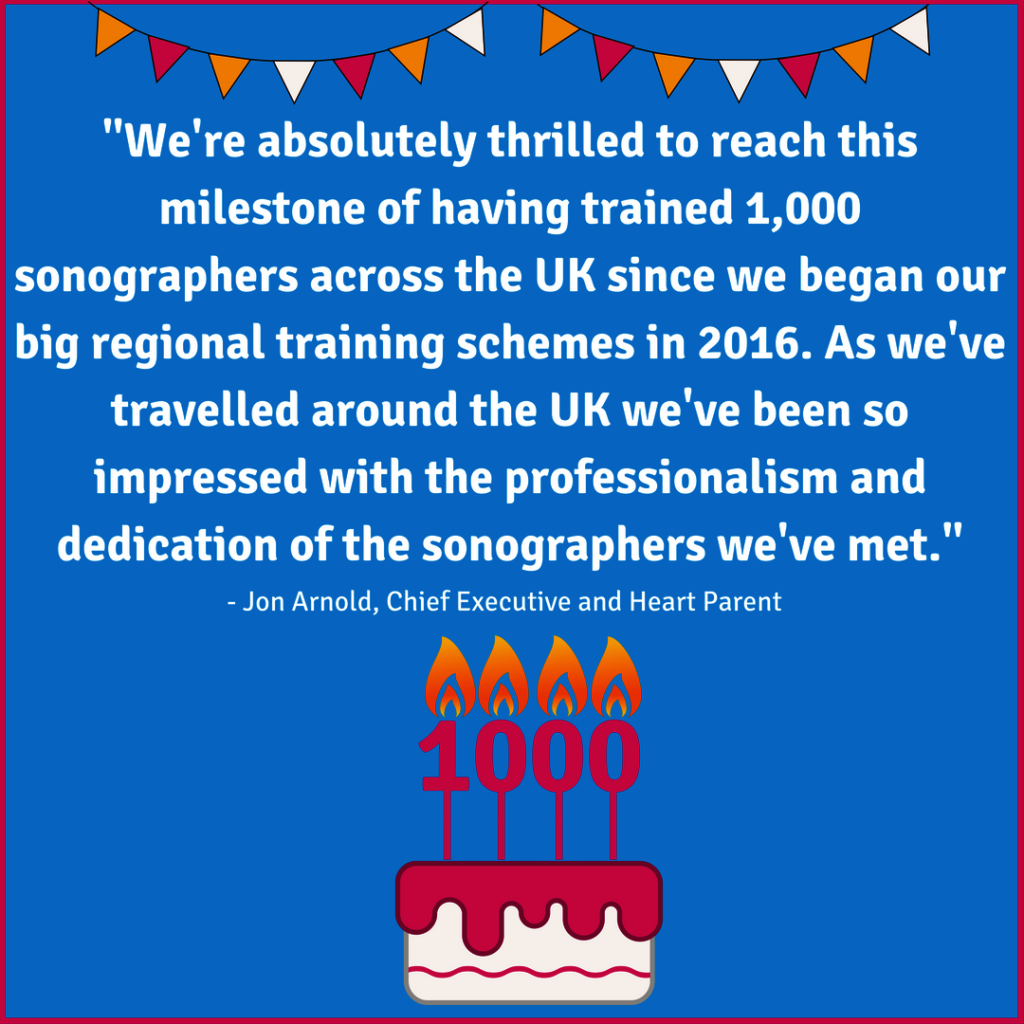
September also sees the launch of our West Midlands training. Over the next two- three months we will be training over 200 Sonographers and 5 doctors in 15 hospitals across the region. This will benefit the 63,000 pregnancies in the region per year and should ensure the 570 Herat babies born are far likely to be detected earlier.
Awareness raising
Lastly this month we have mailed over 7,000 GP surgeries and 3,000 nurseries, targeting both with our Think 20 and think HEART messages. We ask asking health professionals and nurseries working with babies under one year old to learn the 5 key signs and symptoms of a heart problem - if you'd like to know, these are:
H = Heart rate: Is your baby's heart rate too fast or too slowly - it should normally be 100-160 beats per minute?
E = Energy: Is your baby sleepy, quiet or floppy? Are they too tired to feed, or falling asleep during feeds?
A = Appearance: Is your baby a pale, waxy, dusky, blue, purple, mottled or grey colour?
R = Respiration: Is your baby breathing too fast or too slowly - it should normally be 40-60 breaths per minute?
T = Temperature: Is your baby persistently cold to touch - particularly their hands and feet
Knowing the signs really could save a life.
Heart conditions are the most common and deadly birth defect in babies, responsible for 1 in every 13 infant deaths. Tiny Tickers is a small charity but our work is hugely practical. Your support has allowed us to transform the breadth and scope of our work and we are extremely grateful. Thank you.
Please visit our website www.tinytickers.org for more details.