By Elisabeth Gish | Project Leader
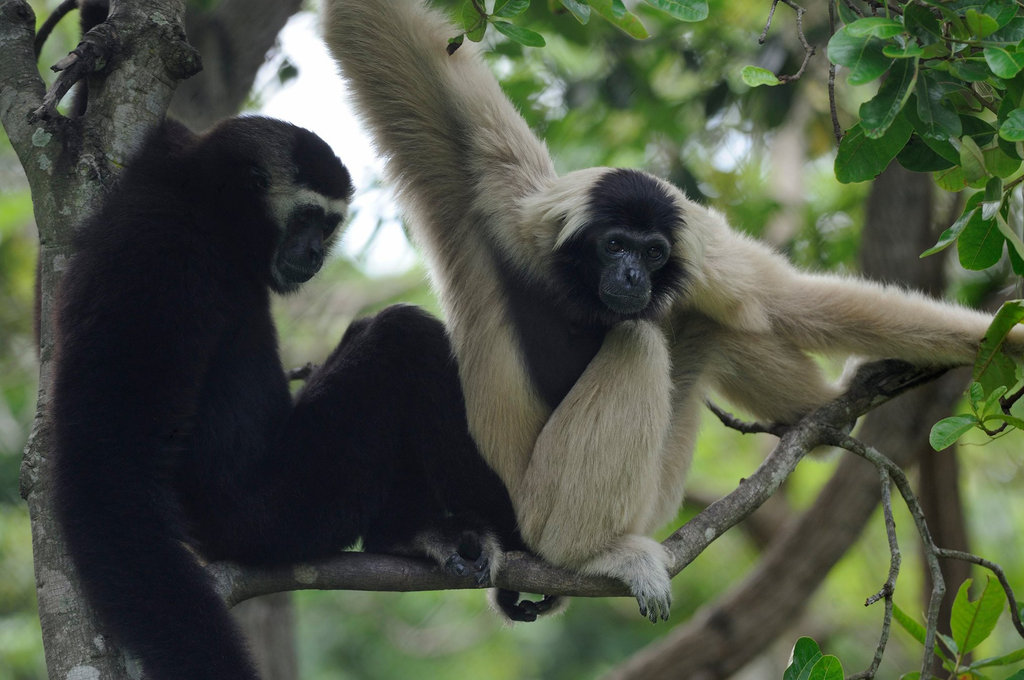
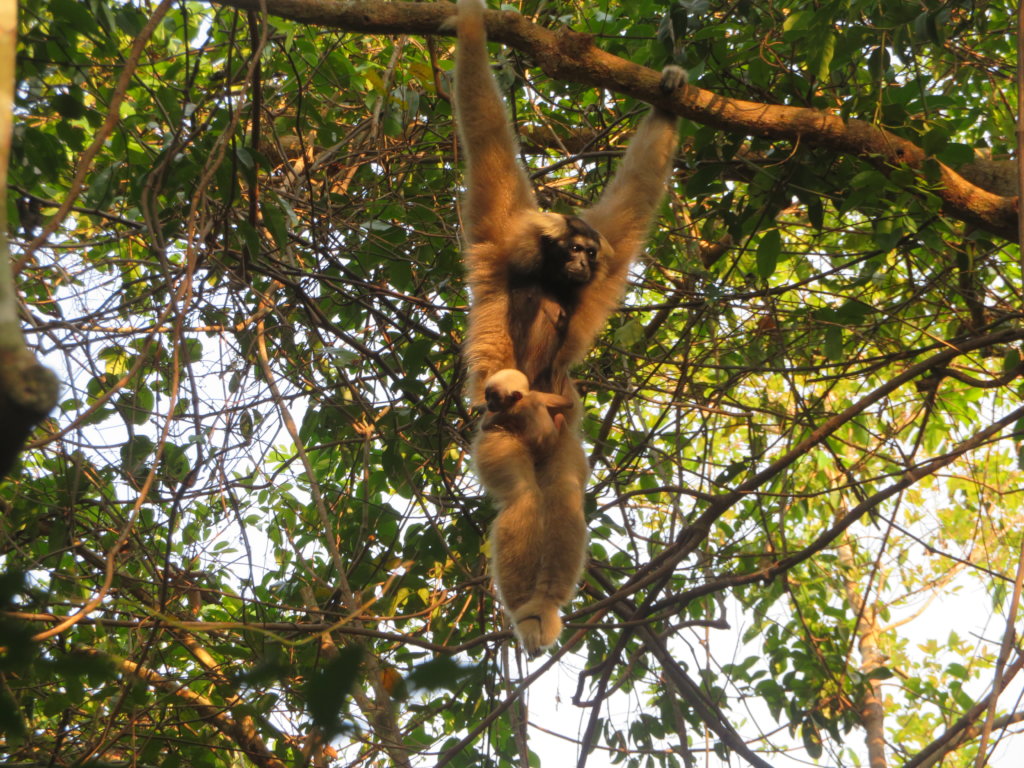
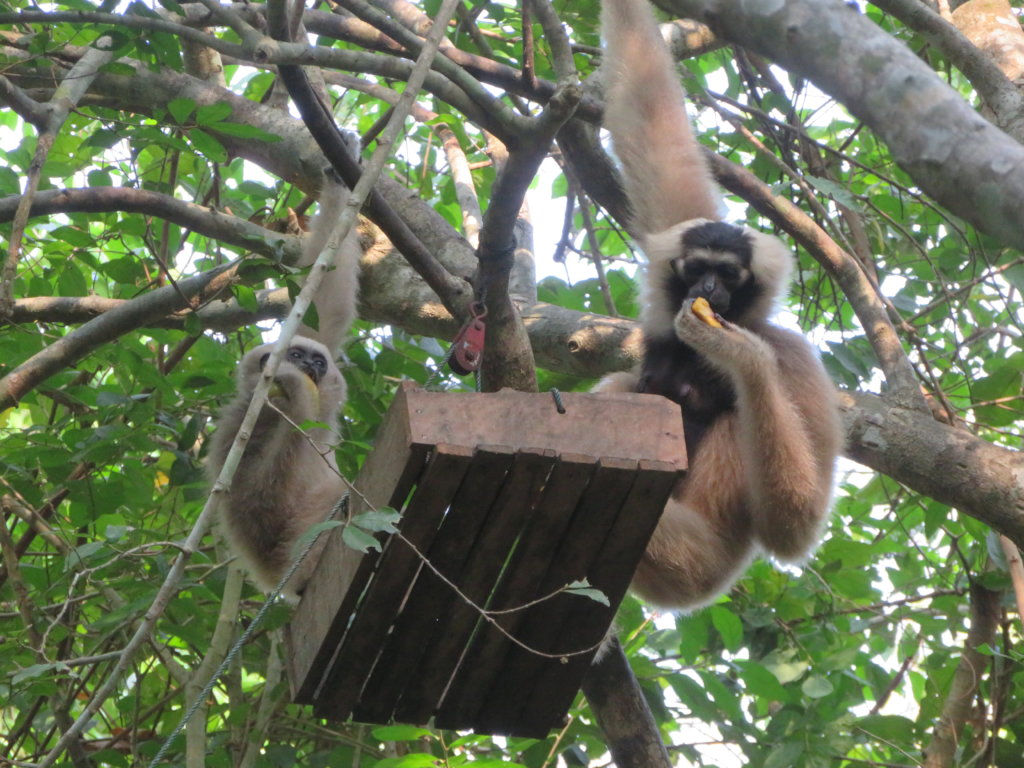
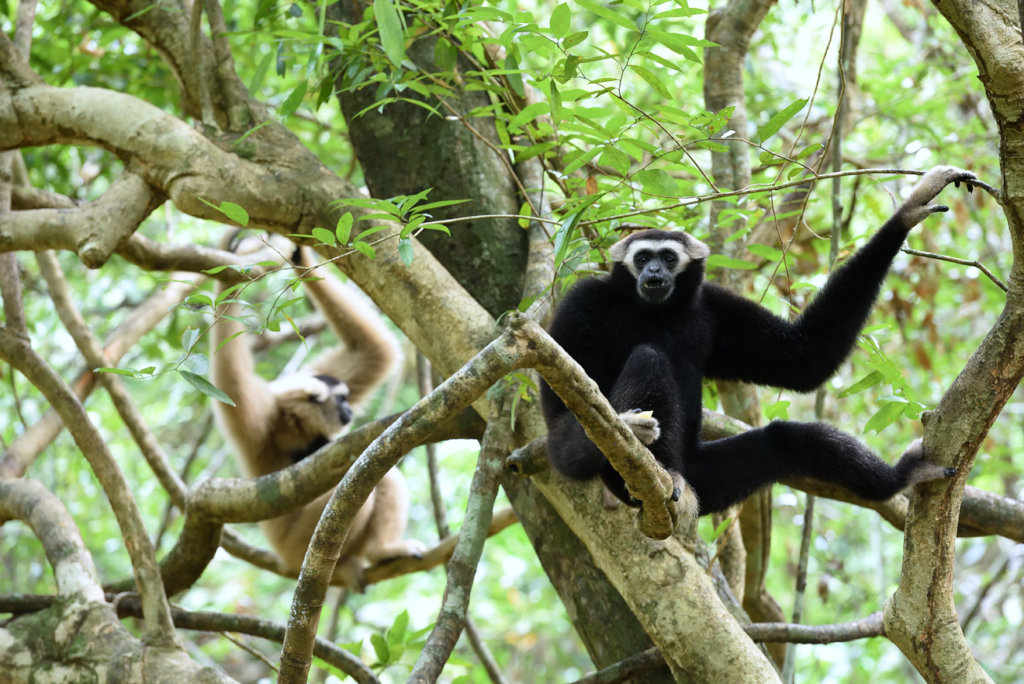
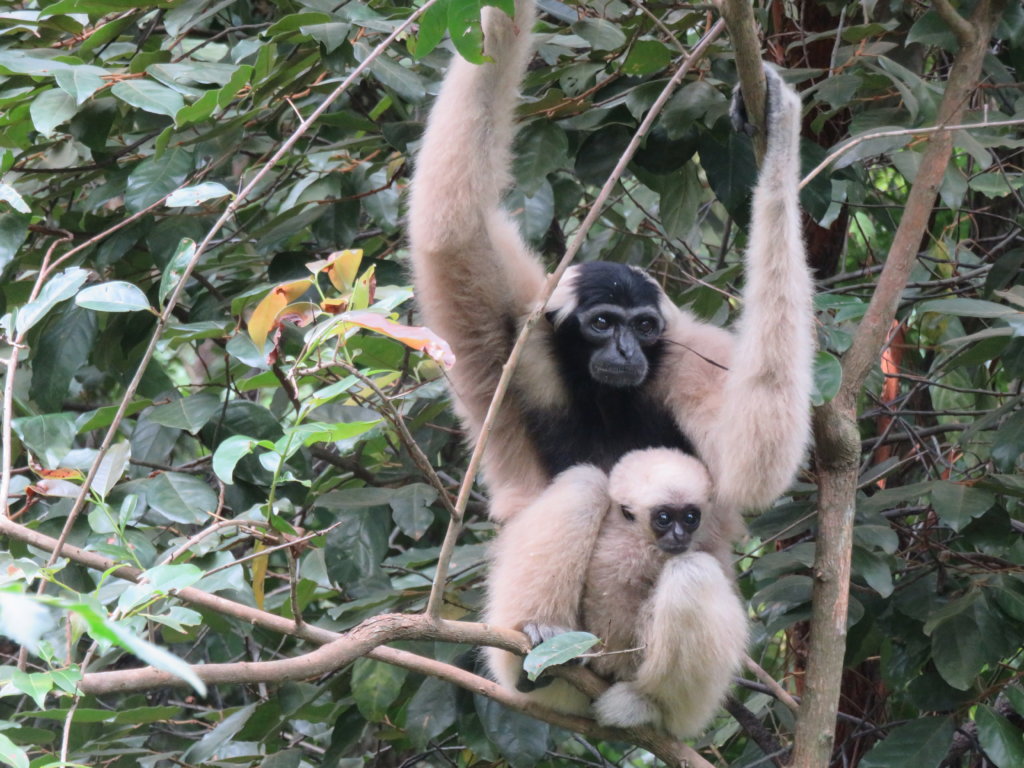
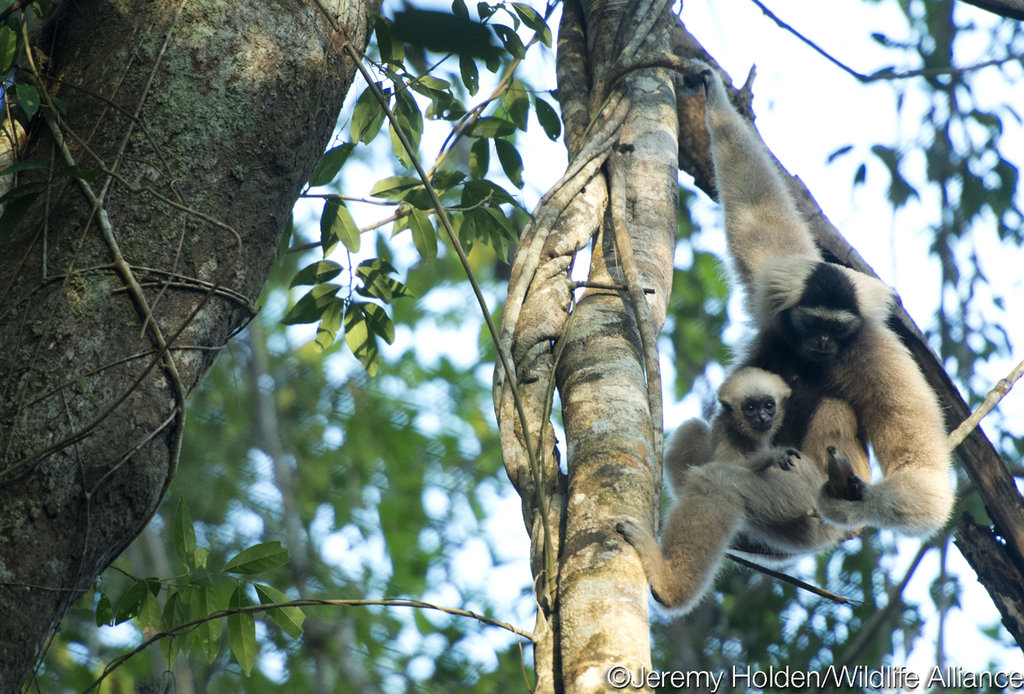
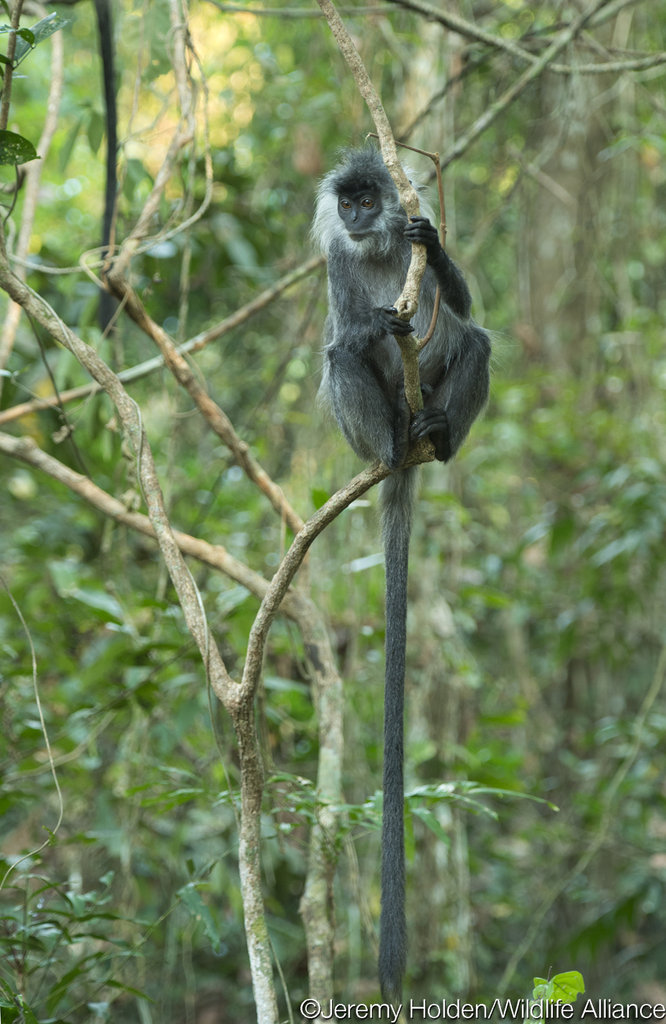
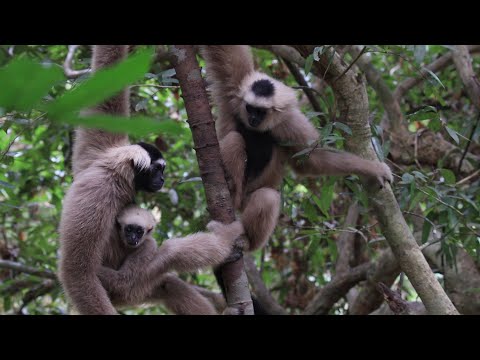
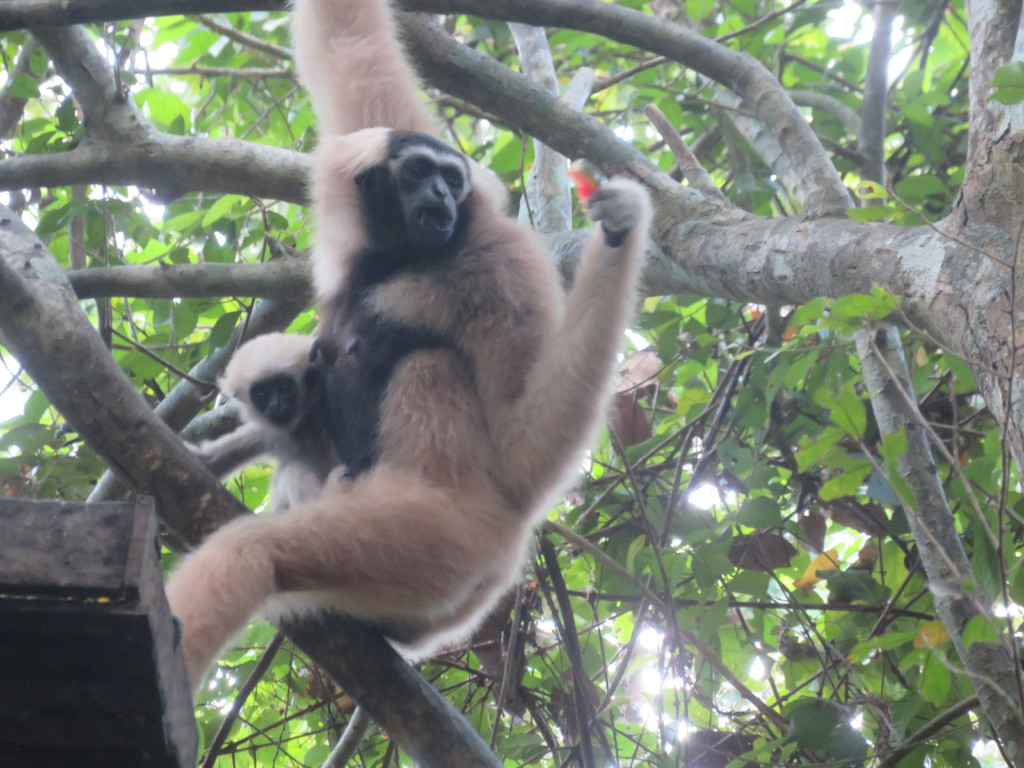
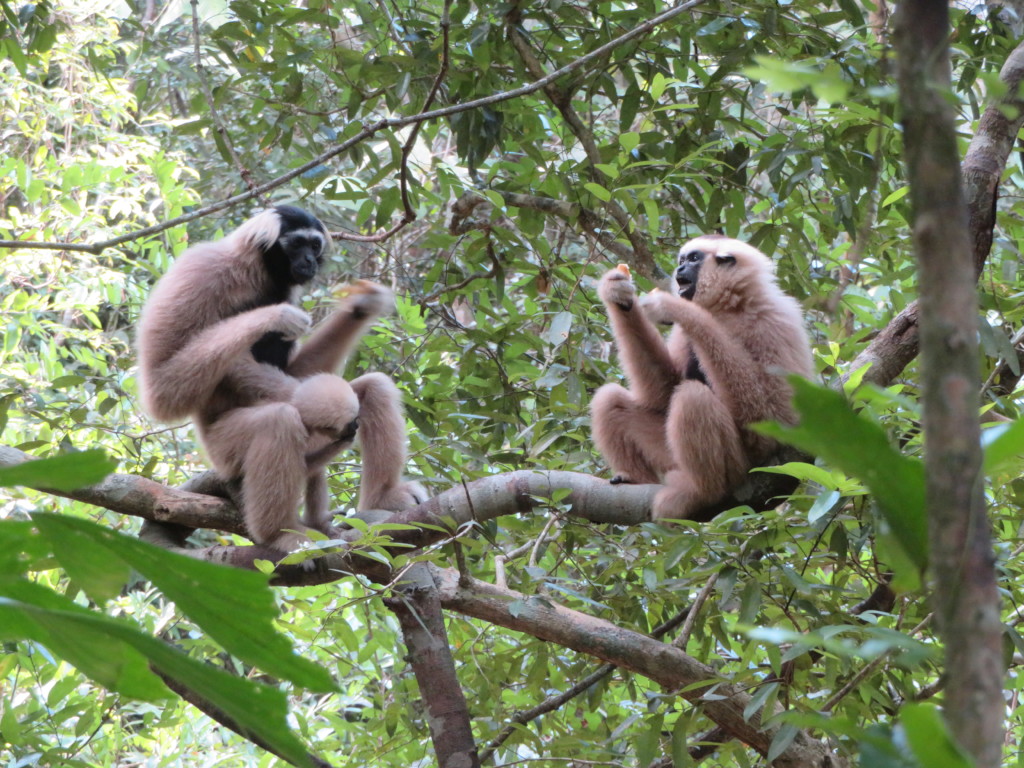
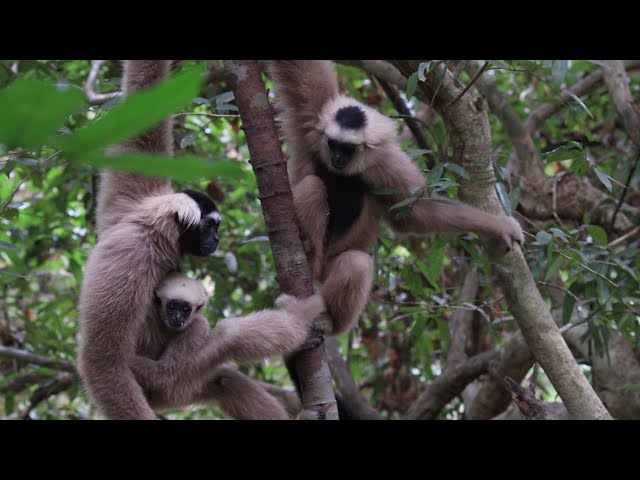
2020 was a landmark year for the growth and sustainability of the reintroduced gibbon population your donations help to foster in Angkor’s ancient forests. The first two pairs of pileated gibbons released by the project each produced a new wild-born infant in 2020! In March, Saranick and Baray, released in 2013, and their two older offspring were joined by new baby Kontes-long (Khmer for ‘water beetle’). We were delighted when, just five months later, Tevy and Bayon had an infant as well! Dun-kow is also this pairs’ third offspring since they were released in 2015. My role with the Wildlife Rescue and Care program is largely office-based, but finally last month I had the opportunity to see these two gibbon families in the forest on a visit to Angkor with my own family over a long holiday weekend. It was truly awesome to see them swinging through the trees, snatching tasty morsels from their feedbasket, and retreating to a branch to eat – and Kontes-long was stealing bites of fruit from mom, just as in the photo above! In addition to new wild-born infants, the Angkor gibbon population grew in 2020 through new releases and pairings.
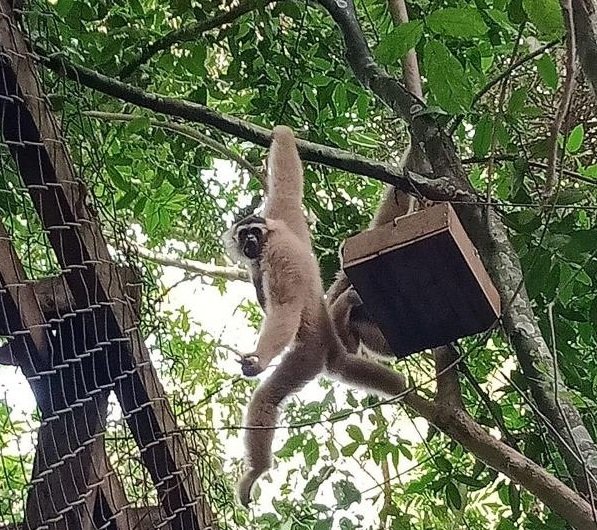
Few organizations conduct soft-releases of rehabilitated wild animals after they have spent time in captivity, including long-term monitoring and management, so this work is experimental by nature and plans are adapted based on what is learned from closely observing the animals post-release. Supplemental food is provided to all gibbons at feedbaskets hung in the trees as a means of daily monitoring and to encourage them to remain in the more remote areas of Angkor selected for each pairs’ release site. A third gibbon pair was released in January 2018, but after less than two weeks it was apparent that they were not suited for life in the forest so they were recaptured and returned to Phnom Tamao Wildlife Rescue Centre. A replacement pair was identified and transported to Angkor in November 2018. After more than a year and a half of acclimatization, this replacement third pair, Pompoi and Borey, was released in July 2020 and both have since adapted to life in the forest and are doing well. In case you missed it in our report last year on Pompoi and Borey, you can watch this video of their release.
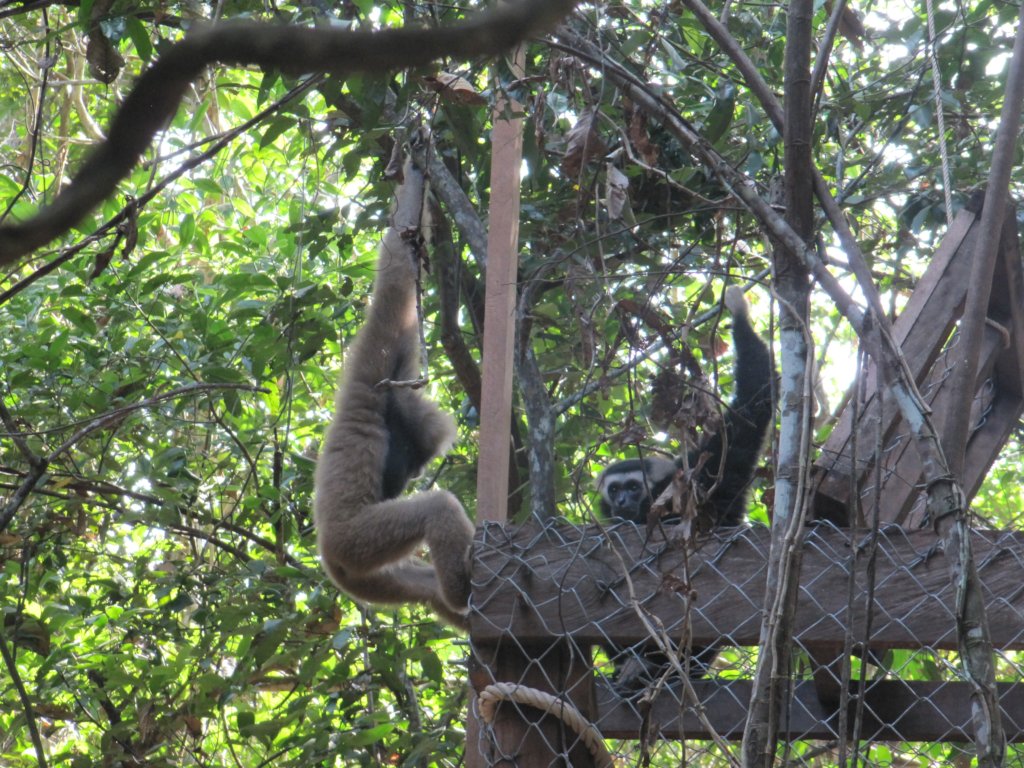
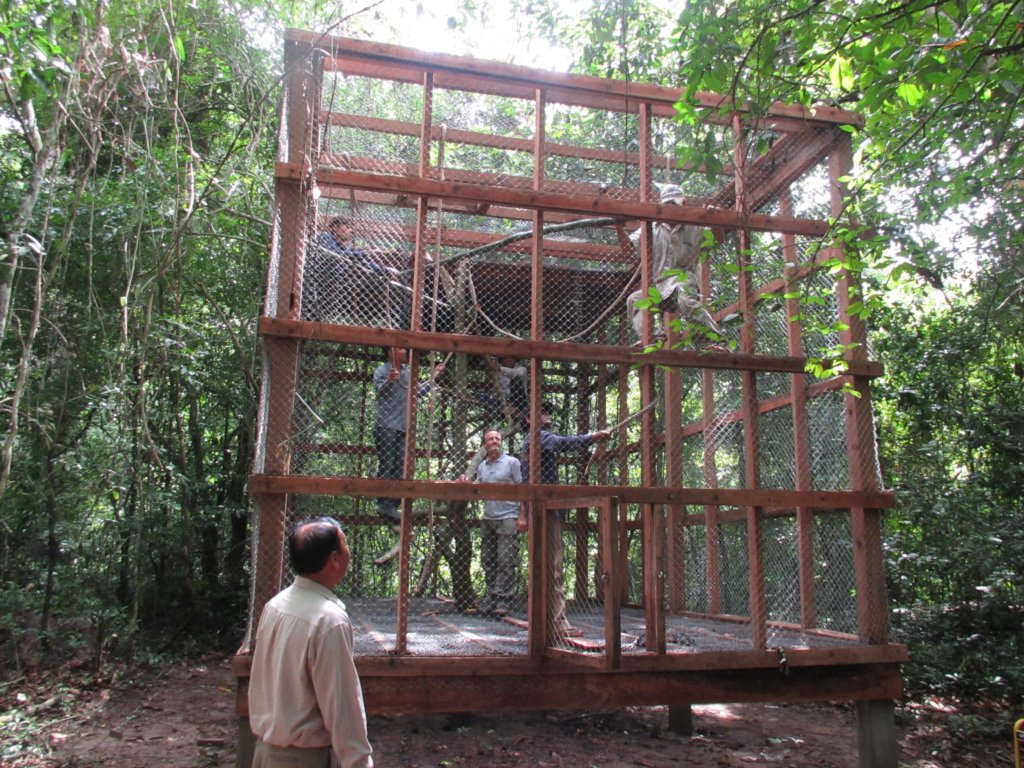
In mid-December 2020, a fourth pair of young gibbons, Bahkeng and Santamea, was transported to Angkor to a new release enclosure constructed at Dai Chhnang Gate. However, within weeks the female, Santamea, was displaying aggressive behavior that makes her unsuitable for release in Angkor. The first gibbon infant born in Angkor, Ping-peeung (which means Web spider) has now reached adulthood at 6 years old and over the past year she was being driven away by her parents, Saranick and Baray. This is natural as gibbons are territorial apes and in the wild each pair claims a range of about 30 hectares of forest and offspring move off their parents’ territory when they reach adulthood. By late December, Ping-peeung had moved away from her family, entered a small village in Angkor, and was sleeping under the eaves of a house roof. On Christmas Day, the team captured her and enclosed her with Bahkeng to replace Santamea as the female in the fourth pair and Santamea was returned to PTWRC. Ping-peeung and Bahkeng get along extremely well despite their age difference and they will be released after a period of bonding and acclimatization.
This situation presents a solution to a challenge anticipated from the very start of this project – as the gibbon population grows, how will the wild-born offspring of released pairs find mates? Angkor was selected in 2013 as the reintroduction site because it is extremely well-protected, it had no existing gibbon population that would drive away released pairs and the large old-growth forest is big enough to sustain an expanding population. However, these conditions also make it difficult for the first generation offspring to find mates. Initially, we planned to transfer single gibbons from Phnom Tamao and release them at Angkor as potential mates once the offspring of released pairs reached adulthood. But as time went by and the team observed the behavior of the first two pairs released, it seemed very likely that the parents would just chase away any potential suitors introduced nearby. Instead, we decided to release additional pairs and let nature take its course, trusting that offspring from different families would hear each other’s calls whooping though the forest, find each other and create new pairs. The circumstances with the fourth pair presented an alternative method – capturing wild-born Ping-peeung and moving her to an enclosure in a different part of the forest with a rehabilitated captive-born male from Phnom Tamao provides her with both a mate and her own territory in Angkor.
The Angkor gibbon population now stands at 6 released adult pairs and five wild-born offspring living in the forest, plus Ping-peeung and Bahkeng in their pre-release enclosure. Creating a reintroduced wildlife population that is self-sustaining is a long journey, made possible by donations from generous supporters like you. We look forward to continuing to learn from these amazing creatures and sharing the next chapter in the story of the Angkor gibbon families with you.
Links:
Project reports on GlobalGiving are posted directly to globalgiving.org by Project Leaders as they are completed, generally every 3-4 months. To protect the integrity of these documents, GlobalGiving does not alter them; therefore you may find some language or formatting issues.
If you donate to this project or have donated to this project, you can receive an email when this project posts a report. You can also subscribe for reports without donating.