By Nick Marx | Director, Wildlife Rescue and Care
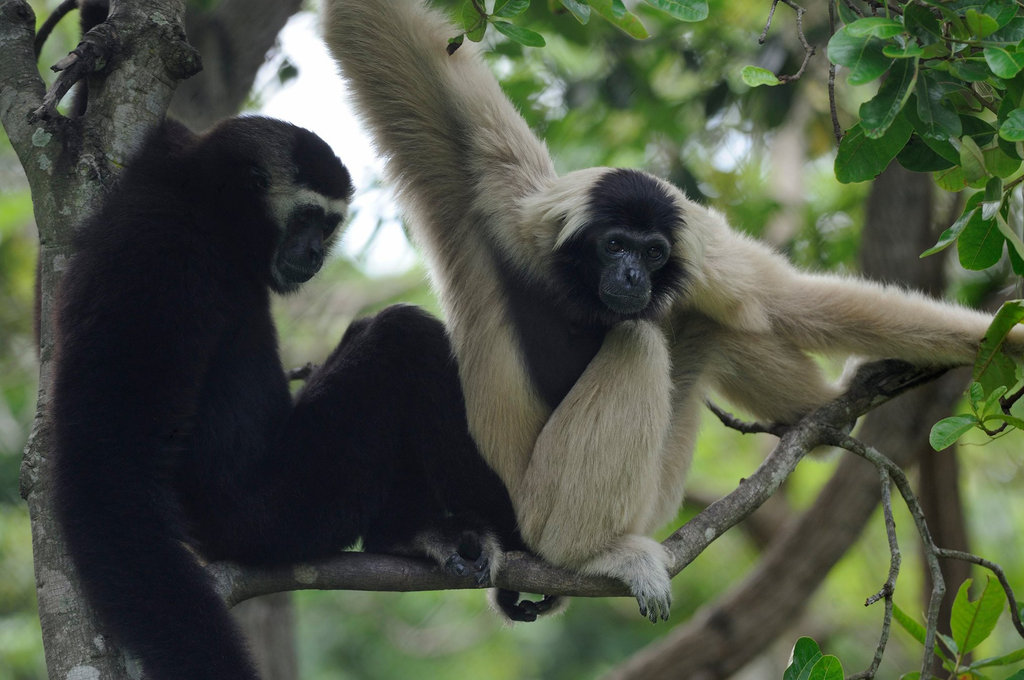
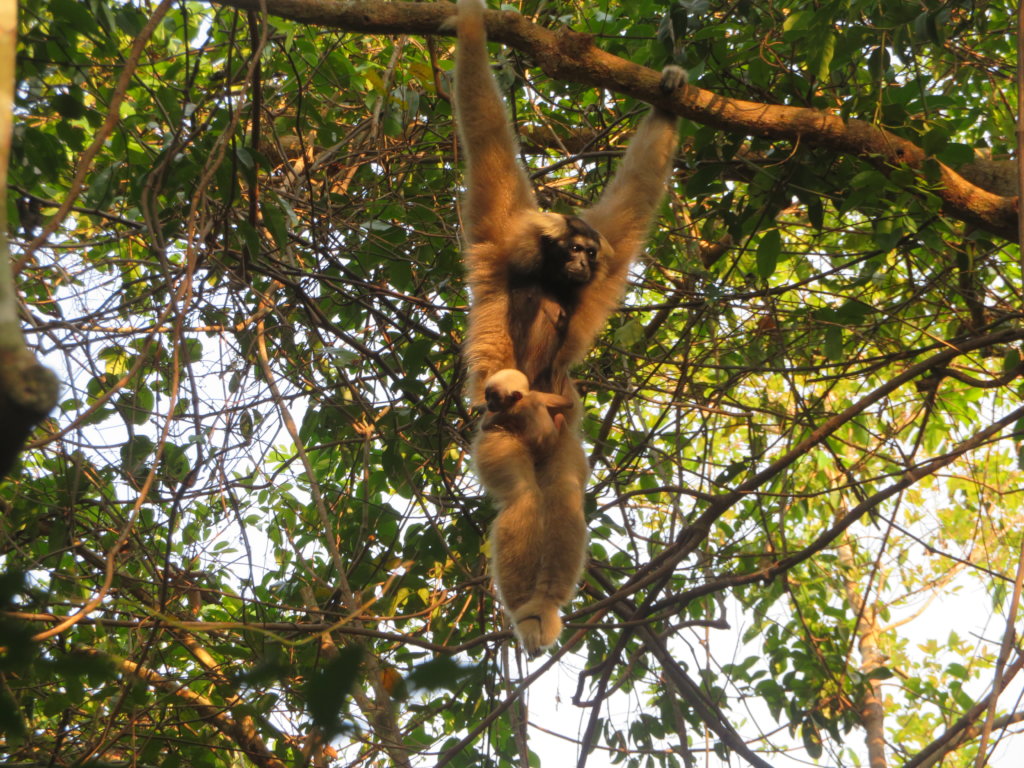
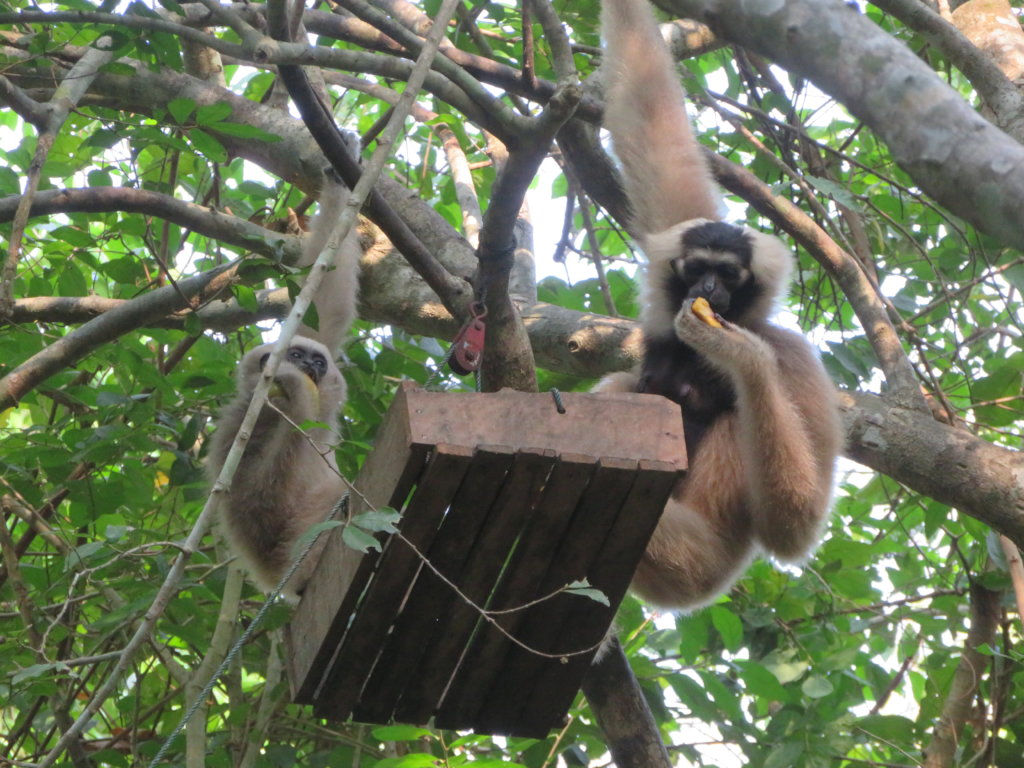
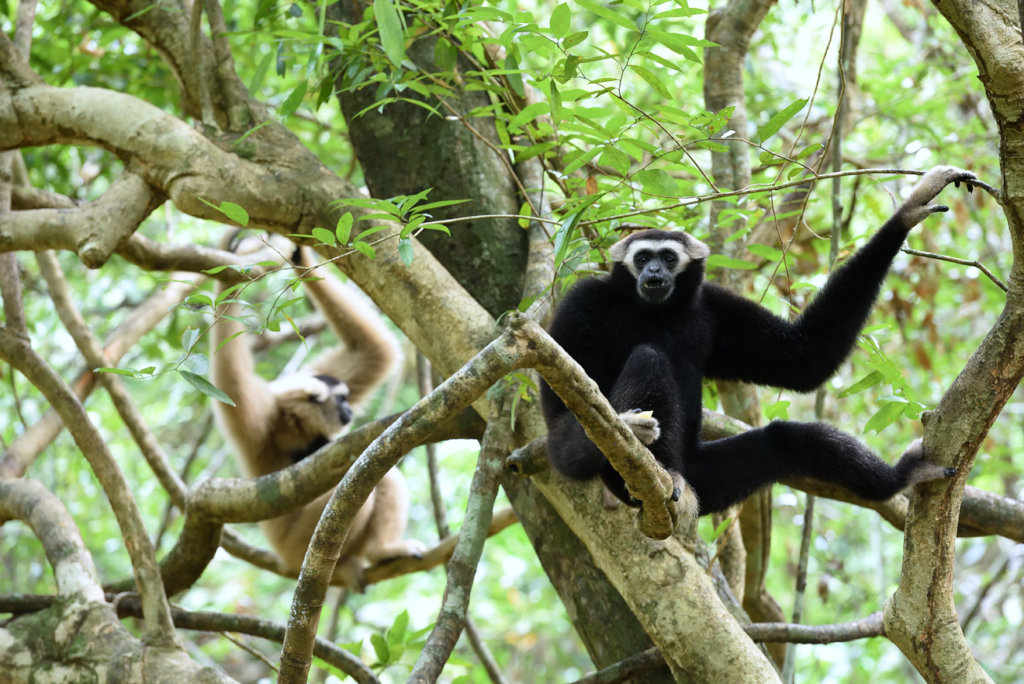
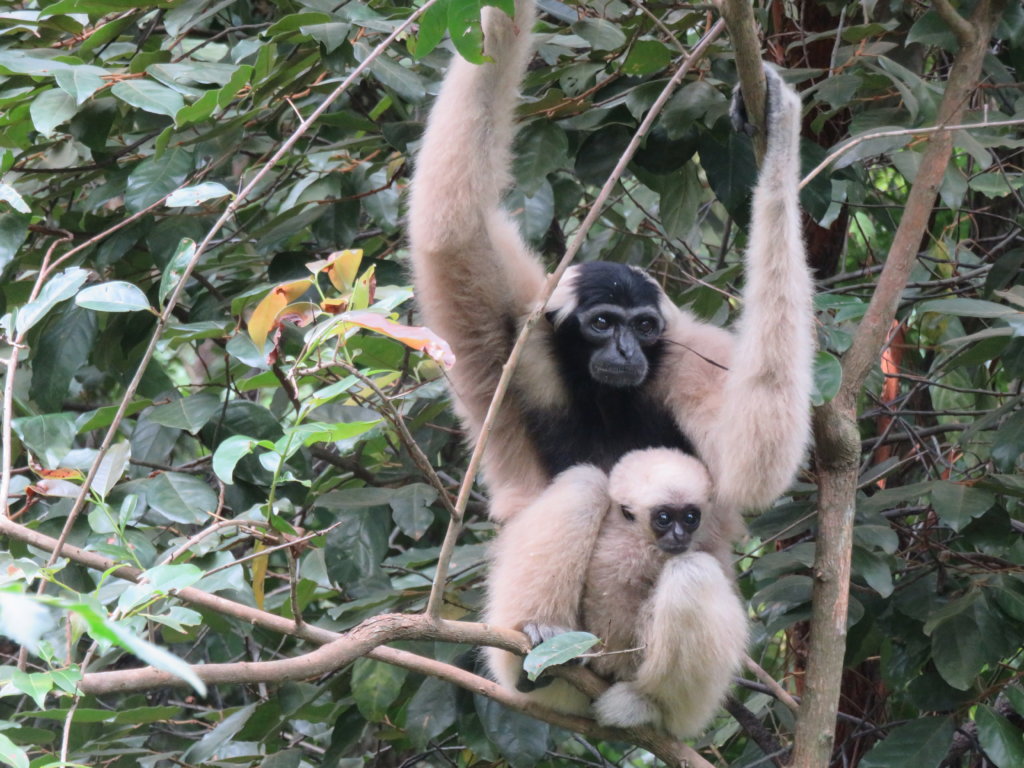
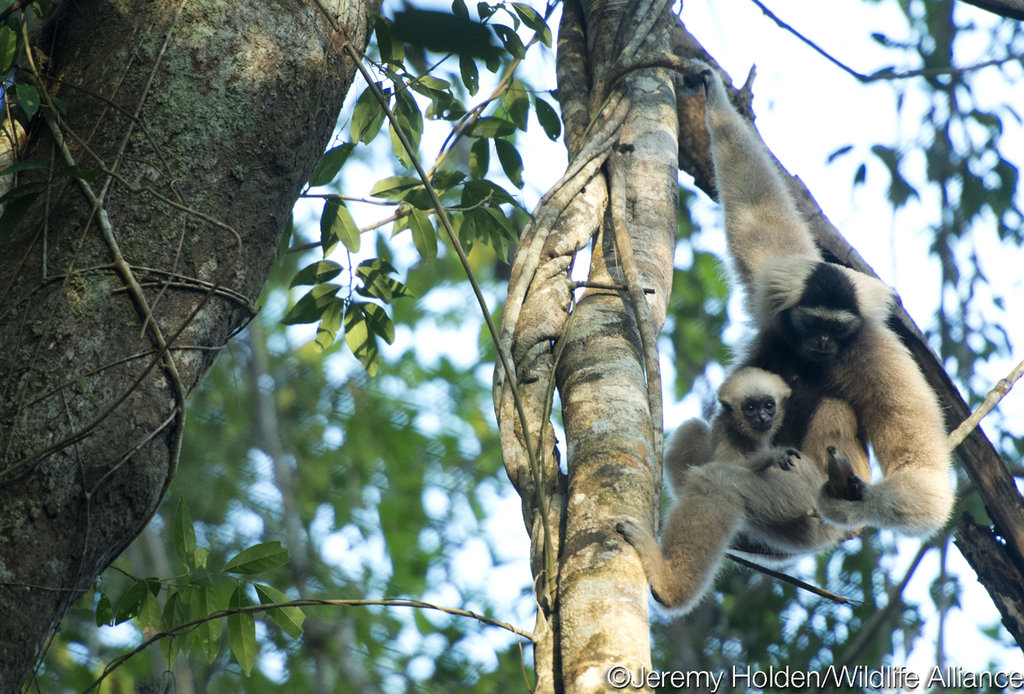
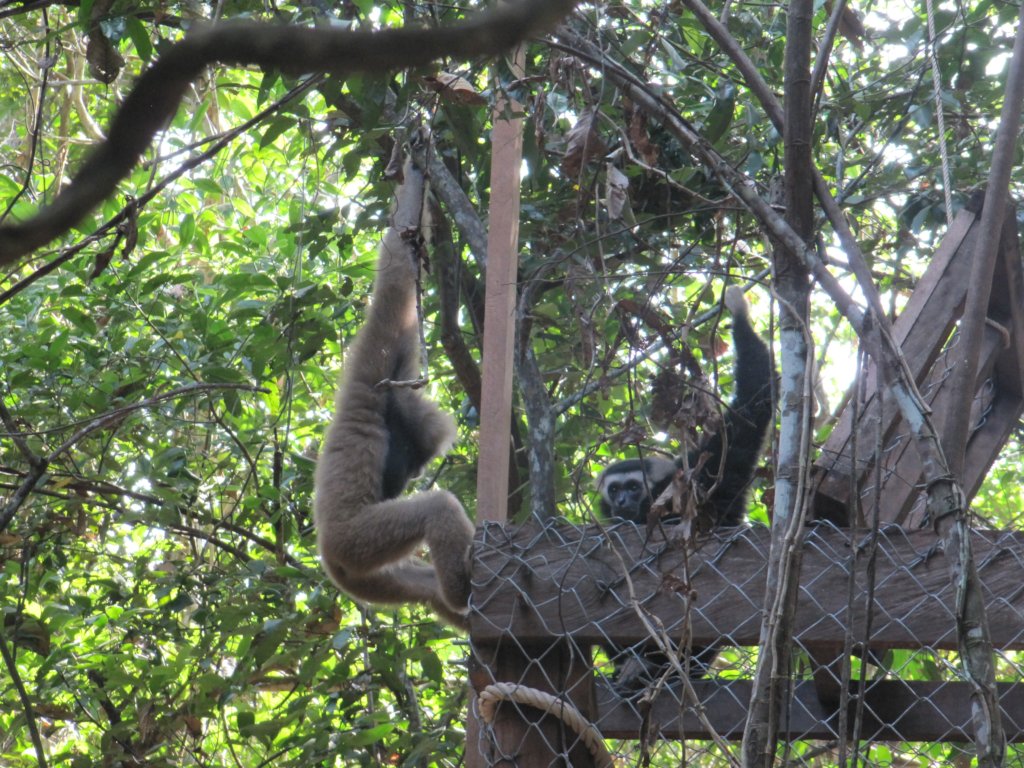
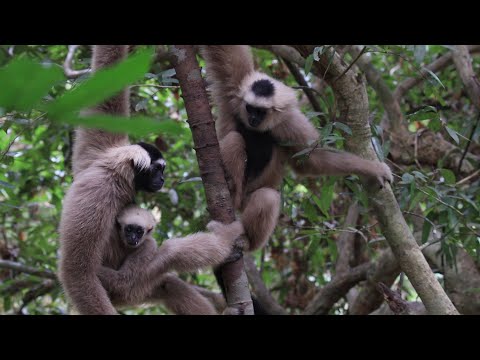
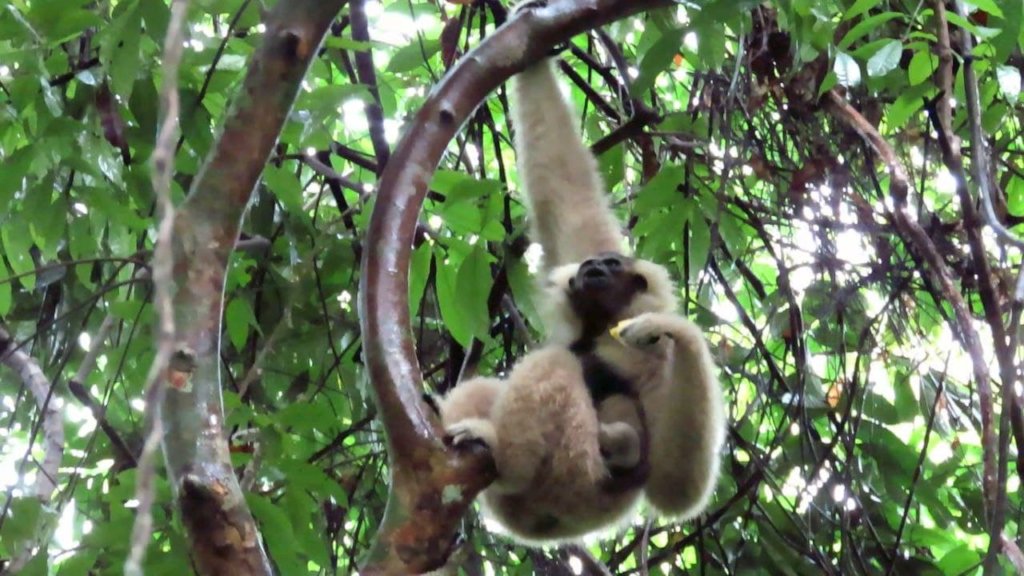
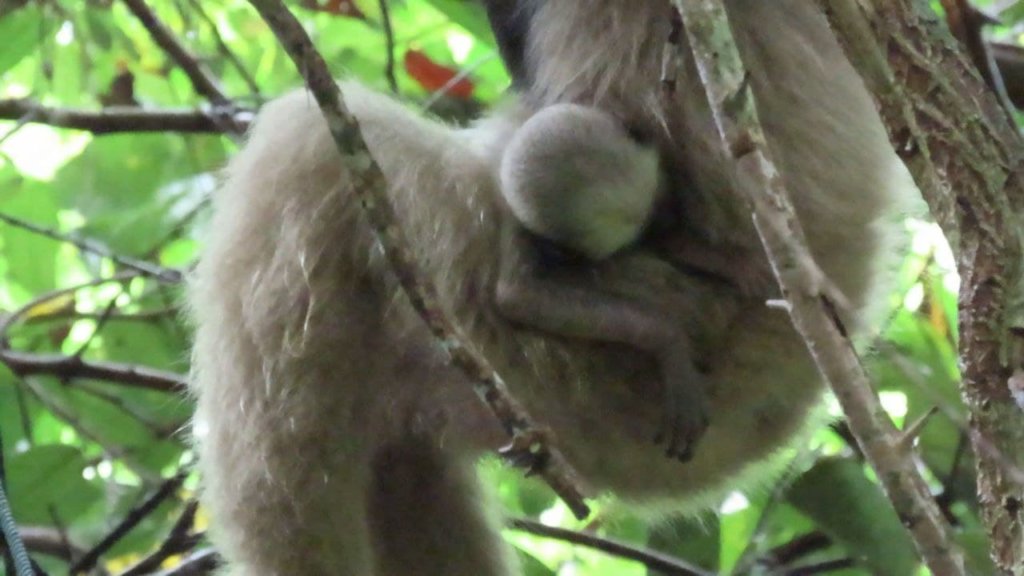
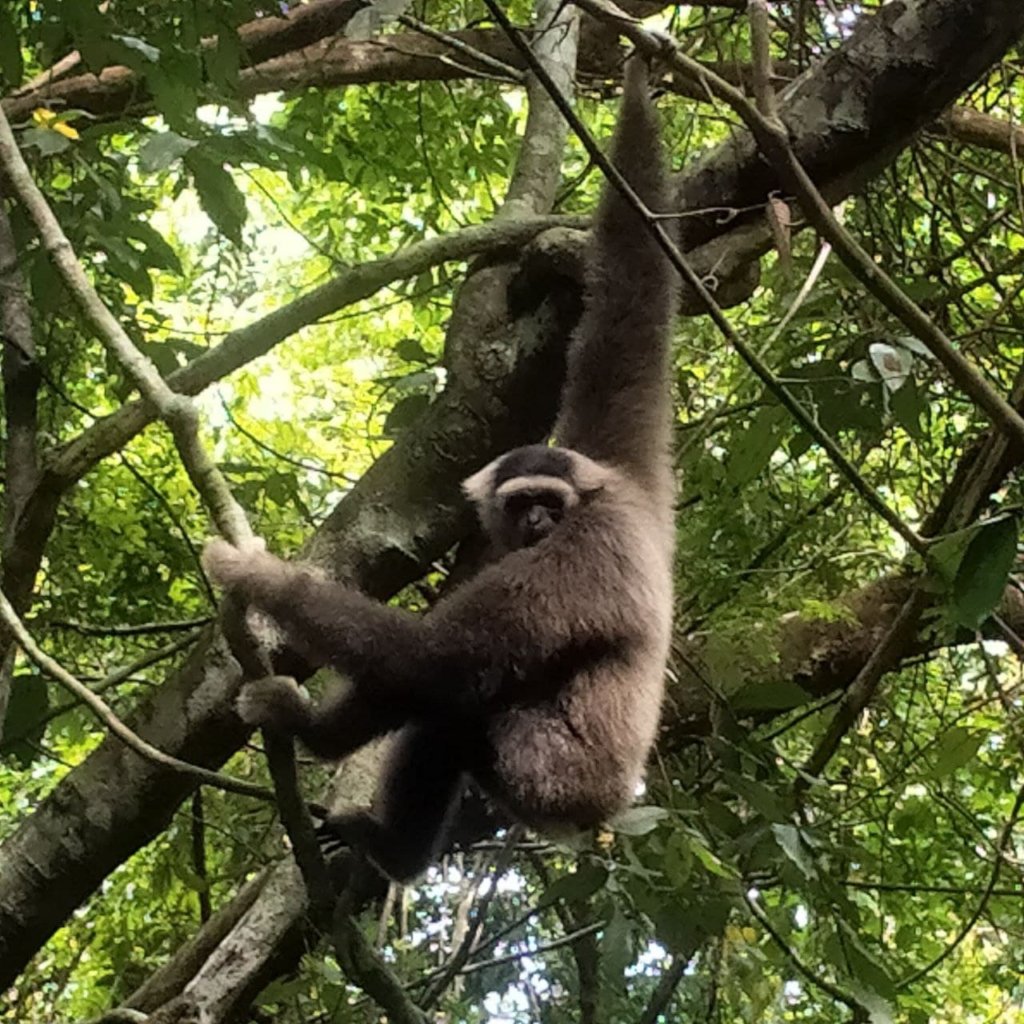
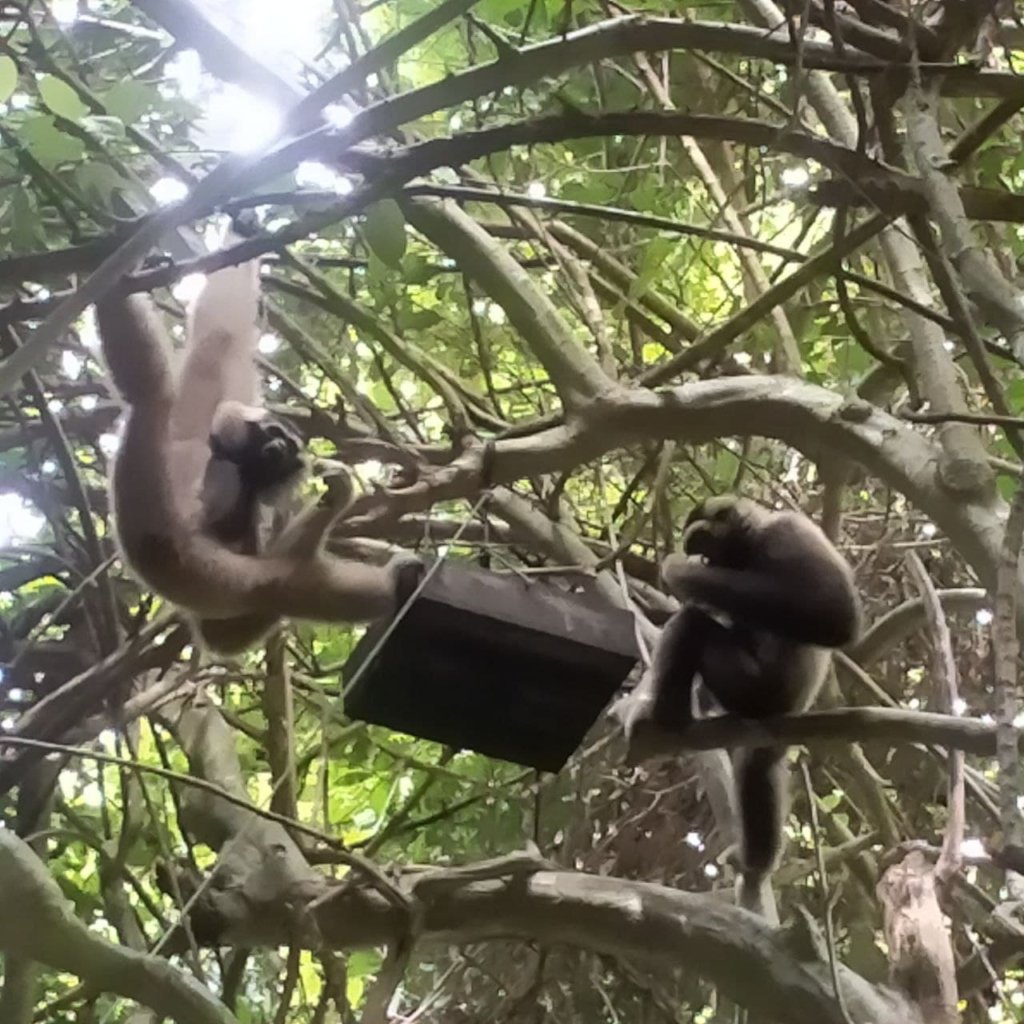
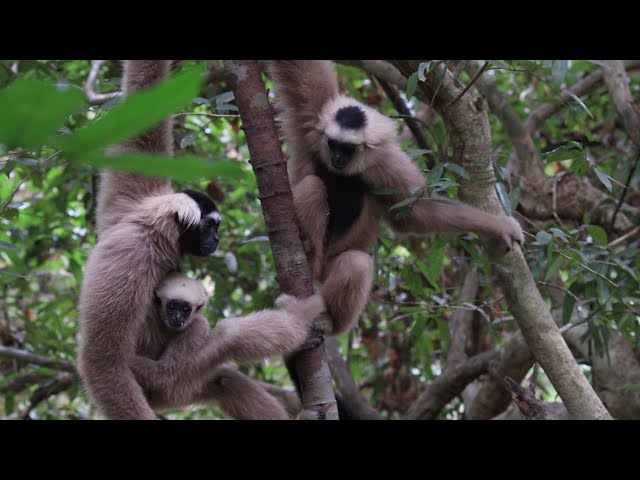
The third gibbon pair released in Angkor, Borey and Pompoy, had their first baby in September! In keeping with the theme of naming gibbons wild-born in Angkor after insect species, the new baby was christened Mey-ambaugh (butterfly in Khmer). It’s hard to get good photos of the little one, who is always clinging to mother Pompoy, but another shot is included below. Mey-ambaugh is the 7th gibbon born in Angkor, and the newest branch of this gibbon family tree. Not much to say so far about the baby, but we can share the fascinating story of Mey-ambaugh’s maternal grandfather.
All of the pileated gibbon pairs released in Angkor come from Phnom Tamao Wildlife Rescue Centre and were either rescued from the illegal wildlife trade or born at Phnom Tamao to rescued parents. In 2006 (I think it was) a pair of adult pileated gibbons were rescued and brought to the Centre. They had been hand-raised, so were humanized and could never be released. The pair arrived together, and got on extremely well and there was no reason to split them up. After completing quarantine, we moved them to a large, natural enclosure. Unfortunately, shortly after the move the male broke his arm extremely badly. Back then, the veterinary department at Phnom Tamao was not equipped to treat such a bad injury so we transported him to a private veterinary clinic in Phnom Penh, where Dr. Arnau Demarti operated to pin the damaged limb. We then returned him to the Quarantine section for care and surveillance and christened him Pompoi (yes, the same name his daughter would one day be given, just spelled differently).
Unfortunately, the fracture was serious, there was little intact skin to work with, and the stitches broke open repeatedly during the ensuing months. Each time we returned Pompoi to the clinic and the wound was re-stitched, only to tear open again almost immediately following his return to Phnom Tamao. Pompoi was kept on antibiotics to guard against infection and had to be recaptured frequently to re-suture his wounds. This happened so often that he ultimately ceased to even resist the net as it descended over his head. Finally, Dr. Arnau suggested we amputate the arm as there was not enough skin for the injury to heal properly. I thought long and hard about this. I did not want to proceed – a one-armed gibbon would be seriously handicapped! Instead, I suggested that the vet suture the skin, but leave the steel pin external, allowing the skin to heal underneath it. Dr. Arnau did not like the idea, understandably feeling that this would leave an entry point for infection. However, he did as I requested and we returned Pompoi to Quarantine.
In 2007, the Cambodian Forestry Administration, which is the government agency responsible for managing Phnom Tamao, suddenly ‘ceased cooperation with Nick Marx’ and my Care for Rescued Wildlife Program at the Centre was suspended. There is no need to go into detail, suffice to say exactly one year later I was invited to return. There was important work to be done, which had not been attended to in my absence. Among many other things, I wanted to find out what Pompoi was up to and how his arm had healed.
I was sad to learn that Pompoi’s original partner had been exchanged, passed to a menagerie with a dubious reputation in the UK. Pompoi was still in the Quarantine section, and while his arm still had the pin outside the skin it was scarcely visible now, mostly covered with thick black fur, and seemed to have healed completely! A friend of mine who is a veterinary surgeon was visiting Cambodia at the time and had brought a portable x-ray machine. He x-rayed Pompoi’s arm and found that inside the bone had regrown and fused – around 3 centimeters – so we gently removed the pin.
Pompoi was taken to a larger enclosure in the Rehab section, into which visitors are not allowed, where all gibbons that are free from pathogens are housed, in the hope that in the future either they or their offspring might be able to be released. Pompoi had not been there for very long, when he managed to break his arm again! The injury was less serious this time, we repaired it and built a modified, lower enclosure for him in the hope that he would be less able to damage himself. We paired him up with a new female and they bonded.
Time passed and in 2013 we began this project to reintroduce gibbons to Angkor. Two years later, Pompoi and his mate produced a baby girl, which they cared for well, and we named Pompoy after her father. Pompoi was hand-raised by the people before he was rescued from the illegal wildlife trade and so is very comfortable with humans. However, his daughter, Pompoy, was naturally raised by her own mother and grew up more fearful of people, making her suitable for release.
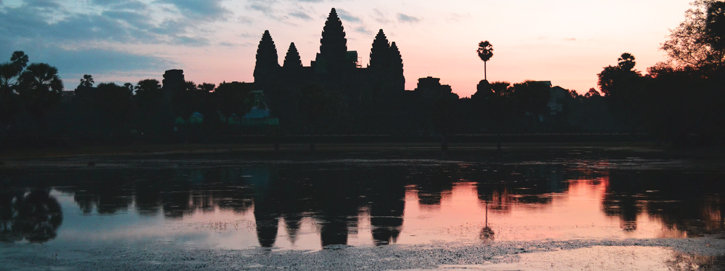
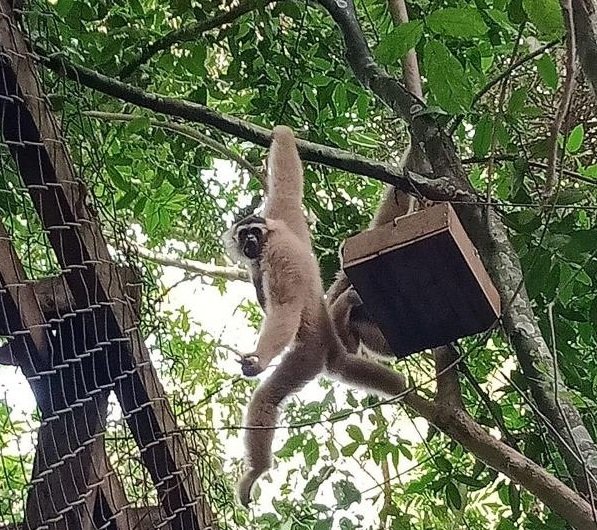
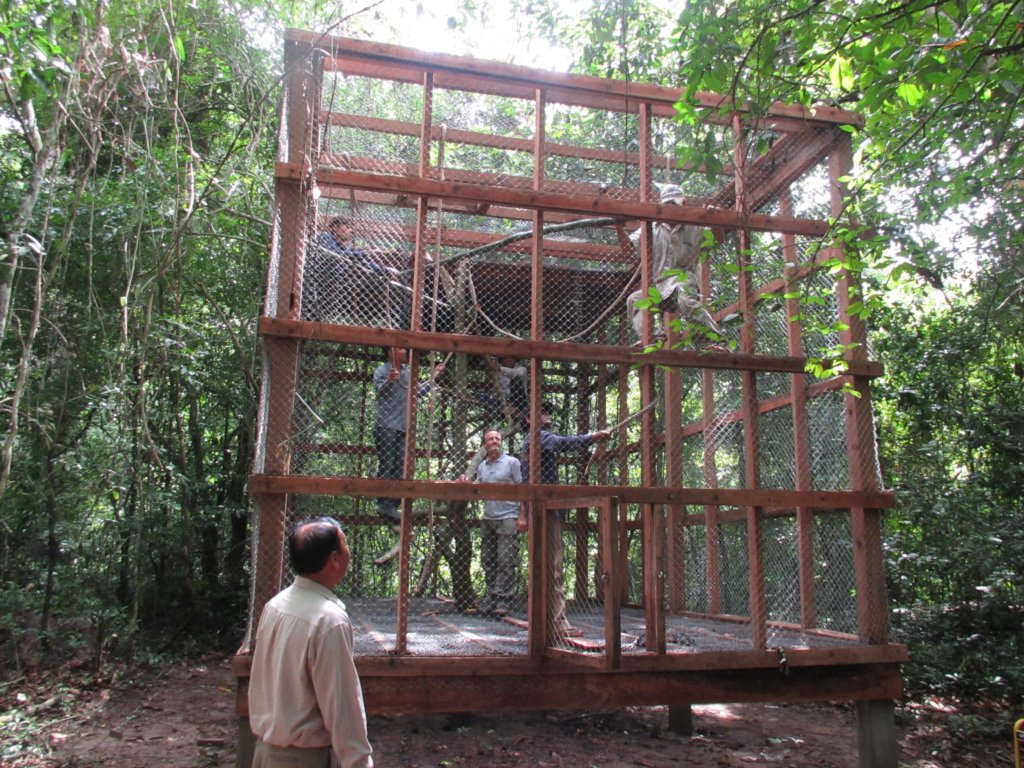
Then, in early 2018, we needed to select a new pair of gibbons to release in Angkor. Pompoy, although a little young for immediate release, seemed a perfect candidate. She was paired with a male gibbon of around the same age, Borey, and they shared an enclosure at Phnom Tamao. In November 2018, the pair were transported to Angkor to acclimatize at their release site near Takao Gate. We released them in July of last year. Now they are the proud parents of a two-month old baby gibbon, born in the ancient forests of Angkor. Mey-Ambaugh will grow up swinging through the trees and, when adult, we hope will produce Pompoi’s great-gandchildren, continuing to expand Angkor’s gibbon population.
The process of reintroducing gibbons to Angkor is long and your donations help make this work possible. Thank you so much for your support.
Our year-end fundraising goal is to raise $600 towards the $4,000 cost of building another gibbon enclosure at a new release site in Angkor. If you plan to support us during this season, please consider making a donation on GivingTuesday – November 30 (from 00:01AM-11:59PM EST) – GlobalGiving will match all donations of up to $2,500 from their $1 Million Incentive Fund!!
Project reports on GlobalGiving are posted directly to globalgiving.org by Project Leaders as they are completed, generally every 3-4 months. To protect the integrity of these documents, GlobalGiving does not alter them; therefore you may find some language or formatting issues.
If you donate to this project or have donated to this project, you can receive an email when this project posts a report. You can also subscribe for reports without donating.