By Andrea Wogsland | Development Director
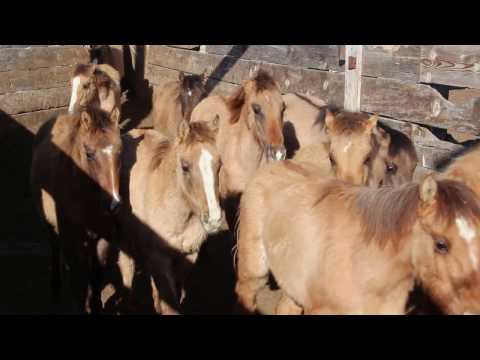
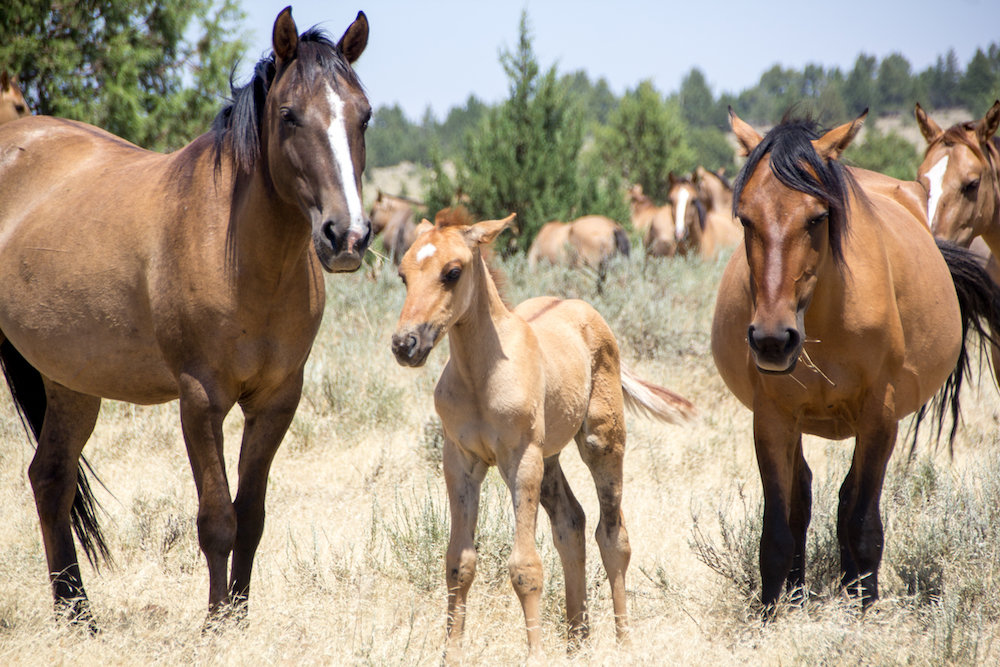
Recently on a beautiful warm day, Neda along with a volunteer and RTF tour coordinator, visited the Gila herd in Northern California. Neda and team found a herd full of vitality and playfulness, among diverse age groups.
From Neda’s notebook—
“The horses are now utilizing more of the available acreage. Of the 1,800 acres, some of it is good meadow, with juniper and sage, and other areas are more wooded featuring pine trees and a beautiful lake. It was gratifying to see them using more of the grazing land. Their hoofs look great, rocks are nature’s farriers!
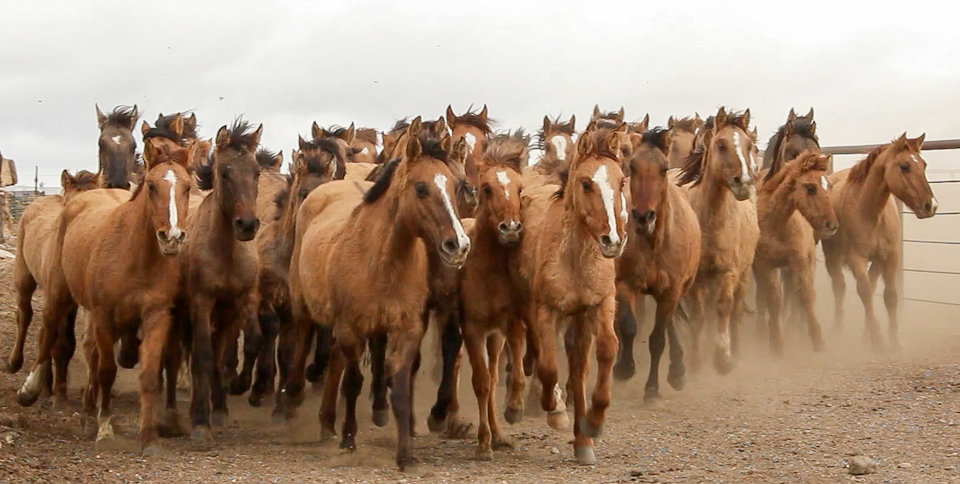
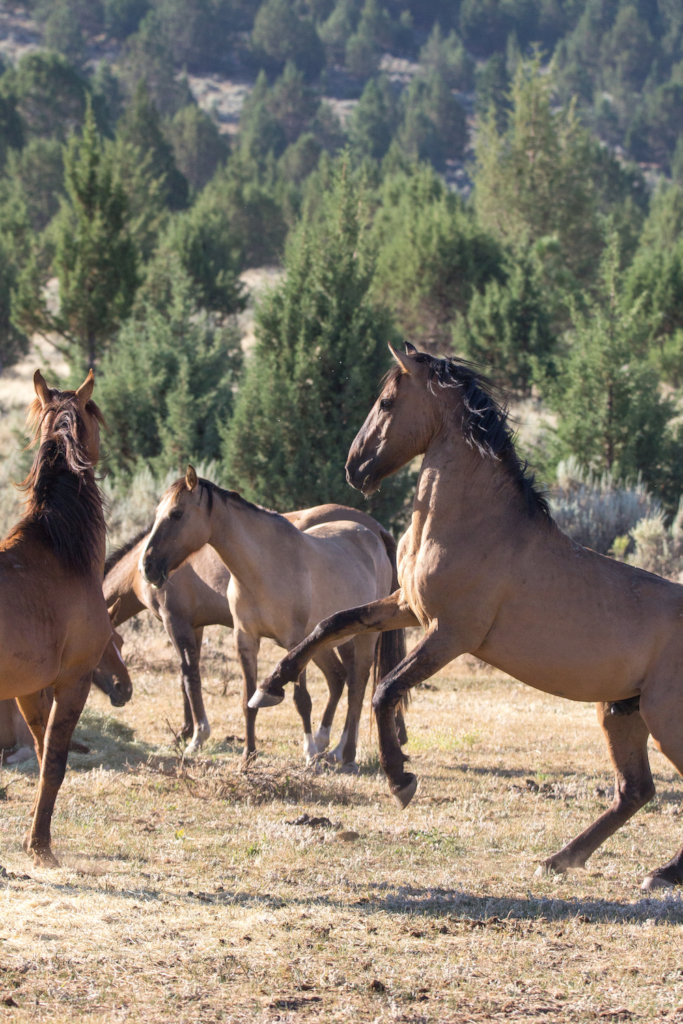
The horses are fat and shiny. The males are still working things out amongst each other, with politics and standoffs from time to time. For the most part, they work things out successfully. There is still occasional “conversation” between the males going on as they move throughout the area.
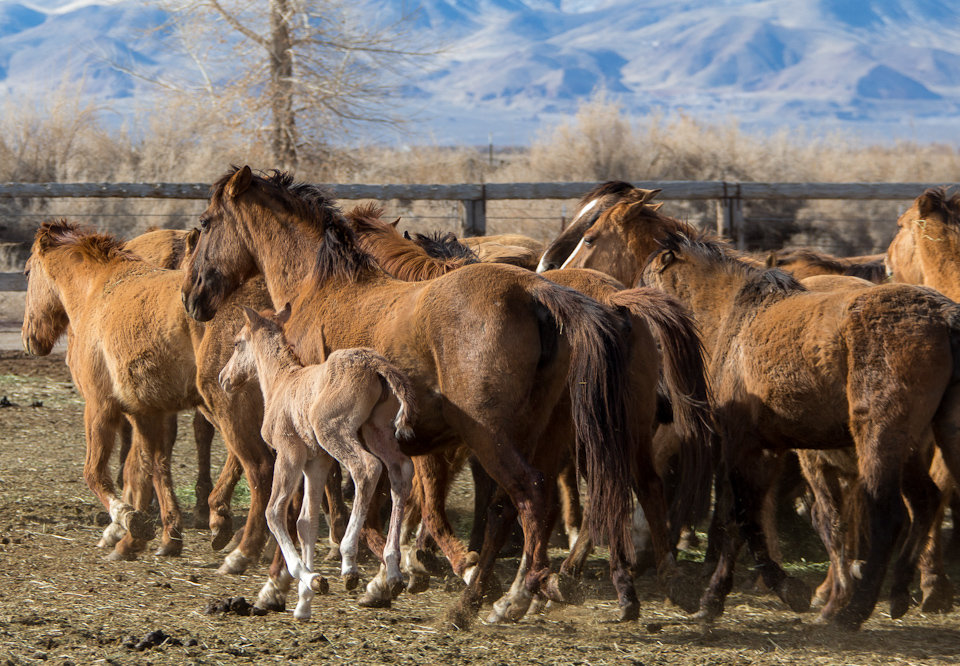
Two baby foals – a colt named Forest and a chestnut filly whose name eluded us at the time were observed in good health. Their yearling brothers and sisters play really well together. We watched an intense game of tag. The young horses are very athletic, running up mounds of dirt and winding between trees. We watched them playing and roughhousing while the rest of the herd was resting in the late morning.
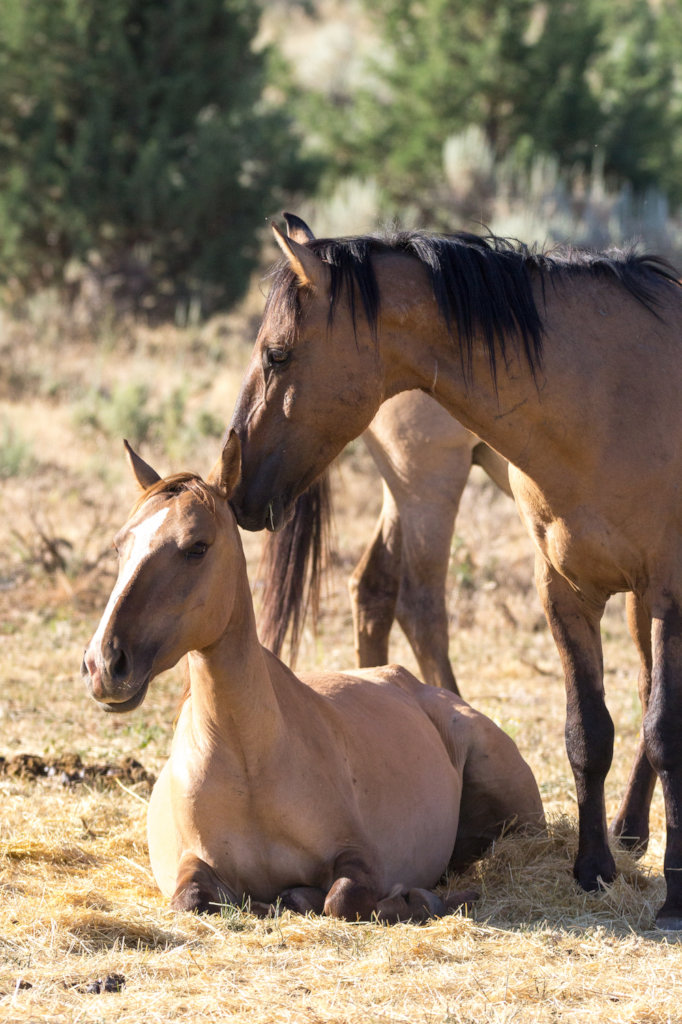
When you have a variety of age groups, it is particularly fun to watch. They are engaged and social, adding a lot of dimension and vitality to the herd. Teenagers playing, adults calling them back to them, stallions being roused to play by younger colts—the whole scenario feels the way it is supposed to feel—families.
Watching the group, we could see how the extended herd family participates in shaping the youngsters’ character as they learn different things from members in varied ages and seniority. There is a lot of activity, communication, and evident relationships in the herd. The situation feels very healthy and there is a strong sense of well-being in the herd members.
One stallion has some challenge to his mobility, but he does try to keep up with the herd. A couple of his band run back to make sure he is still ok, but he’s having a hard time and is dropping a lot of weight. We are concerned about his immediate future in terms of his ability to overcome his difficulties. We’ll support him as well as possible.
One stallion, blind in his right eye, let me stand near him for quite a while. He is with a band of horses and seems to have somewhat of a leadership role. This mature horse still has respect and seniority in his band.
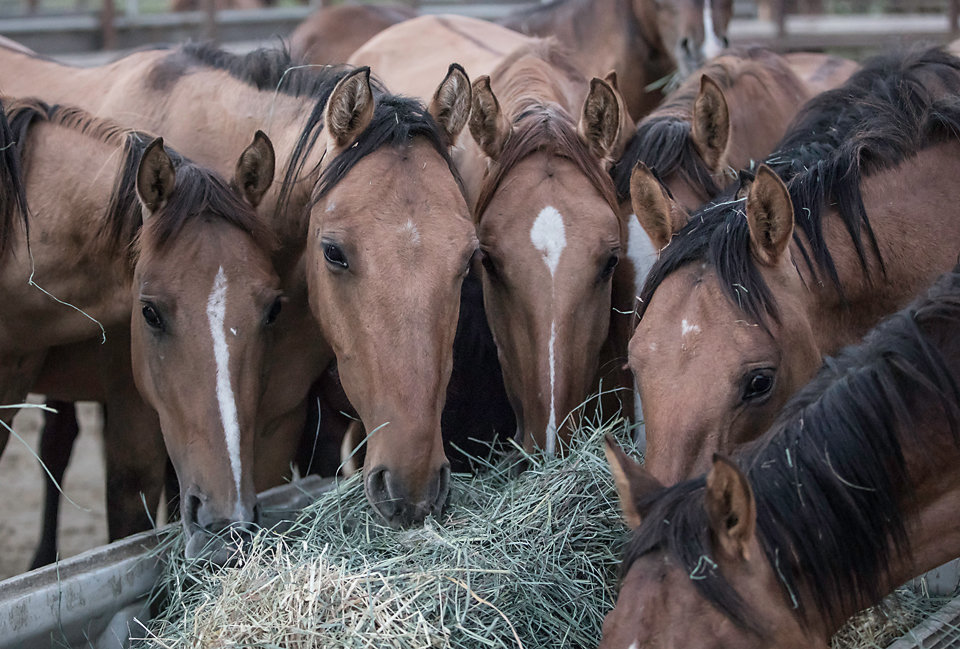
At this time, the horses are grazing the forage there along with some supplemental meadow grass we provide every other day. Early every morning the horses come down from the forest for their hay. Some have muddy legs, so you can tell they’ve been enjoying the water. On the lake is a small row boat. Ever playful, the horses have been playing with it and have taken the oars out!
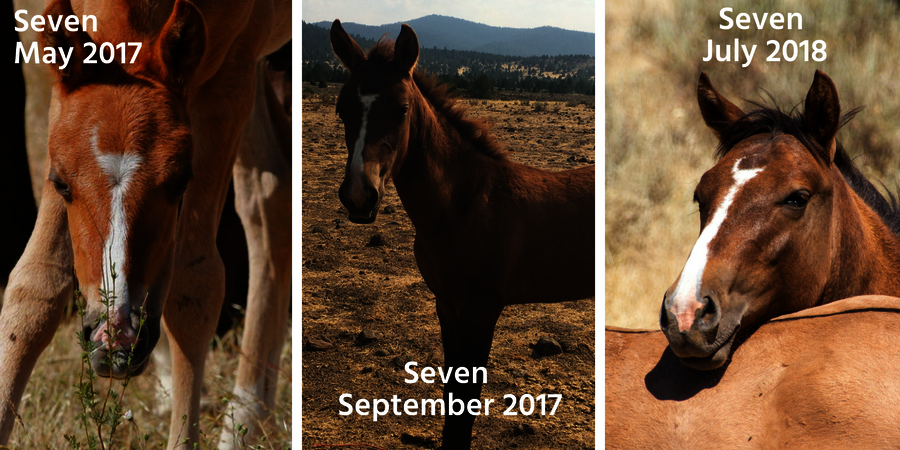
Of the horses who were born here last summer, the foals are very leggy and are growing larger than their predecessors and larger compared to the yearlings that came from South Dakota last winter. The nutrition they have been receiving, between the hay we give them and the natural forage is having an extremely positive effect.
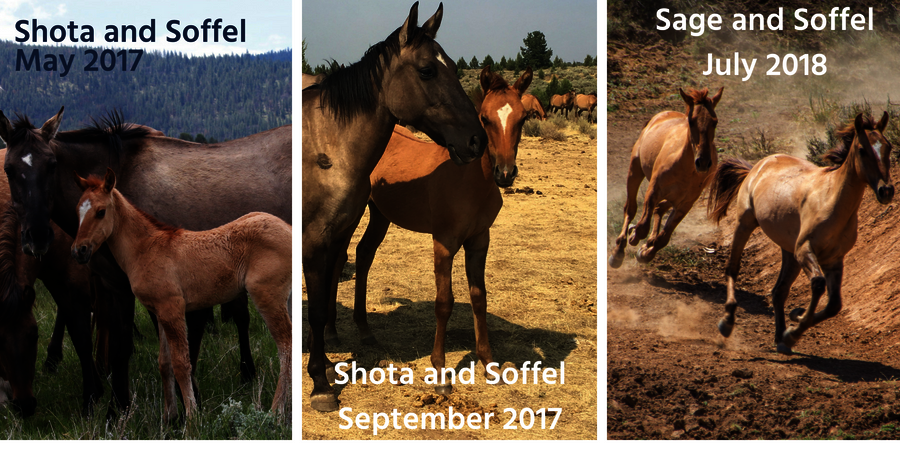
It took a while to identify some of the foals born last summer! As they grow, some of their colors have a changed a bit. Easter, a foal born last year, looks beautiful. Sage is a steady and beautiful young colt who has already developed a strong thick neck. The younger horses are growing up fast!
One foal from the previous year sustained an injury to his shoulder, and Jeff, the caretaker, had to doctor him. His scar healed really well. He is quite friendly now because of the care and kind human contact we provided. He and a couple of others will be very adoptable as they enjoy human contact.
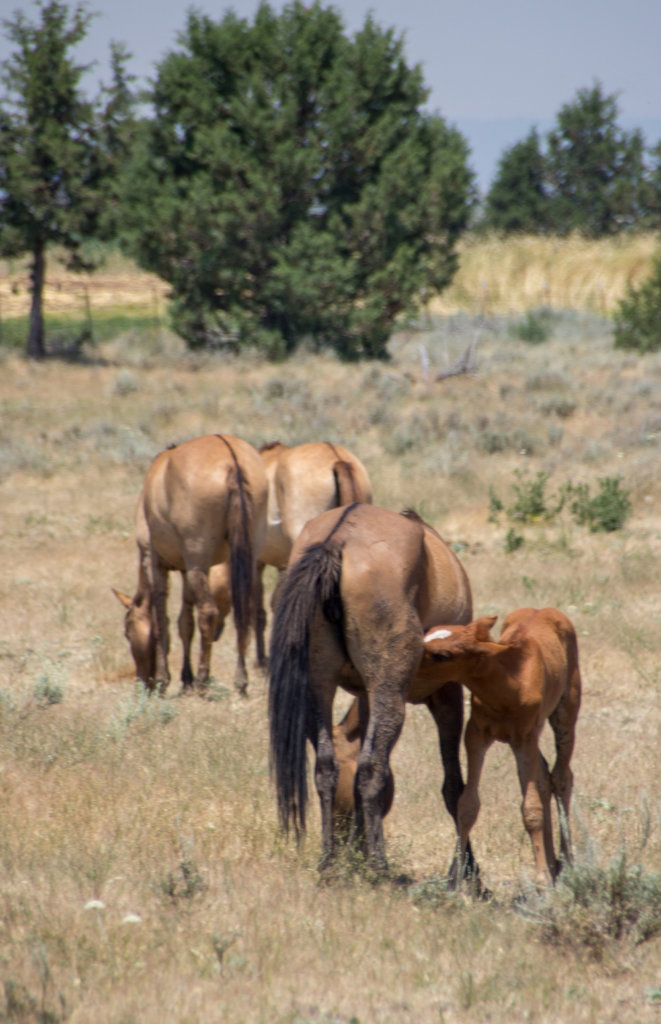
Things change quickly, including the horses themselves. Soffel is bigger than her mother now. She is also not as red as she was when we first saw her. The youngsters are all still staying close and stealing drinks from their mom.
Last year we had a mild winter, but even so, some days Jeff (their on-site care taker) had to cut the ice in the pond twice a day to make water accessible. Jeff is concerned that a harsher winter might be too much for him to properly care for the horses. Since this property has been sold, the new owner does not want to continue the lease and we are looking for another location for the Gilas, before the winter sets in.”
Thank you for your support which makes all this possible. It’s only being united with other caring people that RTF can do the things we do. Thank you!
Photo credit: Kaitlynn Toay
Project reports on GlobalGiving are posted directly to globalgiving.org by Project Leaders as they are completed, generally every 3-4 months. To protect the integrity of these documents, GlobalGiving does not alter them; therefore you may find some language or formatting issues.
If you donate to this project or have donated to this project, you can receive an email when this project posts a report. You can also subscribe for reports without donating.