Project Report
| Oct 12, 2011
Springtime in Namibia!
By Allison Rogers | Grants Manager
![Worth his weight in gold]()
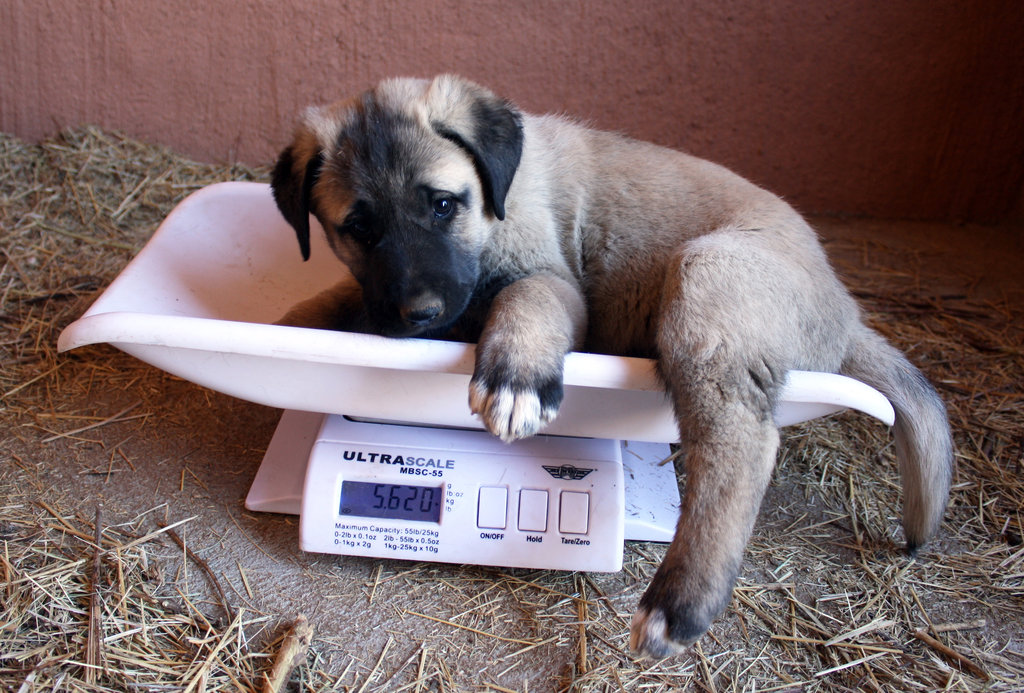
Worth his weight in gold
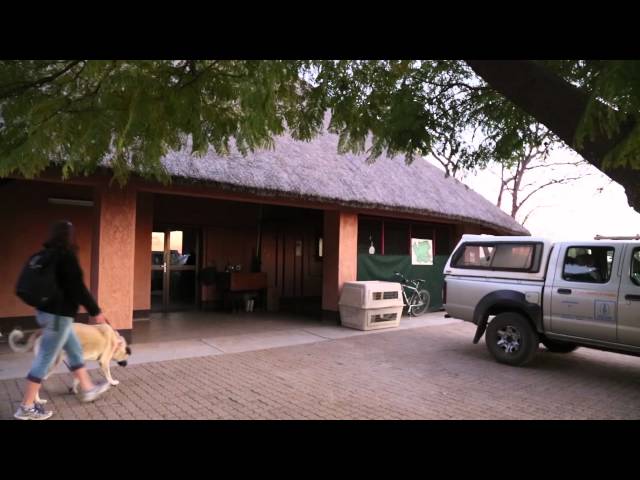
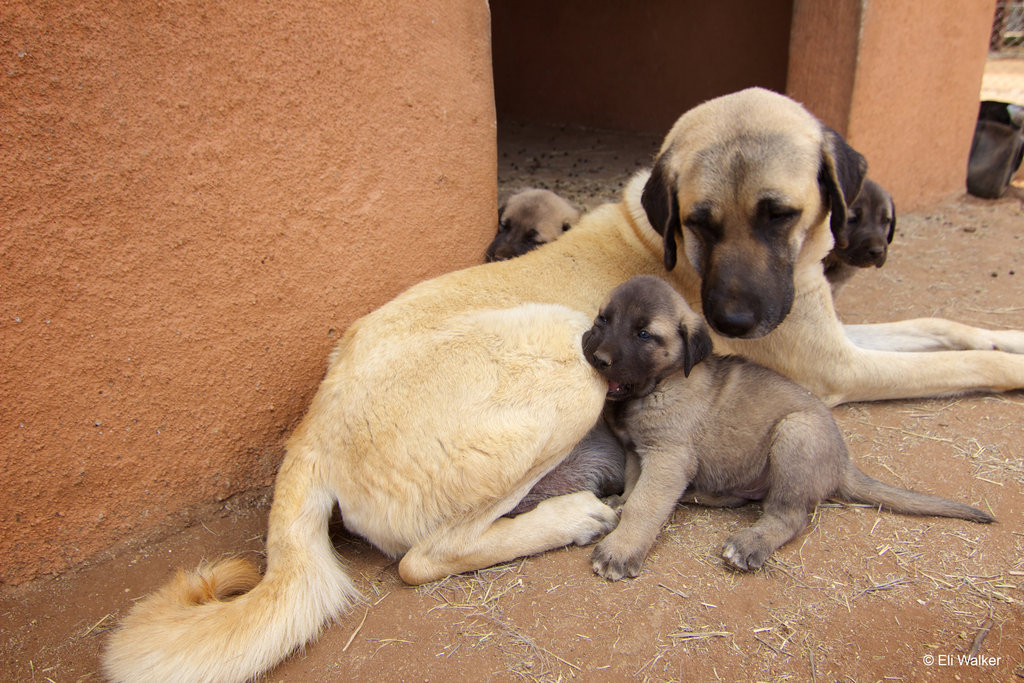
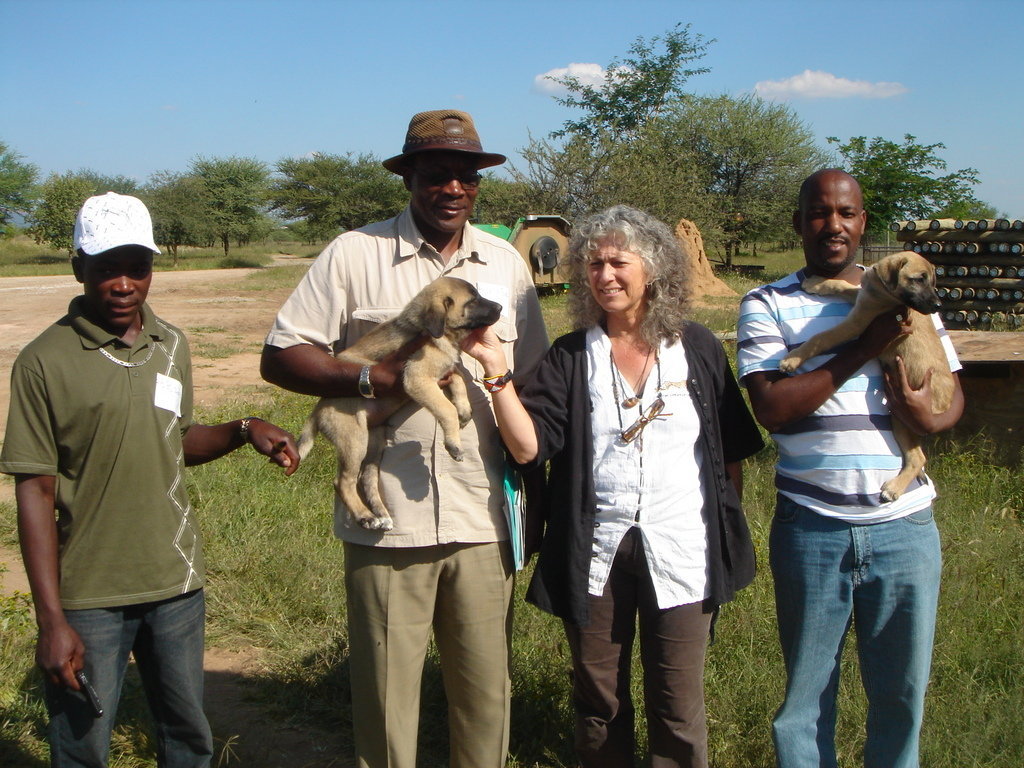
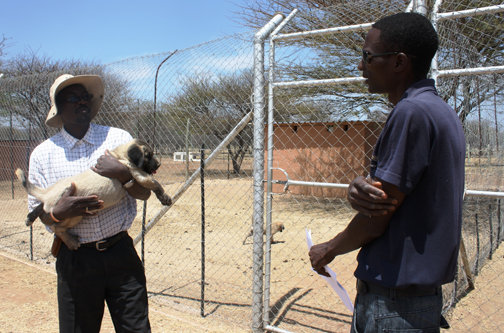
It's springtime in Namibia, and in addition to a slew of baby goats, we've had two litters of puppies at CCF and a third is "in the oven". The first group was recently vaccinated and spayed or neutered and given out to farmers around Namibia. (The farmers attend Puppy Day at CCF to learn how to take care of and train their new charge.) The next litter will follow soon. After nursing and caring for these little ones for two months, we all grow attached, but we know they are going on to do the greatest work--saving an endangered species. These adorable little pups will grow up to be so protective of their goat and sheep herds that they will fight to the death if they have to. Luckily they don't usually have to do more than bark. We have three new females at CCF as well as an intact female in the southern part of the country, so we hope to increase the number of litters we have each year. Even after giving out these three litters, we'll still have a waiting list of more than 100 farmers. Thank you for your support of this critical project! Please spread the word.
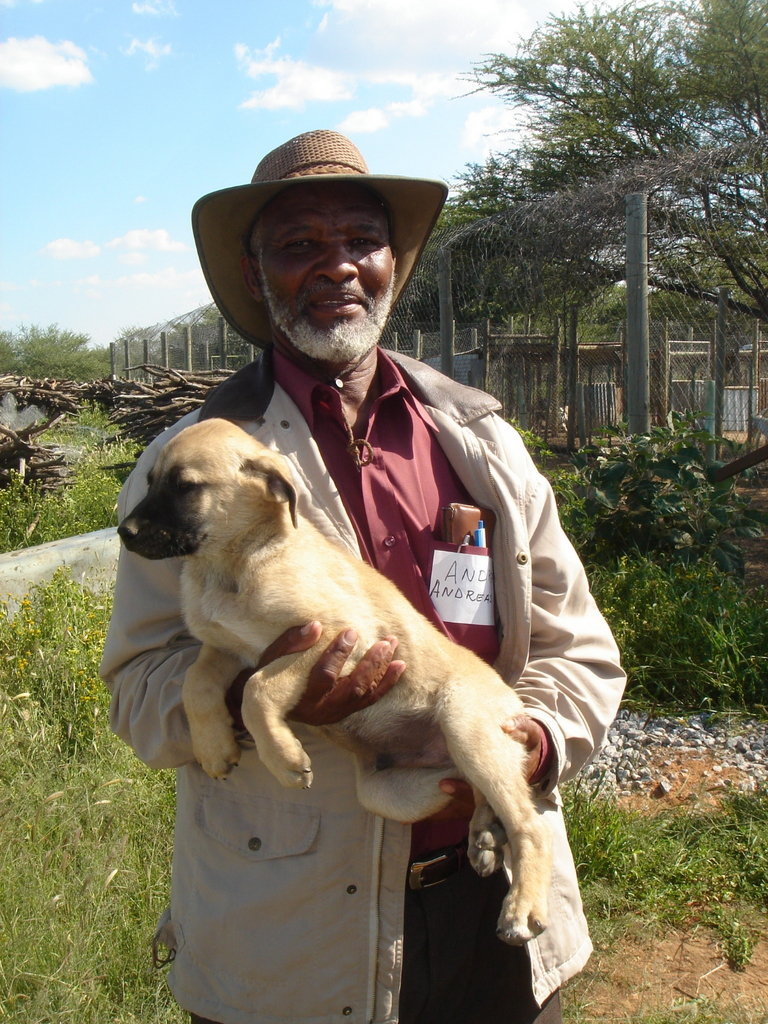
![A farmer picks up his pup from CCF]()
A farmer picks up his pup from CCF
![Share on Twitter]()
![Share on Facebook]()
Jul 28, 2011
More puppies on the way
By Allison Rogers | Grants Manager
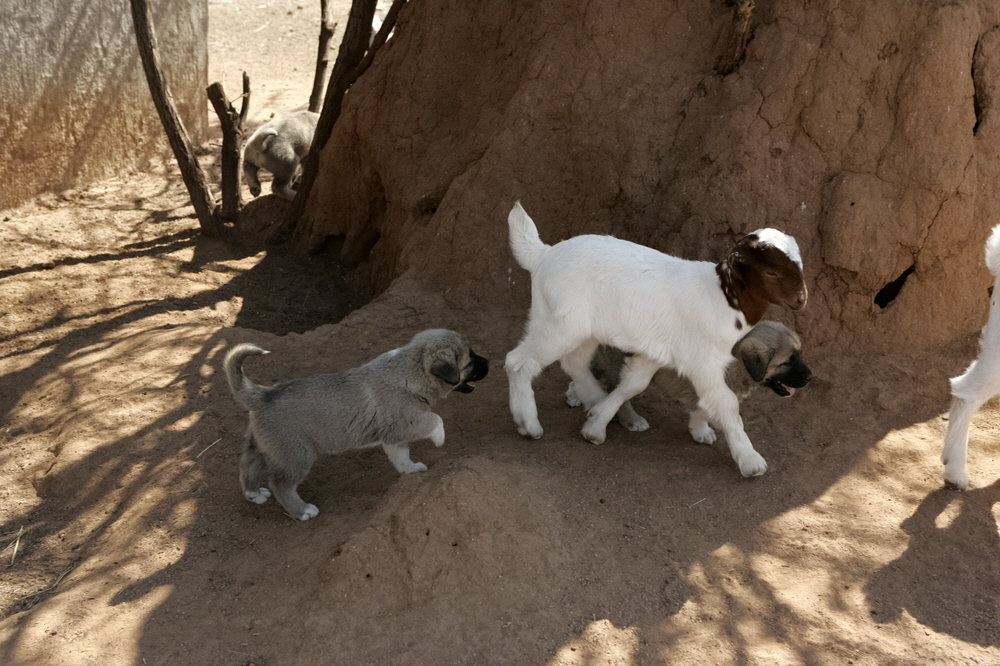
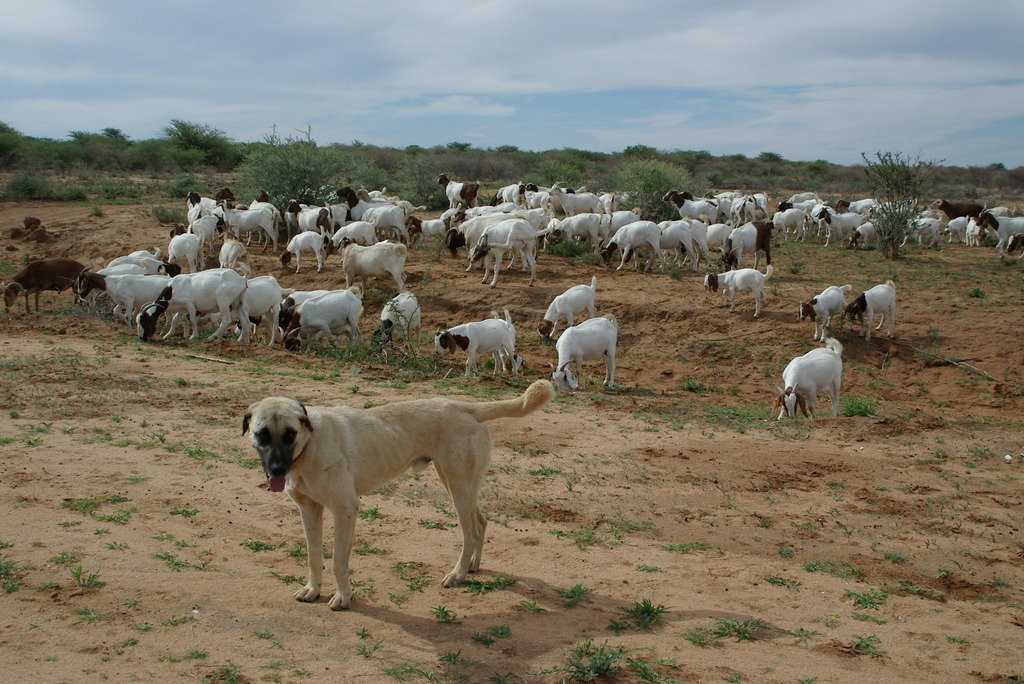
Thanks to the support CCF has received for our livestock guarding dog program, things are going very well. At CCF's headquarters in Namibia, we have two litters of puppies on the way. The puppies are born and reared in the goat pen so that they bond with goats. When they are at least 8 weeks old they are neutered and sent to live with their new goat herds. Before taking their puppies home, their new owners have to attend puppy class so they'll understand how to properly use and care for livestock guarding dogs. We follow up on each of the puppies to make sure they are healthy and doing what they're supposed to.
On another note, CCF has received a grant to study whether a vitamin deficiency is related to the high incidence of squamous cell carcinoma in dogs in southern Africa. We've got to find a way to lower the incidence of this type of cancer so that the livestock guarding dogs can live long, healthy lives saving cheetahs. We will update our supporters on GlobalGiving as we learn more.
As always, thank you so much for your support of this groundbreaking program!
![Share on Twitter]()
![Share on Facebook]()
May 2, 2011
The hard reality of a livestock guarding dog's life
By Allison Rogers | Grants Manager
I'm sad to report that one of CCF's young Kangal guard dogs, Cazgir, died a few weeks ago. Cazgir had been imported to CCF from the United States to help build up the Kangal breeding lines. Cazgir was a victim of a disease that is causing serious problems with livestock guarding dogs in sub-Saharan Africa: lingual squamous cell carcinoma (or SCC of the tongue). SCC is much more prevalent in dogs in sub-Saharan Africa than in other parts of the world, probably due to damage caused from sun exposure. CCF is working hard to determine if there are other predisposing factors, such as nutrition and genetics, and we are also trying out various methods of early diagnosis and treatments. Because livestock guarding dogs are the greatest hope for the survival of cheetahs, we cannot abandon the program. We simply must find a way to stop SCC. We will keep you informed of the progress we make. In the meantime, we mourn the loss of Cazgir. These dogs are so much more than guard dogs to the staff. Thank you for your support of this very important program.
![Share on Twitter]()
![Share on Facebook]()