By Sara Steffen | Director of Conservation
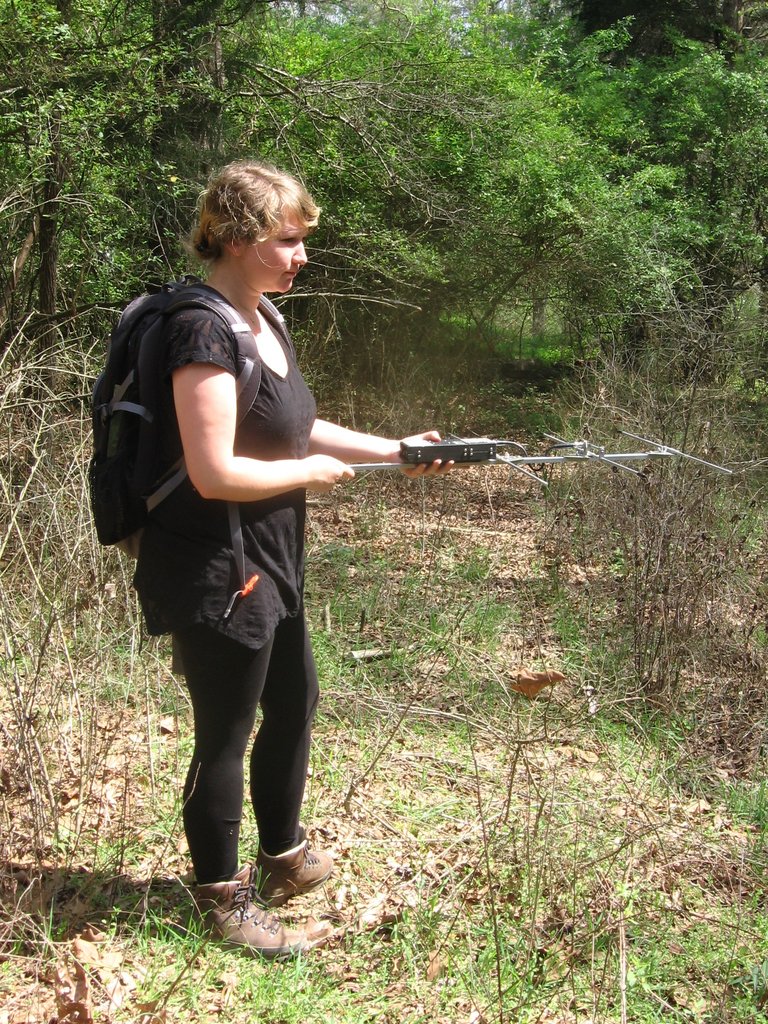
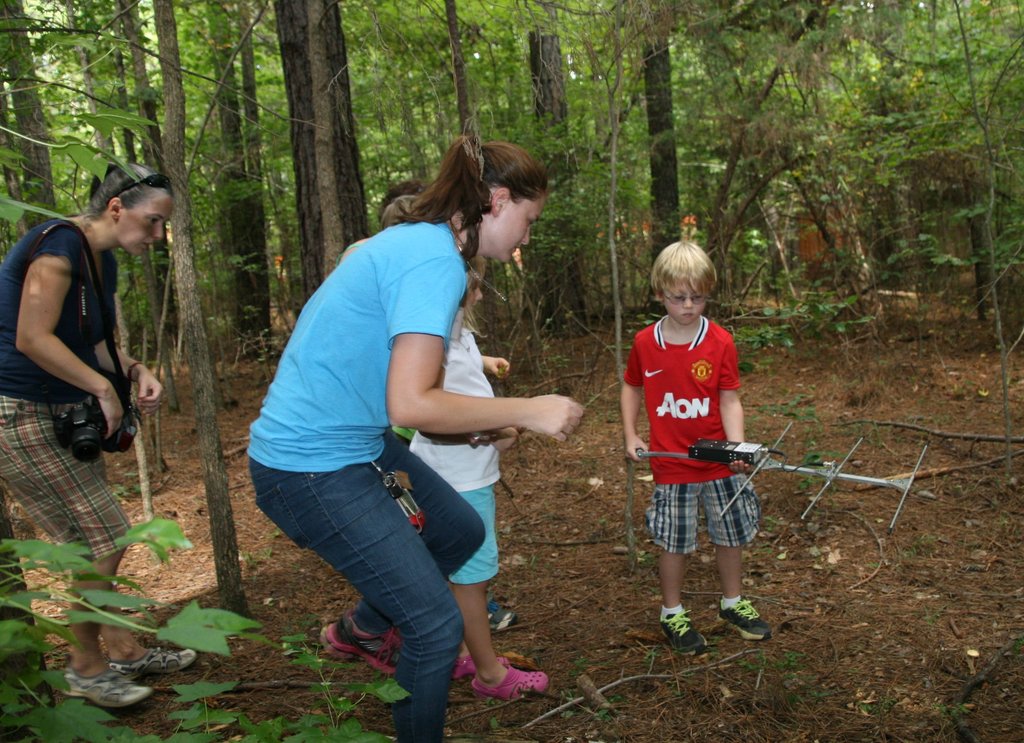
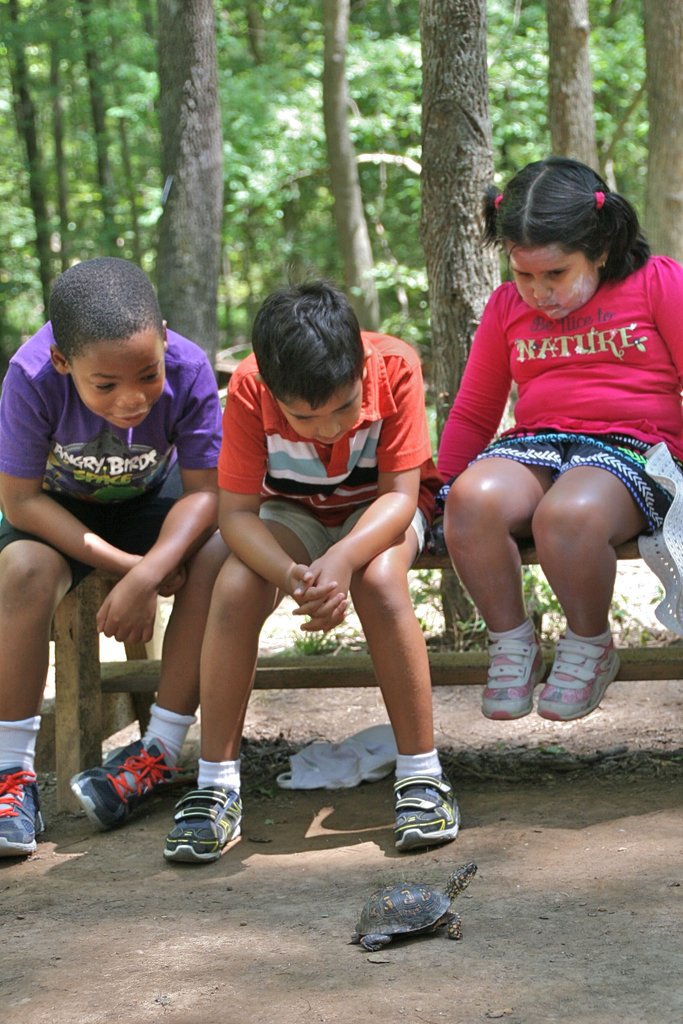
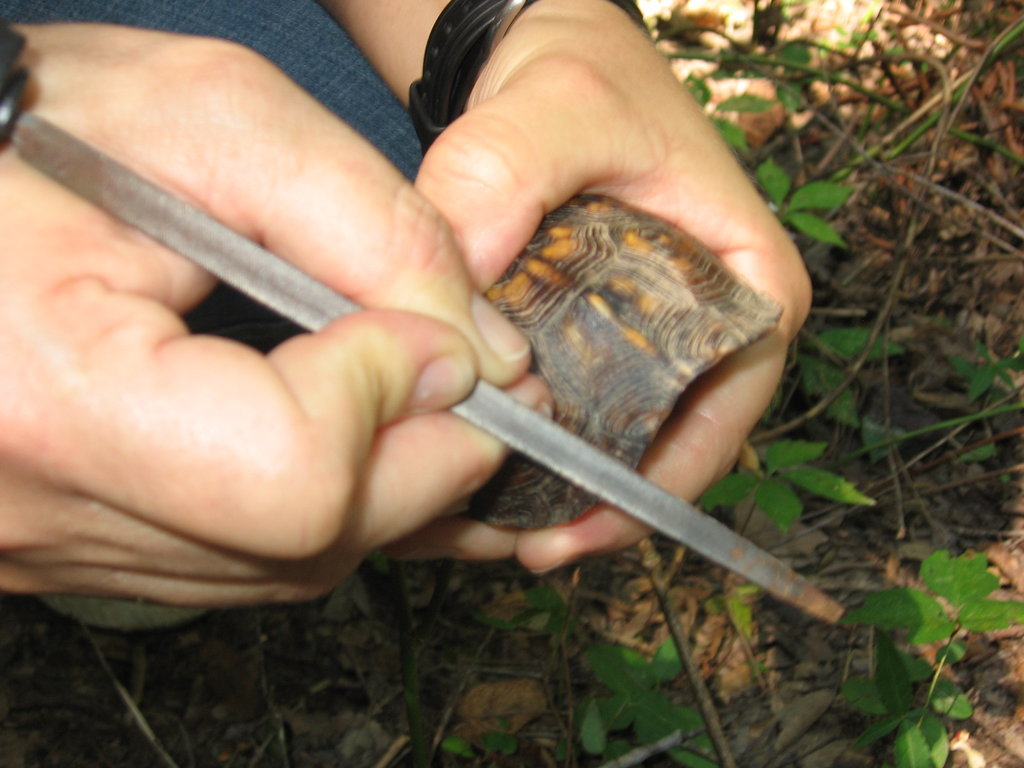
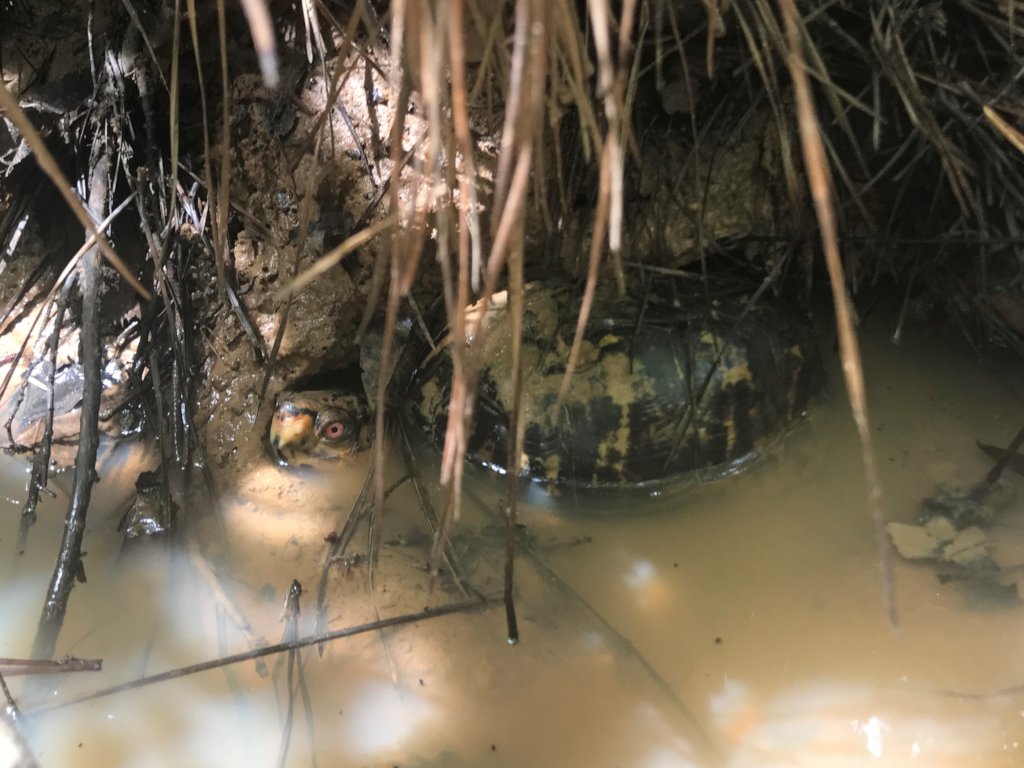
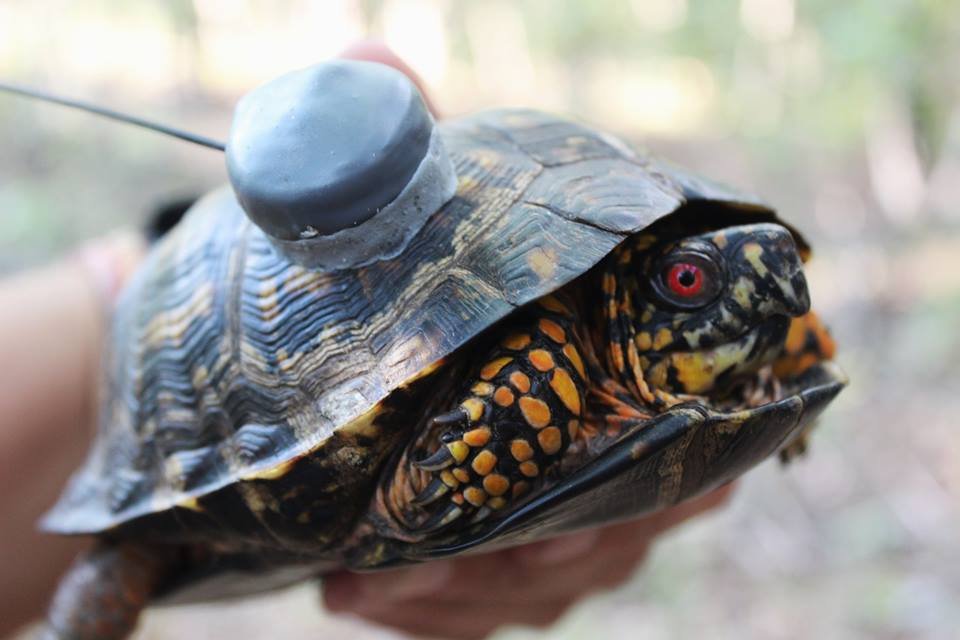
Turtle “AOW” has been part of our study since August 2011. We’ve been tracking him for 7 years! He’s one of the original turtles to be part of our transmitter study. So when I found him in a creek on July 17, I was a little concerned. Box turtles, although they are terrestrial, can occasionally be found in creeks, puddles, and even rivers. Researchers don’t know much about why box turtles hang out in water, other than the need to cool down in the summer months. However, theories are forming that box turtles may be self-medicating in these locations.
We rarely interact with the box turtles when we are tracking them through the woods. Our objective is to observe what is happening, and do as little to interfere with their everyday behaviors. However, when I found AOW in the creek, I picked him up to see if he was okay. At first sight, I didn’t notice any abnormalities. He seemed to be bright, alert, and responsive. When placed on the ground though, he wasn’t fully using his right front leg. I tried to examine his leg, but for obvious reasons he tried to keep it as tucked into his shell as possible. It didn’t appear broken. There was no external injury. Then my brain started going into over drive, maybe he got stung, maybe he stepped on something, maybe he sprained something? After allowing my brain to wander, I put him back and he immediately went back into the creek!
It’s so easy for us, humans, to think we know better than the wildlife that exists on the planet with us. However, after I took a step back and started thinking, I remembered that AOW is an older turtle. Likely, over 20 years old. Surely something like this had happened to him in his younger days. You don’t get to be an old turtle if you don’t know how to take care of yourself. So, we monitored. We waited. On July 25 (8 days later!) he was still submerged in the creek. Because he was under the water and camouflaged with mud, he was hard to find even when we knew where he was. I started being concerned at this point, but again, AOW was still bright, alert, and responsive. Yet again, he obviously knew what he was doing, and was able to protect himself from predators even in the creek. He may have found a stray insect to eat while in the creek, but because they are cold-blooded and their metabolism is so slow, he could easily go a couple weeks without food. So, we continued to monitor.
Two days later, July 27, while out looking for other turtles, not in our transmitter study, we just happened to find “AOW” out of the creek! He spent at least 10 days in the creek! At this point, his leg seemed fine and he was eager to run away from us as we approached. Perhaps the cold water of the creek helped with the inflammation of his leg. Perhaps there are other microbial properties that helped minimize infection of the leg. Whatever the case, it’s a good reminder that wildlife know what they’re doing. With wildlife, we often think we need to step in and “help,” but most of the time if we take a step back and just watch, we’ll see that they know what they’re doing. Especially our friendly turtles, who have been around over 200 million years!
Links:
Project reports on GlobalGiving are posted directly to globalgiving.org by Project Leaders as they are completed, generally every 3-4 months. To protect the integrity of these documents, GlobalGiving does not alter them; therefore you may find some language or formatting issues.
If you donate to this project or have donated to this project, you can receive an email when this project posts a report. You can also subscribe for reports without donating.