By Sara Steffen | Conservation Coordinator
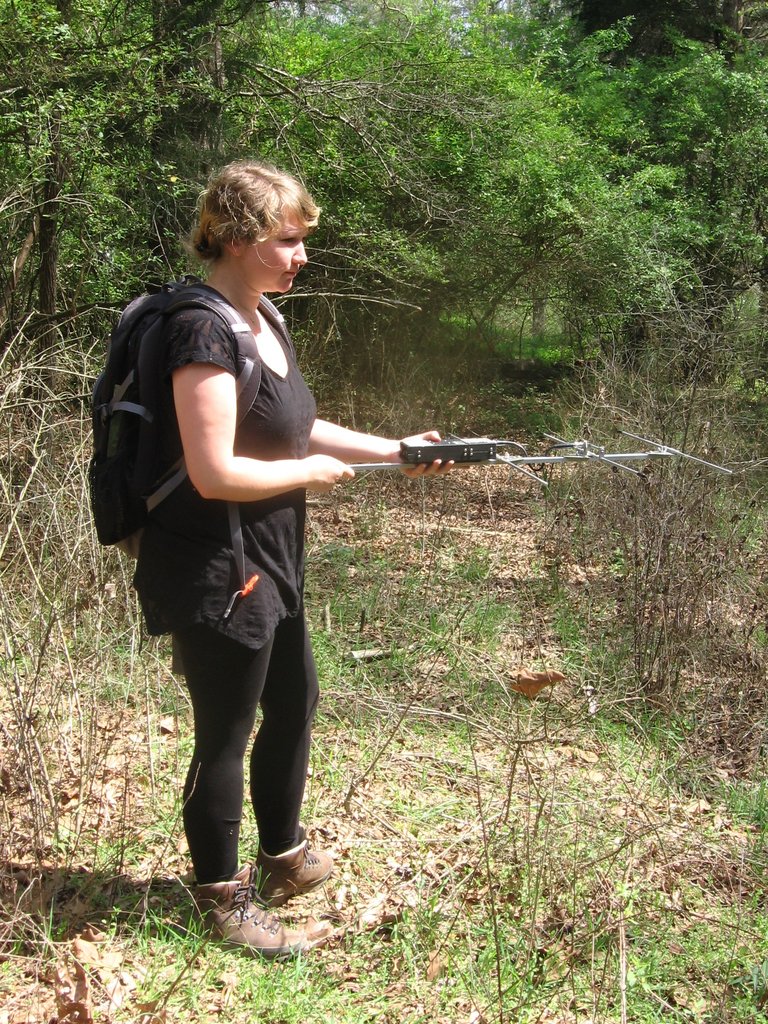
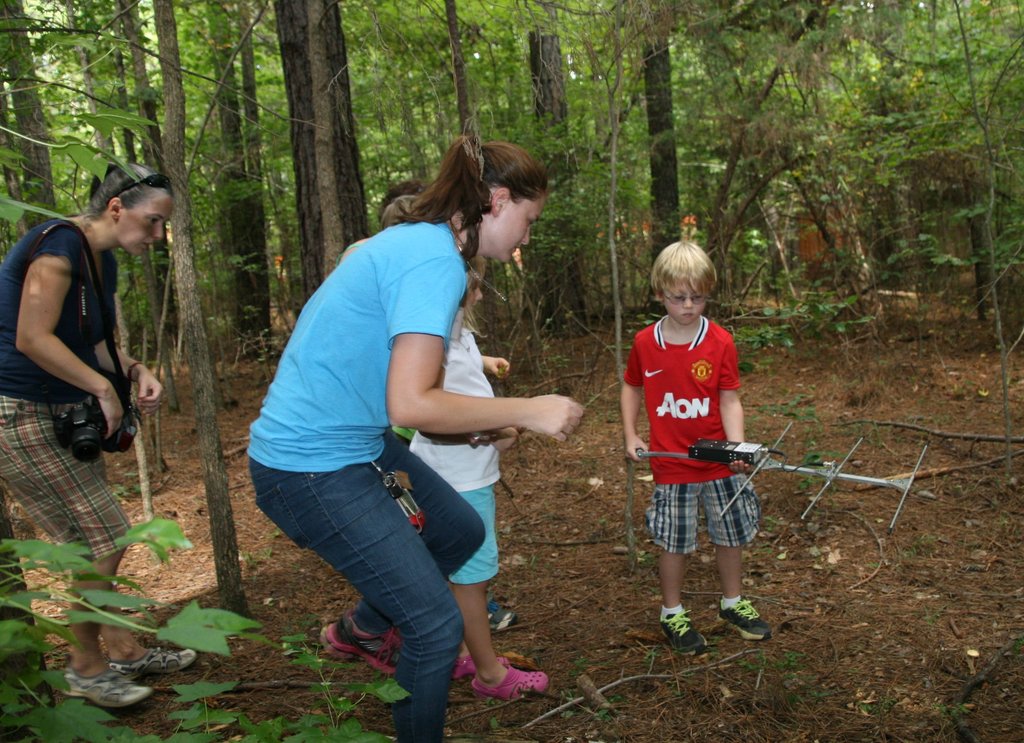
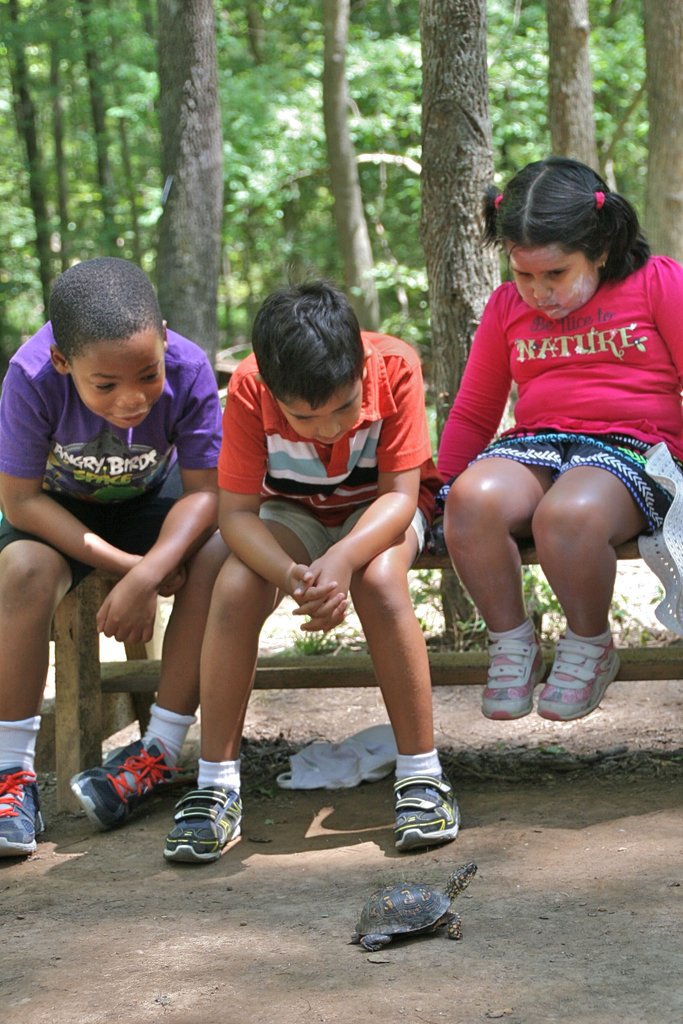
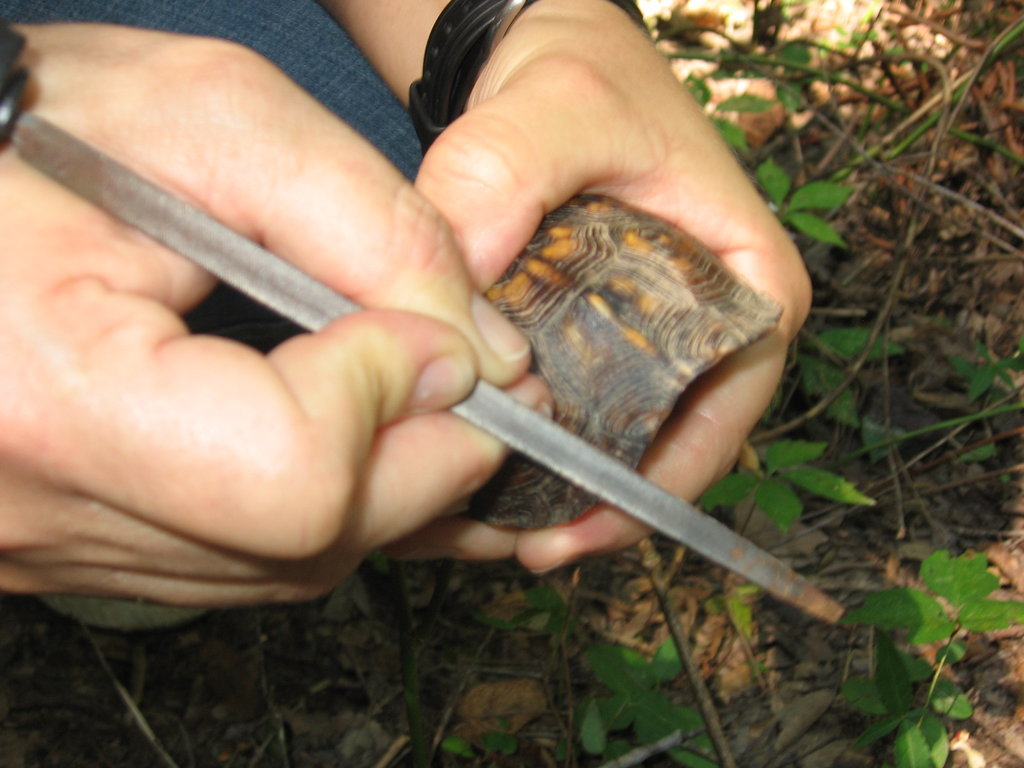
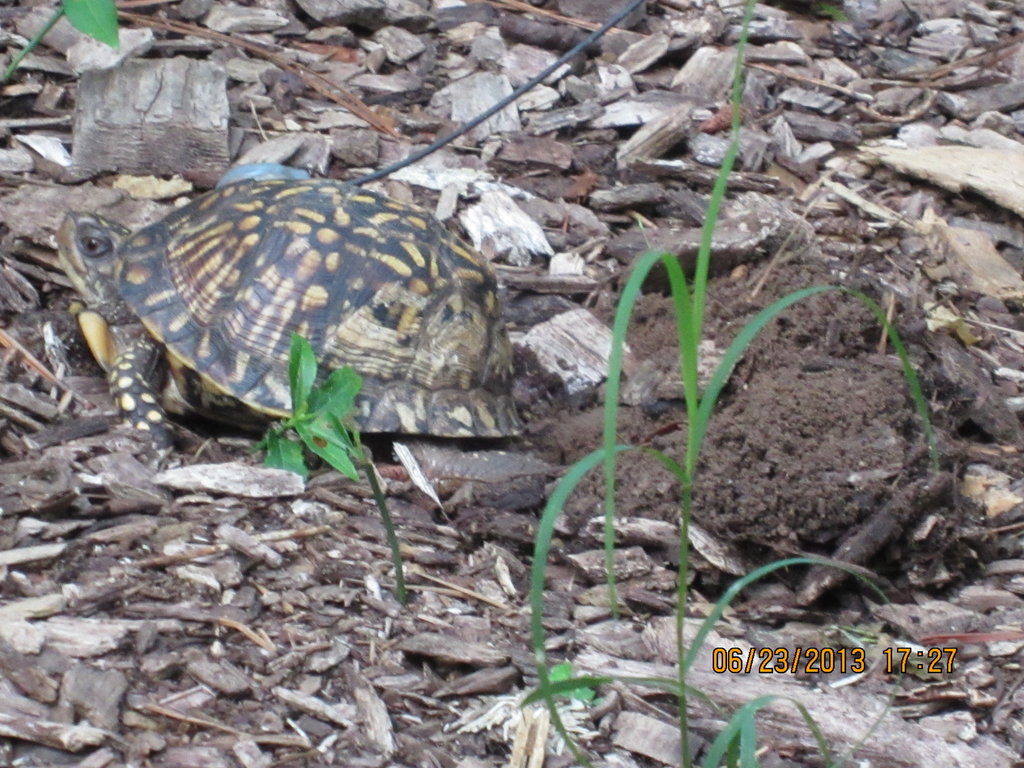
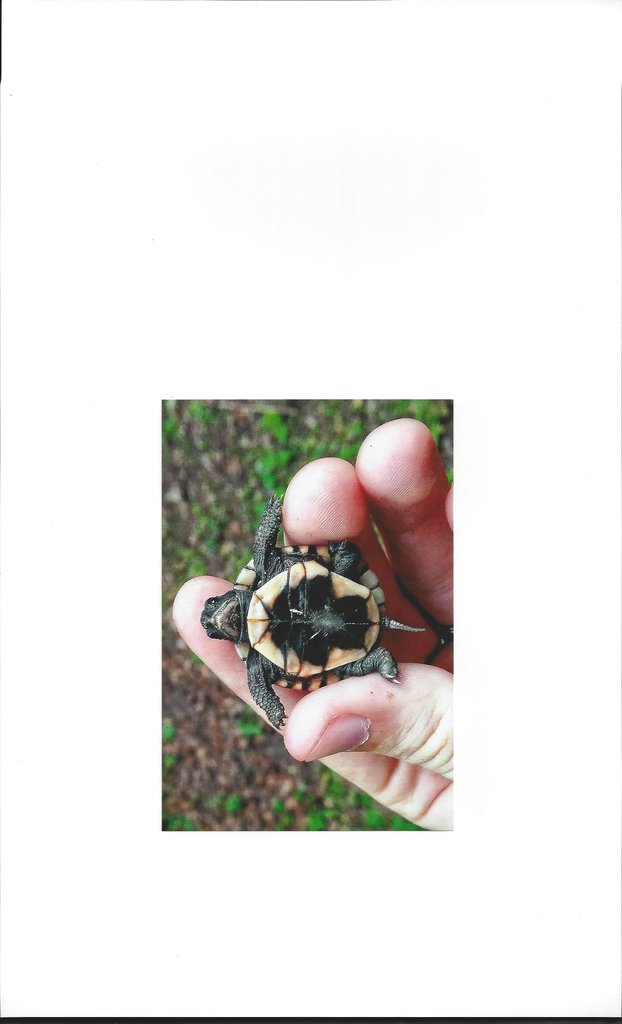
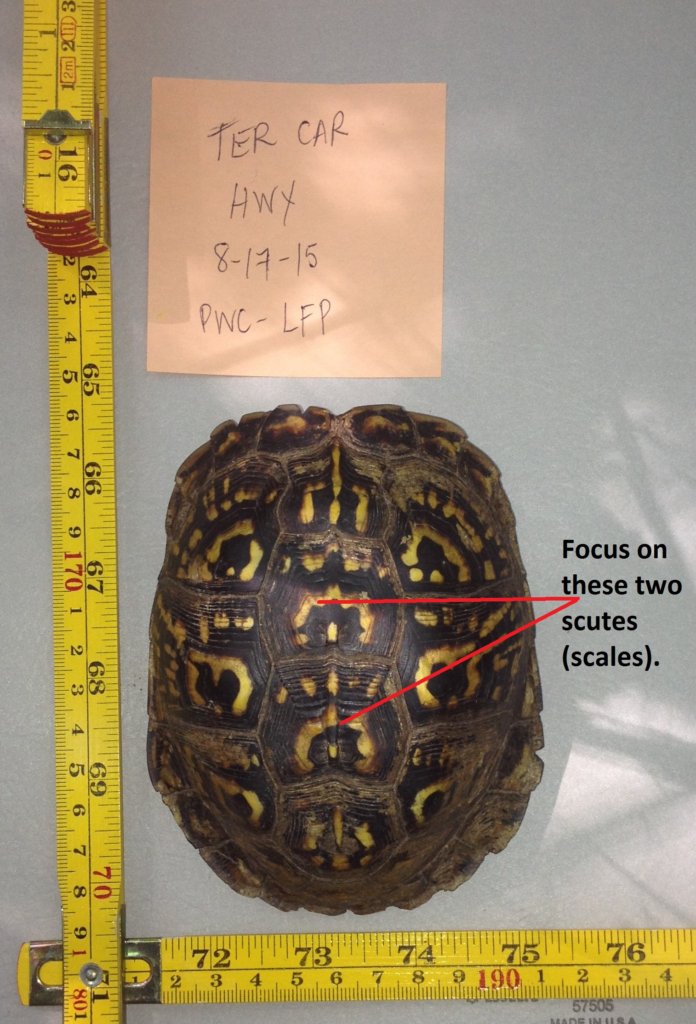
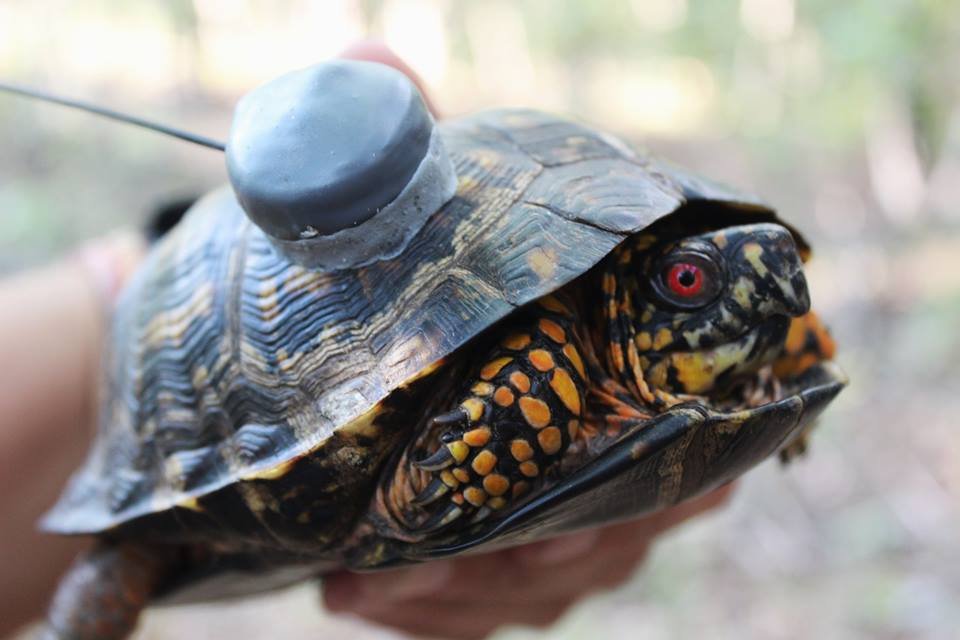
All animals need food, shelter, space, and water to survive. But how much of each of those things do they need? This is the main objective of our box turtle tracking program. There is very little data on how much space box turtles need to survive. We started using radio telemetry in 2011 to track box turtles in Leigh Farm Park in Durham, NC. Four of the turtles that entered our program in 2011 are still alive and part of our tracking program (see image above). According to the literature, this is longest that any box turtle has been tracked.
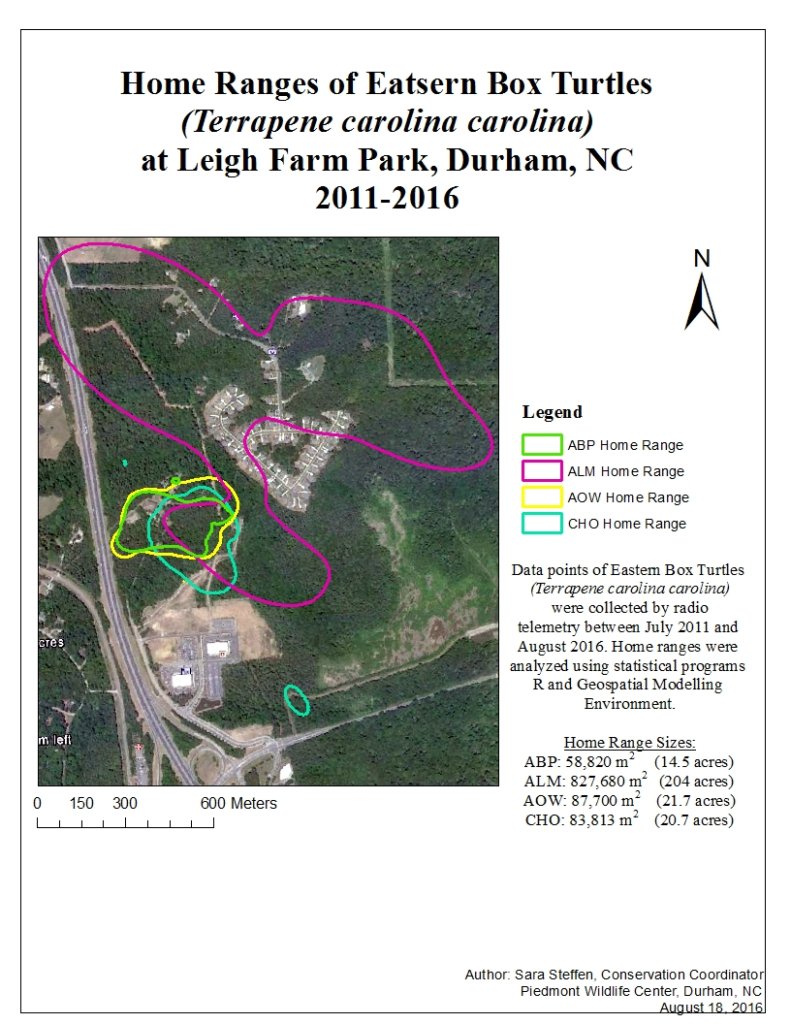
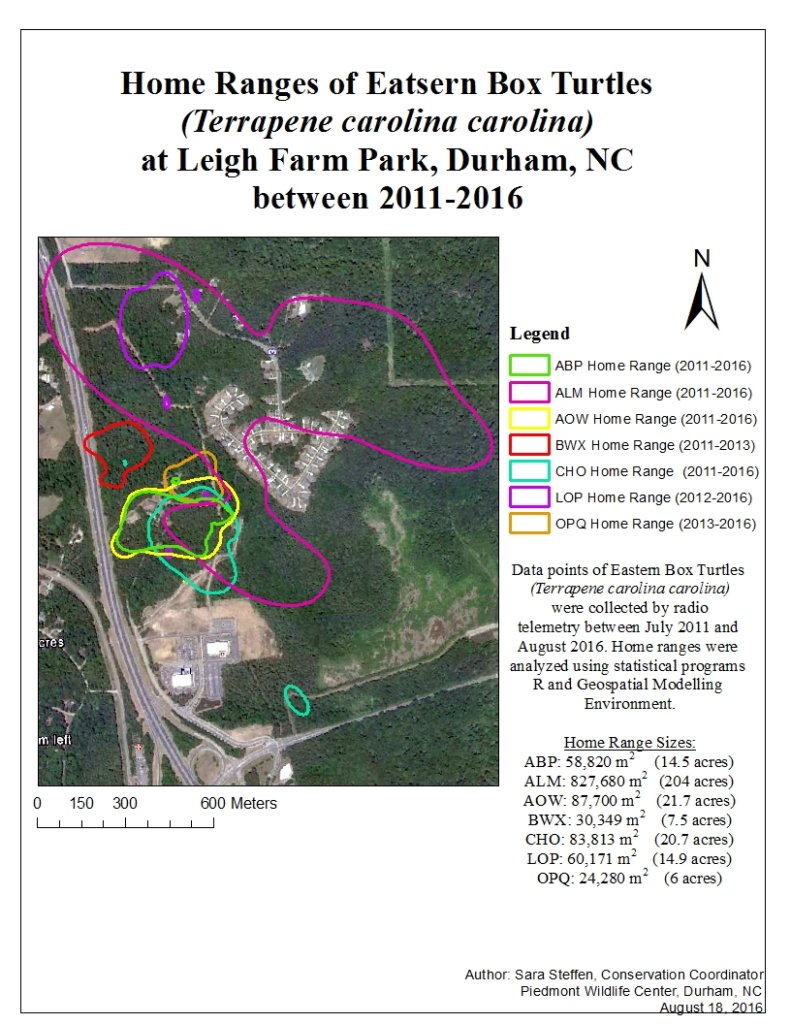
Although a sample size of four is not what we prefer (we need many more than this) in our study, this is just the beginning. We’ve added more turtles to our project as some of our previous turtles either perished or their transmitter batteries died prematurely, or the epoxy didn’t hold. Unfortunately, research usually isn’t perfect, especially when working with wild animals. You can see the home ranges of the new turtles in the second photo. Along with this info, we have determined their home range in acreage. For a long time, biologists thought that turtles only needed about 1 acre to survive. Although this may be true, we can see that turtles with more space available to them use that space. However, we don’t know what turtles are doing when they have little space, like in a neighborhood. If there is only an acre available to them, will they seek out a larger area elsewhere? Will they survive to the ripe age of 50? This is what we hope our photo ID app can help us determine. To protect turtles for future generations, we need to understand more about their habitat requirements.
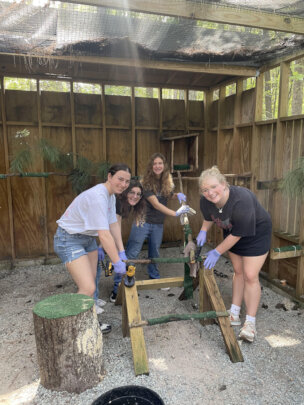
One interesting turtle in our study is “ALM.” She has used the most space and seems to be settled in a new location than when we found her in 2011. Do you see the neighborhood in the middle of her home range? She used to stay on the west side of this neighborhood, similar to “LOP.” For the last year she has been on the east side of the neighborhood. So why the move? In short, we don’t know. Some of our conservation interns have these theories of why she has moved.
“She may have been found on a road in the neighborhood and moved.” - Matt
“Maybe she needed to find a new habitat with more food available to her.” -Becca
“She may have washed down a creek in a heavy storm.” - Debbie
In short, we need to continue to research turtles so we can understand more about their habitat requirements and their movement. Although we may know a lot about the box turtle itself, we know very little about what they need to survive. Without this knowledge, future conservation of box turtles is limited. We also need YOUR help to help us find box turtles outside of the park. Get involved with our Turtle Trekkers program today and make sure you tell all your friends!
Links:
Project reports on GlobalGiving are posted directly to globalgiving.org by Project Leaders as they are completed, generally every 3-4 months. To protect the integrity of these documents, GlobalGiving does not alter them; therefore you may find some language or formatting issues.
If you donate to this project or have donated to this project, you can receive an email when this project posts a report. You can also subscribe for reports without donating.