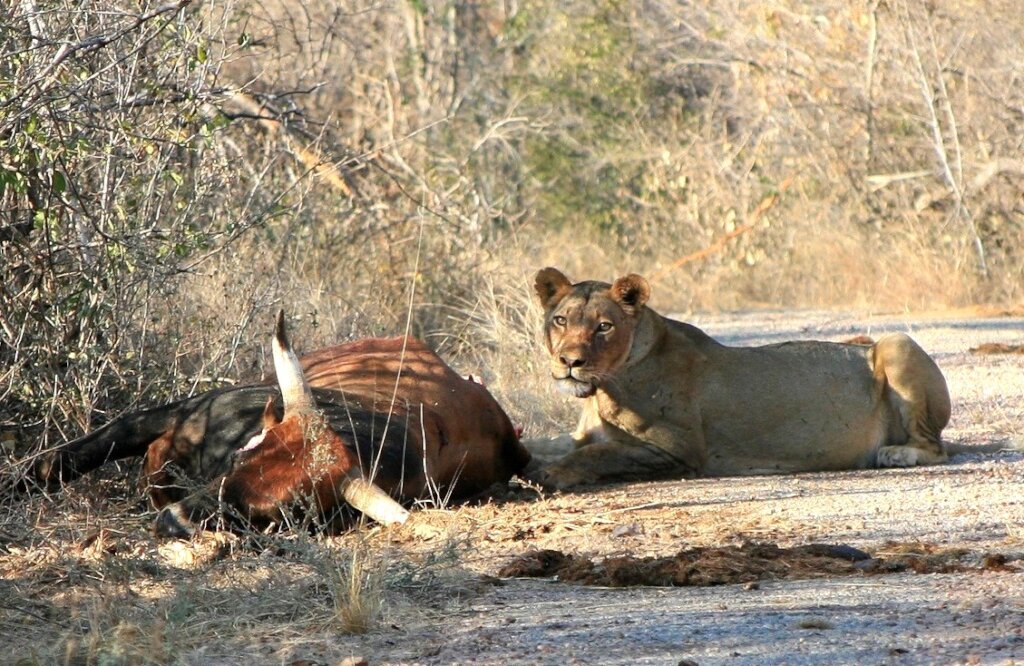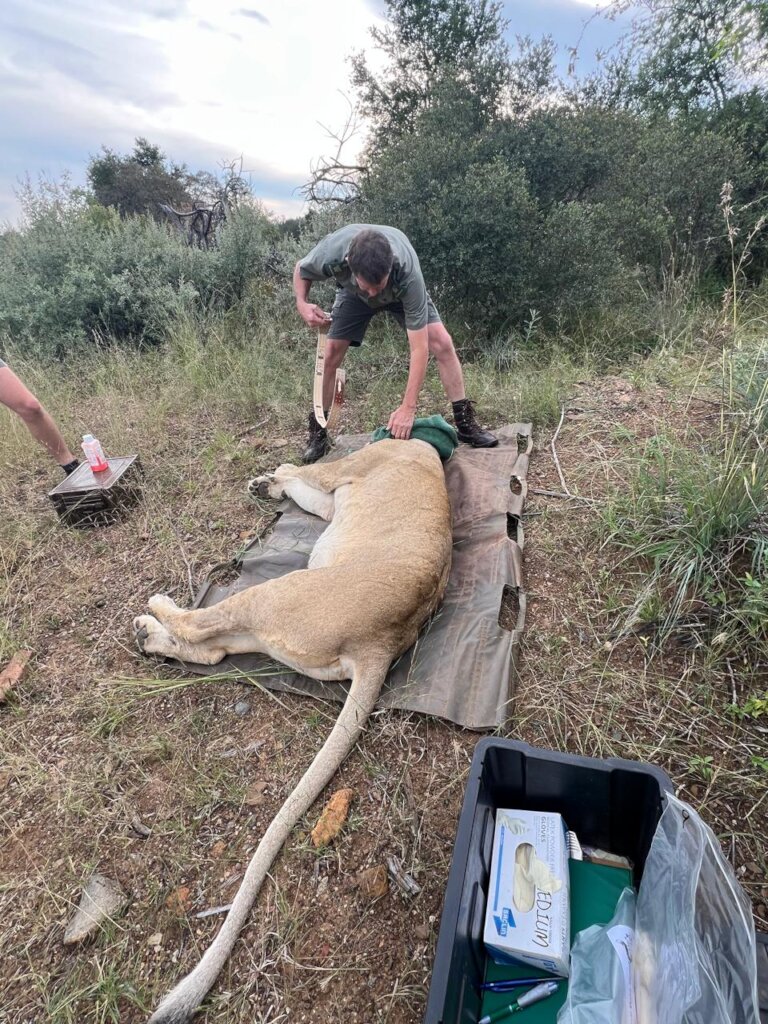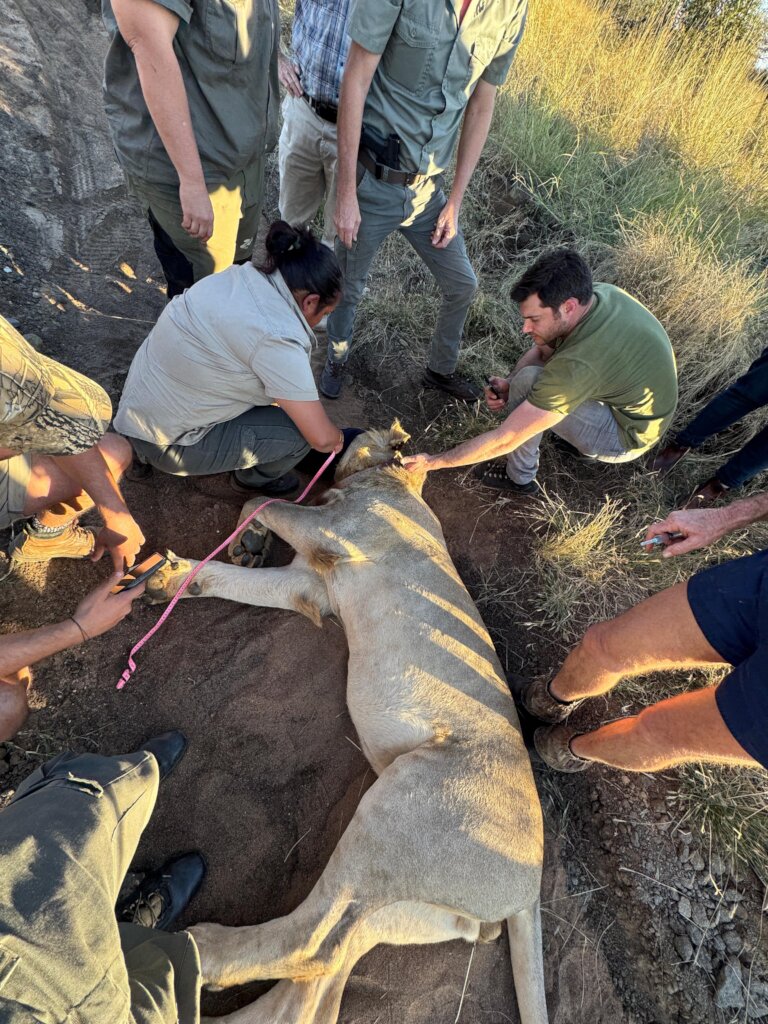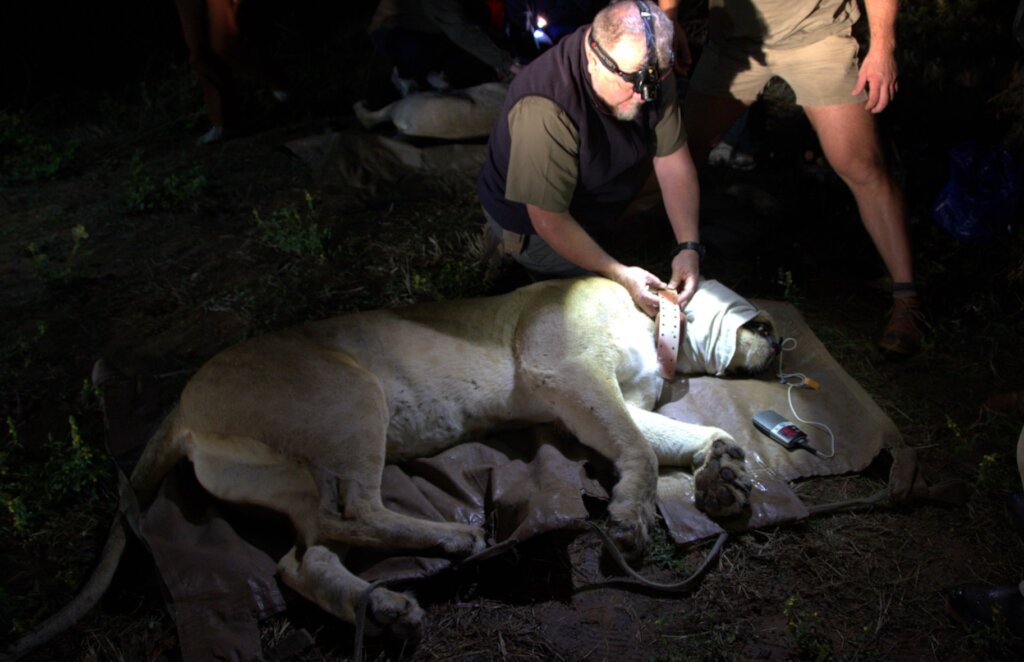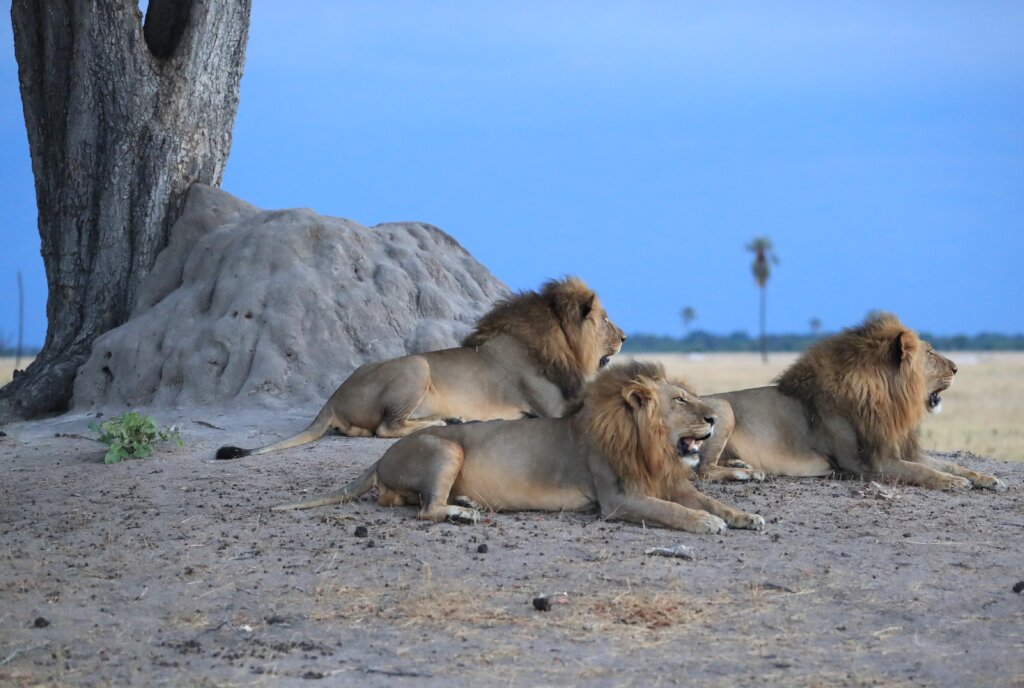
The African lion is listed as vulnerable on the IUCN red list of threatened species - their population has decreased by 75% in the last 50 years (approx 25,000 left). Increasing human populations reduce available lion habitat, leading to a rise in human-lion conflict. GPS collars on selected lions is a proven tool in lion research. They've proved useful in assisting Parks authorities to track potentially problem lions, intercepting them before they stray into rural lands, and relocating them.
Typically, the boundaries of protected wild areas adjoin tribal lands where rural communities of subsistence farmers live with their families and domestic animals. Lions are wide-ranging predators needing a vast amount of space to access prey. Understandably, lions targeting livestock as prey in these rural communities are a potential danger to people, their children, and a constant source of conflict between these communities and the interests of conservation.
SACT partners with SANParks & Nelson Mandela University to mitigate the problem by closely monitoring lion prides situated on park boundaries. Often these lions are likely to cause conflict with communities by threatening their livelihoods and killing livestock. By tracking the locations of these collared lions, we establish an early warning system to local people with a live feed. This enables rapid dissemination to the community.
Over time, rural communities and SACT build mutual trust which results in safer community environments. On a broader scale, saving wild lions ensures long term sustainability in Sub-Saharan Africa. In many protected areas there are so few wild lions left that they are not viable from a genetic perspective. Protecting free roaming lions from being killed by local communities is one way to ensure their survival by mitigating human-animal conflict.



Support this important cause by creating a personalized fundraising page.
Start a Fundraiser