By Soni KC | Project Leader
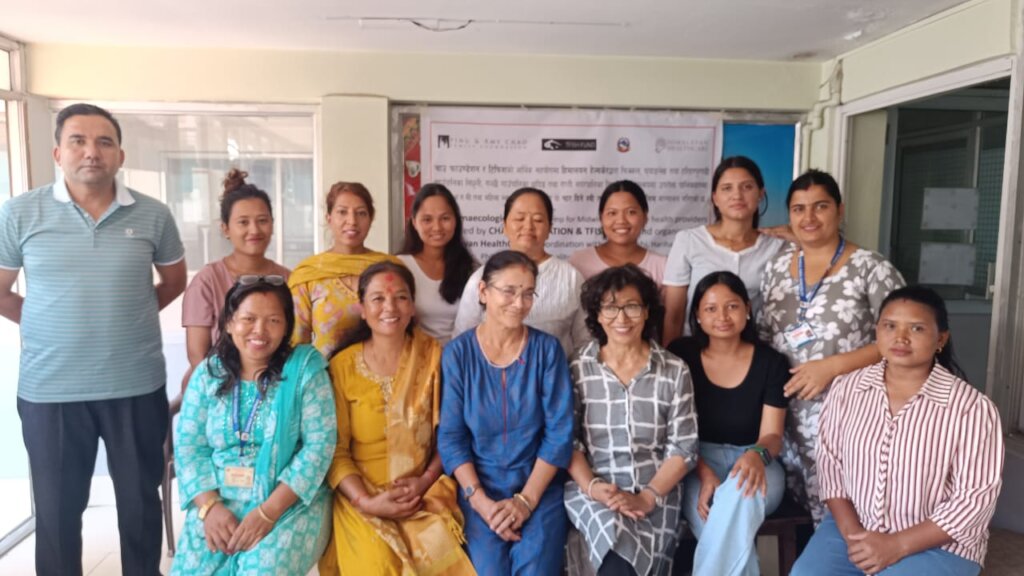
The Gynecological training for 10 Auxiliary Nurse Midwives (ANM) of three districts covering 5 rural municipalities was held from 9 to 12 July 2025 at Ganesh Man Singh Memorial Hospital, Lalitpur Nepal. The training was facilitated by Drs. Madhu S and Madhu T and funded by Chao Foundation and TFish Fund.The participants were as follows:
Day 1 Training: 9 July 2025
The first day of training on 9 July 2025 started at 10 AM. After short inauguration program, the trainers and participants introduced themselves and the health institutions that they are associated with. Discussed about the importance of the training and the opportunity to share the experiences and shortcomings with the senior trainers and to learn from them. After this, the facilitators took the following classes and discussions were held in an interactive manner.
Trainers asked the trainees to present their experiences at work and the cases that they handled and how they managed the situation. Most of them shared their experience and example some cases how they managed such as LBW, PPH, Meds indication and contraindication to pregnancy.
Pre question/Answer:
Gyne/Obs examination and overview: This topic was covered in the first day of training. It was the interactive session where participants put forward their understanding about gynecology. Following activities are performed to know genealogical condition. In this topic trainers teach how to take history of patients.
History taking
Physical examination
GC (general condition): fair, ill looking, conscious or unconscious,
Vitals: T, PR, RR, BP (temperature, pulse, respiratory rate & blood pressure)
PILCCOD: (pallor, icteric, cyanosis, clubbing, edema, dehydration)
Chest examination: B/L normal vesicular breath sound and equal air entry, crepitation and wheeze
CVS (cardiovascular system): s1 s2 or any added sound
A/P (per abdomen): any mass feel and tender
P/S (per speculum): polyp, discharge, erosion on cervix and its position
P/V per vaginal: feel any cyst or mass and motion tenderness on cervix
Breast examination: standing and hands-on waist, press by palm on the breast as quarterly on both breasts.
Emergency medicine in labor room: Discussion on medicine like Oxytocin, Magnesium Sulfate, IV fluid etc. were done with their use and function. When and how to use these medicines in which quantity and which cases.
Neonatal care and post-delivery care: A care given to the mother and her newborn baby immediately after the birth of the placenta and for the first six weeks of life. Majority of maternal and neonatal deaths occur during childbirth and the postpartum period.
PPH management: any amount of blood loss that threatens woman’s hemodynamic stability (blood loss >500 ml from vaginal delivery & >1000 ml in caesarean section or 1500 ml at caesarean hysterectomy).
Types:
Causes: 4 Ts (tone, trauma, tissue, thrombin)
Management: Three methods use in PPH
Inflate 250-500 ml saline & bleeding stops in 0-15 min in most cases
2. Vaginal Discharge:
Types of Vaginal Discharge:
Sexual infected- TV, Chlamydia, Gonorrhea, Syphilis, HSV
Non sexual infected- BV, Candida (mostly below 25 Year
Foreign body, atrophic (dryness) and malignant
Management: treatment provided as per the symptoms mentioned above, if yeast infection with antifungal medication, if bacterial vaginosis with antibiotic pills and/or cream, if trichomoniasis metronidazole or tinidazole.
Day 2 training, 10 July 2025
Early Pregnancy Loss
Abortion (Miscarriage)
It is defined as the expulsion of a fetus before it reaches viability (20 weeks of gestation)
Etiology of Abortion:
Fetal Factor
Maternal Factor
Types of Abortion
Signs and symptoms of Abortion
A small amount of bleeding early in pregnancy is common and does not necessarily mean that you will have a miscarriage. If your bleeding is heavy or happens with a pain like menstrual cramps, contact your ob-gyn right away.
Ectopic Pregnancy:
It also called extra-uterine pregnancy or when a fertilized egg grows outside of the uterus (90% in fallopian tube). As the pregnancy grows, it can cause the tube to burst (rupture) and can cause major internal bleeding.
Early warning of ectopic pregnancy:
Often, the first warning signs of an ectopic pregnancy are light vaginal bleeding and pelvic pain. If blood leaks from the fallopian tube, you may feel shoulder pain or an urge to have a bowel movement. Your specific symptoms depend on where the blood collects and which nerves are irritated.
Treatment for ectopic pregnancy:
The most common drug used to treat ectopic pregnancy is methotrexate. This drug stops cells from growing, which ends the pregnancy. The pregnancy then is absorbed by the body over 4–6 weeks.
Day 3 Training, 11 July 2025
Amenorrhea:
Amenorrhea is defined as the absence of menstruation during the reproductive years of a woman's life. Physiological states of amenorrhea are seen, most commonly during pregnancy and lactation (breastfeeding). It can be classified as primary and secondary amenorrhea
There are two types of amenorrhea:
Cause- physiological and pathological
Treatment- of amenorrhea depends on the underlying cause and various tests such as pregnancy test, thyroid function test, ovary function test, prolactin test and male hormone tests can be conducted. In some cases, birth control pills or other hormone therapies can help. If caused by thyroid disorder, it can be treated with medications.
Postpartum Hemorrhage (PPH):
Postpartum hemorrhage (PPH) being the major cause of women death in Nepal, the participants were taught on how to manage PPH
Definition: An estimated blood loss of >500ml of blood from the genital tract at vaginal delivery & >1000 ml at caesarean section or 1500 ml at caesarean hysterectomy.
Classification: 1. Primary: within the first 24 hours after delivery 2. Secondary: when it occurs between 24 hours to 6-12 weeks postpartum
Causes: 4Ts (tone 80%, trauma, tissue and thrombin)
The principles of management: ABC- Airway, breathing & circulation; Replace circulating blood volume & Stop blood loss; Medical management: Oxytocin, Ergometrine, Carboprost and Misoprostol; Non-medical management: Uterine massage, Bimanual uterine compression, Compression of aorta against sacral promontory, Anti-shock garment and Intra uterine pressure
Pelvic Organ Prolapse (POP):
Descent of one or more of the genital organs below their normal anatomical position. Prolapse is a condition in which organs, which are normally supported by the pelvic floor, namely the bladder, bowel and uterus, herniate or protrude into the vagina due to weakness in their supporting structures.
Cause:
Pelvic organ prolapse happens when the muscles or connective tissues of the pelvis do not work as they should. The most common risk factors are: Vaginal childbirth, which can stretch and strain the pelvic floor. Multiple vaginal childbirths raise your risk for pelvic organ prolapse later in life.
The four categories of uterine prolapse are:
Symptoms of pelvic organ prolapse (POP):
Treatment of pelvic organ prolapse:
Any surgical procedure may pose risks or create complications, nonsurgical procedures are usually the first line of treatment for POP.
Nonsurgical treatments
Surgical treatments
Surgery may be an option if your symptoms haven’t improved with conservative treatments and if you no longer wish to have children.
Pelvic Floor Exercises
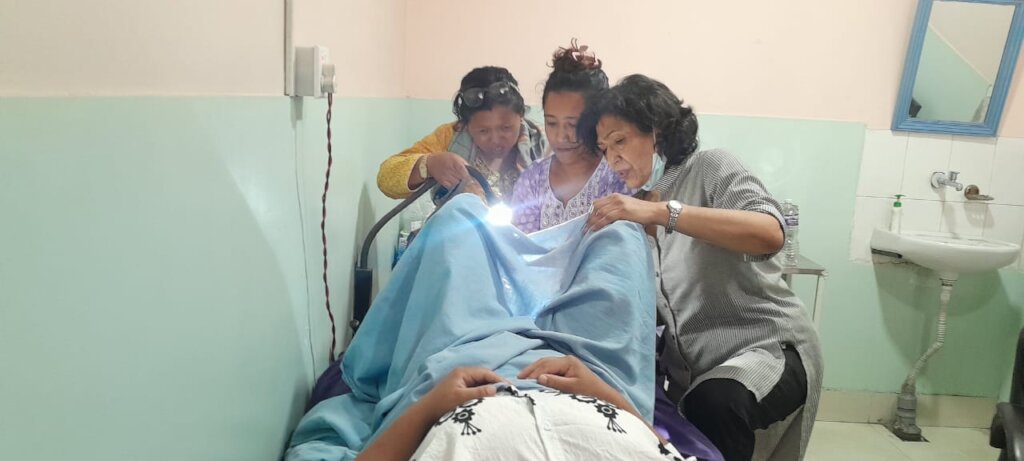
Demonstration of pelvic floor exercises were carried out by the expert at the Bluebird International Clinic.
Importance of nutrition during pregnancy
This class was taken by Ms. Urmila. She emphasized on why proper nutrition during pregnancy is crucial for the health and development of both the mother and the child and how it supports fetal growth, reduces the risk of complications, and can positively impact the baby's health later in life. A balanced diet with essential nutrients like folic acid, iron, calcium, and others is vital during this period. Food such as fruits, vegetables, whole grains, lean protein, and dairy products need to be taken in good quantity and stay hydrated by drinking plenty of water throughout the day.
Day 4 Training, 12 July 2025
Dysfunctional Uterine Bleeding (DUB):
Itis a condition that affects nearly every woman at some point in her life. Also called abnormal uterine bleeding, DUB is a condition that causes vaginal bleeding to occur outside of the regular menstrual cycle. Certain hormonal conditions and medications may also trigger DUB. The main cause of dysfunctional uterine bleeding is the imbalance in the sex hormones.
Signs: Anemia, abdomino-pelvic examination is usually normal. If uterus is enlarged, fibroids are likely
Symptoms: Heavy or prolonged vaginal bleeding, dysmenorrhea (on/off); pelvic pain or uncomfortable pressure
Investigation: Pregnancy test, CBC, TFT, USG
Management: Tranexamic and Mefenamic acid are useful to decrease loss during periods, oral contraceptive pill to regulate irregular cycle
Menorrhagia (more than 80 ml) is very common among age below 45 years
How is DUB diagnosed:
The diagnosis of DUB depends on a thorough history and physical examination to exclude organic disorders. In older women, endometrial biopsy should be done before starting therapy. The treatment depends on an understanding of the menstrual cycle.
Complications of chronic abnormal uterine bleeding can include anemia, infertility, and endometrial cancer. Acute abnormal uterine bleeding, severe anemia, hypotension, shock, and even death may result if prompt treatment and supportive care are not initiated.
Cervical Cancer
It is one of the most common genital cancer among Nepalese women, number one among all the cancer reported in Nepal and has a high morbidity and mortality rate. It affects women at a relatively younger age. Cervical cancer has a very long pre-cancerous condition (10 to 20 years) & detection during pre-cancerous condition is possible by screening; and the condition is curable by simple treatment.
VIA (visual inspection with acetic acid):
Screening carcinoma of cervix with simple technic is called VIA. This is the technic applicable in all level of health institutions.
Acidic acid with normal saline applies around the cervix and leave for a minute then observe the color.
Result: Color changes if positive and no changes if negative.
Also, Pap smear, LBC (liquid bases cytology), HPV DNA tests are conducted
Signs and Symptoms:
Asymptomatic:
Almost all cases of cervical cancer are caused by persistent infection with some high-risk types of the Human Papilloma Virus; this is the biggest risk factor for cervical cancer. The other main risk factor for cervical cancer is smoking. Around eight out of 10 women will become infected with genital HPV at some time in their lives. Most women who have the HPV infection never get cervical cancer; only a few types of the HPV result in cervical cancer.
Management:
Preventive: HPV vaccine and awareness to predisposing factors, chemotherapy, radiotherapy and surgery
Review of Day 1, Day 2 and Day 3 topics
Pre-test Questionnaire:
The participants were able to answer 80-90% of the questions.
Patients served during the training: 15
Project reports on GlobalGiving are posted directly to globalgiving.org by Project Leaders as they are completed, generally every 3-4 months. To protect the integrity of these documents, GlobalGiving does not alter them; therefore you may find some language or formatting issues.
If you donate to this project or have donated to this project, you can receive an email when this project posts a report. You can also subscribe for reports without donating.



Support this important cause by creating a personalized fundraising page.
Start a Fundraiser