By Mitch Lewis | Executive Director
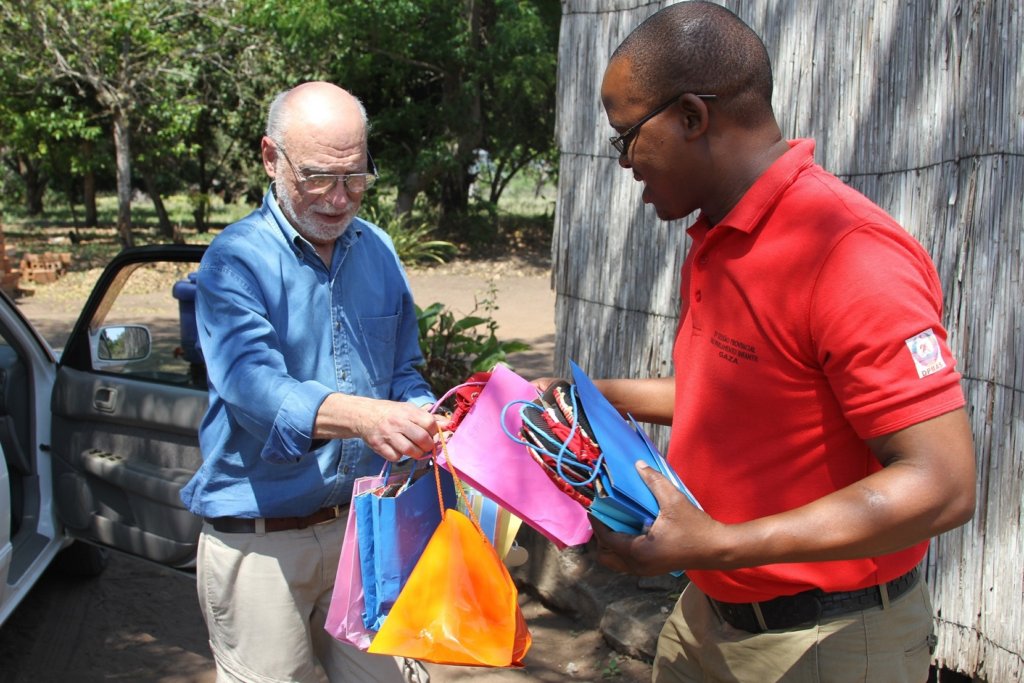
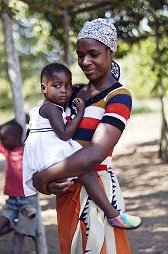
I am writing this report to you while I am returning to the U.S. from our trip to Mozambique, Southern Africa. Accompanied by Board member Chris Morgan, we flew to Mozambique to help our partners launch the initial cottage industry. The trip also included a visit to the rural village of Macuane, where caregivers were taught how to make KLEM shoes for their children.
Over the years, I have read extensively about Africa. However, no amount of reading or watching videos can prepare you for the experience of actually being in Mozambique. I am truly overwhelmed by what I have seen and felt. The trip began in Maputo, where the cottage industry will be operated in the vocational training facility of Mozarte, whose mission is to provide life skills to women and disadvantaged youth. After 1.5 years of emails and long Skype calls, I finally got to meet our Mozambique team in person. Rita, our team leader and project coordinator in Mozambique is a beautiful young woman with an easy smile and the charm that it takes to melt the heart of the most hardened bureaucrat. She has a thorough understanding of how Mozambique works (or doesn’t) and the skills and determination to overcome all obstacles. Moises is our master shoe-maker, who grew up as a barefoot child and had the perseverance to overcome his surroundings. Tomas is a very talented artist, who has exhibited globally, including in Atlanta, New Mexico and New Jersey. Together, they will be training the first group of ten young apprentices in Mozarte. Ultimately, they will also be supervising the production of the “Fashion Shoes” designed by students at NC State University, which will be sold both nationally and internationally to sustain the program and guarantee its continuity. Additionally, Rita will be coordinating all KLEM community activities.
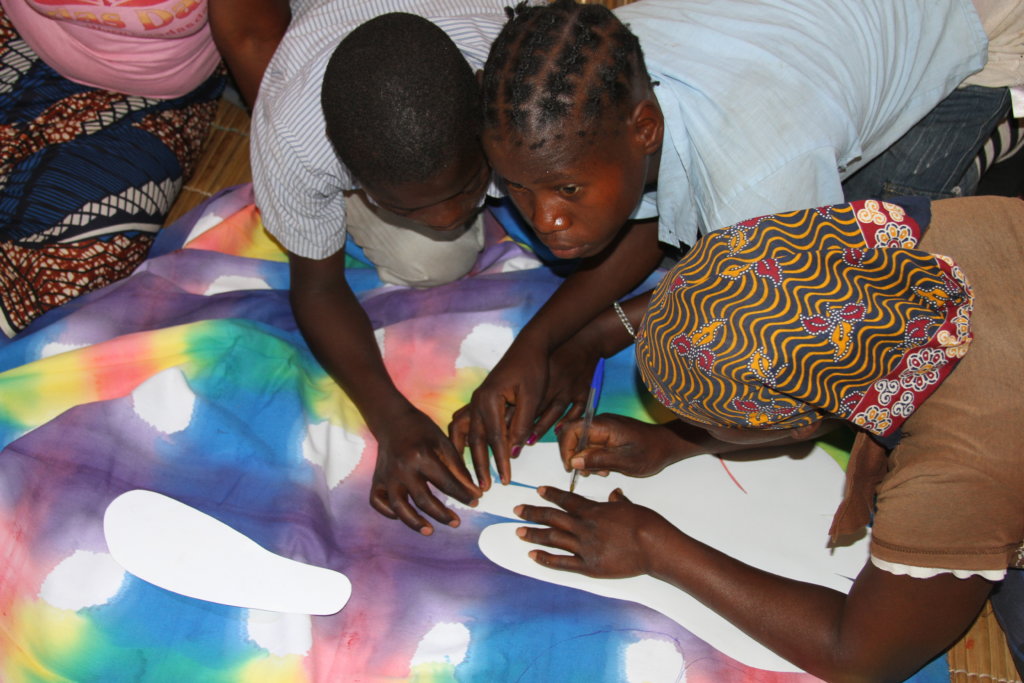
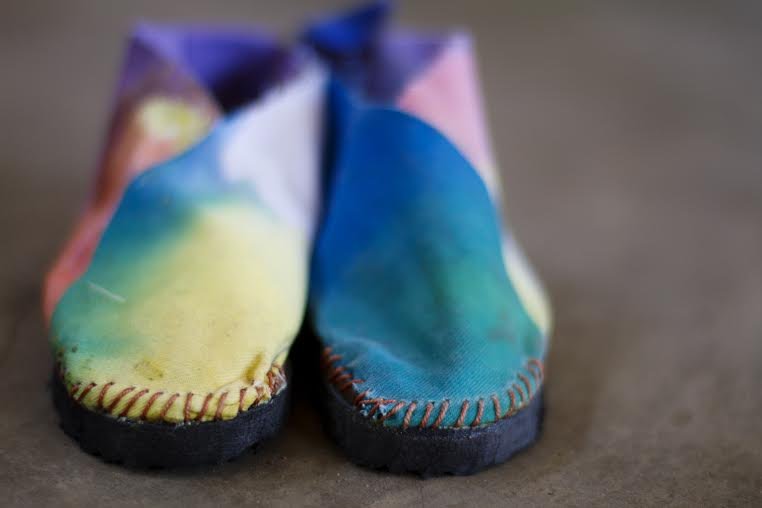
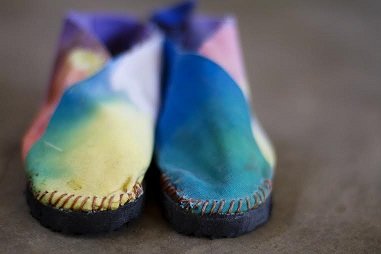
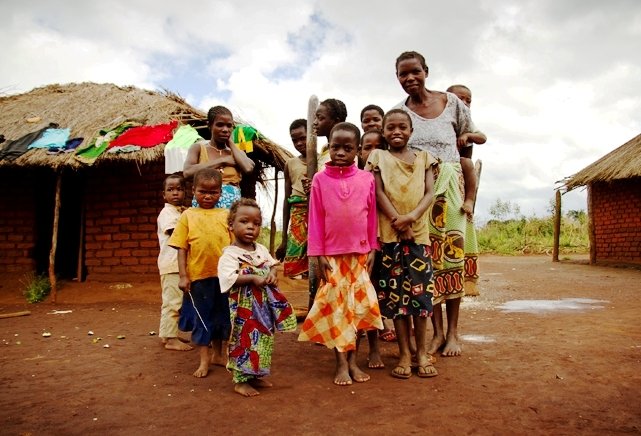
During the first two days of our visit, we prepared for our first KLEM workshop which would be held in the community of Chichango. Tomas hand died the fabric that would be used for the upper part of the shoes using various folding techniques that he had developed. The results were quite beautiful. For our pilot program in the rural areas, it was determined by social services, with whom we have been working, that we begin in the Chicango community of Macuane, Belene District, which is a 4 hour drive from Maputo. This is a 4 hour trip that spans 2 worlds.
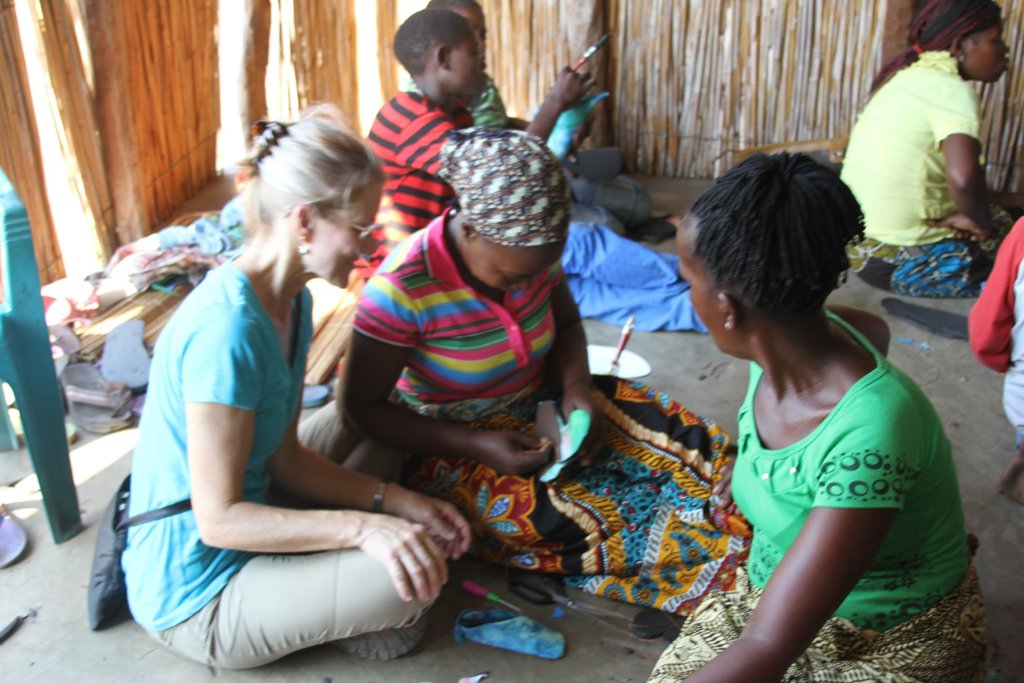
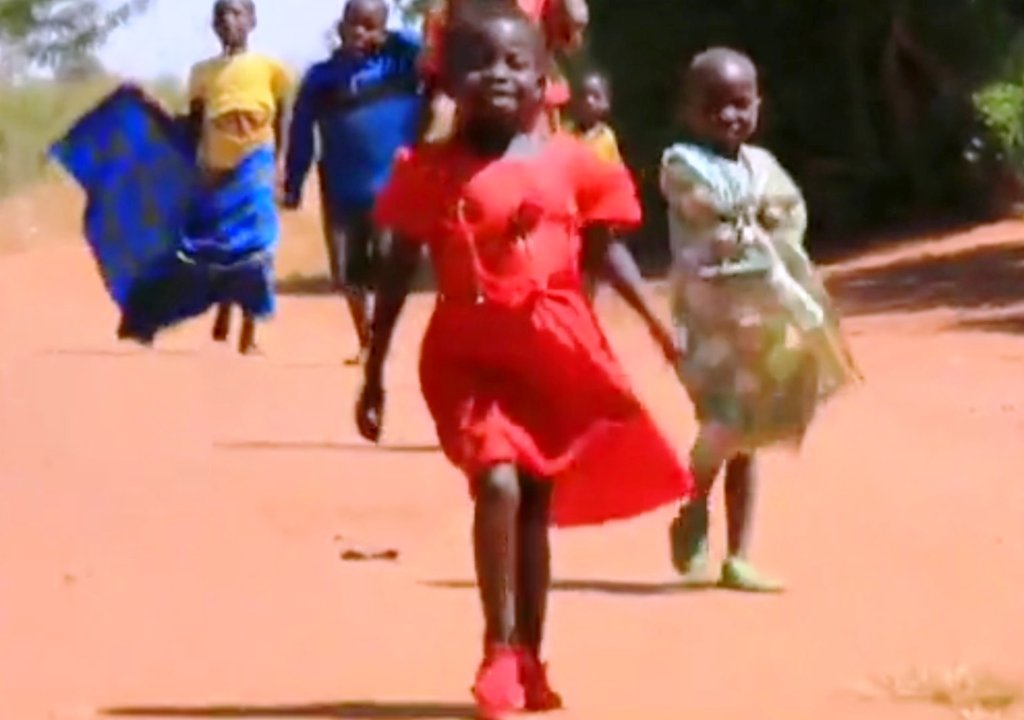
In Maputo, enormous cranes fill the skyline as its development outstrips its infrastructure. Power outages have become commonplace recently as demand outpaces supply. In addition to the power problems another infrastructure issue is the road system. Any car manufacturer that used the slogan “Our car survived the roads of Mozambique” is one that I would surely buy. Fortunately, among Rita’s many skills was the ability to zip down the roads at top speed swerving around potholes that could swallow a small car, all the while barely avoiding the usual Mozambican road traffic of ladies carrying bundles of wood or cans of water on their heads, oxen, dogs, chickens and school children. Along the way we were joined by 3 social workers who accompanied us to Chicango. One was a health worker who would explain to the village the importance of proper hygiene. The official language of Mozambique is Portuguese, but the country has dozens of different native languages. In all Gaza Provence, where Macuane is, they speak “Changane.” Therefore, everything I said had to be translated by Rita into Portuguese and then retranslated again into Changane. The Social Services had determined that we would train caregivers of the 30 most vulnerable children. So we all gathered in a small grass hut: 30 caregivers, 30 children, 3 Social Service workers, our team of 5, and other members of the community called in to give support to the caregivers. Using the hub and spoke approach, selected people among that group will move on to continue training with Rita, Tomas and Moises to perfect the process as well as to gain the ability to pass this knowledge on to others in their community and surrounding villages, following a working plan developed by Rita and the Social Services.
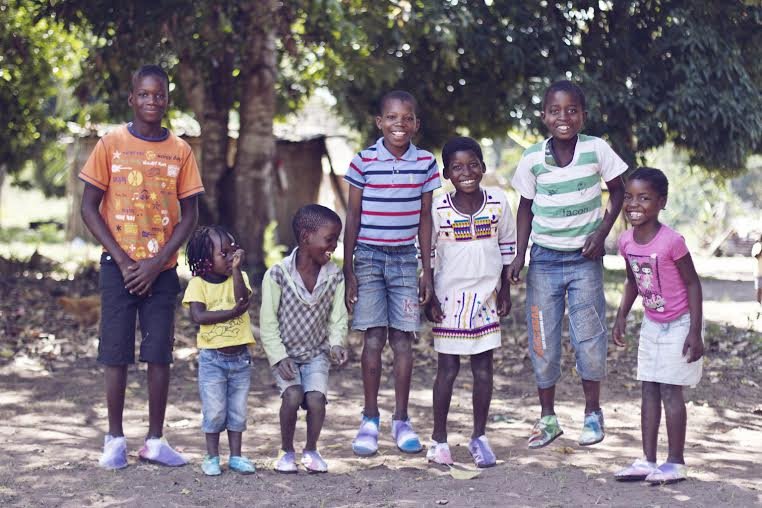
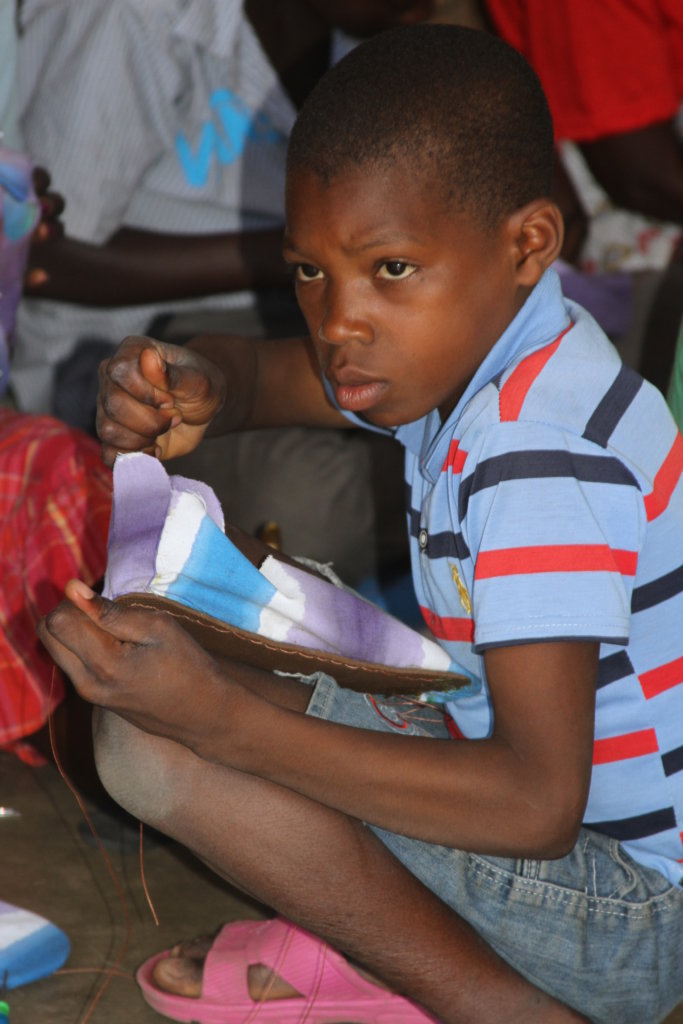
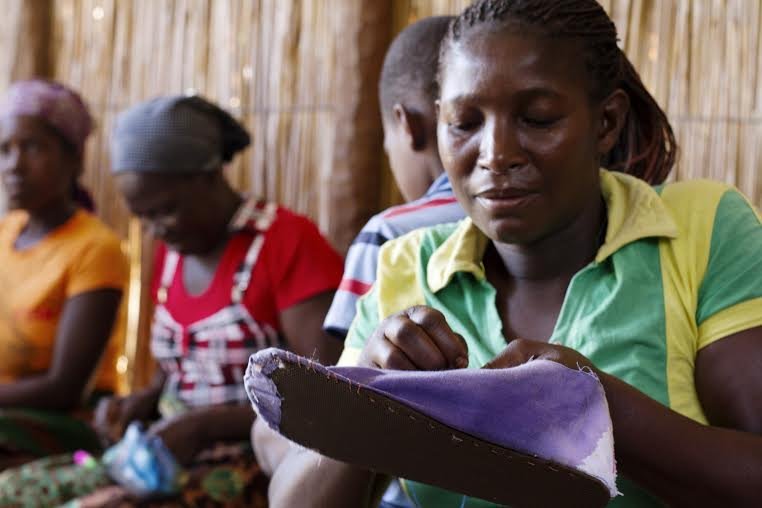
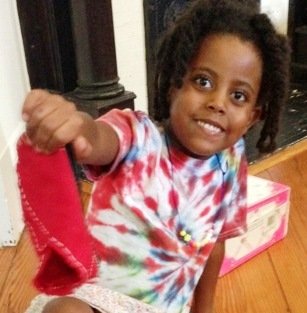
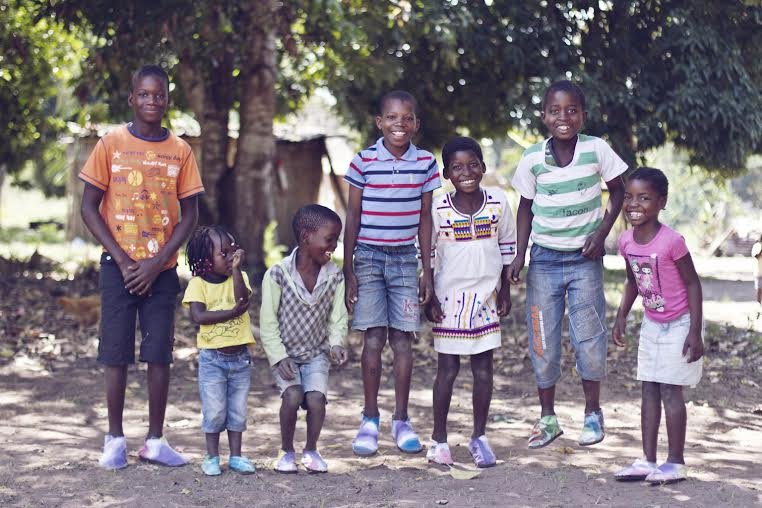
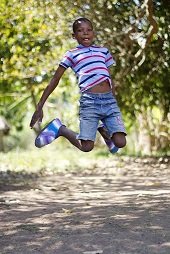
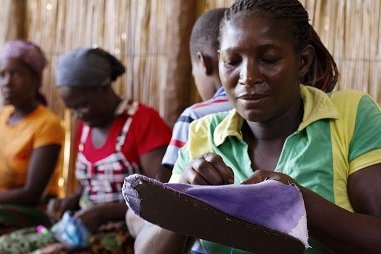
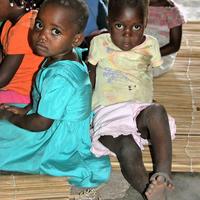
So after one and a half years of planning, this was the moment of truth. I secretly wondered… would the mothers be capable of, or even have the interest to make the shoes? I am very pleased to report that our pilot project was an outstanding success. The hut was filled with laughter and banter of which I had absolutely no understanding. Since the village had no tables, mothers were cutting KLEM patterns while on their knees on a concrete floor, many with children strapped on their backs by capulanas (their native fabric). Others were making KLEMS while breast feeding. They worked all day Wednesday and half of Thursday without a complaint. The results were amazing! The women and men were all so proud of their handiwork, and the children were thrilled to own a pair of beautiful, hand-made shoes colored by Tomas beautiful fabrics.
I am sorry that each of you could not have accompanied us on this trip, for it reaffirms an appreciation of how blessed we all are. I often think about the randomness of where we are born, and how different we would be if we began our life journey in a place like Chichango, Macuane. One of my favorite quotes is “remember always that to whom much is given, much is expected.” We hope that eventually the “Fashion Shoes” being made in Mozarte will generate enough income to make the program self -sustaining. But until that time, we can only continue this program through your generous support.
I am so grateful to all of you, for it was only through your generosity that we were able to reach this point. I hope that you will continue to support our efforts and together we will improve the health outcomes of the beautiful children of Mozambique. Thank you.
Mitch Lewis
Project reports on GlobalGiving are posted directly to globalgiving.org by Project Leaders as they are completed, generally every 3-4 months. To protect the integrity of these documents, GlobalGiving does not alter them; therefore you may find some language or formatting issues.
If you donate to this project or have donated to this project, you can receive an email when this project posts a report. You can also subscribe for reports without donating.