By SHARE NGO | Director
SHARE NGO Baseline Survey - Health, VHTs work in Mbale District!
Interviews. Locals.
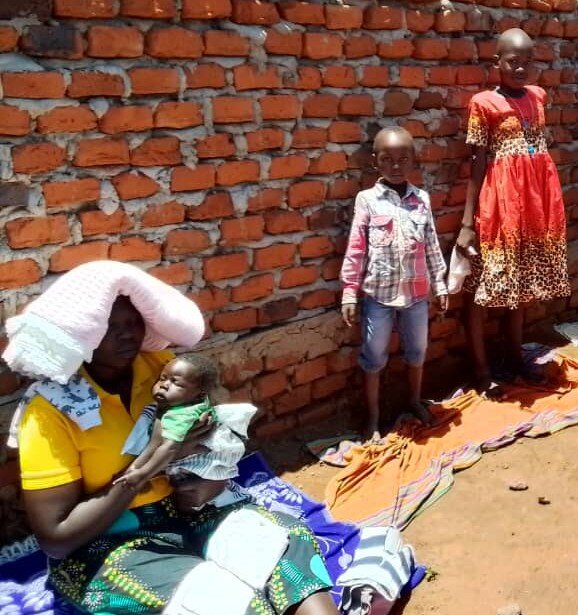
For Lucy, a 35-year-old mother from Mbale, Mt Elgon region said, accessing treatment at the health facility has always been a big challenge. Part of the problem is the distance from her home to the facility. As a result, she has not benefited from services of Village Health Teams (VHTs)who go around the communities to offer maternal health care services to women.
Easing the work.
But now with a new NGO SHARE in her village. VHTs need bicycles to ease their work. she is optimistic her entire community will benefit from the available healthcare services and advise that the VHTs will offer.
VHTs program aims to improve maternal, newborn and child health in all the District's in Uganda. The strategy is on addressing causes of under-nutrition in pregnant and lactating mothers and improving access to and increasing utilisation of maternity care services by pregnant women and mothers of newborn infants.
19-year-old Brenda also says the bicycles will ease transportation of mothers to health facilities, where they previously had to walk long distances. Community mobilisation for outreaches will also become easy as the VHTs will be able to reach the farthest of every home, thereby creating awareness.
Making a difference
SHARE NGO’s monitoring and evaluation volunteer field officers explains how the bicycles will make a difference: The VHTs look at issues such as access to safe drinking water, sanitation hygiene and latrine coverage in the homes.
From the field reports, VHTs usually spend at least 30 minutes in every homestead, it would take them longer time to cover a wide range of households without proper means of transport. John Chairman local government says even though the government has distributed some bicycles to the VHT project, not all of them have benefited and therefore there is need to get more bicycle donation's, with the aims to cover the gap and ensure that more mothers are reached.
VHTs, Ugandas Frontline Health Workers.
VHTs are often the first & only contact for health services for millions of people around the most rural area's. They are key to improving health equity and reaching rural poorest. Community Health Workers: Tackling Avoidable Childhood Deaths from Malaria Head-on.
Working primarily in a voluntary capacity, VHTs are ordinary community members who receive basic health care training to provide home visits and health management services.
Four-member Community Health Worker teams in Uganda provide home visits and health management services for local communities.
SHARE NGO noted that Limited funding prevents these workers from receiving regular and consistent supervision. However limited their supervision, the impact of each team has enabled the country to achieve reductions in morbidity and mortality among children.
Background
Community Health Workers in Uganda work as members of Village Health Teams (VHTs). The VHTs Program was established in 2001 as a cost-effective way to link communities with health services. VHTs support the Ministry of Health (MOH) to bring health services closer to the population.
Implementation
In Uganda, each village is mandated to have four VHT members, at least two of whom provide integrated Community Case Management (iCCM) of childhood illnesses.
Roles/responsibilities
The main role of VHTs is to mobilize communities for better health services, hence bridging the gap between communities and health facilities. Other specific roles of VHTs include: conducting home visits, managing malaria, diarrhea and pneumonia among children under five years, distributing health commodities, and conducting referrals to health facilities.
Training
All VHT members must be above 18 years and able to read and write, preferably in the local language. Initial training is provided to all VHT members, with those involved in the provision of iCCM receiving additional training. Refresher trainings are conducted by the MOH and implementing partners as needed although on an irregular and non-standardized basis.
Supervision
SHARE NGO field reports. VHTs are supposed to report to a health facility within their community where a health worker supervises them. A parish coordinator often offers support to all VHTs within a parish, and the District Health Educator is mandated to oversee the work of all VHTs in the district. However, due to limited funding and human resource capacity, supervision of VHTs is often irregular and inconsistent.
Incentives and remuneration
According to the MOH VHT strategy, VHT members are community-selected volunteers who do not receive financial payment for their services. However, they may receive non-monetary and sometimes ad hoc monetary incentives from the MOH or from their implementing partners that work with them in communities. These incentives are not standardized and vary throughout the country, and mainly depend on the implementing partner that is supporting the VHTs.
Impact
VHTs have made a significant contribution to increasing access and utilization of health services as well as improving health outcomes in communities, including reduction of morbidity and mortality of children younger than five years of age.
Malaria
In Uganda, over 18,000 children under five die from malaria each year. Delayed treatment is a common cause of childhood deaths, especially in rural Uganda where distance to health facilities presents a major challenge.
Most of the children would suffer from malaria, diarrhoea, and coughs. But instead of taking the children to the health centre, mothers would often just give them paracetamol at home,” explains Lucy 65 a volunteer community health worker in Mbale district. “Sometimes, the children would die as a result. As a mother and a grandmother, this is very painful to witness, when you know it is avoidable.”
As a result, the Uganda Ministry of Health with support from partners such as Malaria Consortium, has trained over 12,500 volunteers, locally known as Village Health Team members (VHTs) to conduct extensive health education and prevention activities. This includes diagnosing and treating malaria, pneumonia and diarrhoea in children under 5 years at community level, as well as referring severe cases and sick newborns to the nearest health facility. This strategy is known as integrated community case management (iCCM).
iCCM has the potential to significantly reduce childhood mortality and, if implemented appropriately, can act as a health system strengthening tool, allowing essential care to reach remote villages while lessening the strain on overburdened rural health facilities.
Peter 25 said. “I became a VHT in 2009 because I wanted to help the children in the village suffering from diseases,”. “There was a mass distribution of long lasting insecticide treated nets back then and I helped educating people on the correct use of the nets.”
SHARE NGO findings, In Mbale district alone, more than 98% of VHTs trained in iCCM remain active. People have increased knowledge and awareness of prevention and treatment of childhood diseases.
iCCM has resulted in a reduction of almost half in outpatient attendance. We know this can be attributed to the VHTs because when they have medicine stock outs, the outpatient numbers shoot up immediately.
Need for VHTs Support!
As volunteers, VHTs spend their days working to support their families and try to balance providing care for the children in their communities with their own responsibilities. It is often asked how these volunteer community health workers remain motivated and committed.
According to DHO Mbale “They are our key entry persons in to the communities; they mobilise for health programmes and follow up after, they provide health education, and they detect and inform on trends in diseases. So we involve them in any relevant workshops and seminars, we show our appreciation at political functions, and we keep motivating them through quarterly support supervision visits. The VHTs are our colleagues, and we make sure they feel their importance.”
He added, Malaria Consortium is committed to the sustainability and scale up of iCCM programmes in Uganda and in many other sub-Saharan African countries including Ethiopia, Mozambique, Nigeria, and South Sudan.
The organisation’s work focuses on providing the highest quality of care through these programmes while ensuring they are used as a strategy for wider health system strengthening.
Francis 45, a VHT in Mbale concludes, “I feel good. This was my goal, to reduce the number of people dying, so I feel happy and proud. If all the VHTs stopped working, the situation would be very bad. We would go back to children dying.”
Phiona 30, a Village Health Team Volunteer in Mbale. She has gained lots of experience and An opportunity to serve, learn, and teach as VHT ne for 3 year's.
Jane 50, Being a VHT is not without its challenges. It can be difficult to find resources to travel to the health facility, outreach activities, or to people’s homes. Product stockouts are a frequent challenge, sometimes travels to the facility to pick up products only to find that they are not available, so you must return to the community without all the supplies needed.
She said. VHTs maintains a positive outlook, explaining that “being a VHT has made them popular in their Community's, and they feel very proud whenever, to be referred to as a health care provider, getting to fulfill their dreams of serving their Community's in an important role.”
Conclusion!
The Uganda Ministry of Health established the Village Health Team (VHT) program to empower communities to take part in the decisions that affect their health, mobilize communities for health programs, and strengthen the delivery of health services at the household level. VHT volunteers have been offering family planning services for more than 15 years and play a critical role in increasing access to contraception. The mix of methods they provide to villages and rural areas includes injectable contraceptives, like DMPA-SC.
Globally, momentum is growing around advocacy to ensure that all lay health workers, including VHTs are paid for the work they perform. In addition, recent research examining Uganda’s community health worker programs has highlighted the need to better support these workers, including through improved coordination, streamlined data collection, local ownership, and sustainable funding.
Project reports on GlobalGiving are posted directly to globalgiving.org by Project Leaders as they are completed, generally every 3-4 months. To protect the integrity of these documents, GlobalGiving does not alter them; therefore you may find some language or formatting issues.
If you donate to this project or have donated to this project, you can receive an email when this project posts a report. You can also subscribe for reports without donating.



Support this important cause by creating a personalized fundraising page.
Start a Fundraiser