By Rina Rosenberg (Jabareen) | International Advocacy Director, Adalah
Dear Friends,
With the start of the new school year this month, September 2017, Adalah’s focus remains on access to education, including securing the most basic safety measures for Arab Bedouin children to attend school, in the Naqab (Negev) desert in the south of Israel. We wish to take this opportunity to report on a success and a new case on which we are working.
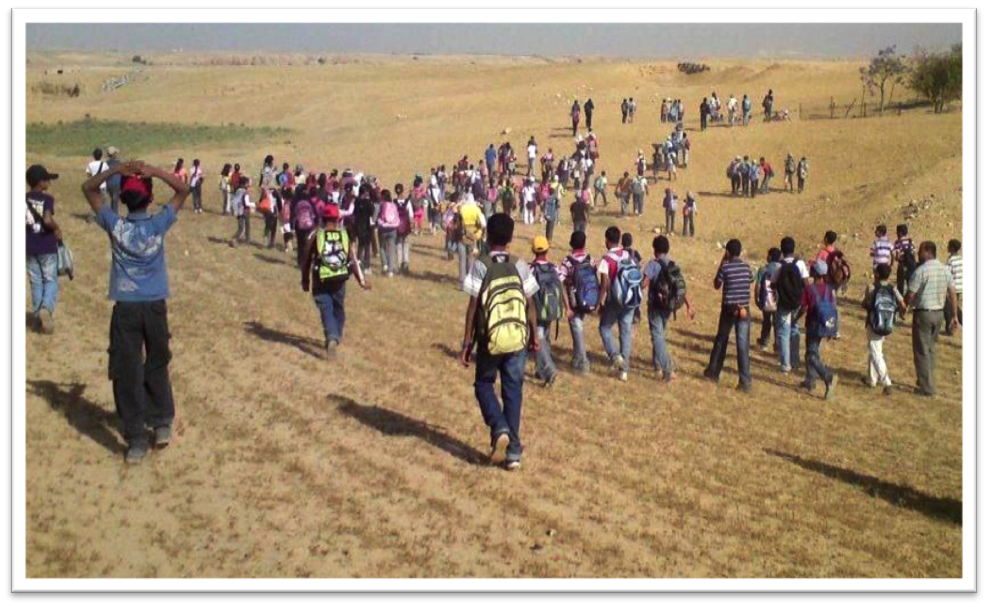
First, the success. In July 2017, the Education Ministry announced before the Be'er Sheva District Court that the state intends to fund the construction of safe school bus stops for children living in six Bedouin villages in the Naqab, This commitment was made in response to a petition filed by Adalah in January 2017 on behalf of parents against the Education Ministry and two local Regional Councils demanding these bus stops.
As Adalah argued in its petition, "Hundreds of school children currently gather at random locations close to main roads with no signs, sidewalks or shelters. The lack of bus stops poses a serious safety hazard that endangers the lives and physical wellbeing of these children … These conditions do not exist in schools in [Israeli] Jewish communities in the Naqab, where authorities take care to establish proper bus stops and to eliminate safety hazards. The failure to establish proper school bus stops [for the Bedouin community] creates a situation of blatant inequality in the enforcement of the law."
The ministry further promised before the court that the construction of the bus stops would extend to related safety infrastructure, as Adalah demanded, including protective fences, sidewalks and pedestrian crossings, etc., to resolve numerous hazards that the children currently face on their way to and from school. Further hearings on the case will take place in this fall to monitor the implementation of the state's commitments.
Second, the new case. You might be very surprised to learn that numerous schools in Bedouin villages in the Naqab are not connected to the national electricity grid. In previous cases brought by Adalah, the Supreme Court found that the state’s failure to connect the schools was totally unacceptable and cannot be allowed to continue.
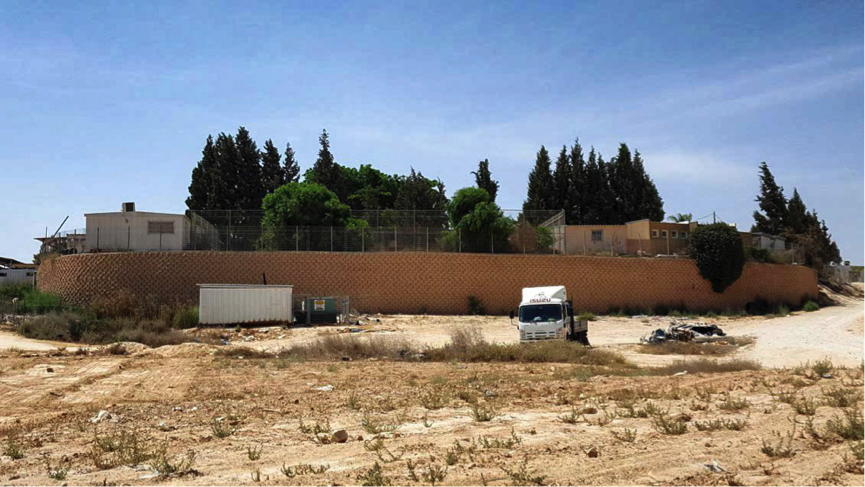
Adalah recently learned that 3,000 kids in the unrecognized Arab Bedouin village of Wadi al-Na'am study in schools powered solely by diesel generators. In September, Adalah sent a letter on behalf of the Wadi el-Na'am parents committee and the local village council, to senior Israeli officials and the Israel Electric Corporation demanding that they connect the schools in the village to the national grid.
Adalah wrote in the letter that the state's failure raises grave educational and safety concerns:
"The diesel deliveries take place during the school day when students and staff are all onsite, which undoubtedly poses a danger to their health and safety. Access to the generators is not entirely blocked off and children are able to walk over to the generators during recesses in the schoolyards, putting them in life-threatening danger. The generators also produce noise, which disturbs classes. In many cases during power outages caused by generator failures, principals are forced to cancel school entirely – particularly during periods of heavy heat and cold winter temperatures. During these conditions, it is impossible to hold classes and insufferable for students and educational staff alike."
The Wadi el-Na'am local council stated:
"Our children have the right to study in reasonable conditions, like any other child in the State of Israel. It is shameful that in 2017 we have to ask to get a school connected to electricity. The current situation is unsafe and likely to cause accidents. Electrical power lines already run through the village but only serve the chemical plants located nearby. We demand that the Education Ministry take immediate action to connect schools in the village to the electricity grid." Power lines from the electricity generating station pass over homes, schools, and businesses in Wadi el-Na’am but connect only to nearby chemical plants and not to the schools.
Your generous support makes it possible for Adalah to continue to fight for the basic right of access to education. We sincerely appreciate you help in ensure that these children, and many more, can #MakeTheGrade.
Thank you for your continued support for our work.
Stand with Adalah, Stand for Justice!
Project reports on GlobalGiving are posted directly to globalgiving.org by Project Leaders as they are completed, generally every 3-4 months. To protect the integrity of these documents, GlobalGiving does not alter them; therefore you may find some language or formatting issues.
If you donate to this project or have donated to this project, you can receive an email when this project posts a report. You can also subscribe for reports without donating.