By Iain Guest | Project coordinator in the US
This report is going to friends of The Advocacy Project (AP) and Jeevan Rekha Parishad (JRP - “Lifeline”) who have donated to our appeal on behalf of tribal women in the state of Odisha, India. Thank you for your support!
Our partnership with JRP began in 2022 at the height of the COVID pandemic. At the time, AP was funding community-based vaccination campaigns in Nepal, Kenya and Bangladesh. We received a request from JRP – could we support a similar campaign for tribal people in Odisha? JRP explained that tribal villages are inaccessible and far from health centers, which made them acutely vulnerable to the COVID virus.
We were happy to get involved and JRP helped 876 ageing tribal people visit clinics and receive double vaccinations – on a budget of less than $1,500.
The following year, 2023, JRP used the same approach of community mobilization and education to eliminate malaria as a threat to vulnerable families in ten tribal villages.
EXPANSION
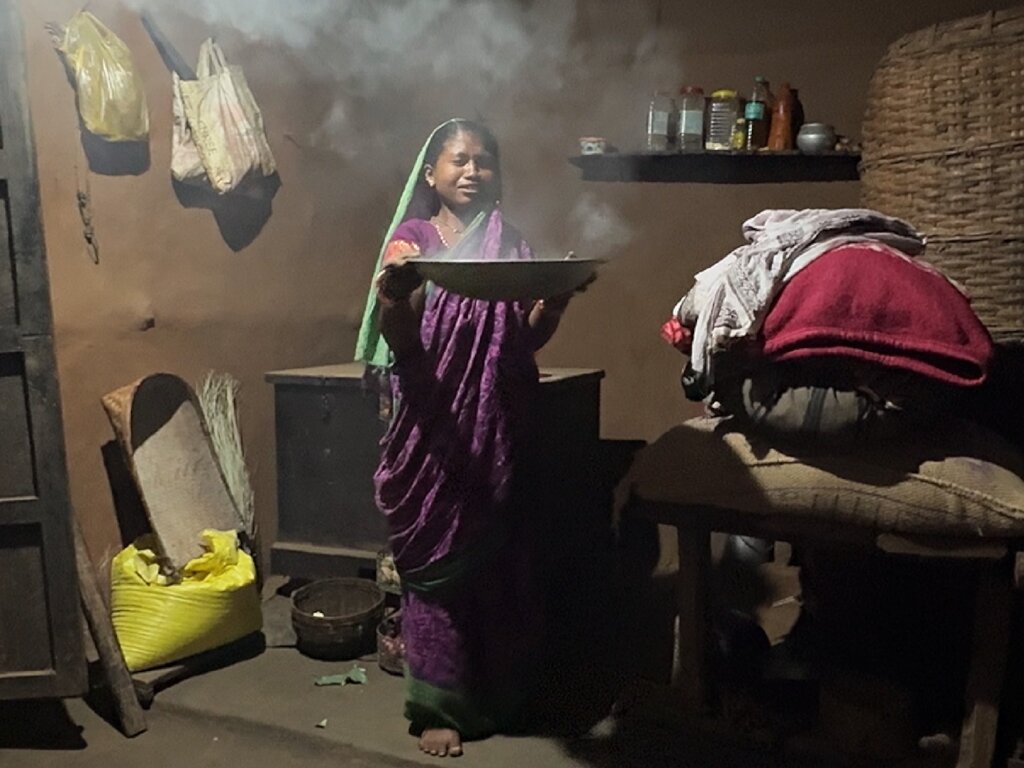
After these two successes, JRP decided to expand the war against malaria. Manu, the founder of JRP and his team proposed a new start-up to produce a mosquito repellent from the Neem tree. The Neem has long been known as a natural anti-malarial, and villagers use smoke from Neem leaves before they sleep to keep mosquitoes at bay.
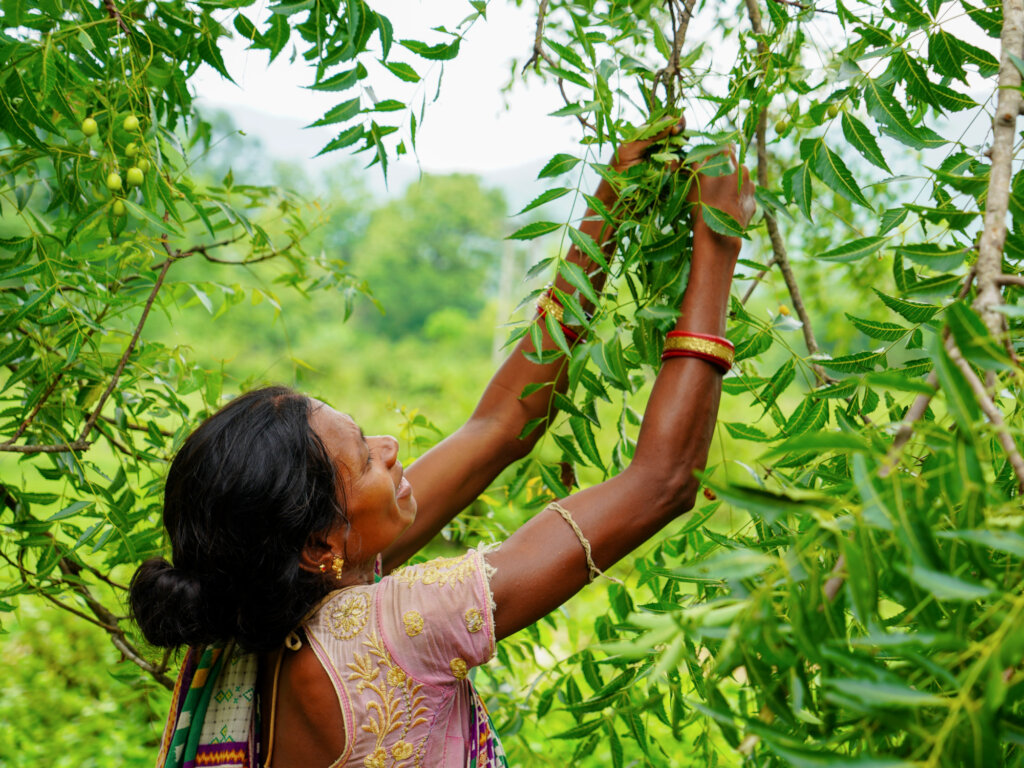
JRP decided on a name for the new oil - Neemola – and put out the word for volunteers in the villages. Fifty women from ten villages signed up and formed a cooperative. Thirty-four cooperative members collected just over a ton of seeds between June and August. The seeds were then taken to the JRP field office in the town of Daspalla where they were ground into oil and bottled by the remaining 16 cooperative members.
By October the start-up had produced 2,700 bottles of Neemola oil. Of this, 1,531 bottles were sold for 7,655 rupees ($87). Another 1,067 bottles remained in stock, ready for distribution.
Both partners considered this to be a big success! The basic idea – of producing oil from seeds – seemed to work. The raw material was entirely natural, cost-free and widely available. Tribal women were leading the project and getting paid. The Neemola brand was attracting attention.
ASSESSMENT VISIT AND VIDEO
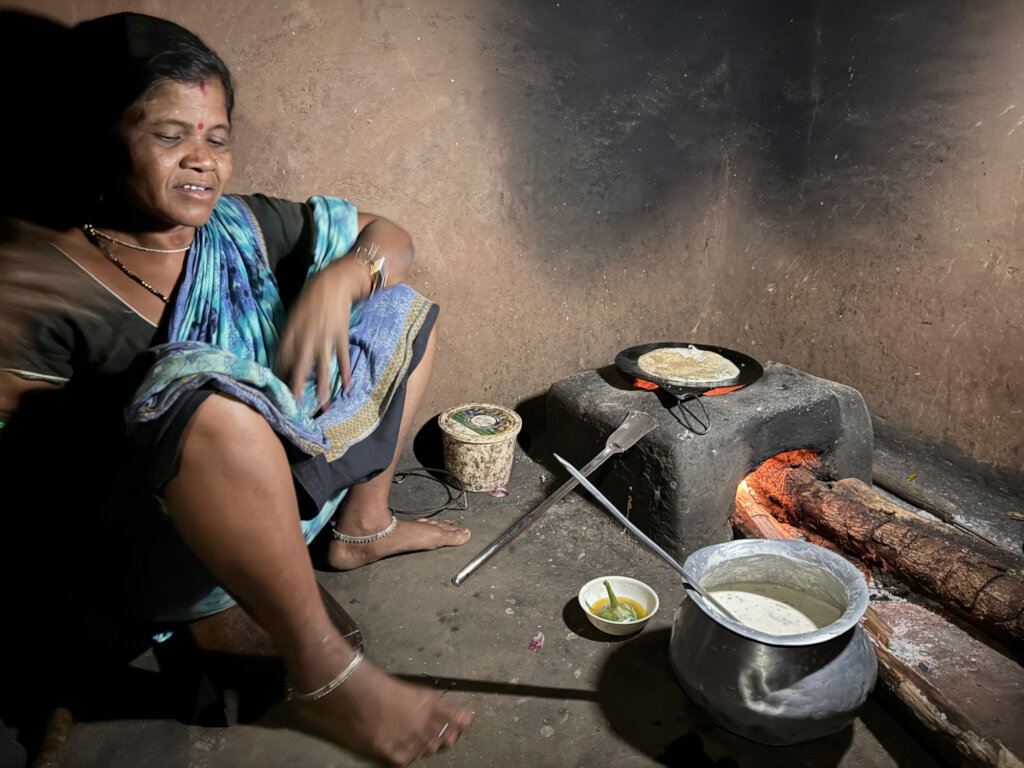
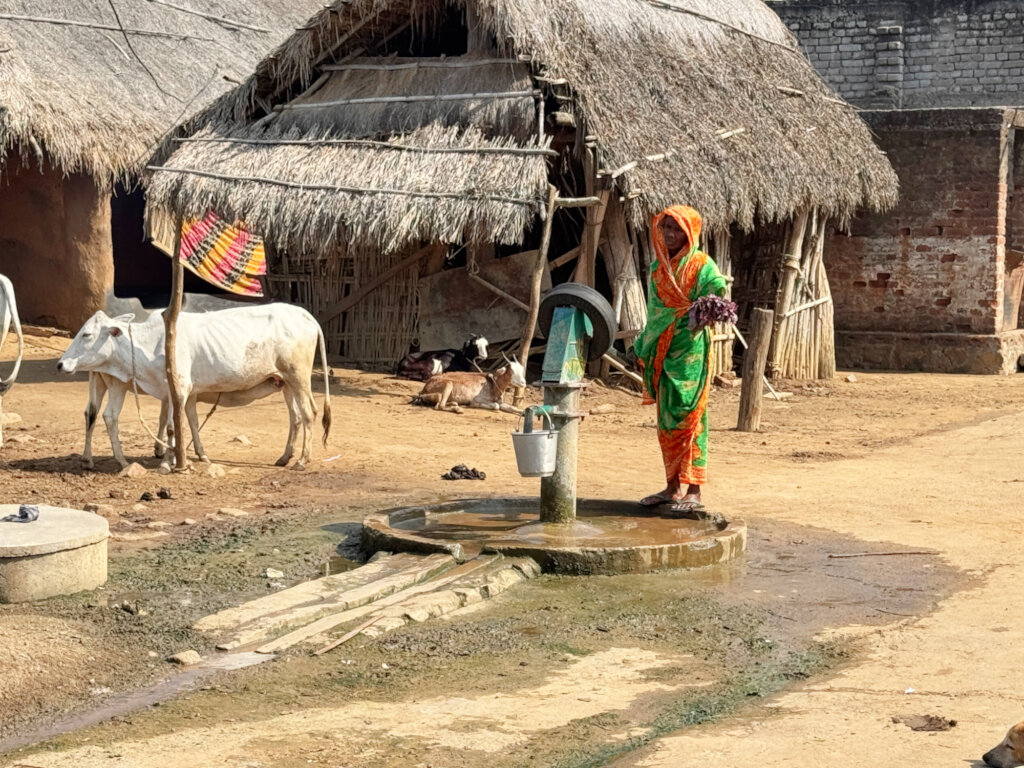
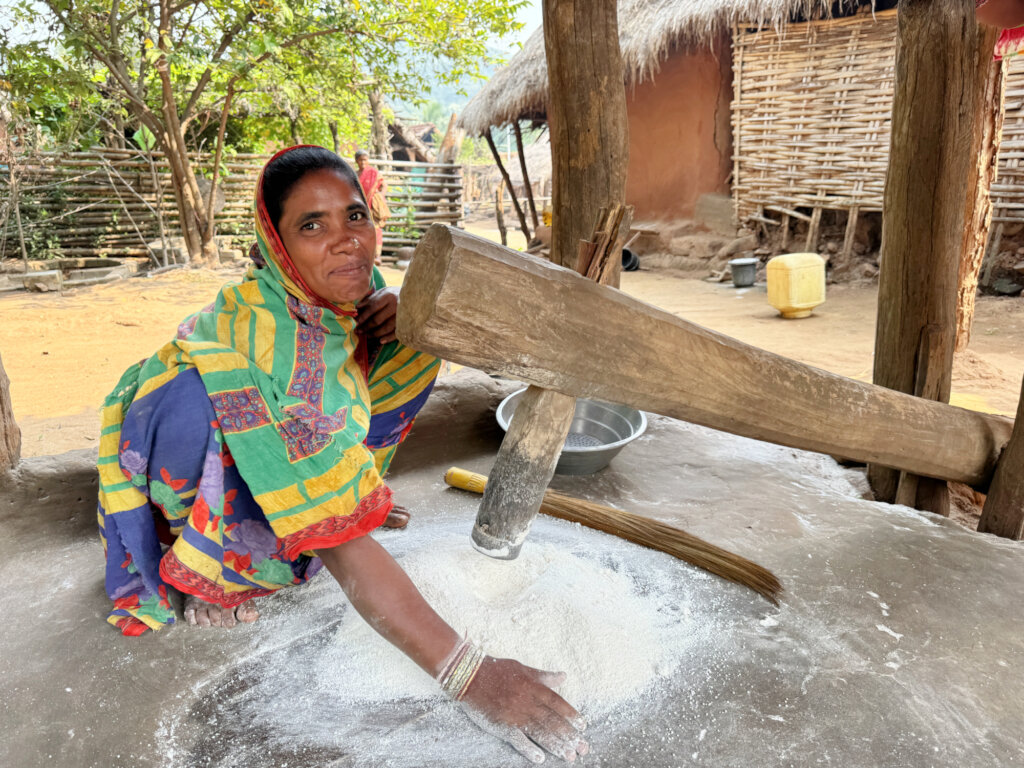
In November of 2024 JRP and AP visited the ten villages to assess the Neemola experiment. We ventured deep into the forests and found a rich culture that is built around families and in harmony with nature. Plastic is unknown in these villages and most food is grown locally.
We watched as village leaders explained to their neighbors that Neemola is best applied before setting off for the fields in the morning and in the evening before sleep. We attended a traditional pala dance and laughed as the dancers integrated the Neemola message into their fanciful stories. We watched students paint Neem trees on the walls at school (photo).
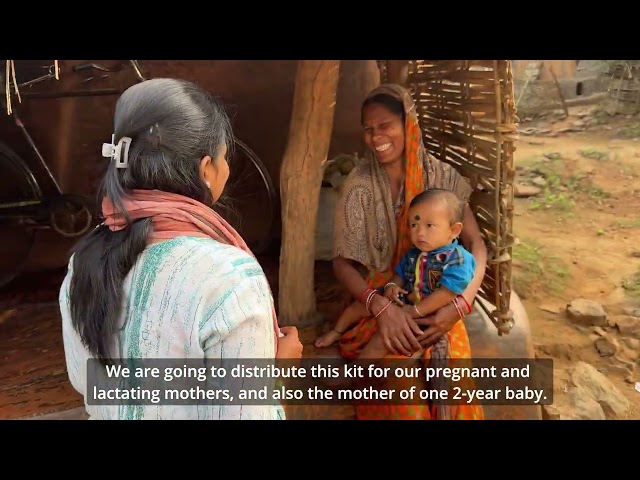
We captured the flavor of life in these villages through this video in the spring of this year. The story is led by Abhilipsa, JRP’s field officer at the time, with commentary from Manu. We hope you like it!
At the same time, we also got a first-hand view of the threats to this gentle way of life. Malaria is front and center, but so is the poor personal hygiene of women in villages that lack toilets or private sources of water. Most of the older girl students stay home for a week every month rather than face the challenge of managing their periods at school.
Tribal wives work hard in the field but have no say in how the family income is spent. Few older women have received a formal education. Most of the mosquito nets we saw were torn and unusable. It quickly became clear to us that Neemola oil could at best be only part of the response to a challenge of such magnitude.
The question then became – could Neemola offer anything more than just mosquito repellent? This year has provided some answers.
THE NEEMOLA MODEL
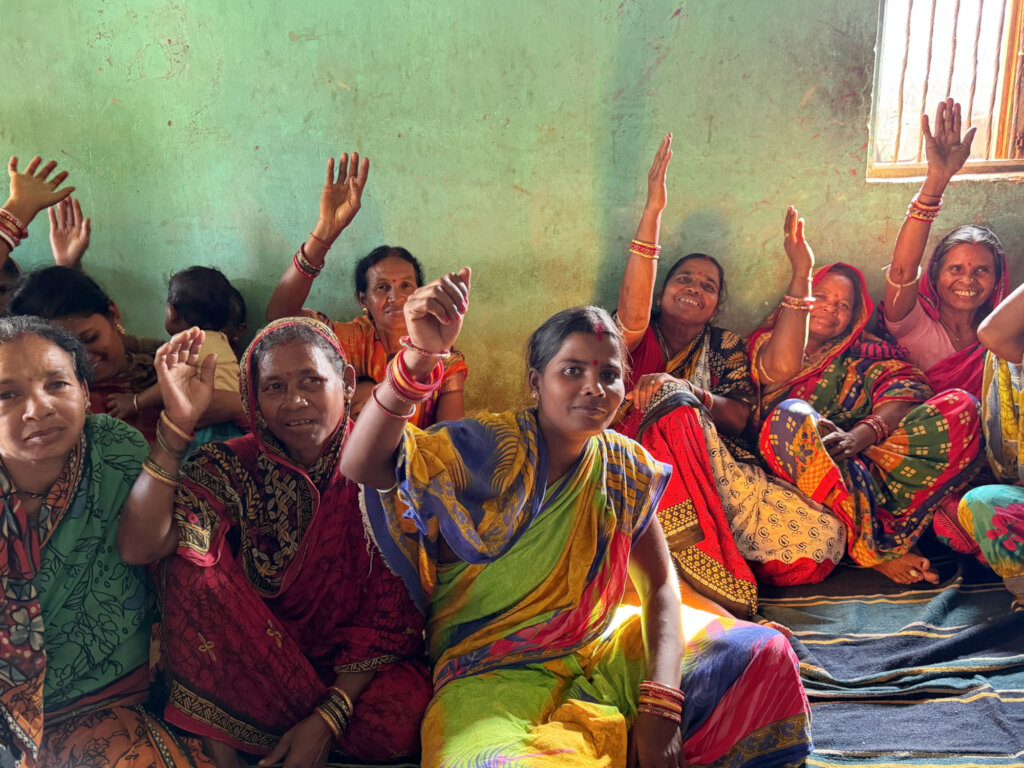
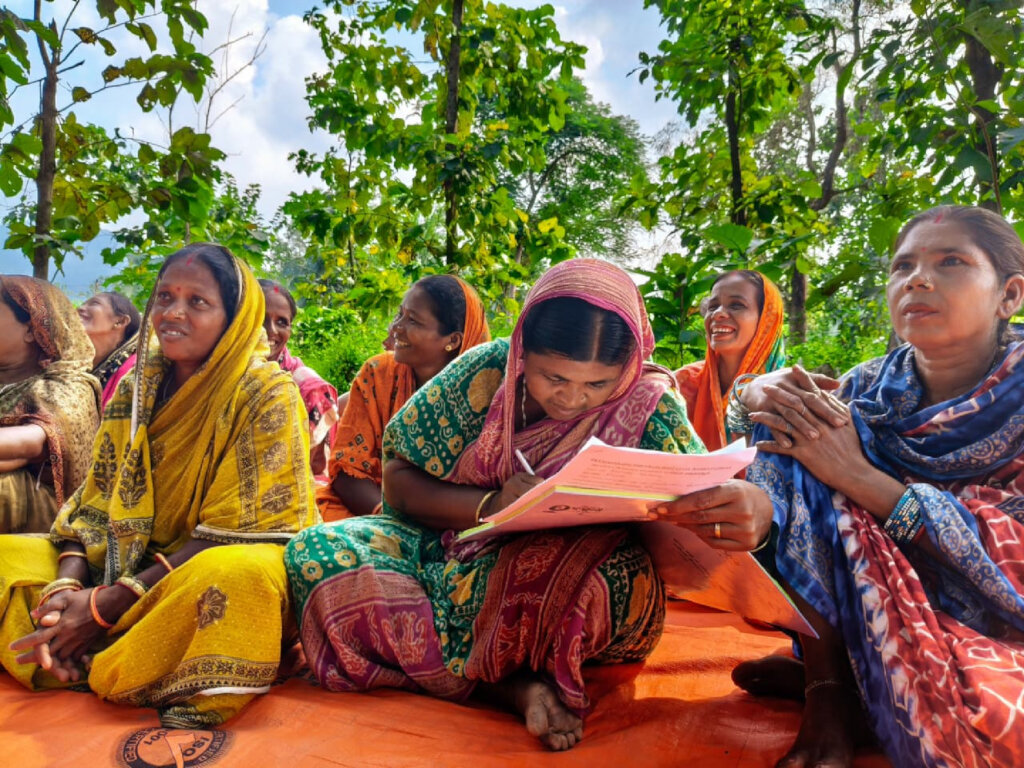
Empowering women through self-help-groups: The government requires that all tribal villages establish at least one Self-Help Group (SHG) for women. Their main purpose is to encourage group saving. They are taken very seriously by members, who see SHGs as an opportunity not just to save money but collaborate with friends and neighbors.
This makes SHGs the perfect tool for expanding the use of Neemola oil while also mobilizing women for community engagement. This year, JRP has worked with groups in 15 villages, comprising 150 members.
Malaria: As in 2024, malaria has provided a starting point. We found no deaths in the villages when we visited in late 2024, but several villages reported over five cases. This was high and was made worse by the fact that patients have to travel long distances to the Daspalla hospital.
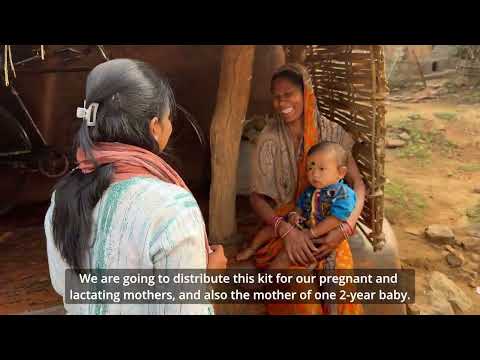
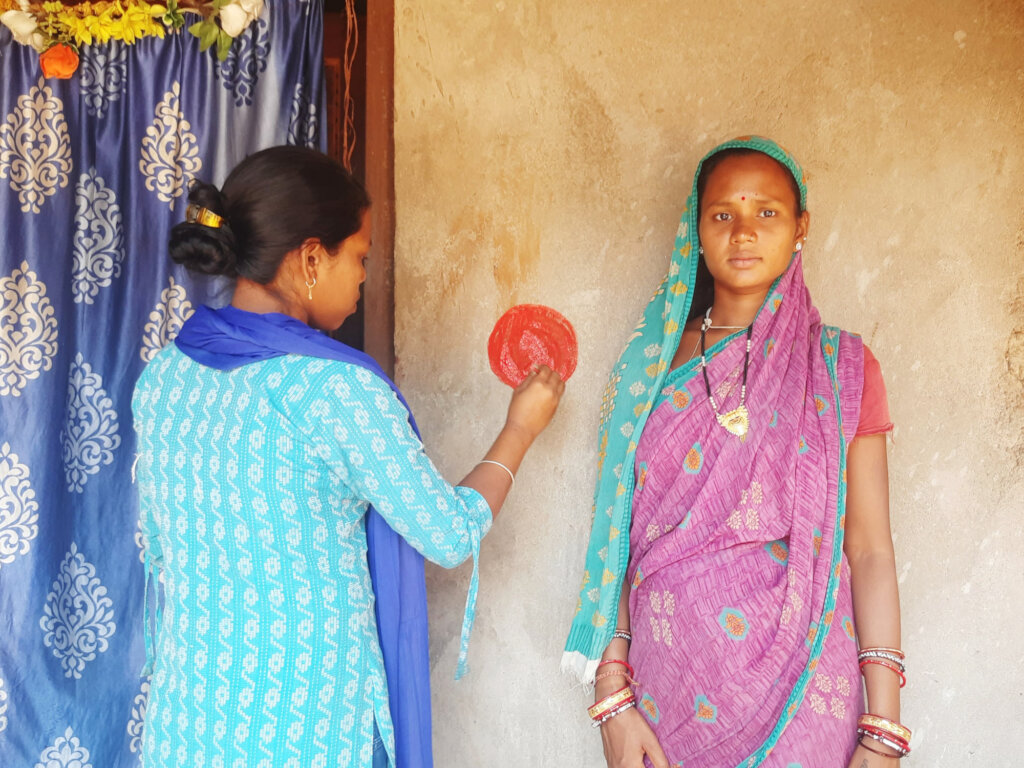
Drawing on its successful 2023 malaria campaign, JRP began by identifying 102 pregnant women and lactating mothers who were most at risk from malaria. Their houses were daubed by red paint (photo) so that they could be identified quickly. Anyone with a sign of fever was given medicine and watched carefully (a precaution that could also help to address health threats other than malaria.)
In another attempt at malaria prevention, JRP has worked through SHGs to release 2,000 gambusia fingerlings into village ponds where mosquito larvae breed, to devour the creatures.
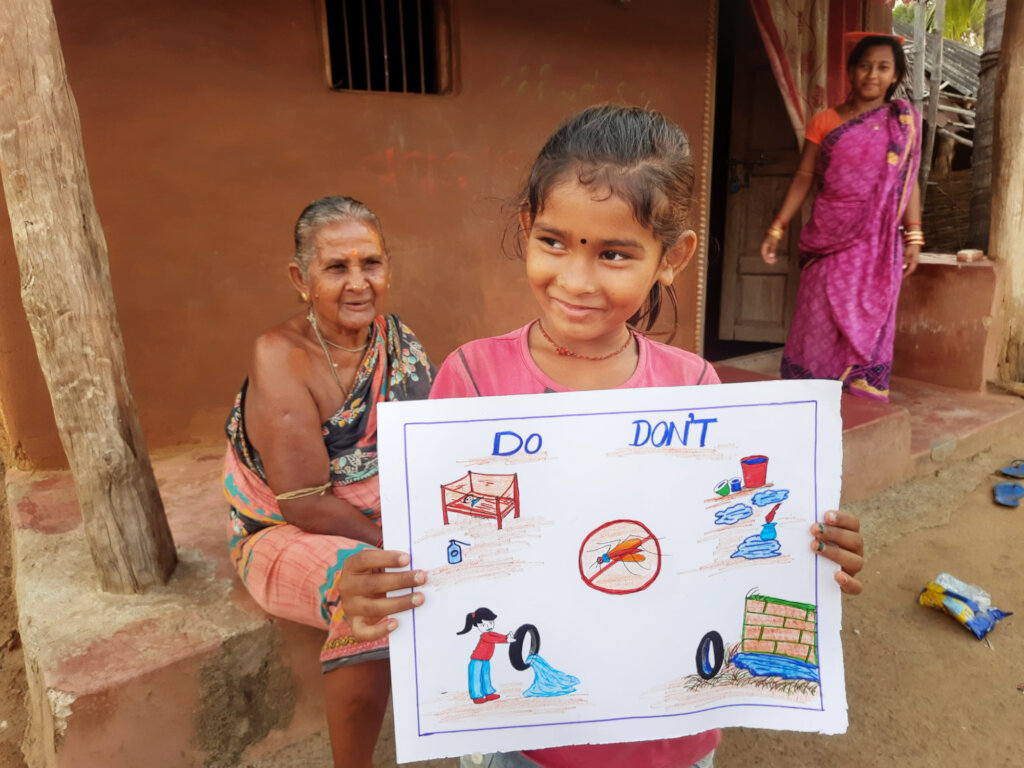
Education: JRP is spreading the word against malaria through wall-paintings that feature the ubiquitous Neem tree, and through art competitions (photo).
No cases of malaria have been reported from any of the village schools and while this cannot be directly attributed to wall painting, every activity feeds into the same common goal. And every school activity that helps students focus is of course a bonus for their over-worked teachers.
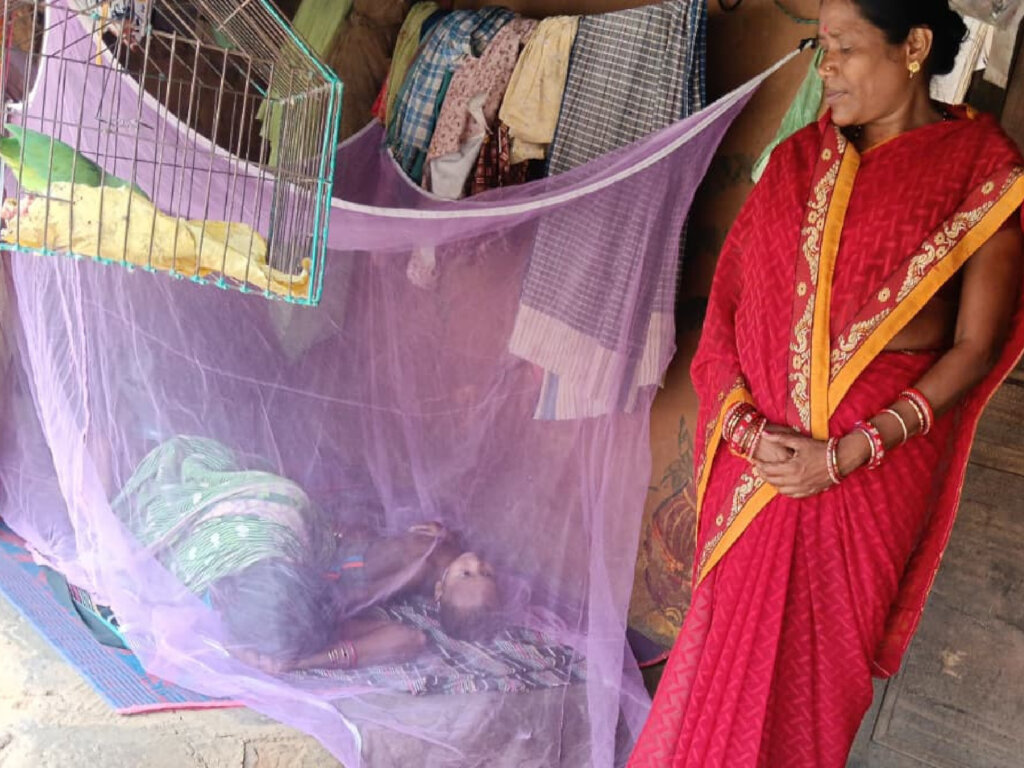
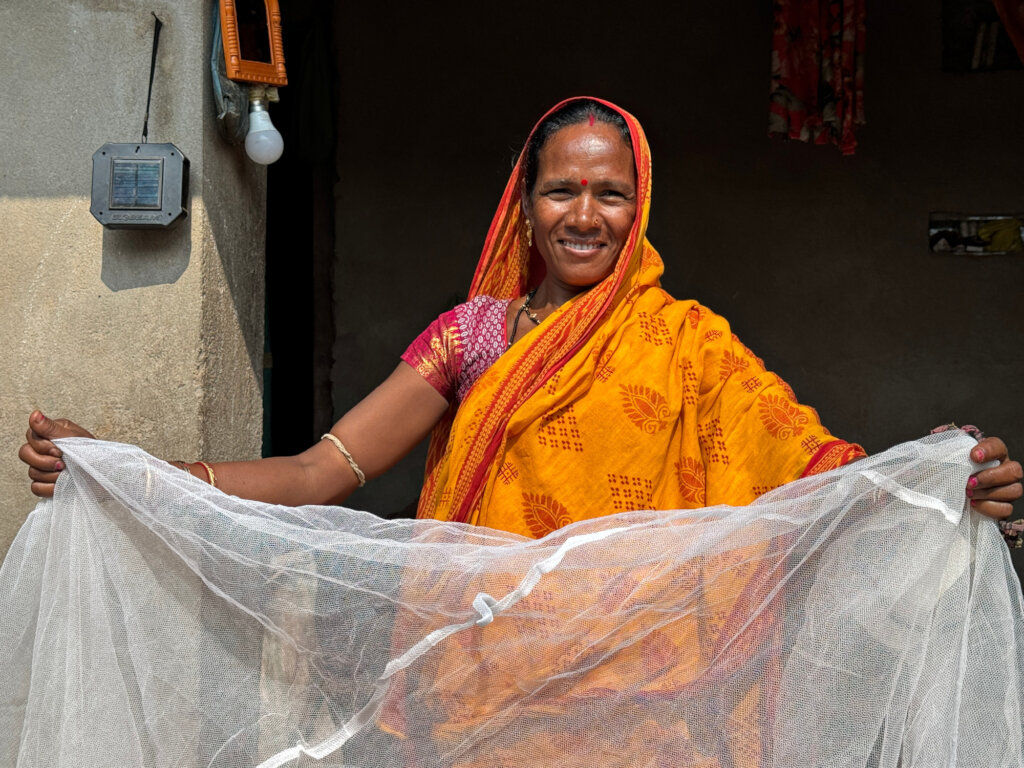
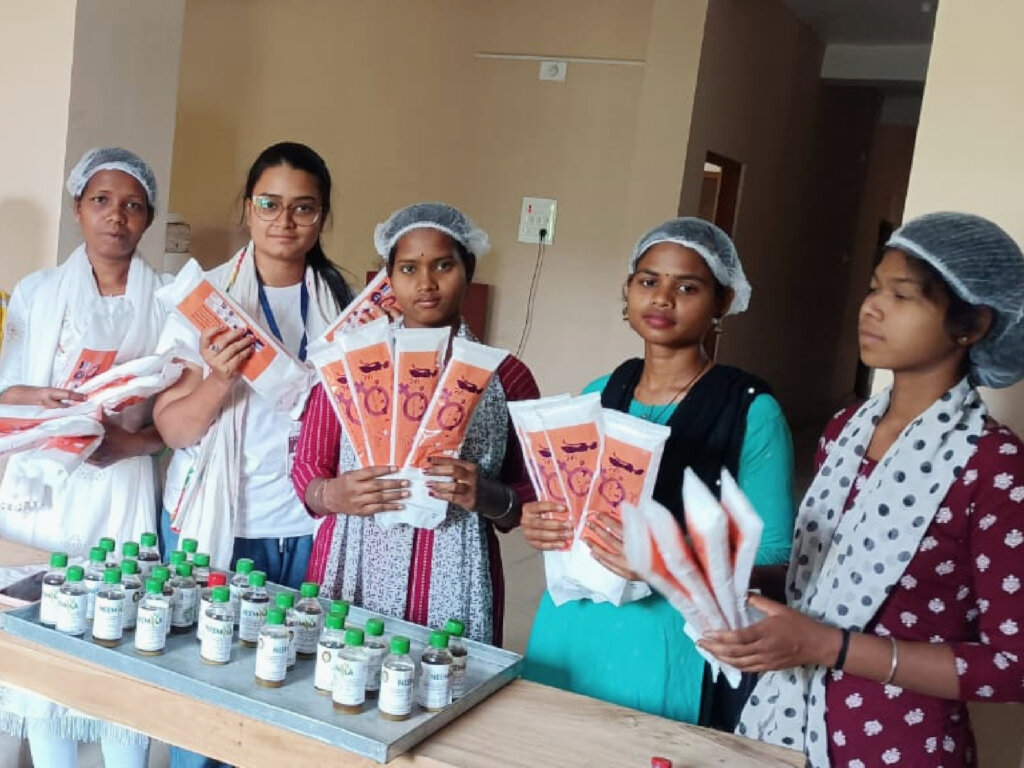
Preparation and early warning: Neemola has provided JRP with a way to stockpile goods that can be used for purposes other than malaria. The project purchased 102 mosquito nets and included these in “Neemola kits” along with a bottle of Neemola oil and sanitary pads made in the villages (photos).
As part of this new emphasis on prevention, it was also agreed that pregnant women would be taken to hospital 15 days in advance of delivery, to be on the safe side.
Menstrual hygiene: The self-help groups offer a way to improve menstrual hygiene. Runubala, the multi-talented JRP accountant, trained 10 girls to make sanitary pads. Together they produced 3,000 pads that were given out to women and girls and included in the Neemola kits. Pads sell for 30 rupees apiece in the market and JRP hopes to turn them into a source of income in 2026.
Disposing of used pads has been more of a challenge. This is done at some schools, where pads are buried or burned in pits. This is not ideal for the environment, but is probably better than simply throwing the pads away. JRP has dug one pit and plans to dig five more in 2026. Manu agrees that making re-usable pads might be more sustainable.
Neemola oil: The Neemola project has collected 6.2 tons of Neem seeds in 2025 – five times as much as 2024 and greatly exceeding the target for this year. The seeds have been pressed into around 6,000 bottles of oil, of which 3,000 bottles have been distributed free in the villages. The rest have been sold.
Income: Neemola is not just bringing in money to tribal women, it is changing the way income is shared within families.
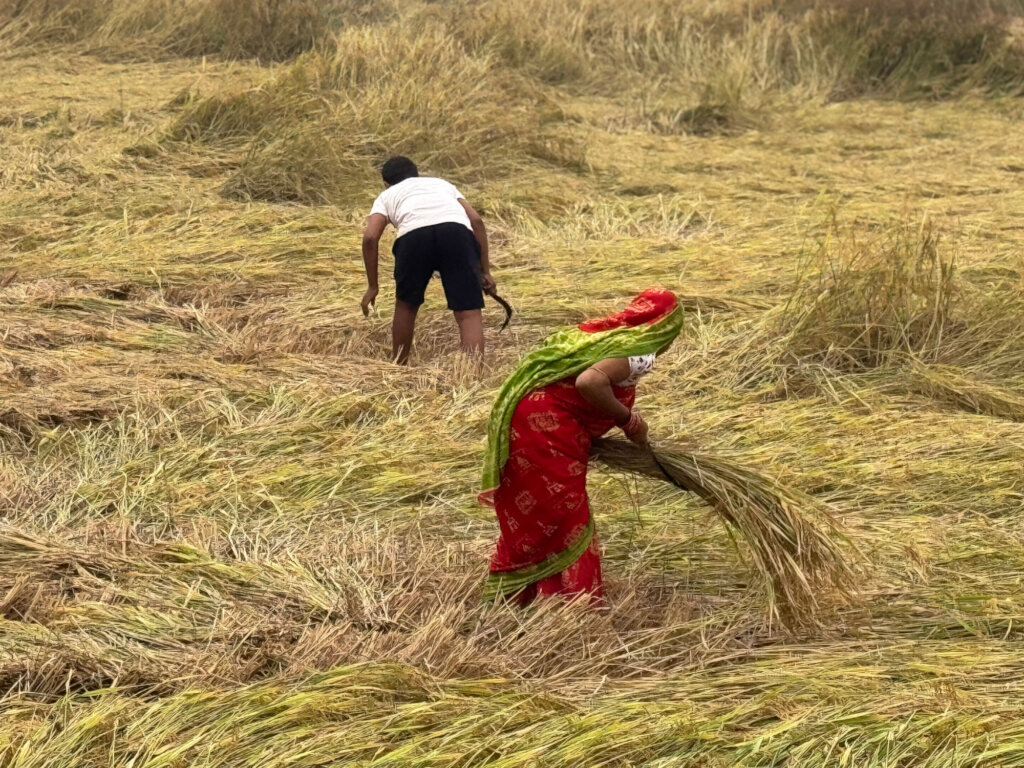
We heard repeatedly that tribal husbands control the family’s income, particularly when it comes to selling rice, the essential commodity. In other words, wives are expected to work in the fields but do not receive any disposable income. Undeterred, most of the women we met were determined to contribute to their SHG savings group, although this usually means begging from their husbands.
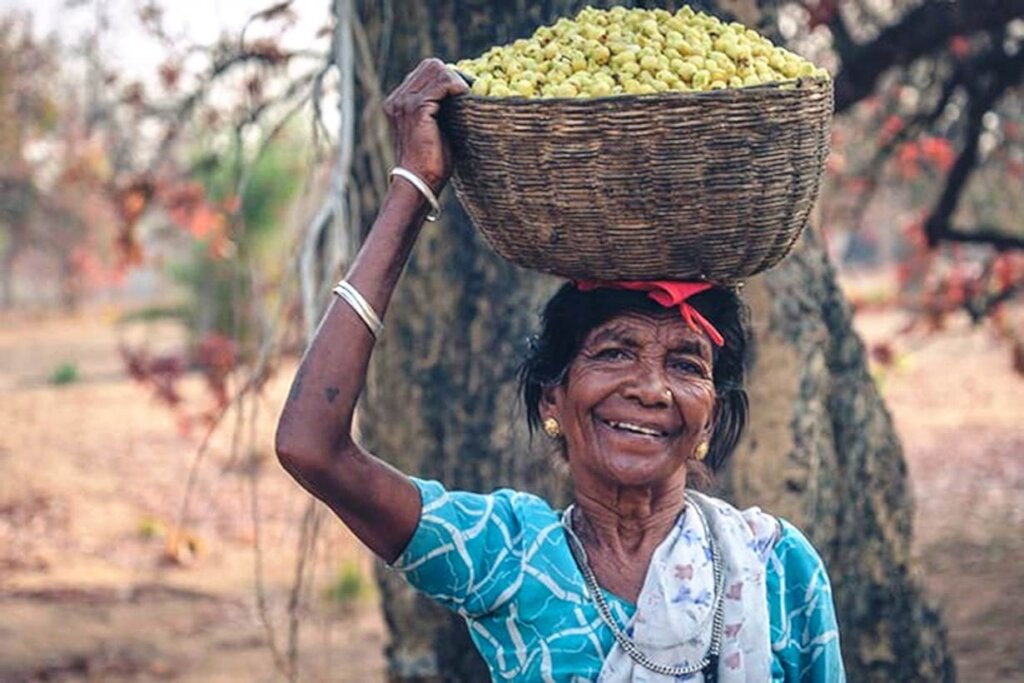
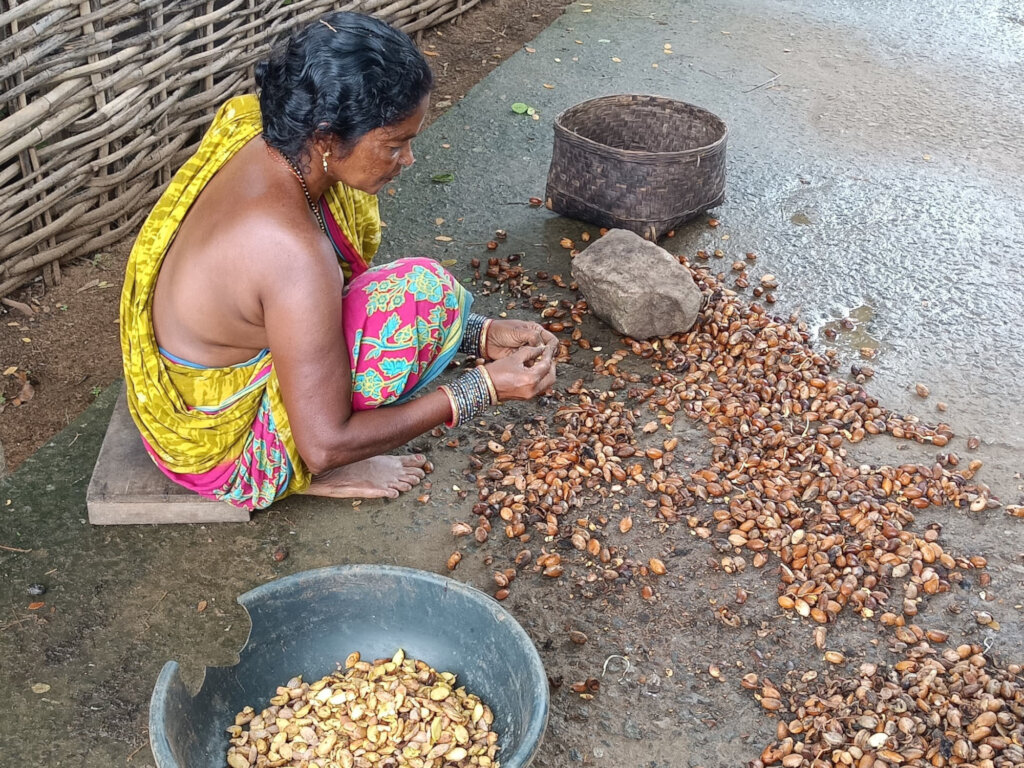
No longer. Fifty SHG members went out into the forests to collect the Neem seeds, which were dried (photo) and sold to JRP at 25 rupees a kilo. This brought in the equivalent of $1,691 which was shared among the women. It was, for most, their first experience of disposable income.
The income from other Neemola products was shared among the SHGs. So far this year, the sale of Neemola oil, Neem manure and sanitary pads combined has produced 120,000 rupees ($1,359). This has been divided up between the 15 SHGs.
While important, this has revealed another challenge. Of the ten SHGs we met last November, all had savings accounts but only one had invested in an actual project. The reason was that many of the older SHG leaders had not gone to school and did not know how to maintain a deposit book, let alone run a project.
Here was another task for the Neemola project. This past spring Runubala, the project accountant, organized a training for all the SHG treasurers. At least one group has launched a poultry and goat-rearing project. More projects are envisaged in 2026.
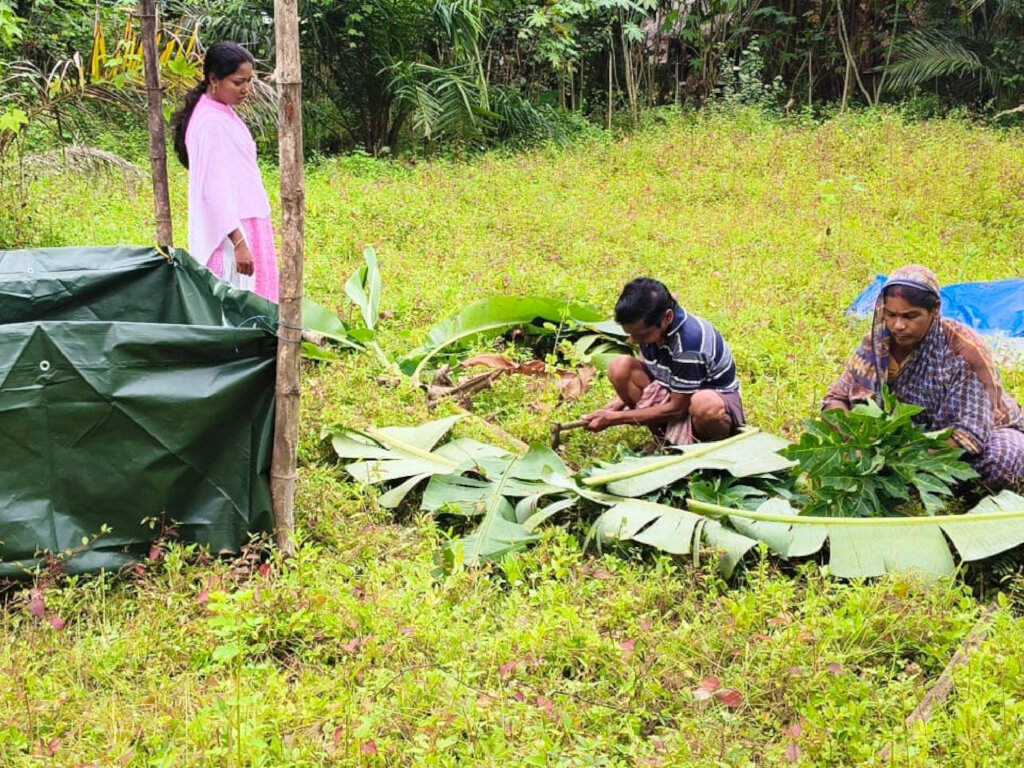
Protecting and improving the environment: The Neemola project is providing villagers with a way to clean up their villages and manage waste. JRP has dug two vermi-compost pits (photo) and organized clean-up drives in the villages to collect organic waste for the pits. JRP reports “huge demand” from other villages for vermi-composting.
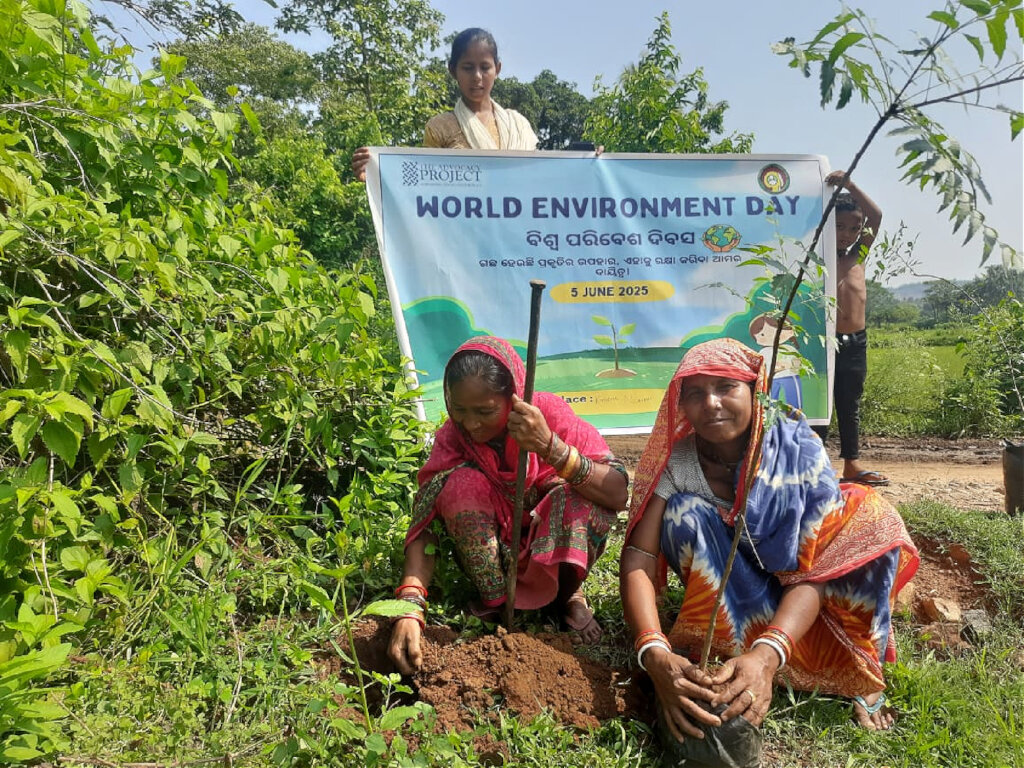
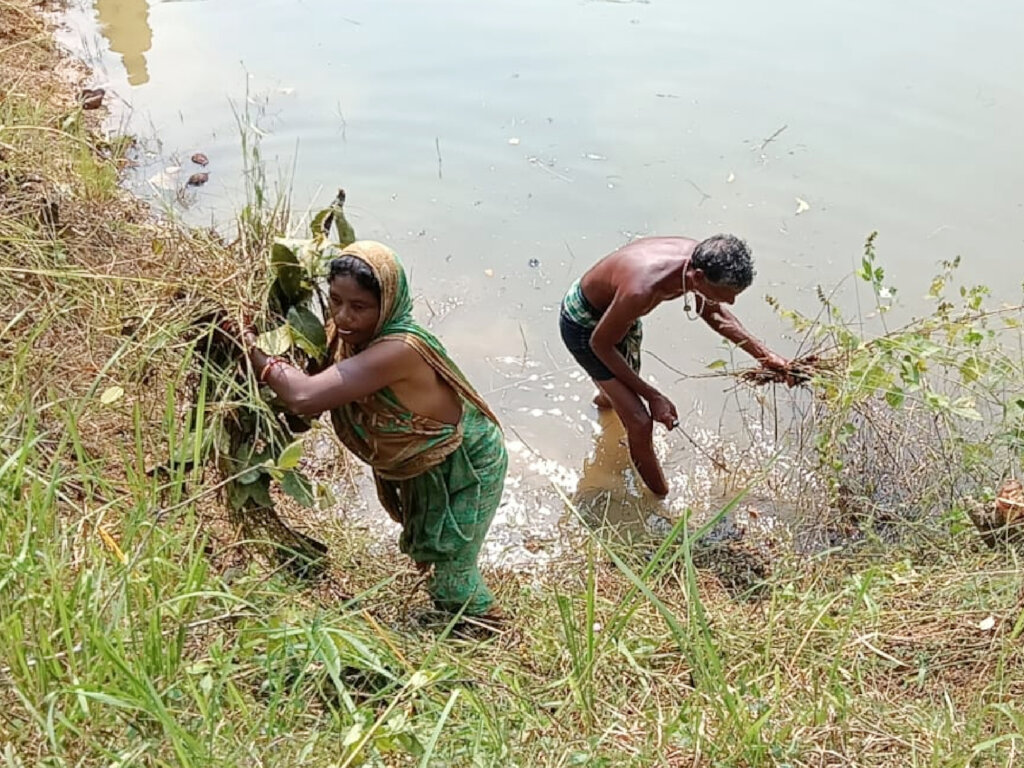
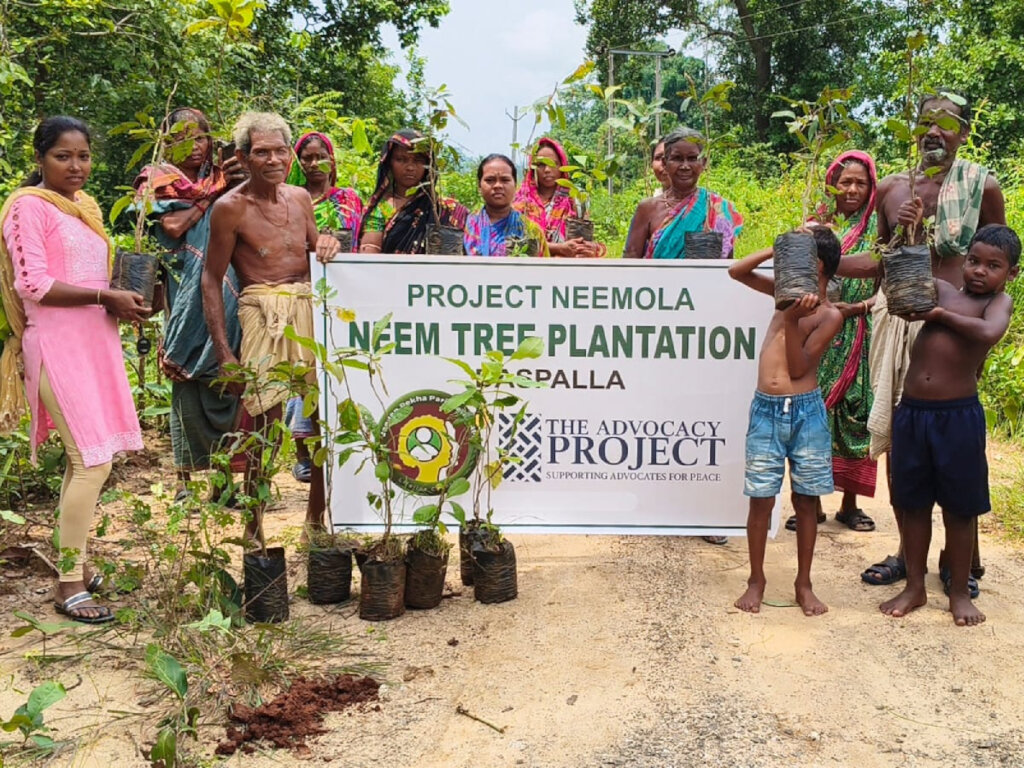
Tree planting is another important environmental activity. Under the Neemola project several SHGs have planted 500 Neem saplings (photo), with another 500 to follow. To the villagers, more Neem trees means more Neem seeds and leaves. To the district government of Odisha, the trees mean more forest cover in the fight against climate change. The government has distributed 10,000 saplings this year for planting and was happy to hand over 1,000 to the Neemola project.
Neemola oil is also helping farming. The process of making the oil produces a solid waste (“Neem cake”) that is packed into bags and sold or given to small farmers to help smart farming. Just over 250 packets have been sold so far this year.
LOOKING AHEAD
Looking ahead to 2026, oil is likely to remain at the heart of the Neemola project - but more for the indirect benefits discussed in this report than its impact on malaria.
As far as malaria goes, there has been a sharp decline in cases among vulnerable women and children this year. Only two cases have been reported since the beginning of the year. It is impossible to show whether and how Neemola oil is helping, but this welcome decline would probably not be happening without the entire Neemola package – prevention, education, mosquito nets, outreach to schools, village clean-ups and speedy referrals to health centers.
This begins to answer the question posed at the start of this report - whether Neemola can offer anything other than mosquito repellent in the fight against malaria. JRP certainly hopes that the lessons learned from malaria can be turned against other serious threats such as Reproductive Tract Infection (RTI), which is caused by poor hygiene and can be deadly.
As we head into 2026 the stakes are certainly high. These villages may be remote but they much to offer the rest of the world at a time of tension, over-consumption and the growing threat from climate change. Neemola offers a new model of development that begins in villages, feeds off the talent of women, respects nature and is deeply spiritual.
Thank you for helping us to give it shape and develop this wonderful project!
In gratitude, Jeevan Rekha Parishad in Bhubaneswar and The Advocacy Project in Washington DC
Links:
Project reports on GlobalGiving are posted directly to globalgiving.org by Project Leaders as they are completed, generally every 3-4 months. To protect the integrity of these documents, GlobalGiving does not alter them; therefore you may find some language or formatting issues.
If you donate to this project or have donated to this project, you can receive an email when this project posts a report. You can also subscribe for reports without donating.



Support this important cause by creating a personalized fundraising page.
Start a Fundraiser