By Iain Guest | Project coordinator in the US
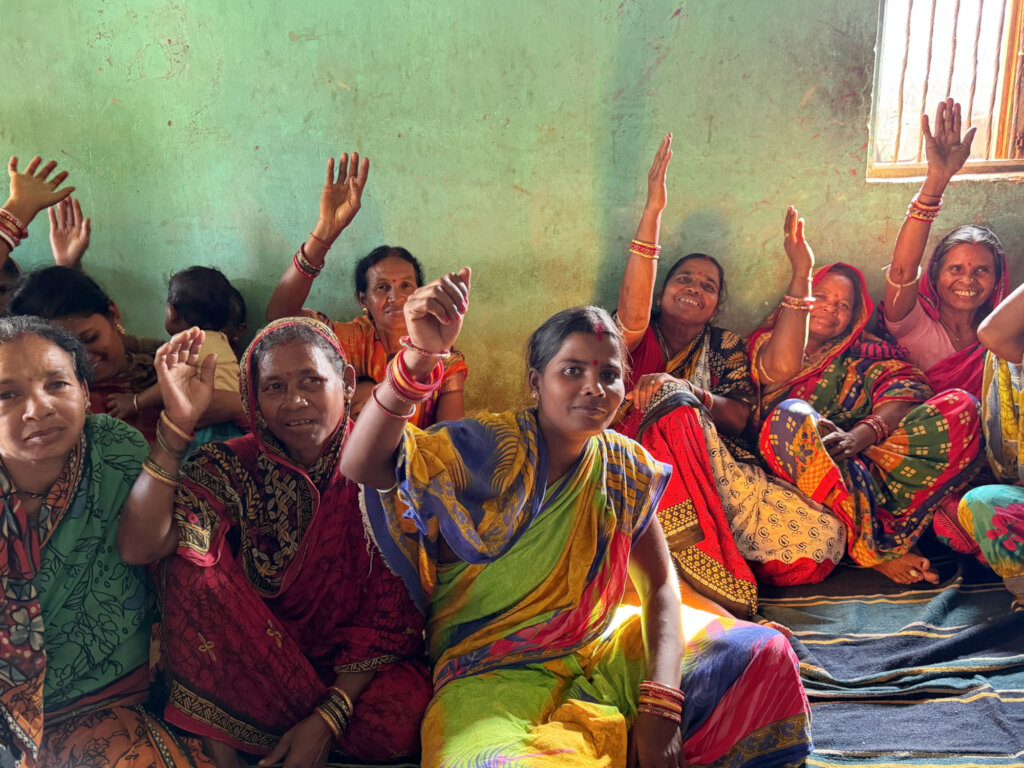
This report is being sent to 23 friends who have donated $1,125 to help our Indian partner Jeevan Rekha Parishad (JRP - 'Lifeline') empower tribal women in the state of Odisha State. Thank you!
From COVID to malaria to Neemola
Let's start by noting that Neemola owes its existence to two mass killers – COVID and malaria. It began as follows:
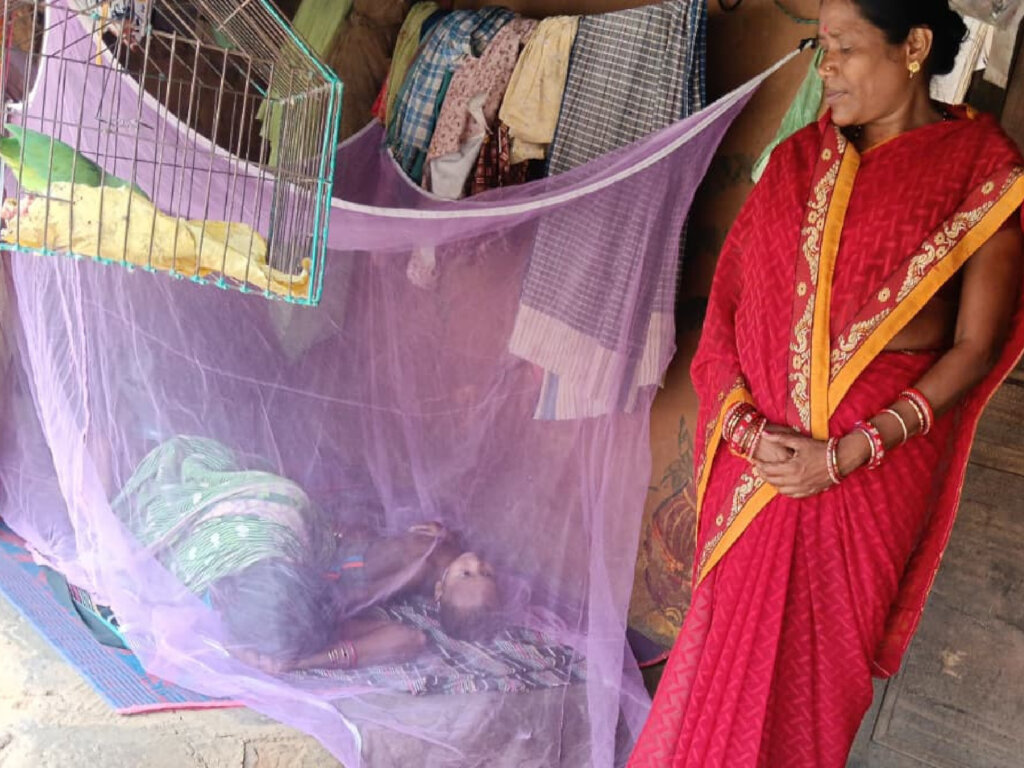
In 2022 JRP sought our help for a community-driven campaign to vaccinate elderly tribal people against COVID. The vaccination drive was a success and the following year JRP launched a new campaign to bring down the rate of malaria in ten villages. Odisha has the second highest rate of malaria among states in India. Tribal people are especially vulnerable because they live in heavily wooded areas that are far from health services.
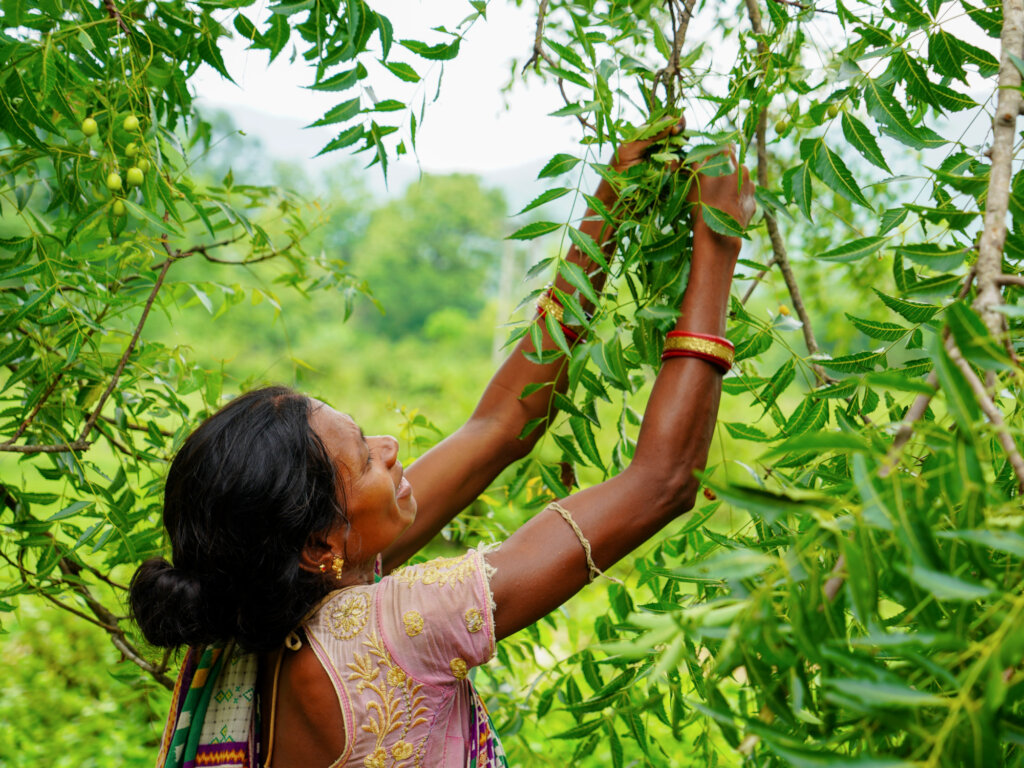
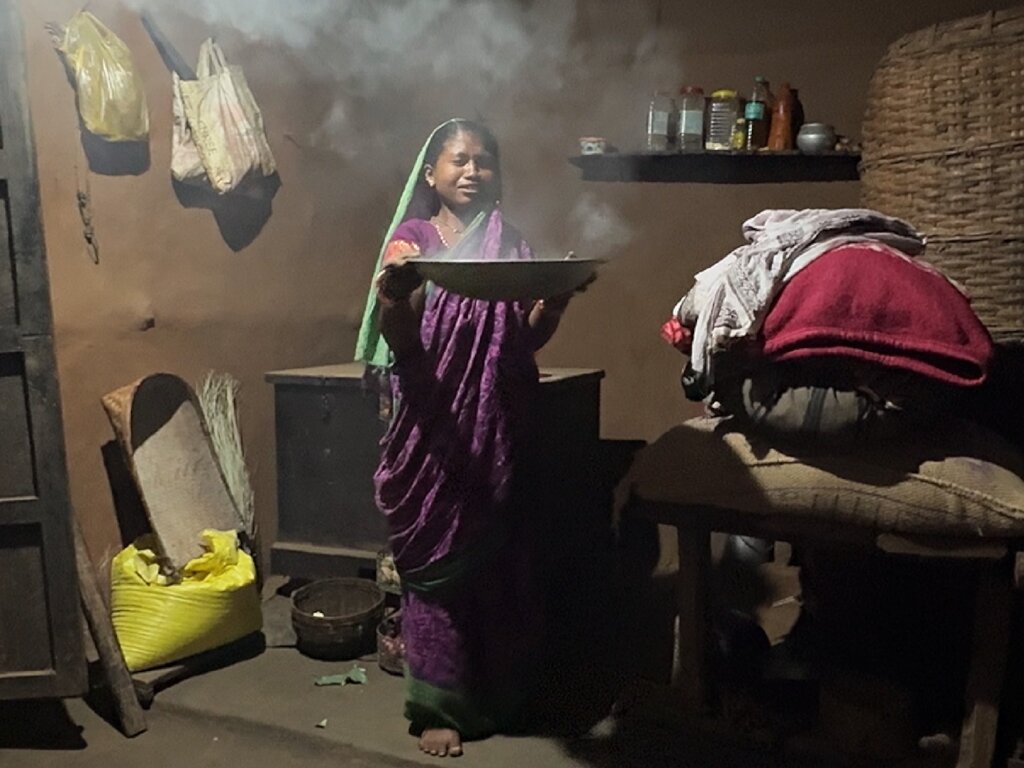
This second campaign used education and prevention to elminate malaria among pregnant and lactating mothers – our primary target. Encouraged by this, we turned to the majestic Neem trees that are found throughout tribal villages. Neem products have long been known to repel mosquitoes and most tribal families burn Neem leaves in their homes before going to sleep.
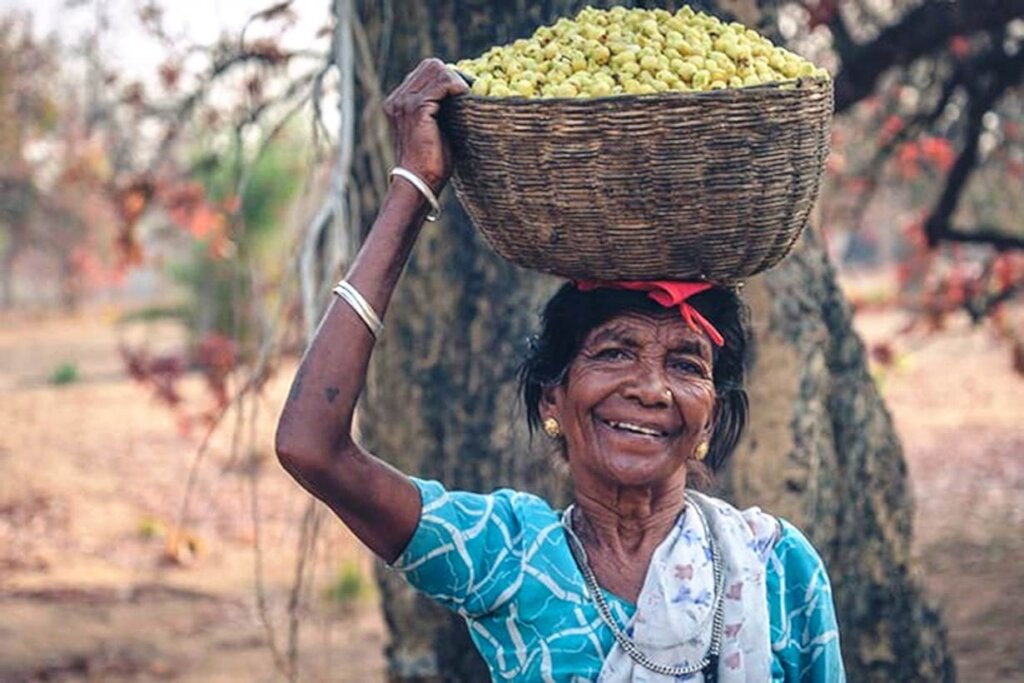
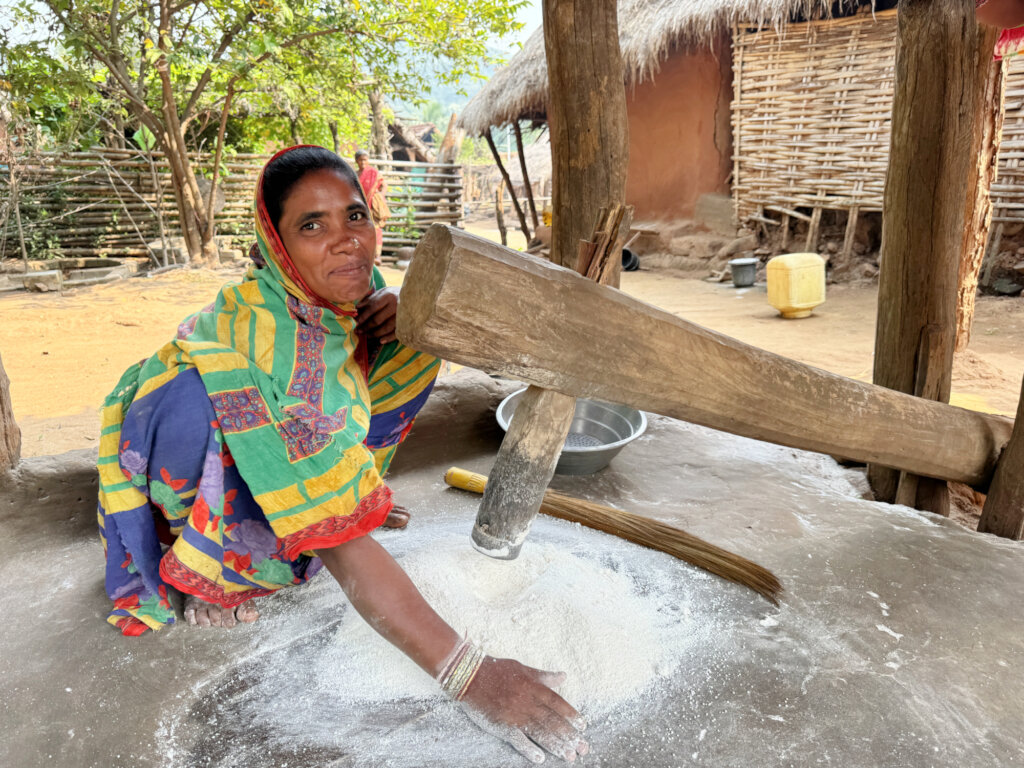
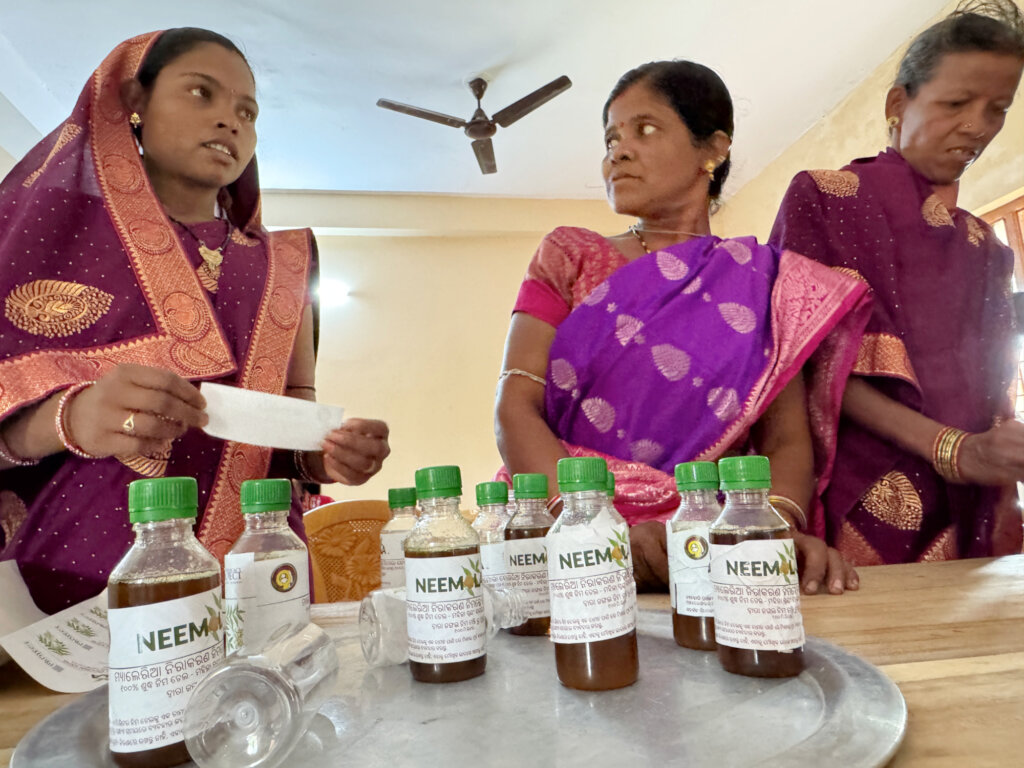
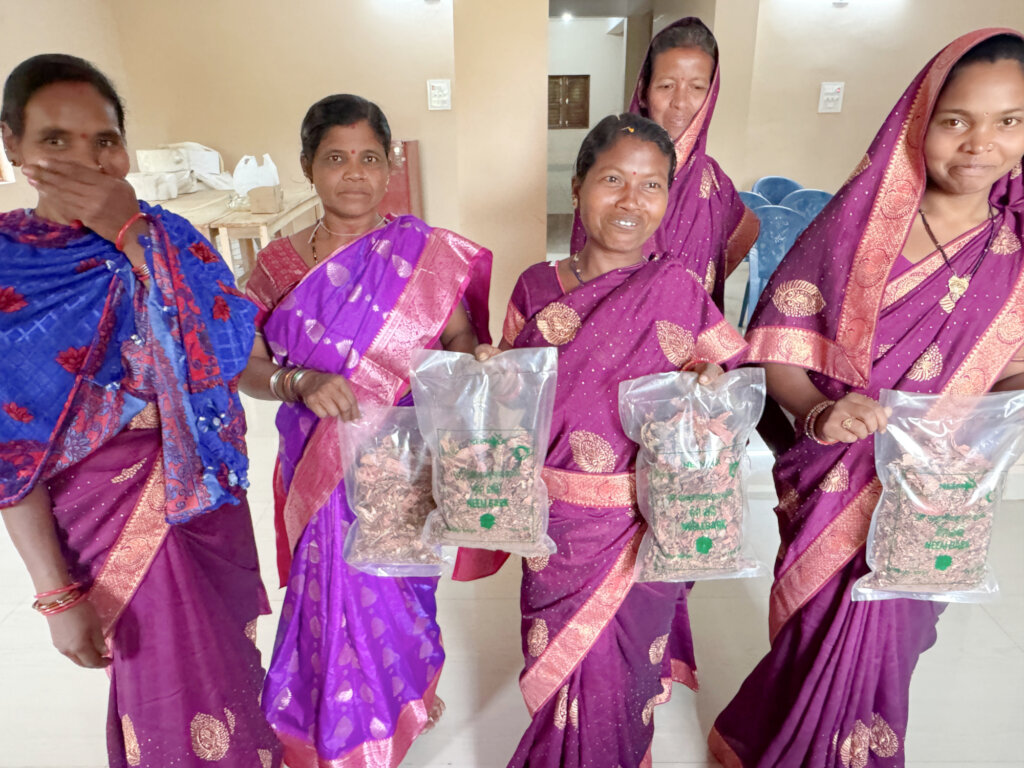
We began to wonder whether seeds from the Neem trees could also help in the fight against malaria. As an experiment, JRP organized 50 tribal women leaders into a cooperative named Neemola. Three teams went out into the forest to collect Neem seeds. The remaining members then processed the seeds into a thick oil at JRP's field office in Daspalla, using a locally-made press commissioned by JRP. The oil was given the brand name of Neemola and bottled.
At this point, we launched our appeal on GlobalGiving. You have been kind enough to respond.
Neemola as an agent of innovation and change
By the Fall of 2024 the Neemola start-up had produced a new oil that was as pure as nature and had a distinctive brand. But would it be accepted by villagers? And would it protect them against malaria?
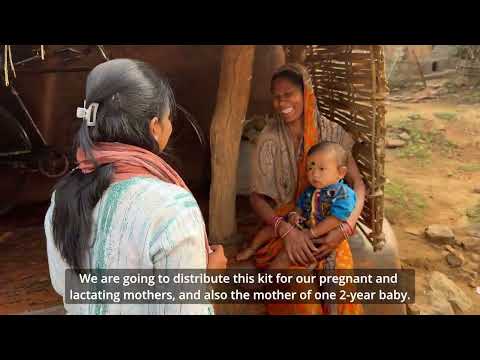
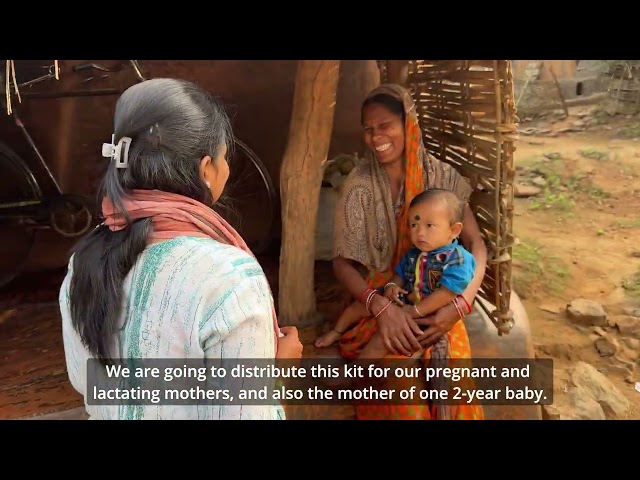
The answer to the first question was a resounding yes, as we found during a visit to the villages in October to make this documentary. Please watch our movie if you have not already done so, because it features some wonderful exchanges between cooperative members who had made the oil and curious neighbors. They were obviously persuasive because many families were buying Neemola oil by the end of 2024.
At the same time, we also realized that JRP would find it difficult to show whether Neemola oil was preventing malaria - in other words show a direct cause and effect. Certainly, the goal was to eliminate malaria and nothing else compared with this. But it would be hard to market Neemola if it could not be shown to help.
But something else also became clear to JRP’s field team in late 2024. By applying Neemola oil regularly at bedtime and before going out into the fields, tribal women were becoming more disciplined about taking care of themselves. This was helping their personal hygiene and reducing the risk from Reproductive Tract Infections (RTI), which are common among tribal women and can be deadly.
In other words, Neemola was changing behavior and even protecting tribal women against something even worse than malaria. This was as unexpected as it was welcome!
It has also become clear than Neemola oil can provide tribal women with a disposable income. In 2025 ten village teams collected and processed around six tons of Neem seeds into 6,000 bottles of Neemola oil. Half of the oil was distributed to vulnerable families and the rest was sold for the equivalent of $1,365, which was shared between women's savings groups.
Neemola is also boosting farming, because the process of extracting oil produces a solid waste that is rich in nutrients. Instead of being thrown away, this Neem "cake" is dried, packaged and given to small farmers who use "smart" farming techniques under another JRP project.
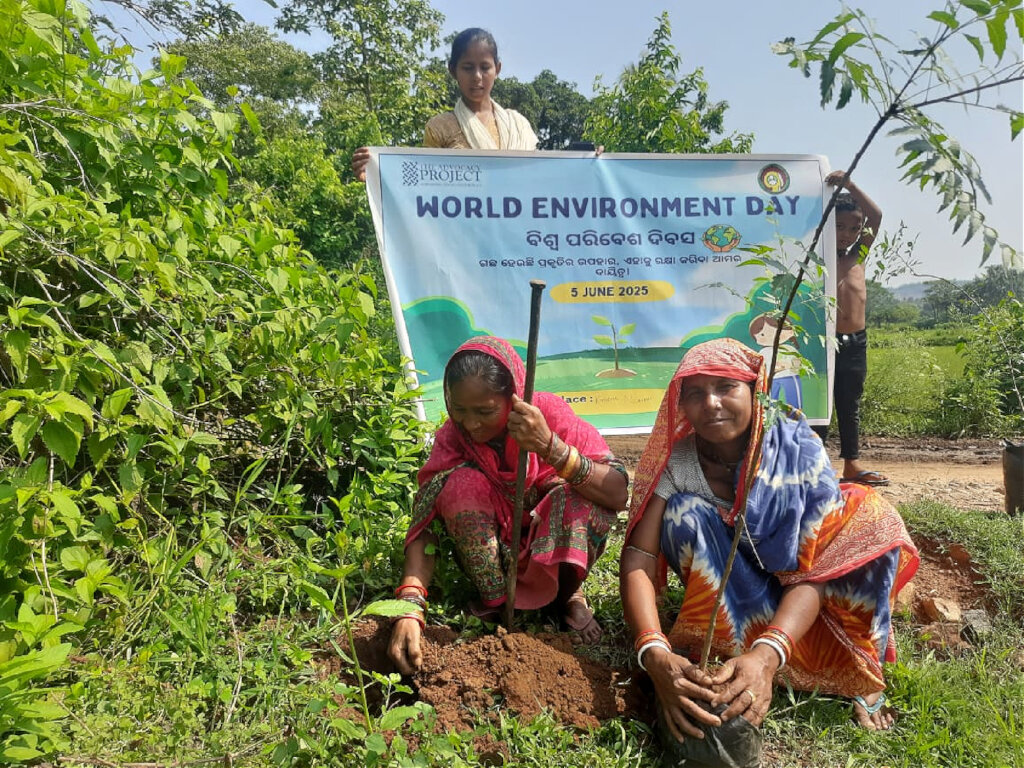
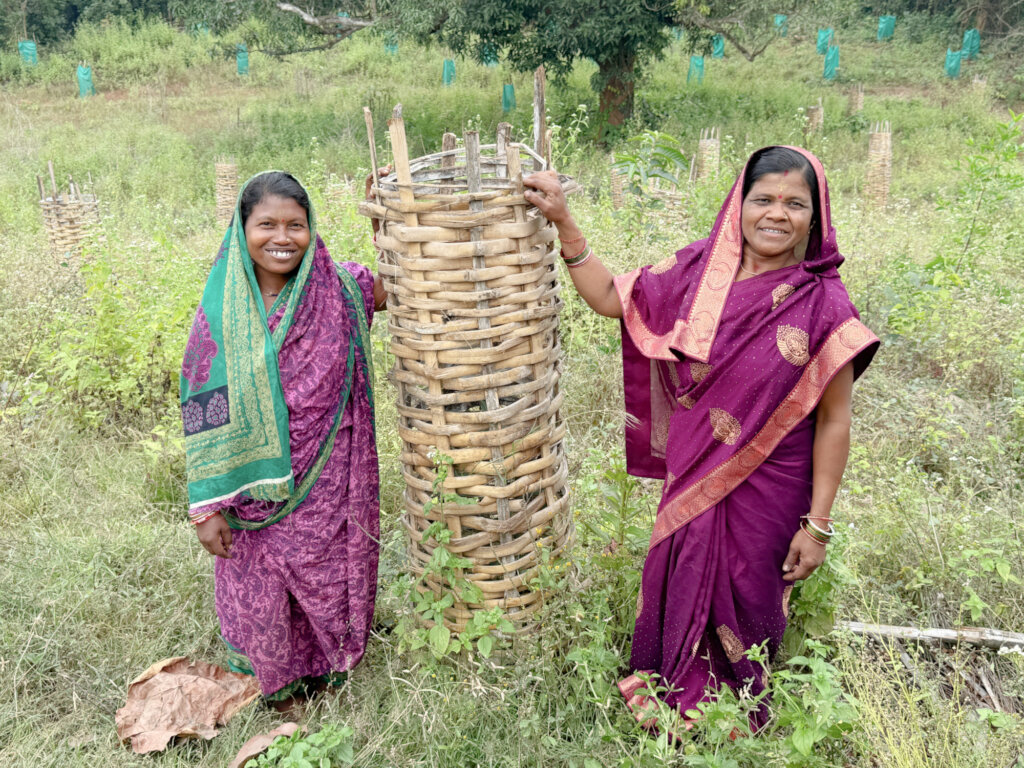
The forest is another beneficiary of Neemola. Last year cooperative members planted 1,000 Neem saplings donated by the local government forestry department. This was another win-win. The government is keen to increase forest cover to protect against climate change. JRP hopes that more Neem trees will mean more seeds - and oil.
The method of collecting the seeds is also evolving. To start off with, seeds were collected off the ground by hand. This was exhausting and time-consuming, not to mention the fact that huge piles of seeds were being left to rot on the ground.
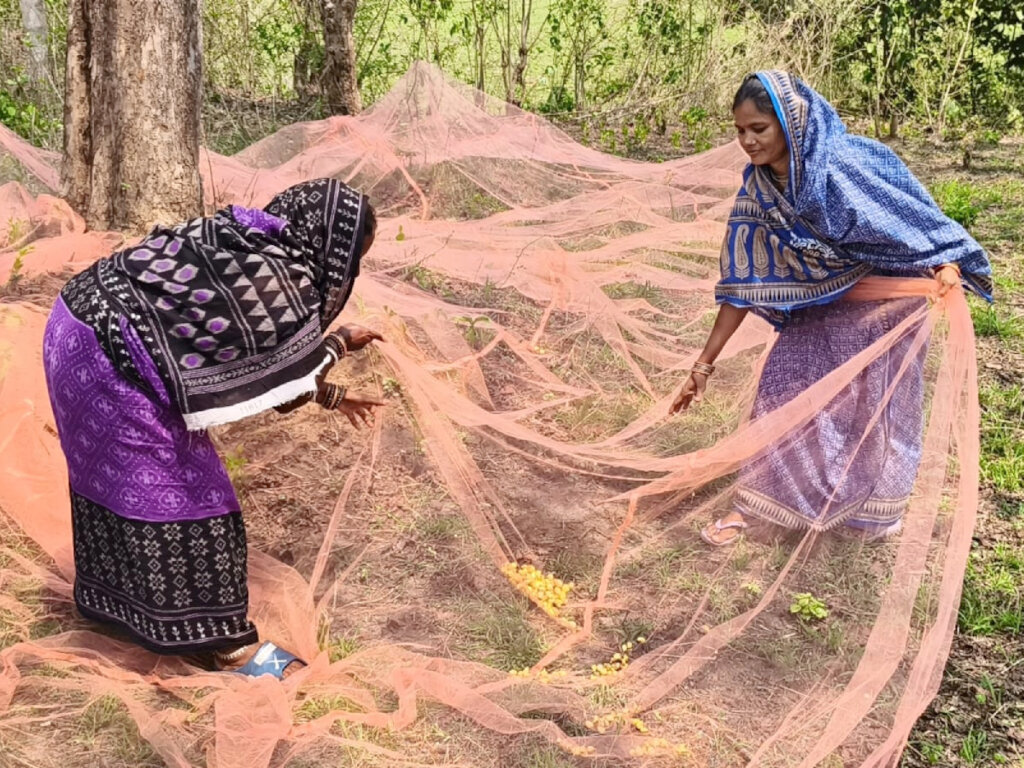
As a result, JRP has teamed up with the Odisha University of Agriculture and Technology to make 50 large “protection nets" that are spread under the trees and collect the seeds as they fall (photo). This simple yet effective intervention enables tribal women to gather more seeds, increase production, and earn more money.
Improving menstrual health
The Advocacy Project is supporting a second project by JRP that is closely linked to Neemola and seeks to improve the menstrual health and hygiene of tribal women.
As noted earlier, Reproductive Tract Infections (RTI) are rampant in the villages. One reason is that older tribal women do not generally use sanitary pads. The government distributes pads at school, but many girl students are still kept back from school by their mothers during menstruation and lose a week of education every month.
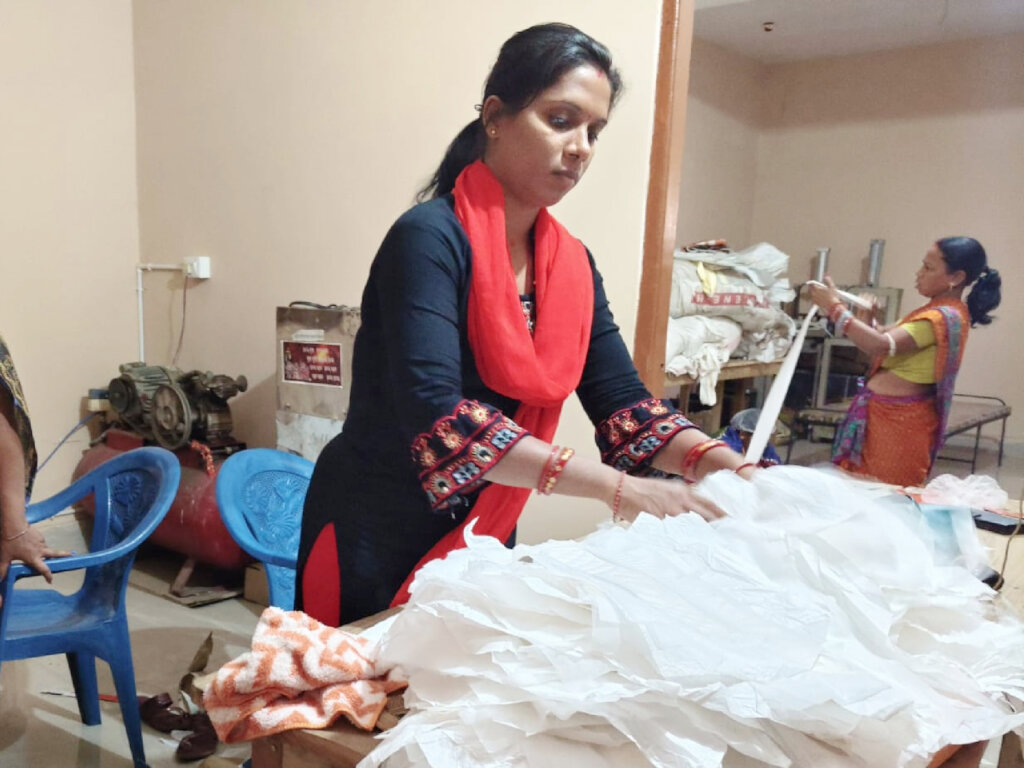
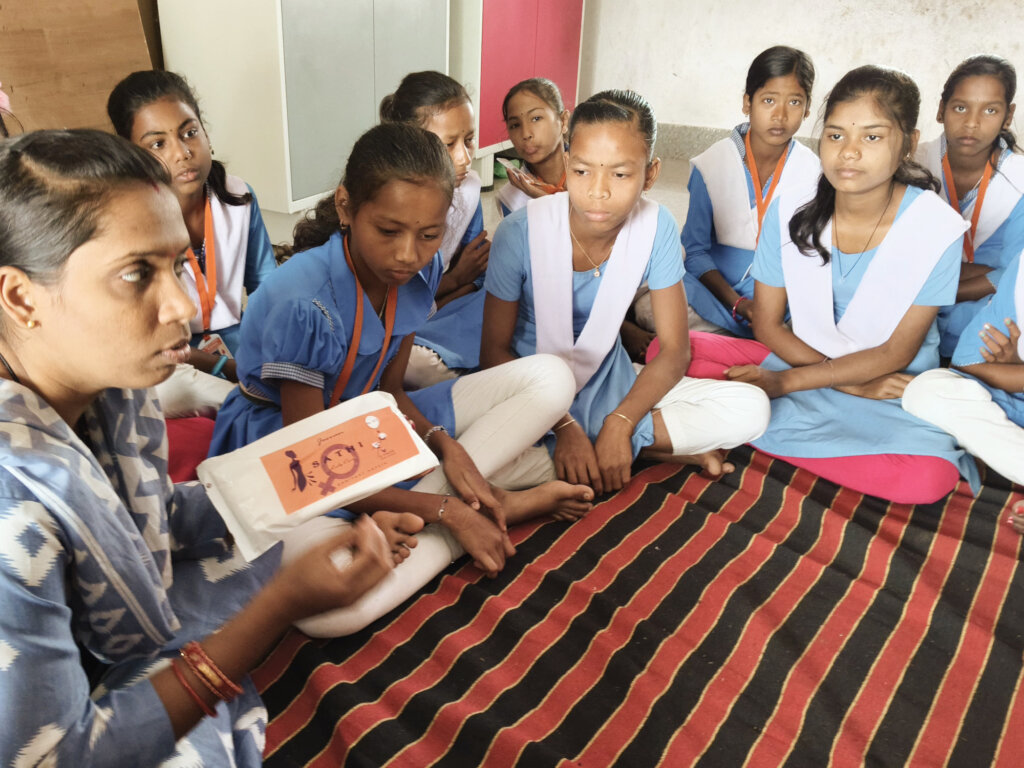
In 2025, JRP launched a pilot project to train girls and women to make and use pads. The trainings produced made 3,000 pads and were so well received that JRP has expanded them into a major new campaign ('Give me a Pad') to make pads and end stigma around menstruation.
This important initiative is jointly funded by The Advocacy Project and Jeevika Trust in the UK, another long-time JRP donor. Together we have invested $3,500 in a first phase of the campaign, which is now active in 25 villages and seven schools.
Working with 18 women, JRP has produced over 100,000 pads in just three months - a huge increase over 2025. The pads are selling well in the markets and provide trainees with another important source of income. JRP is also encouraging schools to dispose of used pads in a way that does not hurt the environment.
It remains to be seen whether this early success will bring down the rates of RTI, but JRP is tracking the production of pads every month with help from Jeevika and checking in regularly with village health workers. This should produce a comprehensive picture by the end of the year.
Pulling it all together - in the villages and at the head office
This report is all about innovation, and new ideas are always popping up at JRP! In addition to menstrual health and Neemola, JRP is also supporting the production of honey, SMART farming, savings schemes, organic composting and water advocacy aimed at improving access to water in the villages. No international day (Water, Women, Toilets, Earth) goes unnoticed and uncelebrated!
All of these activities draw on JRP's years of work in the villages and unequalled knowledge of tribal life. But more projects mean more administration, more coordination and more reporting. All of this can be burdensome and detract from the mission.
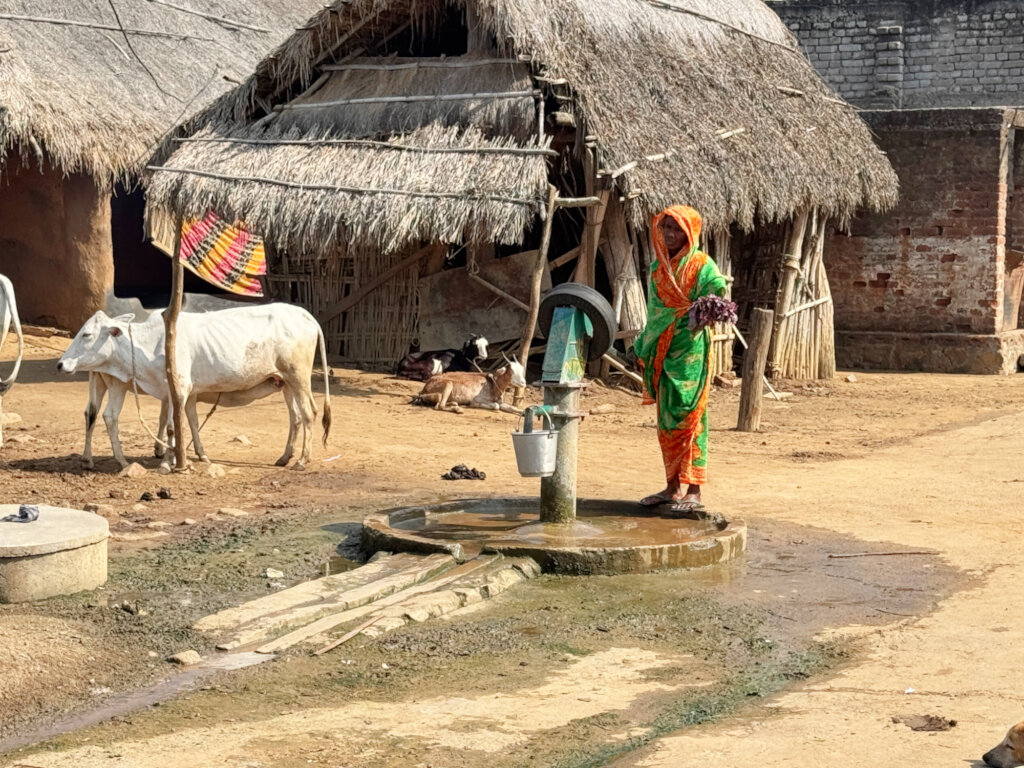
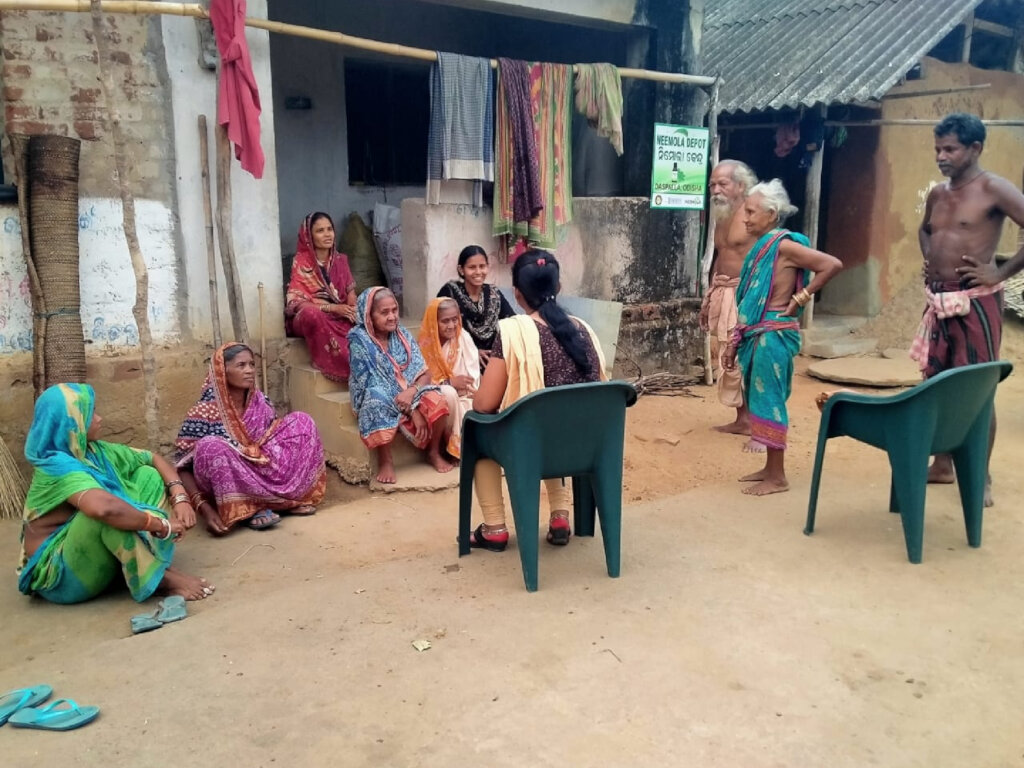
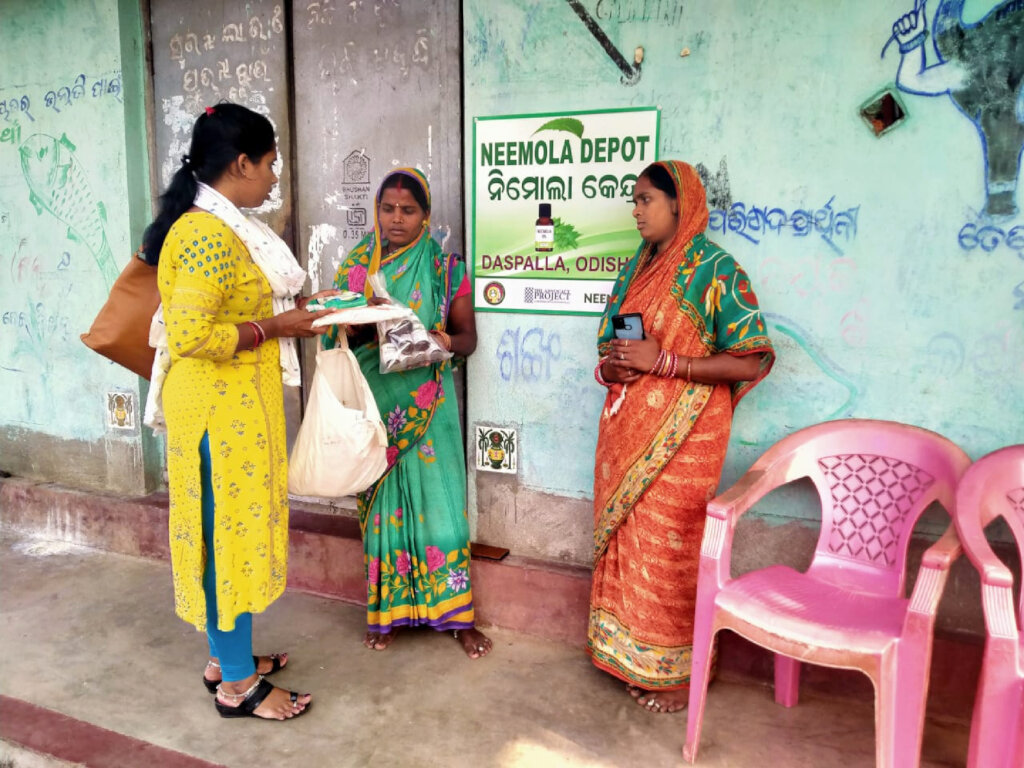
JRP has responded in rhe villages by setting up "Neemola depots" where commodities from different projects (Neemola oil, mosquitoes nets, sanitary pads and basic anti-malarial drugs) are stockpiled and given out quickly and efficiently. The depots are supervised by village health workers (ASHAs) and Auxiliary Midwives (ANMs) who have an intimate knowledge of their neighbors’ health and habits.
At the organizational level JRP is also encouraging more coordination between its different donors. As noted above, The Advocacy Project and the UK-based Jeevika Trust have teamed up to jointly fund the menstrual health project.
In another effort to help we have also recruited an experienced Indian-born Peace Fellow, Saurabh, to volunteer at JRP this summer. Saurabh has worked for the Indian government and studied at Georgetown University in Washington. He will bring a lot to the Neemola project while expanding his own knowledge of community-based development. We wish him well and look forward to reading his weekly blogs.
Thank you all again for helping to make all this happen!
In gratitude,
Manu from JRP in India and Iain from The Advocacy Project in Washington
*
For more information:
* For those seeking a flavor of tribal life in Odisha and the mighty Neem tree, we refer you to our 2025 video Neemola.
* We also recommend the quarterly newsletter of the Jeevika Trust, which can be accessed through Jeevika's website.
* You might also want to sign up to JRP’s social media posts on Linkedin. Barely a day goes by without a sparkling new post!
* JRP's photos are taken by Lipi, the JRP field coordinator, who contributed most of the photos for this report. Our thanks to Lipi!
Project reports on GlobalGiving are posted directly to globalgiving.org by Project Leaders as they are completed, generally every 3-4 months. To protect the integrity of these documents, GlobalGiving does not alter them; therefore you may find some language or formatting issues.
If you donate to this project or have donated to this project, you can receive an email when this project posts a report. You can also subscribe for reports without donating.



Support this important cause by creating a personalized fundraising page.
Start a Fundraiser